Most Popular


 Sora Series


 AquaSense Series

 Skimmer & Bundle

 Retail Edition


 Accessories


We are living through an AI boom, and AI is now being built into nearly every category of smart product. Cordless pool vacuum robots are no exception. An AI mapping pool vacuum robot should cover the pool efficiently, avoid missed spots, get stuck less often, and need less help from you. It should adapt to the pool instead of just repeating the same route.
What Smarter Actually Means for a Robotic Pool Cleaner
A robotic pool cleaner is smarter only when its intelligence changes the outcome. In real use, that means fuller coverage, fewer missed zones, less overlap, fewer stuck moments, and less manual retrieval or steering.
If a pool cleaning robot still wanders in a way that feels random, still skips trouble areas, and still needs frequent help, the AI label does not add much value.
That standard matters in pool care since cleaning is only one part of keeping water clear. A better robotic pool cleaner improves how debris gets removed from the pool floor, walls, waterline, and surface. It does not replace filtration, circulation, or chemistry. A smart pool robot should make the cleaning side more complete.
The 3 Types of Pool Vacuum Robot Navigation That Matter
Most robotic pool cleaners fall into three broad levels. The first is random bounce. The second is patterned cleaning. The third is true smart mapping. The real dividing line is not whether a robotic pool cleaner looks organized. It is whether it can sense the pool, plan around it, and show that it did. That is where real mapping separates from marketing language.
Random Pool Robots
Random bounce is the simplest behavior. The robotic pool cleaner drives until it hits a wall, changes direction, and keeps going. That can be enough in a small, simple pool. In a larger or more complex pool, it often wastes time on repeated passes and leaves harder sections for later, or misses them outright. It is reacting, not planning.
Patterned Pool Robots
A pool robot can clean in a neat, repeatable pattern and still not be truly smart. Zigzags and long passes look more deliberate than random movement, but that alone does not prove real mapping or route planning. In harder pool layouts, a fixed pattern can break down fast.
The language often sounds smarter than the product itself. A product page can talk about smart pathing or optimized cleaning and still tell you very little. If it never gets specific about sensing, route logic, or visible mapping, the intelligence is often thinner than the headline suggests.
True Mapping Pool Robots
A real AI mapping robotic pool cleaner senses the pool, plans coverage, reacts to shape changes, and corrects its route with a clear goal. The strongest signals are practical. Look for multiple sensors, not vague smart language. Look for route planning, not just repeated patterns.
Look for proof in the app, such as a pool map, path history, cleaning records, or one touch retrieval tied to the cleaning cycle. Look for behavior that fits irregular pools, steps, ledges, obstacles, and platforms. If those signals are missing, the AI label may be doing more work than the machine.

When AI Mapping Really Makes a Difference
AI mapping shows its value most clearly when the pool exposes weak navigation.
Large, Irregular, or Freeform Pools
Large and irregular pools create the clearest case for true mapping. The more the floor, walls, and waterline change shape, the more a weak route system tends to show its limits.
A random or lightly patterned robotic pool cleaner may still move a lot, but not with much purpose. In a freeform pool, that often shows up as repeated passes through easy sections and weaker coverage in hard sections.
That is when reliability starts to matter. A smarter robotic pool cleaner should not only finish a cycle. It should finish it in a way that feels repeatable from one clean to the next.
At Beatbot, that is one reason Beatbot AI 2.0 was built on more than 200,000 real underwater scenarios across different pool shapes, debris conditions, ledges, and seasonal edge cases.
Steps, Benches, Ledges, and Platforms
Steps, benches, tanning ledges, and raised platforms are another dividing line. These are the places where weak navigation starts to look unstable.
A robotic pool cleaner may stall, miss an edge, skip an upper section, or revisit the same transition too many times. Real mapping helps by using edge, depth, and obstacle signals to move with more intent.
In a complex pool, the question is not only whether a robotic pool cleaner can reach the area once. The real question is whether it can keep handling those transitions without turning each cycle into a matter of luck.
Beatbot AquaSense X and Beatbot AquaSense 2 Ultra were both built around that reality, with multi sensor mapping and adaptive path planning for platforms and elevated areas.
Owners Who Want Less Intervention
Some pool owners care most about reducing involvement. For them, intelligence is not just route logic. It is route logic plus fewer interruptions. It is knowing the robotic pool cleaner is less likely to get stuck, easier to retrieve, and easier to verify after the cycle ends.
That is where app usefulness becomes real. If the app only lets you tap buttons, it is not doing much.
If the app shows where the pool cleaning robot went, lets you review path history, gives you one touch parking, and helps you call the machine back when it drifts, it becomes part of the proof that the smart layer is saving you work.
What Real Smart Mapping Looks Like in Practice
A true smart mapping robotic pool cleaner should do three things at once. It should sense the pool in more than one way. It should turn that input into a planned route. It should give the owner a result that feels more complete, more consistent, and less hands on.
Beatbot AquaSense 2 Ultra as a Present Day Standard
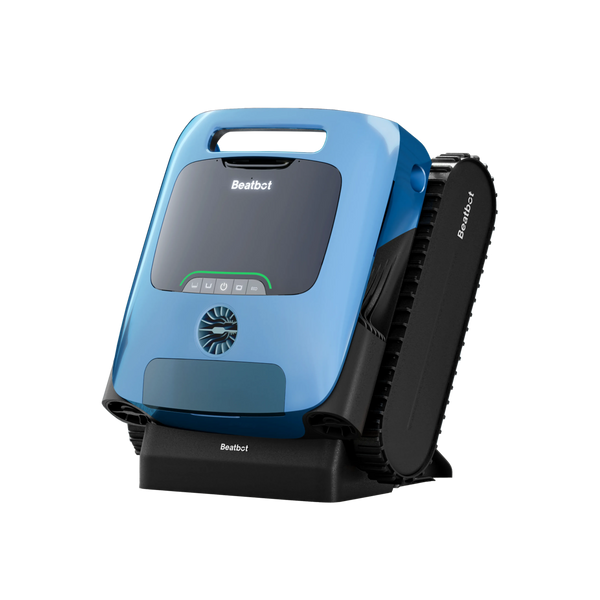
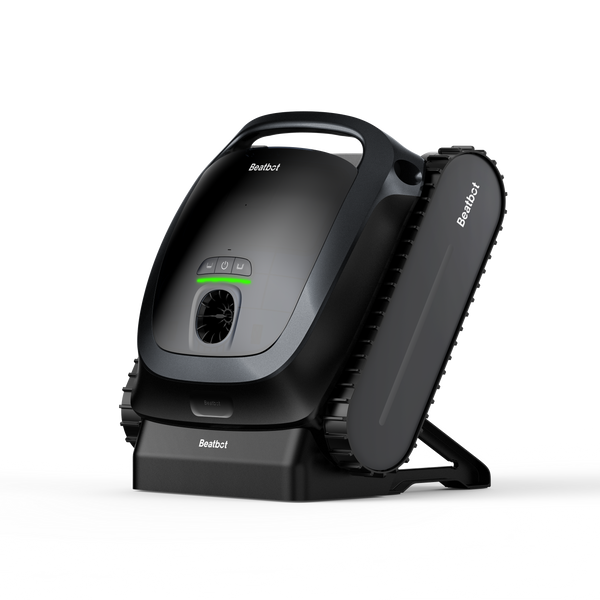
The Beatbot AquaSense 2 Ultra robotic pool cleaner is a strong example of that standard in practice. It uses HybridSense Pool Mapping with an AI camera, infrared sensors, ultrasonic sensors, and a 27 sensor system overall to scan the pool, plan efficient paths, and adapt to irregular layouts.
After mapping, it follows S shaped routes on the floor and surface, N shaped routes on walls and the waterline, and shows the pool map and cleaning path in the Beatbot app. That matters for coverage and trust. You can see whether the cycle actually covered the pool instead of guessing from a finished result.
The value goes beyond route planning. Beatbot AquaSense 2 Ultra ties smart mapping to complete zone coverage. It can clean the floor, walls, waterline, and surface in one system. Its side brushes help pull in floating debris from the surface edges.
Its app supports remote surface navigation, path review, and one touch parking. Its platform logic lets it detect and clean elevated shallow areas above 13.7 inches. The intelligence is not stuck in one part of the pool. It shows up across the pool, and it shows up in the app where you can verify it.
Beatbot AquaSense X as the Next Step in True Smartness
The Beatbot AquaSense X robotic pool cleaner shows where true smart mapping goes next. Beatbot AI 2.0 uses multi sensor fusion and advanced algorithms trained on more than 200,000 real world underwater scenarios to read pool shape, obstacles, and debris with more context.
Beatbot AquaSense X pairs that system with 29 sensors, maps complex pools, and recognizes 40 debris types across both the pool floor and the water surface. That dual zone recognition matters.
A smarter pool cleaning robot should not only know where to drive. It should know what to chase, where to chase it, and when a full pass is not the most efficient next move.
That same logic extends to reliability and intervention. Beatbot AquaSense X uses adaptive path planning for elevated platforms, follows planned floor, wall, waterline, and surface routes, and shows the completed map and route history in the Beatbot app.
Its AstroRinse station can rinse the filter and empty the debris bin in about three minutes. That last part belongs in the same conversation. The best AI mapping robotic pool cleaners do not just clean with more intent. They reduce what you need to do before and after the cycle.
Is an AI Mapping Pool Vacuum Robot Worth Paying More For?
The best way to judge price performance is not to start with price. Start with outcomes. If the premium buys more reliable coverage, fewer missed zones, less wasted motion, and less manual intervention, it can make sense.
If it mostly buys a nicer sounding label, it usually does not. That is the right frame for the four buyer questions that matter most here: coverage, reliability, app usefulness, and value for the money.
It Is Probably Worth Paying More If
AI mapping pool robots are usually worth the premium when the pool creates real navigation problems. That includes larger footprints, irregular shapes, steps, benches, ledges, platforms, or debris patterns that change with the season. In those settings, better coverage and better reliability tend to show up fast.
A stronger app experience matters too, but not just since it feels high tech. It matters when it helps you confirm coverage, direct surface cleanup, review cleaning history, or retrieve the machine with less effort. If that added visibility cuts down on guesswork and intervention, the app is doing real work. In that case, the higher price is tied to a better result, not a fancier label.
It May Not Be Worth Paying More If
The premium can make less sense in a simple pool that is easy to cover and already stays clean with a basic robotic pool cleaner. If your current machine covers the pool well, rarely gets stuck, and you do not care about app based route proof or advanced control, the gain may feel small. A real mapping system may still be better. It just may not be better enough to change your weekly routine in a meaningful way.
If You Want Models That Pass This Standard
At Beatbot, we think the strongest recommendation is a clear standard, not a vague promise. If you want a robotic pool cleaner that shows real route logic, handles complex layouts, supports app based verification, and extends its intelligence across the floor, walls, waterline, and surface, Beatbot AquaSense 2 Ultra robotic pool cleaner is the clearest fit in our lineup.
If you want the newest AI layer with broader debris recognition, deeper environmental awareness, stronger complex pool handling, and a lower maintenance ownership loop, Beatbot AquaSense X robotic pool cleaner is the next step.
The point is simple. AI mapping pool robots are not smarter by default. The good ones are smarter in ways you can measure in coverage, reliability, app usefulness, and the amount of work they take off your hands.
FAQs
Can you leave an AI mapping pool robot in the pool all day?
Usually, no. Most cordless robotic pool cleaners are built for cleaning cycles, not full time storage in the water. Leaving one in the pool all day can add wear, especially in hot water or chemically harsh conditions. Check the model’s usage guidance first.
Can you swim while an AI mapping pool robot is cleaning?
It is better not to. Swimmers change the environment the robotic pool cleaner is trying to map and clean, which can reduce route consistency and coverage. If you want the best result, let the cleaning cycle finish before anyone gets in.
Do AI mapping pool robots need WiFi to clean the pool?
No. WiFi is usually for app features like route history, map viewing, remote control, and parking. The robotic pool cleaner can still run a cleaning cycle without an active WiFi session, but some smart features will be unavailable.
Do AI mapping pool robots work in above ground pools?
Some do. What matters is pool compatibility, not the AI label alone. If the robotic pool cleaner supports above ground pools and your pool fits its depth, wall, and shape limits, mapping can still work well there.
Can one AI mapping pool robot clean the floor, walls, waterline, and surface?
Some can. A stronger model can extend its route planning across multiple pool zones instead of treating floor cleaning as the whole job. That matters most when leaves, floating debris, and waterline buildup all show up in the same week.