Most Popular


 Sora Series


 AquaSense Series

 Skimmer & Bundle

 Retail Edition


 Accessories


The best pool cleaner for a fiberglass pool needs to handle three things that other pool types do not demand together: freeform curved geometry, shallow built-in features like tanning ledges and sun shelves, and the fine oil and organic residue that non-porous gel-coat surfaces do not absorb. Cordless robotic cleaners with mapping navigation, shallow-water capability, and fine filtration are the strongest match.

What Makes Fiberglass Pools Different for Cleaning
Fiberglass pools have three characteristics that shape cleaner selection: freeform curved geometry that random-path cleaners cover poorly, built-in features like tanning ledges at 6 to 12 inches of water depth that most cleaners cannot reach, and a smooth non-porous gel-coat surface that does not absorb fine oil and organic residue. This last point matters most for water clarity: residue that would be absorbed by porous concrete or bound to vinyl liner stays suspended in fiberglass pool water and shows as a subtle haze if the filtration does not capture it.
The pool shell itself is durable, but the gel-coat surface (typically 20 to 30 mils thick) can be damaged by heavy equipment dropped into the water or dragged against the pool wall during retrieval. Gel-coat repair is a professional service costing $2,000 to $5,000, so lightweight cleaners with gentle automated retrieval are worth prioritizing over heavier commercial-grade units.
What to Look for in a Cleaner for a Fiberglass Pool
Six features have the biggest impact on cleaner performance in a fiberglass environment. Each section covers what the feature is and what to look for on the product page.
Mapping navigation (essential for freeform pools)
Most fiberglass pools are not rectangular. Random-path cleaners (bumper sensors + pivot logic) leave consistent coverage gaps along curved walls. Sensor-based mapping (gyroscope, ultrasonic, or LiDAR) plans efficient paths across freeform shapes. Look for "SmartNav," "AI navigation," or "mapping technology" on freeform or kidney-shaped pool designs.
Shallow-water capability (required for tanning ledges)
The relevant spec is minimum operating depth. Standard cleaners need 18 inches (46 cm) of water; shallow-water-rated models work down to 8 inches (20 cm) or less, which is what reaches tanning ledges, sun shelves, entry steps, and built-in benches at 6 to 12 inches of water. Without this feature, these zones require weekly manual scrubbing regardless of how well the rest of the pool is cleaned.
Fine filtration (matters more in fiberglass pools than most)
Filter fineness is measured in microns. Standard baskets are 150 microns (leaves, larger debris only). Fine filtration is 10 to 30 microns (pollen, algae spores). Ultra-fine is 3 to 5 microns (single-cell algae, fine oil-bound residue). Fiberglass pools show fine residue more visibly than other pool types because the non-porous gel coat does not absorb it, so 10 microns is the practical baseline and 3 to 5 microns is worth the step up for heavy bather use or hard fill water.
Waterline coverage (higher priority in fiberglass pools)
Coverage tiers stack: floor-only, floor + walls, or full 5-in-1 (floor + walls + waterline + water surface). Look for specific mentions of "waterline scrubbing" or "active waterline cleaning," not just "climbs walls." Oil and body residue show clearly against smooth gel coat, which makes active waterline cleaning more important than in concrete or vinyl pools.
Robotic type only (rules out suction-side and pressure-side)
Suction-side and pressure-side cleaners drag along the gel coat surface and add load to the pool's pump, which is often smaller in fiberglass installations than in concrete pool setups. Only robotic cleaners (cordless or corded) are appropriate for fiberglass, regardless of pool size.
Lightweight construction and gentle retrieval (protects gel coat over service life)
Cleaner weight ranges from 12 pounds (5.5 kg) at the entry level to 30 pounds (13.6 kg) for high-capacity premium models. Under 25 pounds (11 kg) is the threshold at which the cleaner can be lifted out of a pool by hand without physical strain, and at which the risk of dropping the unit against the pool wall drops meaningfully. Retrieval features also matter: basic units surface wherever the cycle ends, higher-end units include automated retrieval that drives the cleaner to the pool edge before shutting off. Given the fiberglass pool's 20 to 30 year service life, small gel-coat damages from repeated retrieval accumulate over time.
Match the tier to your pool size
Once you have identified which features you need, use pool size to determine the tier:
Small fiberglass pools (under 15 feet): Entry to mid-range robotic with the essential features. Floor and walls coverage is enough for pools without built-in features. Add shallow-water capability if there is a tanning ledge or entry step.
Medium fiberglass pools (15 to 25 feet): Mid-range robotic with floor, wall, and waterline coverage. Add mapping navigation for freeform geometry.
Larger fiberglass pools (25 feet and above): Premium robotic with full 5-in-1 coverage and ultra-fine filtration. The productivity gap over any alternative typically pays back the cost difference within one to two seasons.

Best Pool Cleaners for Fiberglass Pools: Beatbot Models by Pool Size
Beatbot offers two cordless robotic pool cleaners well matched to fiberglass pool profiles. Both are fully wireless (no cables or hoses), both handle freeform shapes and shallow-water features, and both capture fine residue effectively for the water clarity fiberglass pool owners actually notice.
Best for Medium Fiberglass Pools: Beatbot AquaSense 2 Ultra
The AquaSense 2 Ultra is a cordless robotic pool cleaner built for medium fiberglass pools where waterline residue and water clarity are the ongoing priorities. Its dual-pass waterline cleaning scrubs the tile band twice per pass, physically removing body oils and sunscreen residue that show visibly against smooth gel-coat surfaces. The ClearWater natural clarification system automatically disperses a skin-safe, eco-friendly clarifier during each cleaning cycle, binding fine particles into filter-capturable clusters. HybridSense AI mapping handles freeform shapes systematically rather than leaving coverage gaps along curves. Best matched to fiberglass pools 15 to 25 feet where waterline appearance and water clarity are the specific concerns.
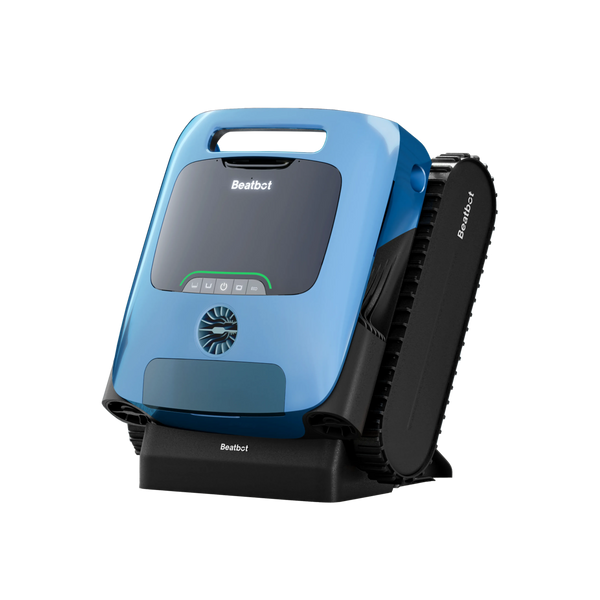
Best for Larger Fiberglass Pools: Beatbot Sora 70
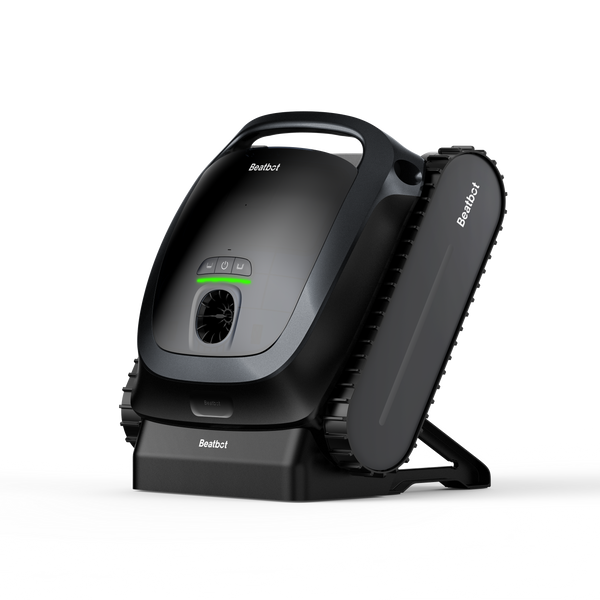
The Sora 70 is a cordless robotic pool cleaner built for the full cleaning workload in one cycle. It runs on a 10,000mAh battery with up to 7 hours of water-surface cleaning, covering pools up to 3,230 square feet in a single session. 6,800 GPH water flow with a 6L filter basket handles heavy debris; the standard 150-micron filter comes with an optional 3-micron ultra-fine filter for pollen, algae spores, and the fine oil-bound residue that non-porous gel coat produces visibly. 5-in-1 cleaning covers water surface, waterline, walls, floor, and shallow zones down to 8 inches, which reaches tanning ledges, entry steps, and built-in benches most cleaners cannot access. Submarine-inspired floating technology automatically brings the cleaner to the pool edge at cycle end, and SmartDrain releases internal water before pickup to reduce lifting weight, both of which reduce the gel-coat impact risk that comes with lifting heavy units out of a pool by hand. At 22.9 pounds, the Sora 70 sits under the 25-pound threshold for comfortable manual retrieval. Best matched to fiberglass pools 25 feet and above, pools with heavy bather use, or pools where tanning ledges and freeform coverage both matter.
Common Mistakes When Buying a Cleaner for a Fiberglass Pool
Overlooking tanning ledge and shallow feature coverage
Tanning ledges are common in modern fiberglass pool design and consistently ignored by robotic cleaners not specifically rated for shallow water. Buying a cleaner without confirming its shallow-water capability produces the result of a well-cleaned pool floor and persistent residue on the tanning ledge that requires manual scrubbing every week. Confirm the cleaner's minimum operating depth matches the shallowest built-in feature in your pool.
Choosing random-path navigation for a freeform pool
Random-path cleaners work adequately on rectangular pools but leave consistent gaps along curved walls and in transition zones on freeform designs. Owners often notice the cleaner runs frequently but does not produce clean results, and mistake it for a suction issue. The actual issue is navigation mismatch. Mapping navigation is worth the price premium for freeform shapes.
Skipping fine filtration
Fiberglass pool debris skews toward fine oil and organic residue that non-porous gel coat does not absorb. Standard 150-micron filter baskets miss most of this material, and it stays visible as a subtle water haze even when the pool is otherwise well maintained. Fine filtration (10 microns or below) captures it; 3 to 5 microns is worth the step up for heavy bather use or hard fill water.
Choosing heavy equipment for a fiberglass pool
Robotic cleaners over 25 pounds are physically harder to lift out of a pool without accidentally scraping the gel-coat surface at the pool edge. Given the fiberglass pool's 20 to 30 year service life, small gel-coat damages from repeated retrieval accumulate meaningfully. Lightweight cleaners with automated retrieval to the pool edge reduce this risk directly.

What to Expect at Each Price Tier
Under $500: entry cordless robotic
Cordless robotic cleaners with floor-only or basic floor + wall coverage, 60 to 90 minute runtime, 1,200 to 1,800 GPH. Service life 3 to 5 seasons. Adequate for small simple fiberglass pools without built-in features.
$500 to $1,000: mid-range cordless robotic
Cordless robotic cleaners with floor and wall coverage, sensor navigation, 120 to 180 minute runtime, and 2,000 to 2,500 GPH. Service life 4 to 6 seasons. This is the value tier for typical fiberglass pool ownership without tanning ledges or premium coverage needs.
$1,000 to $2,500+: premium cordless robotic
Cordless robotic cleaners with full 5-in-1 coverage, high-capacity batteries (10,000mAh+ for 5 to 7 hours per charge), 5,000 to 6,800 GPH, fine to ultra-fine filtration (3 to 10 microns), and AI mapping navigation. Service life 5 to 8 seasons. Justified for larger fiberglass pools, pools with tanning ledges and freeform shapes, or owners who want fully hands-off maintenance for the pool's full service life.
FAQs
What type of pool cleaner is best for a fiberglass pool?
A cordless robotic cleaner rated for fiberglass surfaces, with mapping navigation for freeform shapes and shallow-water capability if the pool has a tanning ledge or built-in features. Robotic cleaners are specifically the right category because suction-side and pressure-side cleaners drag along the gel coat and add load to the pool's pump.
Do I need a cleaner that can reach my tanning ledge?
Yes, if you have one. Standard robotic cleaners are designed for full pool depth (18 inches or more) and cannot navigate the 6 to 12 inch depth typical of tanning ledges. Without shallow-water capability, ledges and built-in benches require weekly manual scrubbing regardless of how well the rest of the pool is cleaned.
How often should I run a cleaner in a fiberglass pool?
Two to three times per week during regular use. Higher frequency during heavy bather use, hot weather, or after storms. Fiberglass pools generally need slightly less frequent cleaning than plaster pools because the smooth gel coat surface accumulates less binding residue, but consistent cleaning is what keeps water clarity and chemistry stable.
Why does my fiberglass pool water look hazy even after cleaning?
Fine oil and organic residue that non-porous gel coat does not absorb stays suspended in the water, and standard 150-micron filter media does not capture it. Fine filtration in the cleaner (10 microns or below, ideally 3 to 5 microns) captures this material. Fiberglass pool owners who step up from standard to fine filtration typically see visibly clearer water within a few cleaning cycles.
How long should a robotic pool cleaner last on a fiberglass pool?
Entry-level cordless: 3 to 5 seasons. Mid-range: 4 to 6 seasons. Premium: 5 to 8 seasons with proper maintenance. Given the fiberglass pool's 20 to 30 year service life, mid to premium tier equipment amortizes better over time and reduces the total number of cleaner purchases across the pool's life.