Most Popular


 Sora Series


 AquaSense Series

 Skimmer & Bundle

 Retail Edition


 Accessories


Yes, you should run a full robotic pool cleaner cycle before closing your pool for the season. Whatever debris sits in the water when you put the cover on does not disappear. It sinks, breaks down over winter, and becomes the stains, cloudiness, and early algae that appear at reopening. A final cleaning pass removes that organic load while the water is still balanced and circulating, so the pool spends winter as clean as possible.

Why a Final Cleaning Pass Matters Before You Close the Pool
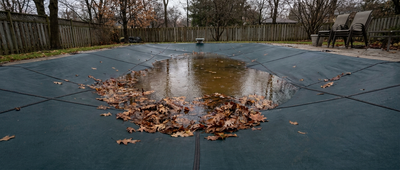
Organic debris left in the water is the main reason a closed pool degrades over winter. Leaves, pollen, insects, sunscreen residue, and fine dirt keep decomposing under the cover with no filtration running to remove them. That slow breakdown feeds three problems that show up in spring.
The first is staining. Decaying leaves and metals leach tannins and pigments that settle against the floor and walls, and on a vinyl liner those marks can set into long-term discoloration. The second is chemistry drift. Rotting organic matter consumes sanitizer and pushes water toward the conditions algae prefer, so a pool that was clear in October can open green in April. The third is workload. Everything you leave behind becomes something you have to vacuum, scrub, and chemically treat before the water is swimmable again.
Clearing the pool first shortens all of that. A clean floor, walls, and waterline going into winter means less material to decompose, more stable water chemistry under the cover, and a faster, cheaper reopening.

When Should You Run the Cleaner While Closing Your Pool?
Run the full cleaning cycle near the end of your closing routine, after you have balanced the water but before you lower the level, add winterizing chemicals, and cover the pool. Cleaning while the water is still at its normal level and the system is circulating lets the robot reach the waterline and gives your filter a chance to catch anything it stirs up.
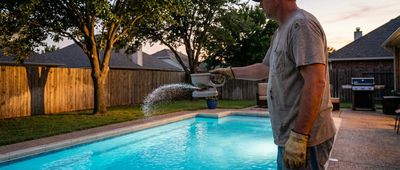
The order matters. Balancing the water first means the robot works in properly sanitized conditions and you avoid locking imbalanced water under the cover. Cleaning next removes the physical debris that would otherwise interfere with your winter chemistry. Adding closing chemicals last puts them into water that is already clear, so a winter algaecide or clarifier protects a clean pool instead of rescuing a dirty one.
Treat this as a general order, not a strict rule. Manufacturer instructions for your closing chemicals and your cleaner always take priority, and pools in mild climates that never freeze may follow a lighter routine than pools that get winterized fully.

What a Good Final Cleaning Cycle Should Cover
A proper pre-closing clean should reach the floor, walls, and waterline, not only the pool floor. The waterline is where oils, sunscreen, and scum concentrate, and that band hardens into one of the most stubborn stains after months under a cover. Walls collect the same fine film that fuels early algae. A cover placed over a dirty waterline and walls seals in the exact material that drives spring staining and algae.
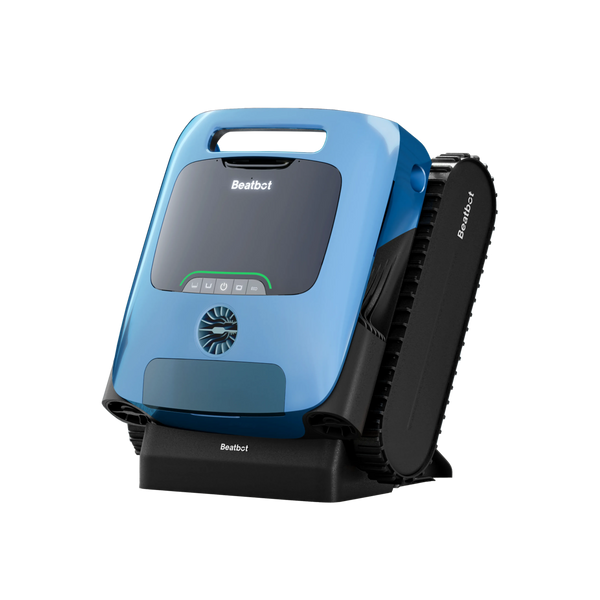
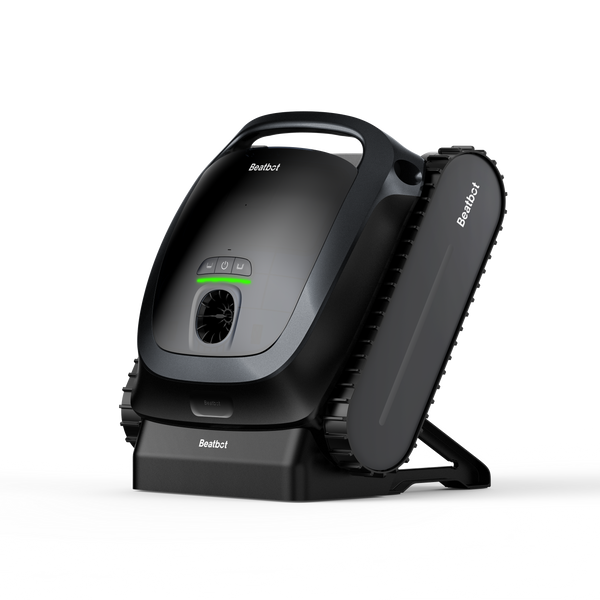
The Beatbot AquaSense 2 Pro robotic pool cleaner runs a 5-in-1 cycle that reaches the water surface, waterline, floor, and walls in a single pass, so one run covers every zone a pre-closing clean needs. For pools with large steps or platform areas, its MultiZone Mode extends coverage to those flatter sections that a standard floor pass can miss.
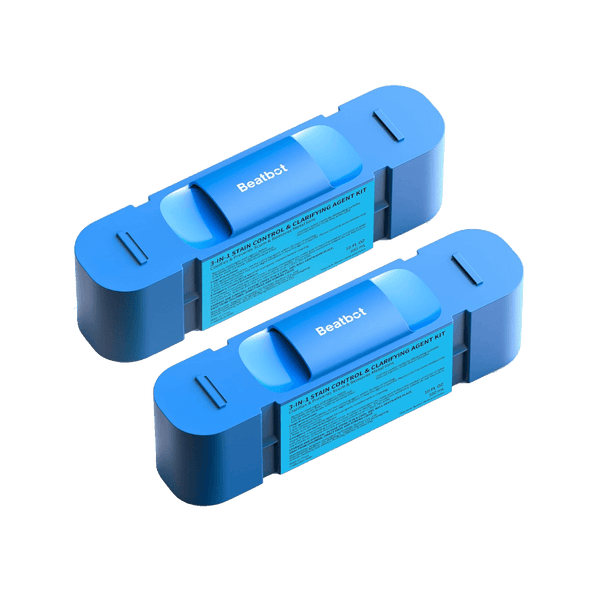
Fine suspended particles are what leave the water cloudy right before you cover it. The Beatbot AquaSense 2 Pro pairs its cleaning with the ClearWater™ Clarification System, which dispenses a natural clarifier that binds algae and microscopic particles into larger clumps the filter can capture. Clearing those fines before closing leaves you with cleaner water under the cover and less sediment at reopening.
What to Do With the Cleaner After the Final Run
Take the cleaner out of the water as soon as the cycle ends, then empty and rinse the filters before storing it. Leaves and organic matter left inside will rot, breed bacteria, and leave odors and residue that are hard to clear later, so a cordless cleaning robot should never go into storage with a loaded basket.
End-of-season retrieval is the point where a heavy, water-logged machine is hardest to lift out. The Beatbot AquaSense 2 Pro handles that with Smart Water Surface Parking, which returns the unit to the edge and releases its internal water so it floats lighter for pickup, plus a one-touch app return if it drifts before you reach it.
How to Winterize and Store a Cordless Pool Cleaning Robot
Store a cordless robotic pool cleaner clean, dry, and indoors where temperatures stay above freezing, and follow your manufacturer's battery guidance before putting it away. Lithium batteries do not hold up well in long storage while fully drained or hard-frozen, so the two conditions that protect the battery are a sensible charge level and a climate-controlled space.
A reliable end-of-season routine covers a few things in order:
- Rinse the filters and the exterior, then let every part air dry so no moisture is sealed inside
- Set the battery to the charge level your manufacturer recommends for storage, not empty and not left at a random level
- Keep the cleaner and its charging dock in a dry indoor spot that stays above freezing, out of direct sun and away from damp basements or unheated sheds
Battery-handling specifics vary by model, so check your unit's manual for the exact storage charge and any pre-storage steps.

FAQs
Can you leave a robotic pool cleaner in the pool over winter?
No. A cordless robotic pool cleaner should be removed, cleaned, and stored indoors before you close the pool. Left submerged, it faces freezing water, stagnant chemistry, and long-term moisture, all of which can damage the motor, seals, and battery. Even in climates that never freeze, months in unfiltered water shorten the unit's life.
Do you still need to balance the water if you run the cleaner first?
Yes. A robotic cleaner removes physical debris but does not adjust pH, alkalinity, sanitizer, or calcium hardness. Balance the water and add your winterizing chemicals as normal. The cleaner reduces the organic load so balanced chemistry holds more stable under the cover, but it is one step in the process, not a replacement for it.
Will a robotic pool cleaner remove algae that has already started?
Partly. A cleaner can brush and vacuum loose algae from surfaces, but an active bloom still needs chemical treatment and rebalanced water before closing. Running the cleaner after you shock and treat the pool clears the dead algae so it is not sealed in for the winter.
Do you need to run the cleaner again when you reopen the pool in spring?
Usually yes. Even a pool closed clean collects fine sediment and windblown debris over the winter. A full cleaning cycle at reopening, after you uncover and rebalance the water, clears that layer and gets the pool swimmable faster than manual vacuuming alone.