Most Popular


 Sora Series


 AquaSense Series

 Skimmer & Bundle

 Retail Edition


 Accessories


A pool cover sags before winter for two connected reasons. Weight builds up on top from rainwater, wet leaves, and early snow, while the support underneath disappears when the pool water level drops, straps loosen, springs wear out, or an air pillow deflates. A slow, worsening sag in the weeks before winter is almost always a setup problem, not a weather problem, and it is far easier to correct now than after the first hard freeze locks the water and debris in place. If your cover used to sit firm and now dips heavily in the middle, something in the setup changed, and the fix is usually straightforward once you know which cause you are dealing with.

What Causes a Pool Cover to Sag Before Winter?
A pool cover sags before winter when the load on top outpaces the support beneath it. The load comes from standing rainwater, wet leaves, and early snow. The lost support comes from a low pool water level, loose straps, worn springs, shifting anchors, or a deflated air pillow. Most sagging traces back to one or more of these five, and identifying which one is happening tells you exactly what to fix.
Standing rainwater is the heaviest and most common cause. Water weighs a little over eight pounds per gallon, so even a puddle a few inches deep across the center of a cover can add hundreds of pounds of load. The problem also feeds itself. Once a shallow dip forms, the next rain runs straight into that low spot, deepening it, which pulls in even more water the following storm. Solid covers suffer the most because water cannot pass through and has nowhere to go without a pump.
Debris adds a second layer of weight that behaves differently from water. Wet leaves mat together and act like a saturated blanket that holds moisture for weeks, while acorns, twigs, and small branches create concentrated point loads that push one section lower than the rest. Early snow is the sneaky one because it lands as fluffy weight but can compact into ice that will not drain off on its own, so a cover that looked fine in October can be straining under a frozen load by December.
A low pool water level removes support from underneath, and it is the cause people overlook most. Many covers rely partly on the water in the pool to hold their shape, almost like a cushion pressing up against the fabric. When closing leaves the level too low, or when slow evaporation and a leaking winter plug drop it further through autumn, the cover has a larger empty void to sink into. Vinyl liner pools deserve extra care here, since a level dropped too far can also stress the liner itself.
Worn or loose hardware lets the cover droop even before much weight arrives. Stretched straps, a loosened cable, rusted or fatigued springs, and anchors that have shifted in the deck all reduce the perimeter tension that holds a cover taut. A cover that has aged past its life, or one that never fit the pool correctly, can stretch into a permanent bowl shape that no amount of tightening will fully pull flat.
On above-ground pools, a deflated or off-center air pillow is often the trigger. The pillow is meant to raise the middle of the cover into a low dome so rain and snow drain toward the edges. When it leaks down or drifts against the pool wall, the crown collapses, everything runs to the center, and the sag deepens quickly from there.

How Do You Fix a Sagging Pool Cover?
Fix a sagging cover in a fixed order. Remove the weight first, restore the support second, and adjust the tension last. Tightening a cover while a heavy puddle still sits on it only stretches the fabric further, strains the anchors, and can tear seams. Working in the wrong order is the most common way people turn a minor sag into permanent damage.
Start by removing standing water. Set a submersible cover pump in the lowest puddled area and route the discharge hose so it drains downhill and well away from the pool, not back toward the deck where it can pool again. Let the pump work gradually instead of dragging a heavy unit across fabric that is already under strain. A siphon hose can handle a small puddle, but a proper cover pump is safer and far less work for anything larger. If you have a mesh cover and water is sitting on top rather than draining through, the fix is different: look for leaves matted into the mesh or ice blocking the surface, and clear that gently so the cover can drain the way it is designed to.
Clear the debris next, working from the edges inward with a soft pool brush, a leaf blower, or a rake made for covers. Stay off the cover whenever possible, and only walk on it if it is a properly rated safety cover and the manufacturer allows it. Pay close attention to corners, step sections, raised spas, tanning ledges, and anywhere near overhanging trees, since debris collects unevenly in those spots and creates a sag in one pocket rather than across the whole pool. Avoid sharp tools on frozen debris, because a single small puncture can grow into a long tear the moment the cover is under tension again.
Check the pool water level once the weight is off, because this is the support half of the fix and skipping it means the sag comes right back. If the level dropped below what your cover needs, add water to the level your closing method calls for so the cover has something to rest against. If the level keeps falling even after you top it off, do not assume the sag is only from rain, since steady loss can point to a leak, a loose winter plug, or a liner issue that is worth investigating before the freeze.
Adjust the tension last, and match the method to your cover. Recenter a cover that has shifted to one side so the overlap is even all the way around, because uneven overlap alone will pull the middle down. For a tarp-style winter cover, tighten the cable enough to hold the perimeter snug without cranking so hard that the grommets stretch or the top rails strain, and replace any leaking water bags while spacing them evenly around the edge. For a safety cover, adjust the springs gradually and evenly so each one compresses about halfway around the entire perimeter, rather than tightening one corner all at once, which creates diagonal wrinkles and low pockets. For an automatic cover that is binding or straining, stop operating it until the water is off and the system is inspected, since forcing it can damage the motor and tracks.

How to Prevent Cover Sagging Before Winter
Preventing sag is mostly about setup done right before the cold arrives, and it comes down to keeping weight off the cover, holding the correct water level, supporting the center, and inspecting the hardware. Each of these is cheap and quick to handle in autumn and miserable to deal with once the cover is frozen in place.
Keeping weight off the cover is the single most effective habit. Pump standing water after every heavy rain before it has time to collect and deepen, and clear leaves before they mat into a wet blanket. A leaf net laid over a solid cover through autumn makes this far easier, because you can lift the entire layer of foliage off at once instead of scooping soggy piles by hand. Never let branches, ice chunks, toys, or heavy debris sit on the cover for weeks, since a load that would be easy to remove early becomes a real problem after it freezes.
Set the pool water level correctly for your specific cover and closing method before you put the cover on. Too low removes the support the cover rests against and lets the center sink, while too high can float the cover and lift its edges above the coping. Getting this right at closing heads off sag before it can start, and it saves you from correcting the level in freezing weather.
Support the center on above-ground pools with a properly inflated air pillow. Inflate it partway rather than fully so it has room to absorb ice expansion, and keep it centered so the cover holds a low dome that sheds water and snow toward the edges. Some owners use two smaller pillows instead of one large one, which holds position better in wind and reduces the single deep depression that forms when one pillow drifts to the wall.
Inspect the hardware before winter weather turns rough. Check straps, springs, anchors, cables, winches, water bags, and clips, and replace worn parts while it is still easy to reach them. A stretched strap, a rusted spring, or a leaking water bag is inexpensive to fix in October and a genuine headache once everything is iced over. Running a two-minute walkaround every week or two through the season catches minor slack and small puddles before they turn into a deep, self-feeding sag.

Is Some Cover Sagging Normal, or a Warning Sign?
A small, even dip is normal and expected. Pool covers are flexible sheets, not rigid panels, so they flex with rain, wind, and temperature swings. A safety cover often absorbs moisture and droops slightly after rain or snow, then regains most of its tension once the water evaporates or gets pumped off. Shallow sag that recovers on its own is nothing to worry about.
Deep or worsening sag is the warning sign. If the cover is pulling down into the pool water, dragging across sharp coping, straining visibly near the anchors, or holding a puddle that keeps getting larger, the load has crossed from normal flex into structural stress. The clearest test is behavior over time. Normal sag stabilizes and bounces back, while problem sag keeps deepening in the same spot after every storm, which points to a support failure underneath rather than passing weather. A sag that returns to the exact same pocket right after you clear it almost always means a hardware or water-level issue, not just rain.
How Cover Type Changes the Way It Sags
The reason a cover sags depends heavily on the type you own, which is why the same fix does not work for every cover. Solid covers collect standing water and rely on a working pump, so a solid safety cover with no drain panel is the one most likely to sag under a puddle. Mesh safety covers drain on their own, so when they sag the cause is usually loose springs, stretched straps, damaged anchors, a low pool level, or leaves matting into the mesh faster than water can pass.
Automatic covers and tarp covers behave differently again. An automatic cover can sag when water weight sits on top, the tracks are dirty or misaligned, or the level underneath is too low, and forcing a sagging automatic cover risks the motor and track system. Tarp-style winter covers sink in the center when rain, snow, or a low pool level overwhelms them, and they depend on evenly placed water bags, a snug cable, and a centered air pillow. Knowing your cover type prevents the common mistake of treating every sag as a tension problem when the real fix may be pumping, draining, or refilling instead.
Why a Sagging Cover Makes Spring Reopening Harder
A cover that sags all winter turns into a spring cleaning problem, which is the hidden cost most people underestimate. Standing water on a sagging cover collects dirt, pollen, leaves, and roof runoff, and stagnant water can also draw mosquitoes once organic debris sits long enough. When you finally pull the cover off, that dirty water and debris spill straight into the pool, leaving cloudy water, a debris-covered floor, and stained waterlines to clear before the pool is usable.
Managing the cover through winter keeps that mess small, but a pool opened after months under cover usually needs cleanup on several levels at once, from floating scum and leaves on the surface to cloudy water and debris settled across the floor and waterline. Clearing each of those layers separately by hand is the slow part of reopening.
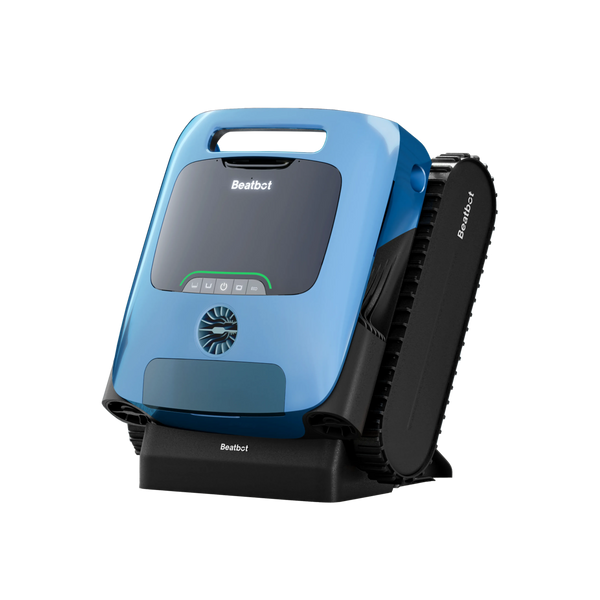
The Beatbot AquaSense 2 Ultra robotic pool cleaner is a 5-in-1 cleaner that covers the water surface along with the waterline, walls, and floor in one session, so the debris a leaky cover left floating on top and the sediment that sank to the bottom get handled in a single run instead of several manual passes. Its AI camera runs a plant debris detection pass that targets leftover leaves and similar organic debris a cover tends to drop, and its ClearWater clarification helps clear the cloudiness a closed season leaves behind by binding fine particles into clumps that settle out and get collected.
FAQs
How long does a winter pool cover usually last?
Most solid winter covers last about three to five years, while quality mesh and solid safety covers often last longer with proper care. Sitting under standing water every season shortens that fast by stretching the fabric and stressing the seams.
Should a winter pool cover be tight or have some slack?
It should be firm with even tension, not drum-tight, and safety cover springs should compress about halfway. If a cover still sags at full tension, the problem is support underneath, not looseness, so cranking harder only risks tearing the grommets.
How much water should stay in the pool under a winter cover?
For most mesh and solid safety covers, keep the water roughly 15 to 18 inches below the coping, or just below the skimmer, depending on your closing method. Too low removes the support the cover rests against.
When should I replace a sagging cover instead of adjusting it?
Replace it once the fabric is torn, brittle, or stretched into a permanent bowl that will not pull flat, or when grommets pull out and springs no longer hold tension. At that point adjustments only buy a little time.