Most Popular


 Sora Series


 AquaSense Series

 Skimmer & Bundle


 Retail Edition


 Accessories


The best pool shock for your pool is calcium hypochlorite for algae and most chlorine pools, sodium dichlor for saltwater and vinyl-liner pools, and chlorine-free shock for routine oxidation when you want to swim again fast. All three are forms of pool shock, a concentrated dose of chlorine or oxidizer that quickly raises your sanitizer level to kill bacteria, clear algae, and break down the chloramines behind that strong chlorine smell. The right choice comes down to your pool surface and the problem in front of you, since the wrong type can cloud the water, spike your pH, or fail to touch the algae at all.

What Is Pool Shock and What Does It Do?
Pool shock is the practice of adding a high dose of chlorine or another oxidizer to burn through contaminants that normal daily sanitizing cannot handle. It pushes free chlorine well above its usual range for a short time, kills bacteria and algae, destroys combined chlorine, and then settles back to a swim-safe level.
The reason shock matters comes down to chloramines. When chlorine binds with sweat, sunscreen, urine, and other organic matter, it forms combined chlorine, which sanitizes poorly and produces the sharp odor people wrongly blame on too much chlorine. Shocking oxidizes those compounds and frees your chlorine to work again.
What Are the Main Types of Pool Shock?
There are three main types of pool shock: calcium hypochlorite, sodium dichlor, and chlorine-free oxidizer. Calcium hypochlorite and sodium dichlor are both concentrated chlorine and differ mainly in strength and whether they carry stabilizer. Chlorine-free shock uses a non-chlorine oxidizer, so it clears organics without adding to your chlorine level.

Calcium Hypochlorite (Cal Hypo) Shock
Calcium hypochlorite pool shock, usually called cal hypo, is the most powerful chlorine shock most owners will use, carrying roughly 65% to 73% available chlorine depending on the product. That strength makes it the go-to choice for killing an algae bloom or recovering a green pool quickly.
Cal hypo is an unstabilized chlorine, so it contains no cyanuric acid and burns off fast in direct sun, which is why it works best applied at night. It also runs a high pH, around 11 to 12, and adds a small amount of calcium to the water. Pools that already sit high in pH or calcium hardness should account for that before dosing.
Sodium Dichlor Shock
Sodium dichlor shock is a stabilized chlorine that carries around 55% to 56% available chlorine and dissolves quickly with a near-neutral pH. Because it already contains cyanuric acid, it resists sunlight and can be used during the day without losing most of its punch, which makes it convenient for routine treatment.
Dichlor is gentle enough for vinyl liners, fiberglass, and saltwater systems, and it will not spike your pH or calcium the way cal hypo can. The trade-off is that every dose adds cyanuric acid. Over a long season, that stabilizer can build up and slow your chlorine down, so it is not the right pick if you already run trichlor tablets.
Chlorine-Free Shock
Chlorine-free shock uses potassium monopersulfate rather than chlorine, so it oxidizes organic contaminants without raising your chlorine level. It clears the oils, lotions, and sweat that cloud water and feed chloramines, and it typically lets swimmers back in after about 15 minutes.
Chlorine-free shock oxidizes but adds no sanitizer, so it fits weekly maintenance alongside a chlorine or bromine system. A green, algae-filled pool still needs a chlorine shock like cal hypo to actually kill the growth.
Which Pool Shock Is Best for Your Pool Type?
The best pool shock for your pool depends on its surface and its current problem. Cal hypo is the best pool shock for algae and most chlorine pools. Dichlor is the safer pick for saltwater pools and vinyl liners. Chlorine-free shock suits routine oxidation and a fast return to swimming.
The table below compares the three types across the attributes that usually decide the choice.
| Shock Type | Available Chlorine | Stabilized | pH Impact | Best For |
|---|---|---|---|---|
| Calcium Hypochlorite | 65-73% | No | Raises pH | Algae, chlorine pools |
| Sodium Dichlor | 55-56% | Yes | Near neutral | Saltwater, vinyl, daytime |
| Chlorine-Free (MPS) | None | No | Neutral | Routine oxidation, fast reswim |
The strongest shock is not always the right one. Cal hypo clears algae fastest in a concrete pool, but for a vinyl liner or saltwater pool, dichlor is the smarter match despite carrying less chlorine per pound, because it protects the surface and keeps pH stable.

How Do You Shock a Pool?
Shock a pool by testing and balancing the water first, adding the shock after sundown, running the pump to spread it evenly, and waiting for chlorine to drop to a safe level before anyone swims.
-
Test and balance first. Chlorine works best with pH between 7.2 and 7.6, so correct your water before adding anything. Check free chlorine so you know how heavy a dose you need.
-
Shock after sundown. Sunlight breaks down unstabilized chlorine within hours, so dosing at dusk or later lets the shock work through the night at full strength.
-
Apply it the right way. Broadcast dichlor and chlorine-free shock across the surface. For cal hypo, pre-dissolve it in a bucket of water when the label calls for it, since dropping raw granules can stain or bleach some surfaces.
-
Circulate the water. Run your filtration system for at least 8 hours so the shock reaches every part of the pool and no hot spots of concentrated chlorine linger.
-
Wait, then test. With chlorine shock, do not swim until free chlorine returns to about 1 to 4 ppm. That can take anywhere from 8 to 24 hours based on the dose.
Follow the product label for exact quantities, since strength varies between brands and a heavier problem needs a heavier dose.

What Happens After You Shock a Pool?
Shocking kills algae and bacteria, but it does not remove them. Dead algae and fine organic particles stay in the water, turn it cloudy or grey, and settle onto the floor. Clearing that debris is what makes the pool look clean again.
Your filter catches some of it, but very fine dead-algae particles slip through many cartridge and sand filters and drift back into the water. Brushing the walls and floor loosens the settled layer, though it also stirs the cloud back up if you have no way to collect it at the same time.
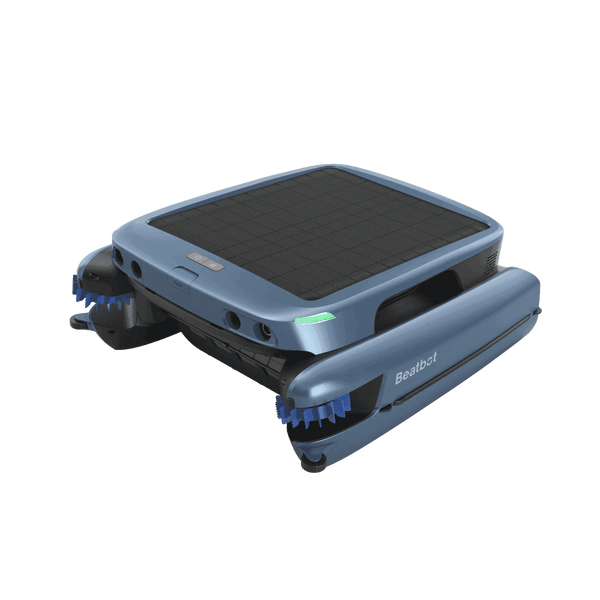
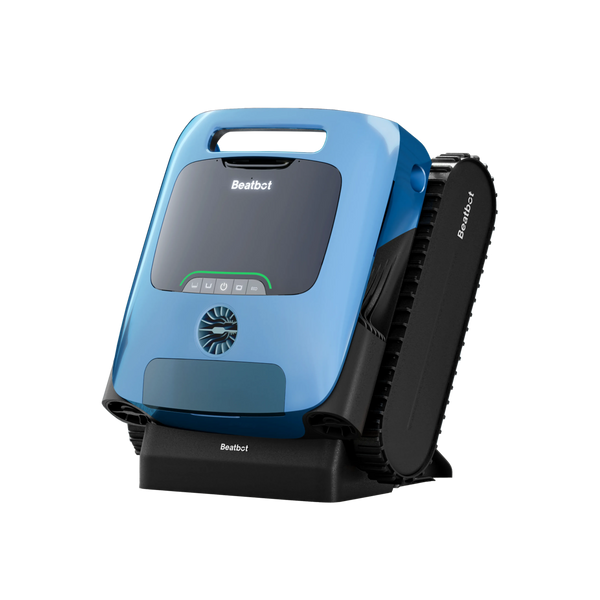
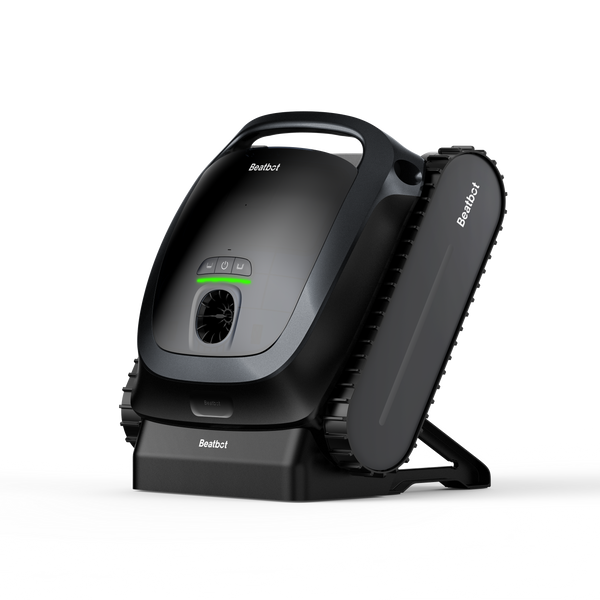
A robotic pool cleaner with fine filtration is what actually clears that haze. The Beatbot Sora 70 robotic pool cleaner runs an optional 3 µm ultra-fine filter that traps dead algae, fine sand, and pollen up to 50 times smaller than most pool cleaners capture, so the grey cloud gets pulled out of the water instead of drifting back through your filter. What sets the Beatbot Sora 70 crodless robotic pool cleaner apart for this job is that it cleans the water surface along with the floor, walls, and waterline, so it also lifts the dead algae and scum that float to the top after a bloom, the layer a floor-only cleaner leaves sitting there. Its 6 L basket and 6,800 GPH suction let it pull heavy settled algae off the floor in one pass without kicking it back into suspension.
If your post-shock mess is mostly on the floor rather than floating on top, the Beatbot Sora 30 robotic pool cleaner also takes an optional 3 µm ultra-fine filter and focuses it on the floor, walls, waterline, and shallow steps.
After shocking algae, dead particles cloud the water and settle to the floor
How Often Should You Shock Your Pool?
Shock your pool about once a week during swim season to keep chlorine effective and stop problems before they start. Beyond that weekly rhythm, shock after heavy pool use, a rainstorm, a visible algae bloom, or any time free chlorine drops below roughly 1 ppm.
Opening and closing the pool are the other two moments that call for a shock. A strong dose when you open clears whatever grew over the off-season, and a dose before closing keeps the water sanitary through the dormant months. Test your water regularly, since your real shocking schedule depends on swimmer load, weather, and sunlight more than any fixed calendar.
FAQs
How much pool shock do you need?
A common starting point is one pound of shock per 10,000 gallons of water, but always follow the label. The right dose depends on the product's strength and how severe the algae or chloramine problem is.
Why is my pool still green after shocking?
Green water after shocking usually means the dose was too low or the pH was off. Rebalance pH to 7.2 to 7.6, brush the pool, then shock again with cal hypo until the water turns cloudy blue.
Does pool shock expire?
Yes. Cal hypo and dichlor slowly lose strength over time, especially once opened or exposed to heat and humidity. Buy what you will use in one season and store it sealed in a cool, dry, ventilated spot.
Can you mix different types of pool shock?
No. Never combine shock products in the same container or feeder. Mixing cal hypo with dichlor, or either one with trichlor tablets, can trigger a dangerous reaction. Add one product at a time and let it circulate fully before dosing anything else.