Most Popular


 Sora Series


 AquaSense Series

 Skimmer & Bundle

 Retail Edition


 Accessories


A salt water pool vacuum needs corrosion-resistant construction, fine filtration to capture calcium particulate, and active waterline scrubbing to handle the calcium scale that builds up faster in salt water than in fresh water. The salt itself does not damage the pool surface, but the electrolysis process that generates chlorine also drives calcium out of solution, and salt spray corrodes exposed metal components on cleaners not built for the environment. Cordless robotic cleaners with sealed corrosion-resistant construction, high-flow water intake, and 5-in-1 coverage that includes waterline scrubbing are the strongest match for salt water pools.

What Makes Salt Water Pools Different for Cleaning
Salt water pools use a salt chlorine generator to produce chlorine through electrolysis of dissolved salt (typically 3,000 to 3,500 ppm). The chlorine level and sanitation are equivalent to a traditional chlorine pool. What differs is the electrochemical process that drives three distinct cleaning challenges.
Calcium precipitation is faster
The electrolysis inside the salt cell raises pH locally, which drives calcium carbonate out of solution and into the pool water. This calcium then deposits on pool surfaces (especially the waterline where evaporation concentrates it), on the salt cell plates, and on any surface where scale can form. The result: salt water pools develop a visible white waterline band faster than fresh water pools, and fine calcium particulate stays suspended in the water column, contributing to a subtle haze that standard filtration does not clear.
Metal corrosion accelerates
Salt water and salt spray both accelerate corrosion on exposed metals. Stainless steel, aluminum, brass, and low-quality alloys used in pool cleaner components (wheels, motor shafts, cable connectors, charging contacts) degrade meaningfully faster in salt water than in fresh water. Cleaners not specifically rated for salt water can show visible corrosion within one to two seasons, particularly at electrical contact points.
Salt spray damages electronic components
Wind and pool splash carry salt spray to any exposed electronic component, including cable connectors, charging ports, and power supplies. Corrosion at these contact points is the most common failure mode on salt water pool cleaners. Sealed construction and corrosion-resistant contact materials are what separate salt water-rated equipment from generic in-ground pool cleaners.
What to Look for in a Salt Water Pool Vacuum
Six specifications matter most: corrosion-resistant construction, chemical-resistant charging contacts, high water flow rate, fine filtration, active waterline scrubbing, and independent operation from the pool's plumbing.
Corrosion-resistant construction
Look for full non-metallic housings, sealed motor enclosures, and rust-resistant fastener materials. Salt water-rated cleaners typically undergo salt-spray testing (measured in hours of exposure) to verify long-term corrosion resistance. Testing at 400+ hours of salt spray without visible corrosion is a meaningful benchmark. Cleaners not specifically rated for salt water often use materials that work in fresh water but degrade visibly in salt within one season.
Chemical-resistant charging contacts
The charging contact point is where cordless cleaners are most vulnerable to salt water corrosion. Look for titanium or noble-metal charging contacts rather than brass or nickel-plated ones. Titanium in particular resists chlorine and salt water corrosion effectively over years of contact cycles, while lower-grade materials pit and lose conductivity within a season or two.
High water flow rate
Salt water pools produce heavier fine particulate loads (fine calcium, salt cell residue, chlorine byproducts) than fresh water pools. Higher water flow rate (measured in GPH) lifts this material effectively without letting it resettle behind the cleaner. Basic cordless models deliver 1,200 to 2,500 GPH, adequate for light debris. Premium cordless reaches 6,800 GPH, which handles the heavier fine particulate loads that salt water pools generate.
Fine filtration
Standard 150-micron filter baskets pass fine calcium particulate back into the water, contributing to the persistent haze that salt water pool owners commonly report. Fine filtration at 10 microns or below captures pollen, algae spores, and mid-range particulate. Ultra-fine at 3 to 5 microns captures fine calcium precipitation and single-cell algae. For salt water pools specifically, 3 to 5 micron ultra-fine filtration produces visibly clearer water within a few cleaning cycles.
Active waterline scrubbing
Salt water pools develop calcium waterline buildup faster than fresh water pools. A cleaner that covers only the floor and walls does not address the specific zone where the problem is most visible. Look for active waterline scrubbing (marketed as "waterline cleaning" or "dual-pass waterline"), not just "climbs walls." Waterline scrubbing physically removes calcium deposits and body oil residue that concentrate at the water-air boundary.
Independent operation from the pool's plumbing
Robotic cleaners run on their own motor and filtration, without connecting to the pool's pump. This matters for salt water pools because heavy calcium loads accelerate wear on the pool's main filter (sand or DE requires more frequent backwashing, cartridge filters need more frequent cleaning). A robotic cleaner captures calcium particulate in its own basket before it ever reaches the pool's main filter, extending filter service intervals meaningfully.

Best Salt Water Pool Vacuums: Beatbot Models
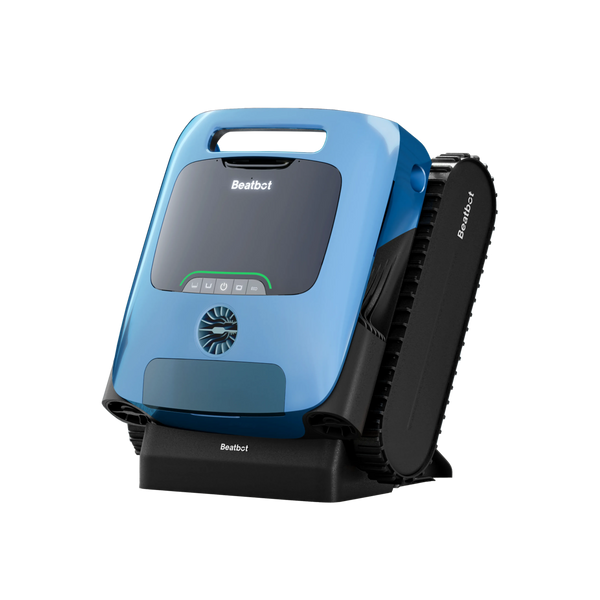
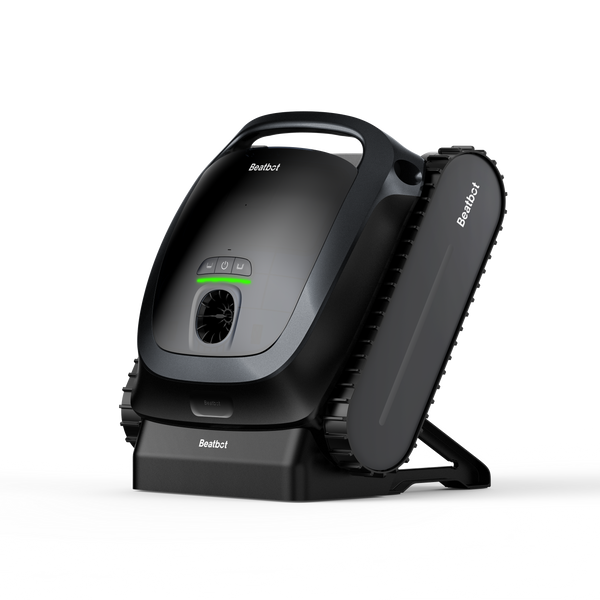
Beatbot offers two cordless robotic pool cleaners built for salt water environments. Both use corrosion-resistant construction and mapping navigation, and both address the specific challenges salt water pools present. Each targets a different combination of the priorities covered above.
Best for Waterline Calcium and Water Clarity: Beatbot AquaSense 2 Ultra
The AquaSense 2 Ultra targets the two most visible salt water pool problems: waterline calcium buildup and fine calcium particulate haze.
Waterline coverage: Dual-pass waterline cleaning scrubs the tile band twice per pass, physically removing calcium deposits and body oil residue that concentrate at the water-air boundary in salt water pools.
Water clarity: The ClearWater natural clarification system automatically disperses a skin-safe, eco-friendly clarifier derived from chitosan during each cleaning cycle, binding fine calcium particles into filter-capturable clusters. This captures the fine calcium precipitation that would otherwise pass through standard filter media and contribute to the persistent haze salt water pool owners often report.
Navigation: HybridSense AI mapping combines AI camera, ultrasonic, and infrared sensors to plan systematic coverage across freeform, curved, or complex pool layouts.
Best for Full Pool Coverage in Demanding Salt Water Pools: Beatbot Sora 70
The Sora 70 targets the most demanding salt water pool cleaning workload: full 5-in-1 coverage, larger pool areas, heavy fine particulate loads, and long-term corrosion resistance.
Corrosion resistance: Titanium safe-charging contacts resist chlorine and salt water corrosion at the highest-risk contact point. The unit has been tested through 480 hours of salt-spray exposure without visible corrosion, verifying long-term durability in salt water environments.
Battery capacity and runtime: A 10,000mAh battery delivers up to 7 hours of water-surface cleaning, 5 hours of floor cleaning, or 4.5 hours of combined floor, walls, and waterline cleaning per charge. This covers pools up to 3,230 square feet in a single session.
Water flow and filtration: 6,800 GPH water flow with a 6L filter basket handles heavy debris loads. The included 150-micron standard filter comes with an optional 3-micron ultra-fine filter that captures fine calcium precipitation, pollen, and algae residue that lower-grade filtration lets slip through.
Coverage tier: 5-in-1 cleaning covers water surface, waterline, walls, floor, and shallow zones down to 8 inches in a single automated cycle. This addresses the calcium waterline band, the fine particulate in the water column, and the mineral scale on the pool floor all in one workflow.
Retrieval: Submarine-inspired floating technology automatically brings the cleaner to the pool edge at cycle end, and SmartDrain releases internal water before pickup to reduce lifting weight. At 22.9 pounds, it sits under the 25-pound threshold for comfortable manual retrieval by hand.
Common Mistakes When Buying a Salt Water Pool Vacuum
Assuming a fresh water pool cleaner works in salt water
Salt water and salt spray corrode exposed metals meaningfully faster than fresh water. Cleaners rated only for fresh water often show visible corrosion at charging contacts, wheels, or motor housings within one to two seasons of salt water use. Confirm the model is explicitly rated for salt water or has undergone salt-spray testing before purchase.
Ignoring the calcium waterline problem
The most visible ongoing challenge in salt water pools is the calcium waterline band that forms as electrolysis-driven calcium precipitates at the water surface. A cleaner without active waterline scrubbing addresses the pool floor and walls but leaves the waterline to weekly manual scrubbing. Look for models with dual-pass waterline cleaning or explicit waterline scrubbing specifications.
Skipping fine filtration for salt water
Salt water pools produce heavier fine particulate loads (calcium precipitation, salt cell residue) than fresh water pools. Standard 150-micron filter baskets miss this material, contributing to a persistent haze that even good chemistry cannot clear. Ultra-fine filtration (3 to 5 microns) captures the fine particulate directly. Salt water pool owners who step up from standard to ultra-fine filtration typically see visibly clearer water within a few cleaning cycles.
Overlooking charging contact material
The charging contact point is the highest-risk single component for salt water corrosion in cordless cleaners. Brass or nickel-plated contacts pit within one to two seasons; titanium contacts resist chlorine and salt water effectively for the full service life of the cleaner. This spec is worth checking before purchase because it directly determines whether the cleaner still charges reliably in year three.
Price Tiers for Salt Water Pool Vacuums
Under $500: entry-level salt water-rated cordless
Cordless robotic cleaners with basic salt water rating, floor-only or basic floor + wall coverage, 60 to 90 minute runtime, and 1,200 to 1,800 GPH water flow. Service life is 3 to 5 seasons in salt water conditions. Suitable for small salt water pools with light debris and no significant waterline concerns.
$500 to $1,000: mid-range cordless
Cordless robotic cleaners with floor and wall coverage, 120 to 180 minute runtime, 2,000 to 2,500 GPH water flow, and 10-micron filtration. Service life is 4 to 6 seasons. Adequate for typical salt water pool ownership without ultra-fine filtration needs or full waterline coverage.
$1,000 to $2,500+: premium cordless with full salt water durability
Cordless robotic cleaners with full 5-in-1 coverage, 10,000mAh+ batteries, 5,000 to 6,800 GPH water flow, ultra-fine filtration (3 microns optional), titanium or noble-metal charging contacts, and verified salt-spray testing (400+ hours). Service life is 5 to 8 seasons with proper maintenance. Justified for salt water pools with visible waterline calcium, persistent haze concerns, larger pool sizes, or owners who want a purchase that lasts across the pool's full salt cell replacement cycle (typically 5 to 7 years).

Maintenance Tips for Salt Water Pool Vacuums
Regular maintenance meaningfully extends salt water pool cleaner service life. A few habits address the specific corrosion and residue risks salt water environments produce.
Rinse the cleaner with fresh water after every cycle. Salt residue left on the housing, wheels, and charging contacts accelerates corrosion over time. A brief fresh water rinse (30 seconds under a garden hose) removes salt before it dries and concentrates on component surfaces.
Wipe the charging contacts dry before every charge. Water on charging contacts, even fresh water, accelerates oxidation at the electrical interface. Dry contacts with a clean cloth before docking the cleaner on the charger.
Empty and rinse the filter basket after every cycle. Salt water pools generate fine calcium particulate that loads the filter faster than fresh water debris. Rinsing removes salt residue and prevents mineral buildup that reduces filter effectiveness over time.
Store the cleaner and charger indoors or under cover. Salt spray reaches surprising distances from the pool edge in windy conditions. Even units rated for salt water benefit from storage away from ongoing salt exposure between uses.
Inspect for early corrosion signs monthly. Look at charging contacts (green or white deposits), wheel axles (rust discoloration), and cable exit points (housing cracks) as early warning indicators. Catching corrosion early allows targeted repair rather than full component replacement.
FAQs
Can I use a regular pool vacuum in a salt water pool?
Only if it is explicitly rated for salt water use. Regular pool vacuums typically use materials rated for fresh water chemistry, which corrode meaningfully faster in salt water. Charging contacts, wheels, cable connectors, and motor housings all show accelerated degradation in salt water. Confirm the model is explicitly salt water-rated or has undergone salt-spray testing before purchase.
Do salt water pools damage pool cleaners?
Salt itself does not damage well-designed pool cleaners; it accelerates corrosion of any exposed metal components not rated for the environment. Cleaners with sealed non-metallic construction, corrosion-resistant fasteners, and chemical-resistant charging contacts (titanium or equivalent) show minimal degradation over 5+ seasons of salt water use. Cleaners built for fresh water only typically show visible corrosion within one to two seasons.
Why does my salt water pool have a white line at the waterline?
The white line is calcium carbonate scale, driven by the electrolysis process that generates chlorine from dissolved salt. Electrolysis raises pH locally at the salt cell, which drives calcium out of solution. Calcium then deposits at the waterline where evaporation concentrates it further. Active waterline scrubbing in the cleaner physically removes this buildup as it forms, keeping the visible line from becoming a permanent feature.
How often should I run a vacuum in a salt water pool?
Two to three times per week during regular use, matching typical fresh water pool cleaning frequency. Higher frequency is helpful in salt water pools with visible calcium buildup or heavy bather use, since consistent cleaning prevents mineral deposits from accumulating to the point where manual intervention becomes necessary.
Does salt water affect how a robotic vacuum operates?
Salt water is denser than fresh water (about 1.025 g/mL versus 1.000), which slightly affects buoyancy and drag. Well-designed salt water-rated cleaners account for this in their motor and drive system tuning. Cleaners rated only for fresh water may show subtly reduced performance in salt water (slower movement, less efficient wall climbing) even before corrosion becomes visible.