Most Popular


 Sora Series


 AquaSense Series

 Skimmer & Bundle

 Retail Edition


 Accessories


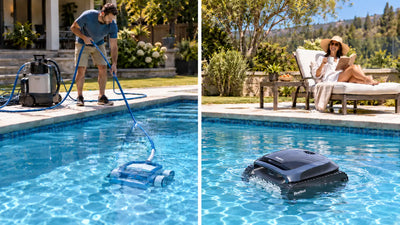
Traditional pool cleaning takes setup. Hoses and long cables need managing. It works, but it gets old. Robotic pool vacuums are smarter and easier to use. Going cordless robotic pool cleaner is the next step.
Before you buy, take a moment to think through these factors.
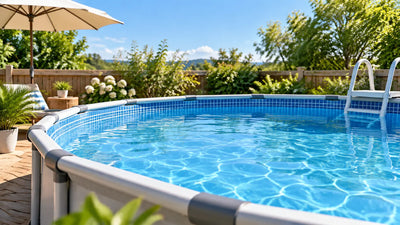
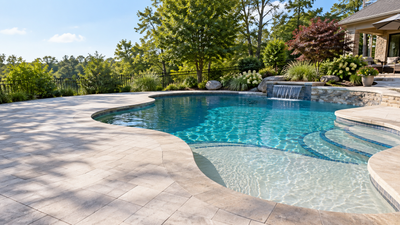
Above ground and in ground pools are different. Pool shape matters. Slopes, deep ends, steps, and shelves change how a cleaner moves. Pool size also plays a role. Bigger or more complex pools need better coverage.
Corded and cordless cleaners feel different to use. Cleaning range decides what the robot can reach. Cycle cleaning time decides how much gets cleaned in one run. Good navigation and AI help the robot clean evenly and avoid getting stuck.
How do you find the best value in a robotic pool cleaner? Read on for a clear breakdown of the key factors.
How Robotic Pool Cleaners Work
A robotic pool cleaner uses its own motor and power source. The motor controls movement and suction. Power comes from a cord or a powerful battery. The robot works independently and does not depend on the pool pump or filter system.
As the robot moves across the pool floor, brushes break up dirt, algae and debris. Suction pulls the debris into an internal filter. Clean water flows back into the pool, while debris stays inside the cleaner.
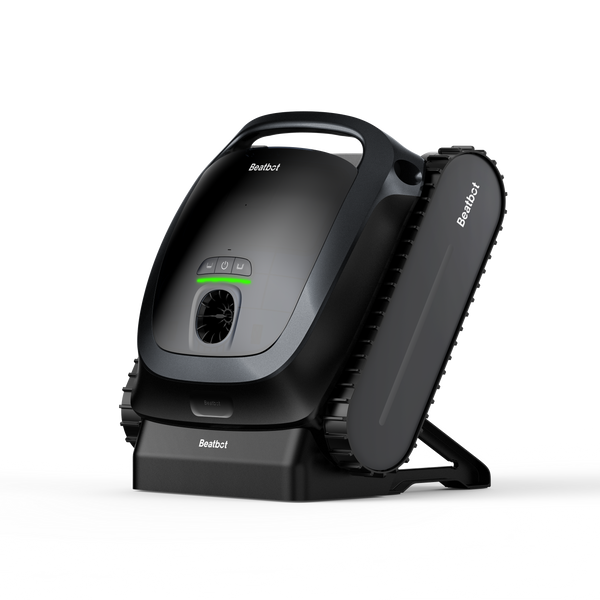
Wheels or tracks move the robot along the floor and up the walls. Sensors help the robot change direction and reduce the risk of getting stuck. Beatbot pool vacuum robots use smarter navigation to clean more evenly and avoid covering the same areas again.
Many modern robotic pool cleaners also offer app-based control. Automatic pool robots from Beatbot include this type of smart control.
The Beatbot robotic pool cleaner can be started or stopped, its cleaning mode selected, and its operating status viewed via a smartphone app.
When a cleaning cycle ends, the robot stops. The filter basket is removed, emptied, and rinsed. The cleaner is then ready for the next run.
Cordless vs Corded Pool Vacuum Robot: What's the Real Difference?
If you've been researching robotic pool cleaners for a while, you‘ve probably noticed how divided opinions are. Some pool owners swear by corded robots, while others say they'll never deal with a cable again.
1. Runtime & Battery Life
A corded robotic pool cleaner runs on constant power. Runtime is not limited. It works well for large pools, usually over 500–600 sq.ft, or long cleaning cycles.
The downside is the cable. Cable drag can reduce turning and wall-climbing efficiency. You also need to manage setup, storage, and cable tangling.
A cordless robotic pool cleaner runs on a battery. Runtime is limited. If navigation is inefficient or paths overlap, the pool cleaner may not finish the job in one cycle, even with a large battery.
When choosing a cordless pool vacuum cleaner, focus on three things:
-
Can it clean the floor, walls, and waterline in one cycle?
-
Does real-world runtime reach 4–5 hours in full-pool mode?
-
Does performance drop late in the cycle, such as failed wall climbing or weak debris pickup?
Models with long battery life, such as Beatbot AquaSense 2 Ultra and Beatbot AquaSense X, both use a 13,400 mAh battery. They support up to 10 hours of surface cleaning in one run. This helps cover larger pools with fewer interruptions. Both models also support fast charging in about 4.5 hours, balancing long runtime and daily efficiency.
2. Filtration & Suction Performance
Corded pool vacuum cleaners usually deliver stable suction. They handle heavy debris like leaves, seeds, and dense waste for long periods.
Most use large filter baskets or bags. They tolerate large debris well and do not fail immediately when partially clogged. However, finer filtration increases clogging risk and needs frequent manual cleaning.
When buying a corded pool cleaner, suction numbers matter less. Focus on how the filtration system handles different debris and how performance drops after clogging.
A cordless robotic pool cleaner has power limits. It relies more on water flow design and filtration efficiency.
Many cordless models lose suction quickly when filters clog. Some stop cleaning early. Anti-clog design and stable water flow are critical.
Check three points before buying:
-
Can it pick up common debris like leaves, sand, and hair?
-
Is filtration balanced with suction (too fine clogs, too coarse leaks debris)?
-
What happens after clogging—reduced suction or full shutdown?
Beatbot AquaSense X and Beatbot AquaSense 2 Ultra are reliable cordless options. Both use a Dual-Suction Ports. They collect debris from the surface and pool floor at the same time. This reduces clogging from concentrated debris intake and keeps cleaning uninterrupted.
In terms of suction:
-
AquaSense X (25.7 m³/h) suits pools with more leaves and heavy debris.
-
AquaSense 2 Ultra (20.8 m³/h) is ideal for daily home use, handling fine sand and dust more consistently.
3. Durability & Build Quality
Corded robotic pool cleaners are usually larger and heavier. They have more internal space and handle long operating hours well.
The weak point is the external hardware. Power cables and connectors are the main risk areas. Cables stay underwater, get dragged, and bend repeatedly. Over time, this can cause aging or seal failure.
In large pools or high-load use, the robot body may stay stable. Cable wear becomes the biggest durability risk.
Cordless robotic pool cleaners have a compact design. There is no power cable wear.
Durability depends on build quality and materials. Key factors include body sealing, waterproof protection for the battery and motor, and resistance to UV, pool chemicals, and corrosion.
Under heavy use or long cycles, poor sealing can lead to performance loss or shorter lifespan.
Beatbot robotic pool cleaners use corrosion-resistant materials. They resist deformation, UV exposure, pool chemicals, and saltwater. This supports year-round operation.
4. Safety
Corded pool vacuum cleaners rely on external power. If the cable stays underwater too long, gets pulled, or is damaged, electrical risk increases.
Users must manage cable placement and storage. Cable aging requires regular attention.
Cordless robotic pool cleaners have no external power cable. Electric shock risk during use is very low.
They are also easier to manage. If the robot gets stuck, overheats, or detects a fault, it usually stops automatically instead of forcing operation.
Beyond electrical safety, Beatbot AquaSense 2 Ultra and Beatbot AquaSense X extend safety to water quality. Their AquaRefine clarification system uses eco-friendly materials. With ClearWater™ technology, it reduces oils, metal ions, and fine particles. This helps prevent scale buildup. Water stays clearer and more skin-friendly.
5. Smart Features
Most corded robotic pool cleaners offer basic intelligence. They use limited sensors for direction, boundary detection, and simple obstacle avoidance.
Navigation is usually fixed or semi-random. Coverage relies on long runtime rather than accurate planning. The power cable often affects movement and turning. This leads to more repeat passes and missed areas.
In complex pool layouts, corded pool cleaners clean by running longer, not by navigating smarter.
Smart navigation is a core feature of a cordless robotic pool cleaner. Because runtime is limited, efficiency matters more.
These models use more sensors to detect pool shape, walls, steps, and waterlines. Path planning reduces overlap and missed spots. Some cordless pool cleaners use adaptive logic. Routes change based on cleaned areas and real-time conditions, not fixed loops.
Beatbot AquaSense X and Beatbot AquaSense 2 Ultra are high-intelligence cordless robotic pool cleaners.
AquaSense X maps the pool automatically. It climbs and cleans raised platforms. Ultrasonic, infrared, and AI camera navigation work together. In low light, dual front LEDs turn on automatically. This helps find missed areas and trigger targeted re-cleaning.
AquaSense 2 Ultra uses AI pool mapping and a front AI camera. It learns pool shape and detects steps, slopes, and high-debris zones. In areas with heavy leaves or fruit, it stays longer. AI Fast Mode focuses on key areas and shortens cleaning time.
Both models use HybridSense® and CleverNav™ technology. Cleaning follows planned paths, not random movement.
6. Ease of Use & Setup
Corded pool vacuum cleaners require power connection and cable setup. First use includes checking cable length and entry path to reduce tangling.
Most start via onboard buttons or an external control box. Some models support app control. After cleaning, the cable must be coiled and stored.
The robot body is usually heavy. Lifting and placement take more effort. In fixed setups, the workflow is stable but less flexible.
Cordless robotic pool cleaners need no cable setup. Drop them in the pool and start.
Control is usually via buttons or an app. Initial setup focuses on charging and mode selection. Without cables, storage is easier. The lighter body allows one-person handling and faster setup.
Beatbot AquaSense X is highly automated. After cleaning, place it in the AstroRinse™ self-cleaning station. The filter rinses automatically and the debris bin empties. This reduces manual cleaning.
Large debris capacity and disposable debris bags reduce cleaning frequency. When surface cleaning ends or battery runs low, the robot returns to the pool edge. It docks above the water and stays afloat even when powered off. SmartDrain auto-drains water for easier lifting.
Beatbot AquaSense 2 Ultra also requires no cable setup. It can auto-park at the pool edge. In surface mode, it can be recalled with one tap in the app. The self-flushing filter system reduces clogging during operation. Mid-cycle maintenance is rarely needed.
7. Maintenance & Cost
Corded pool cleaners usually have a lower upfront price. Maintenance focuses on filter and brush cleaning.
Long runtimes mean more frequent cleaning. Filters and brushes are standard wear parts. Replacement cost is predictable and parts are widely available.
There is no battery replacement cost. However, power cables and connectors may need repair or replacement over time.
Cordless robotic pool cleaners usually cost more upfront. Maintenance still centers on filters and brushes.
Higher efficiency often means less frequent cleaning. Most models use quick-release filters for easier rinsing.
Long term cost differences come from the battery. Batteries are wear components and may need replacement after years of use. Parts availability depends more on brand support.
Beatbot offers three year replacement coverage for faulty robots. Most brands only provide a two year warranty.
Which One Right for You?
-
Corded robots clean through time and repetition.
-
Cordless robotic pool cleaners clean through efficiency and ease of use.
For many residential pool owners, the cleaner that's easier to deploy is the one that gets used more often—and over time, consistency matters more than raw specs.
Cordless vs Corded Pool Vacuum Robots
|
Aspect |
Corded Pool Vacuum Robot |
Cordless Robotic Pool Cleaner |
|
Power source |
Continuous wired power |
Built-in rechargeable battery |
|
Runtime |
Virtually unlimited |
Limited by battery capacity |
|
Performance |
Always stable |
Balanced for power & efficiency |
|
Setup & use |
Cable handling required |
Drop in and start |
|
Cleaning frequency |
Often less frequent |
Typically more frequent |
|
Cable issues |
Tangling, wear, replacement |
None |
|
Best for |
Large pools, long deep cleans |
Residential, routine cleaning |
Is a Pool Robot Right for Your Pool?
The size, shape, and structure of your pool all affect where the robot spends time and which areas get the most attention.
Inground vs Above Ground
Inground pools have complex layouts. They often include deep and shallow zones, steps, and corners. Cleaning must cover the pool floor, walls, and waterline.
A robotic pool cleaner for inground pools needs stable, continuous suction. Reliable wall climbing is essential. Advanced navigation helps avoid repeat passes and missed areas.
In this setting, the robot acts as the primary pool cleaner. It replaces manual cleaning for long-term maintenance.
Above-ground pools have simpler structures. Most have regular shapes. Cleaning mainly focuses on the pool floor.
A pool vacuum cleaner here should be practical and easy to use. Lightweight design matters. It must be liner-safe and able to remove leaves and sand.
Complex navigation and strong wall climbing are not required. The robot works as a daily labor-saving pool cleaner.
Our Beatbot AquaSense X works with all pool shapes and surface types. It delivers stable, efficient cleaning in both in ground and above ground pools.
Pool Size and Shape
Pool size affects whether a single run feels finished. Mid-sized residential pools are often a “one-cycle” scenario; very large pools are where efficiency becomes obvious—especially for a cordless robotic pool cleaner, where every extra correction costs battery.
Pool shape directly affects how a robotic pool cleaner moves. Straight runs allow consistent motion; curves, tight corners, and freeform layouts increase micro corrections and repeated paths. This leads to repeated paths and missed areas if navigation is weak.
Beatbot AquaSense 2 Ultra is built for complex pool layouts. With advanced AI Pool Mapping, it learns your pool's shape, including curved steps, deep slopes, and platforms. Dynamic Path Planning memorizes key structures and optimizes routes, delivering precise, efficient coverage—even in large or irregular pools.
Steps, Shelves, and Built-In Features
Steps, sun shelves, beach entries, and benches break continuous movement. Most robots will probe these areas briefly, then redirect—because they're optimized for floors and walls, not shallow transitions.
Where models differ is how long they keep trying. Less refined robots repeat the same maneuver, burning time and battery without improving coverage. AquaSense 2 Ultra limits repeated correction attempts and redirects earlier when progress stalls, preserving usable cleaning time for productive surfaces. Touch-ups may still be needed, but wasted movement is reduced—exactly what you want from cordless cleaning.
Robotic Pool Cleaners vs Traditional Pool Vacuums in Cleaning Coverage
Traditional pool vacuums depend on time and circulation to eventually cover most areas. Robotic pool cleaners rely on controlled movement and sustained contact to clean more evenly and consistently.
|
Pool Area |
Traditional Pool Vacuum |
Robotic Pool Cleaner |
|
Pool Floor |
Relies on water flow or manual guidance, often leaving uneven coverage and missed spots. |
Actively controls movement, delivering more even floor coverage in a single cycle. |
|
Pool Walls |
Wall contact is brief and inconsistent, depending heavily on hose position. |
Maintains steady wall contact, allowing longer and more effective scrubbing passes. |
|
Waterline |
Usually touches the waterline once before moving on, with little visible impact. |
Treats the waterline as a target zone, using repeated, controlled passes to remove buildup. |
|
Surface Debris |
Not designed to handle floating debris; requires separate skimming. |
Some models can skim the surface during cycles, reducing floating debris. |
|
Steps & Sun Shelves |
Often skipped due to hose tension and poor traction. |
Can detect shallow areas and clean steps or shelves when conditions allow. |
|
Corners & Edges |
Cleaned only by chance overlap or circulation flow. |
Repeated brush contact helps keep corners and edges cleaner over time. |
|
Overall Consistency |
Results vary from run to run and improve slowly over time. |
Delivers more predictable, repeatable results with fewer cycles. |
If you're mainly looking to keep the pool from getting dirty, most robotic pool cleaners can help. If you want cleaning that feels predictable, even, and repeatable, the way coverage is executed matters far more than the coverage list itself.
How Navigation and Technology Affect Pool Cleaning
When a pool robot seems to be working but still leaves uneven areas after a cycle, the issue is rarely suction. More often, it comes down to navigation.
Random Movement vs Smart Navigation
Robots that rely on random movement clean by reacting—move until they hit a boundary, turn, and repeat. Given enough time, most areas eventually get touched, but a single cycle often includes repeated paths and uneven attention.
Smart navigation takes a more deliberate approach. Instead of relying on chance, the robot guides longer paths, reduces unnecessary turns, and spreads cleaning time more evenly across the pool.
Why Some Robots Feel Busy but Miss Spots
Many pool robots rely on reactive movement. They move forward, hit a boundary, turn, and continue. Over time, most of the pool gets covered—but not evenly.
In real use, this often looks like:
-
The pool improves, but rarely feels finished
-
Walls are cleaned in patches rather than edge to edge
-
A second cycle feels necessary more often than expected
In cordless robots, this matters even more. Every unnecessary turn quietly eats into usable cleaning time.
What Better Navigation Changes
More controlled navigation shifts the robot from reacting to actively managing where it cleans next.
With AquaSense X, movement is guided to reduce overlap and extend each pass. Instead of bouncing quickly between zones, the robot commits to longer, more stable paths—especially along walls and the waterline—resulting in noticeably more even coverage within a single cycle.
AquaSense 2 Ultra builds on this by adapting its path as it cleans. Using AI Pool Mapping, it recognizes pool shape, slopes, steps, and debris-prone areas, then adjusts how densely it cleans each zone. Over repeated runs, this leads to more complete coverage with fewer reruns.
Are Expensive Pool Robots Worth the Money?
Robots that clean unevenly often lead to extra cycles and manual touch-ups, which quietly add time and attention to ownership. Over weeks and months, that effort becomes part of the real cost.
Higher end robots aim to reduce involvement. More consistent cleaning and fewer wasted movements usually mean fewer reruns and less manual correction.
A simple test of long term value is this: after a few weeks, do you still feel the need to step in? If the answer is rarely, the robot tends to feel worth the investment.
Conclusion
The right robotic pool cleaner is the one that fades into the background.
When cleaning feels automatic and results stay consistent, you get your time back—and that's what matters most in the long run.
At Beatbot, robotic pool cleaners are designed for that kind of everyday reliability.
If you'd like to learn more, you can browse the current lineup and find the right fit for your pool.
FAQ
How often should you run a robotic pool cleaner?
Most pools do well with 2–3 cleanings per week. Pools with heavy use or debris may benefit from more frequent runs.
Where should you buy a robotic pool cleaner?
Buy from the Beatbot's official website or authorized retailers to ensure warranty and support.
How does a robotic pool cleaner know where to go?
Basic models move randomly, while advanced robots use sensors and navigation systems to clean more evenly.
Can you swim with a robotic pool cleaner in the pool?
No. Always remove swimmers before running the robot.
Can you leave a robotic pool cleaner in the pool?
It's best to remove it after each cycle to protect the battery and extend its lifespan.