

 Flagship


 Sora Series


 AquaSense Series


 Skimmer & Bundle

 Retail Edition


 Accessories



 Extended Warranty


If the water feels warm, flat, and closer to a bath than a backyard escape, the fastest way to cool it down is with a pool chiller or reverse-cycle heat pump. For a more affordable fix, start with nighttime circulation, an aerator or fountain, and shade during the hottest part of the day.
Most swimmers are comfortable when pool water stays in the upper 70s to mid-80s; the Model Aquatic Health Code lists 79°F to 86°F as a comfortable range for moderate activity. Once pool water rises above 88°F, many swimmers start to find it uncomfortable. In the low 90s, it can feel downright steamy.
The right cooling method depends on where you live: dry climates respond well to evaporative cooling, while humid regions often need shade or mechanical cooling to make a real difference.
6 Ways to Cool Down a Pool Fast
The sun has been working on it all day, the cover has been holding in heat, and warm nights give the water almost no chance to cool down. By the time it reaches the low 90s, a quick swim can feel less refreshing and more like stepping into a giant bathtub.
| Cooling Method | Best For | Speed | Cost |
|---|---|---|---|
| Pool chiller or reverse-cycle heat pump | Fast, controlled cooling | Fast | High |
| Aerator or pool fountain | Low-cost cooling | Medium | Low |
| Running the pump at night | Supporting other methods | Slow to medium | Low |
| Shade sails or umbrellas | Reducing afternoon heat | Slow | Medium |
| Removing a solar cover | Letting trapped heat escape | Slow | Free |
| Ice | Short-term emergency cooling | Temporary | High |
For most pool owners, the best starting point is simple: remove the solar cover, follow a smart summer pool pump runtime, and add an aerator or fountain.If the pool still stays too warm, then a pool chiller or reverse-cycle heat pump becomes the more reliable solution.
Warm water can make pollen, leaves, sunscreen residue, and other organic debris break down faster, which makes regular pool debris cleanup more important during hot weeks. If that debris sits too long, the pool can turn cloudy, water balance becomes harder to manage, and algae has a better chance to grow.
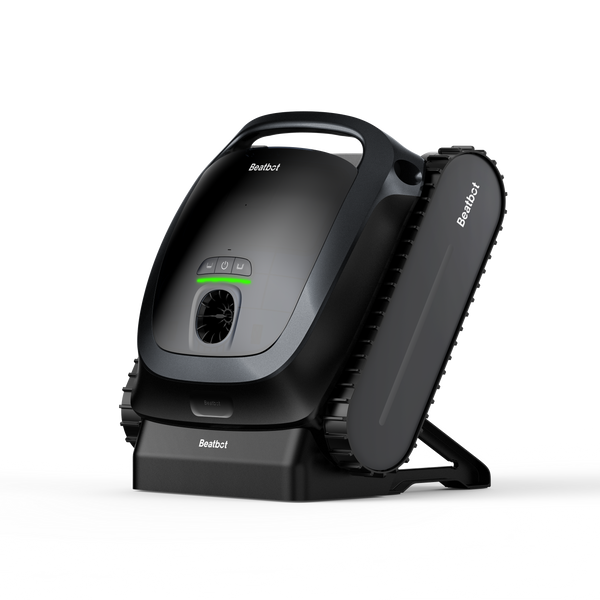
Regular cleaning matters even more during hot weeks. For smaller pools or shallow areas, the Beatbot Sora 70 review shows why it is a practical, high-value option for everyday floor cleaning and spots like sun shelves or shallow ledges.
For larger pools, Beatbot AquaSense 2 Ultra is built for a more complete clean. Its AI-powered system helps improve cleaning coverage and efficiency, while handling the floor, walls, waterline, and surface. It is a better fit when the pool collects more leaves, pollen, and floating debris in hot weather, especially if you need a pool robot for pollen during spring and summer.
Beatbot also offers different cordless robotic pool cleaner options, so pool owners can choose a model that fits their pool size, debris level, and cleaning needs.
Use an Aerator or Pool Fountain at Night
An aerator is one of the easiest and cheapest ways to cool down pool water. It connects to a return line and sprays water into the air. As the water breaks into droplets, heat escapes through evaporation before the water falls back into the pool.
This method works best at night because the air is cooler. Running an aerator during the hottest part of the afternoon is less effective, especially if the air is humid. For better results, run the aerator from late evening to early morning when the water can lose heat more easily.
A pool fountain works in a similar way. It may not cool as efficiently as a dedicated aerator, but it can still help lower water temperature while adding movement and visual appeal to the pool.
Aerators are especially useful in dry climates such as Arizona, Nevada, inland California, and parts of Texas. In humid climates, evaporation slows down, so the cooling effect may be smaller.
Run Your Pool Pump Overnight
Running your pool pump at night can help cool the water, especially when paired with an aerator, fountain, or water feature. The pump keeps water moving and prevents the warm surface layer from sitting still.
On its own, nighttime pump circulation may only lower the pool by a small amount. But when combined with a fountain or aerator, it becomes much more effective. The best schedule is usually late evening through early morning, when outdoor temperatures are at their lowest.
If your pool feels too hot during the day, avoid relying only on daytime circulation. Moving hot water under direct sunlight will not do much. Nighttime operation gives the pool a better chance to release stored heat.
Install a Pool Chiller or Reverse-Cycle Heat Pump
A pool chiller is the most reliable way to cool down a pool when the water stays too warm for days or weeks. Unlike aerators and fountains, a chiller actively removes heat from the water.
A reverse-cycle heat pump can also cool the pool by pulling heat out of the water and releasing it into the air. This gives you more control because you can set a target temperature and maintain it through the hottest part of summer.
This is usually the best option for very hot or humid areas, such as Florida, Houston, New Orleans, or coastal regions where evaporation does not work as well. The main downside is cost. A pool chiller or reverse-cycle heat pump costs more to install and operate than a fountain or aerator.
If your pool only feels too warm for a few days each year, a chiller may not be necessary. But if the pool regularly sits above 90°F, it may be worth the investment.
Add Shade Around the Pool
Shade helps cool a pool by blocking direct sunlight before it heats the water. This does not cool the pool as quickly as a chiller, but it helps reduce heat gain during the hottest part of the day.
Good shade options include:
-
Shade sails
-
Patio umbrellas
-
Pergolas
-
Poolside cabanas
-
Trees or tall landscaping
Shade is especially useful for pools that receive strong afternoon sun. Even partial shade over the west or south side of the pool can help reduce daily heat buildup.
For the best result, combine shade with nighttime circulation. Shade slows down daytime heating, while the pump, aerator, or fountain helps release heat overnight.
Remove Solar Covers During Hot Weather
Solar covers are useful when you want to keep pool water warm, but they can work against you during a heat wave. A solar cover traps heat and prevents the pool from cooling naturally at night.
If your pool water is already too hot, remove the solar cover and leave the pool uncovered overnight. This allows heat to escape from the water surface.
A reflective or light-colored cover may help block sunlight during peak afternoon hours, but it should not stay on all night if your goal is cooling. In hot weather, the basic rule is simple: block sun during the day if needed, but let the pool breathe at night.
Can You Put Ice in a Pool to Cool It Down?
Yes, ice can technically cool down pool water, but it is usually not practical. A backyard pool holds thousands of gallons of water, so a small amount of ice will not make a noticeable difference.
To create a real temperature drop, you would need a very large amount of ice. That can be expensive, hard to transport, and short-lived. Once the ice melts, the pool can warm back up quickly.
Ice may help for a small pool or a short-term event, but for most residential pools, an aerator, fountain, shade, or pool chiller is a better solution.
Pool Cooling Methods for Different U.S. Climates
Climate is one of the biggest reasons one pool cooling method works well for one homeowner but barely helps another. A fountain, aerator, or overnight pump schedule may work well in dry regions, but feel much less effective in humid areas where evaporation is slower.
Dry Heat: Arizona, Nevada, and Inland California
In dry climates, evaporative cooling usually works best because the air can absorb more moisture from the pool surface. That makes aerators, fountains, waterfalls, and return-jet sprayers more useful.
For pools in places like Arizona, Nevada, and inland California, the best low-cost setup is usually:
-
Run an aerator or fountain overnight
-
Keep the pool pump running at night
-
Add shade during peak afternoon sun
Timing matters. A fountain running during a hot afternoon may not cool much, but the same fountain running overnight can help the pool release heat more effectively. This method can increase evaporation, so you may need to top off the pool more often and monitor water chemistry more closely.
Humid Heat: Florida, Houston, New Orleans, and the Gulf Coast
In humid climates, evaporative cooling is less reliable because the air already holds a lot of moisture. That means a fountain or aerator may only create a small temperature drop in places like Florida, Houston, New Orleans, or other Gulf Coast areas.
For these regions, shade and mechanical cooling are usually more important. A pool chiller or reverse-cycle heat pump is the most reliable option if the pool regularly stays too warm in summer. Shade sails, umbrellas, pergolas, and landscaping can also help reduce how much heat the pool absorbs during the day.
A fountain can still help in humid areas, especially at night, but it should not be the only cooling method if the pool stays in the upper 80s or low 90s for several days.
Full Sun Backyards
A pool that gets direct sun from morning to late afternoon will heat up quickly, no matter where it is located. In this case, shade should be treated as a core cooling method, not just a comfort feature.
Shade sails, patio umbrellas, pergolas, cabanas, and trees can reduce heat gain during the hottest part of the day. This works best when paired with nighttime circulation or an aerator, because shade limits daytime heating while the pool releases heat overnight.
If your pool has a dark finish, shade becomes even more important because darker surfaces absorb more sunlight.
Covered Pools During Hot Weeks
Solar covers are useful when you want to keep pool water warm, but they can make the pool too hot during summer. If the water feels like a bathtub, remove the solar cover during hot weeks, especially overnight.
Leaving the pool uncovered at night allows heat to escape from the water surface. If you use a cover during the day to block debris or sunlight, remove it after sunset so the pool can cool naturally.
Above Ground Pools
Above-ground pools often heat up faster than in-ground pools because the walls are exposed to warm air and direct sunlight. Their smaller water volume also means the temperature can rise more quickly.
For above-ground pools, the best low-cost setup is shade, nighttime circulation, and a small fountain or return-jet spray attachment. If the pool gets full afternoon sun, even partial shade can make a noticeable difference.
Quick Climate Based Recommendation
Dry climates respond best to evaporative cooling. In places like Arizona, Nevada, or inland California, a simple aerator or fountain running overnight can noticeably lower water temperature, especially when paired with nighttime pump circulation and some daytime shade.
Humid regions such as Florida, Houston, and the Gulf Coast usually need a different approach. Because evaporation works less efficiently in heavy humidity, shade structures and mechanical cooling systems tend to deliver more consistent results than fountains alone.
Pools that sit in direct sun all day heat up quickly regardless of location. Adding shade often makes a bigger difference than upgrading cooling equipment, particularly for pools with dark finishes that absorb more heat.
Solar covers can also trap unwanted heat during peak summer weeks. Removing the cover at night helps the pool release stored heat naturally and prevents the water from feeling overly warm.
Above-ground pools warm faster than most in-ground pools due to their exposed walls and smaller water volume. A combination of partial shade, overnight circulation, and a basic fountain attachment is usually the most practical low-cost setup.
What Should You Avoid When Cooling a Pool?
The biggest mistake is leaving a solar cover on during a heat wave. Solar covers are engineered to trap heat for off-season use, so deploying one in July works directly against the goal. Another common error is adding ice: a 20,000-gallon pool would need roughly 10,000 pounds of ice to drop 10°F, the effect dissipates within hours, and the meltwater throws calcium and pH out of range.
Draining and refilling with cold tap water drops temperature quickly but resets water chemistry, wastes a large volume of treated water, and in many municipalities triggers summer usage restrictions or penalty-tier billing. Topping off with a garden hose during peak heat does almost nothing: the small volume added gets absorbed by the pool's thermal mass within an hour. Cooling is a sustained intervention, not a one-time pour.
FAQs
What is the fastest way to cool down a pool?
The fastest way to cool down a pool is to use a pool chiller or reverse-cycle heat pump. For a cheaper option, run an aerator or fountain at night to help release heat through evaporation.
How can I cool down my pool overnight?
Run your pool pump with an aerator, fountain, or return-jet spray at night. Cooler night air helps the water lose heat faster. Also remove any solar cover so heat can escape.
Will putting ice in a pool cool it down?
Yes, ice can cool pool water, but it is usually not practical. Most pools need a large amount of ice to make a noticeable difference, and the effect is temporary.
What should I do if my pool is too hot?
Remove the solar cover, run the pump at night, and use an aerator or fountain. Adding shade can also help. If the pool stays hot, consider a pool chiller.
Does running a pool pump at night cool the water?
Yes, but the effect is usually small unless the pump is paired with an aerator, fountain, or water feature. Nighttime circulation helps move warm water and release heat.
Does a pool fountain cool the water?
Yes, a pool fountain helps cool water by spraying it into the air and increasing evaporation. It works best at night or early morning, especially in dry weather.
Is a pool chiller worth it?
A pool chiller is worth it if your pool often feels too warm in summer. It costs more than a fountain or aerator, but it provides more reliable cooling.
How much can an aerator cool a pool?
An aerator can lower pool temperature by a few degrees, depending on the weather, humidity, and runtime. It usually works best at night in dry climates.


