Most Popular


 Sora Series


 AquaSense Series

 Skimmer & Bundle

 Retail Edition


 Accessories


Maintaining an Intex pool is a steady weekly routine. Because Intex pools rely on smaller pumps and cartridge filters than permanent in ground pools, they need closer attention to circulation, filtration, and water chemistry to stay clear, especially through summer.

How to Maintain an Intex Pool Step by Step
Follow these eight steps on a weekly cycle.
Frequency during swim season:
|
Task |
Frequency |
|---|---|
|
Test the water |
2 to 3 times a week |
|
Balance alkalinity and pH |
As needed after testing |
|
Check chlorine level |
2 to 3 times a week |
|
Shock the pool |
Weekly |
|
Skim and brush |
Daily |
|
Run the pump |
8 to 12 hours daily |
|
Rinse the filter cartridge |
Weekly |
|
Vacuum the pool |
As needed (after rain, algae recovery, end of season) |
Hot weather, heavy use, and frequent rain push these frequencies up.
What Supplies Do You Need to Maintain an Intex Pool?
Keep the basics on hand. Most Intex pool owners need test strips or a liquid test kit, chlorine tablets or liquid chlorine, a floating chlorinator, pool shock, pH increaser, pH reducer, alkalinity increaser, a nylon pool brush, a hand skimmer, replacement filter cartridges, a manual vacuum head with hose and pole, and a pool cover.
You do not need every chemical every week; testing tells you what to add.
Step 1: Test the Water Two to Three Times a Week
Start every maintenance session by testing the water. Use test strips or a liquid test kit and check three things: pH, free chlorine, and total alkalinity. The whole test takes under a minute and tells you what to adjust.
Soft-sided pools drift out of balance faster than larger in ground pools because they hold less water relative to use. Smaller Intex pools may need testing closer to daily during peak summer.

Step 2: Balance Alkalinity, Then pH
Adjust alkalinity first, then pH. Target total alkalinity between 80 and 120 ppm and pH between 7.4 and 7.6. Alkalinity acts as a buffer that keeps pH from swinging wildly, so getting it into range first makes pH far easier to hold steady.
If alkalinity is low, add an alkalinity increaser and retest after the pump has circulated it. Once alkalinity sits in range, correct pH: a pH reducer brings down water that reads too high, and an increaser raises water that reads too low.
Chlorine won't sanitize effectively in water with the wrong pH. Two slower-moving levels are worth checking monthly: calcium hardness, ideally 200 to 400 ppm, and cyanuric acid, the stabilizer that keeps sunlight from burning off your chlorine too fast.
Step 3: Keep Chlorine Steady at 1 to 3 ppm
Maintain a constant free chlorine level of 1 to 3 ppm. Steady chlorine kills bacteria and stops algae from taking hold; chlorine that swings between too high and too low lets the water turn cloudy.
The most reliable method for a soft-sided pool is a floating chlorinator loaded with slow-dissolving 1-inch or 3-inch tablets. Most small to mid-size Intex pools need only a fraction of a tablet at a time, so let the float meter the dose out gradually and top it off when the tablets dissolve. Never drop tablets directly onto the liner, since concentrated chlorine sitting against vinyl can bleach or damage it.
Step 4: Shock the Pool Once a Week
Shock your Intex pool weekly to oxidize bacteria, algae, and chloramines, the bound-up chlorine compounds that cause a strong chemical smell and stinging eyes.
Add shock in the evening so sunlight doesn't burn it off, and run the pump for several hours afterward to distribute it. Wait until free chlorine falls back into the 1 to 3 ppm range before anyone swims. After a heat wave, heavy rain, or a crowded weekend, an extra shock is worth it.
Step 5: Skim and Brush the Surfaces
Remove debris before it sinks. Skim floating leaves, grass, and bugs daily with a hand skimmer, and brush the floor and walls to lift settled dirt back into the water where the filter can catch it. Use a nylon-bristled brush, since stiffer bristles can scratch or tear a vinyl liner.
Once debris sinks and decomposes, it consumes chlorine and feeds algae, turning a clear pool green. Removing it while it still floats is far less work than vacuuming it off the bottom later.

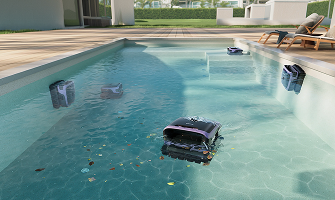
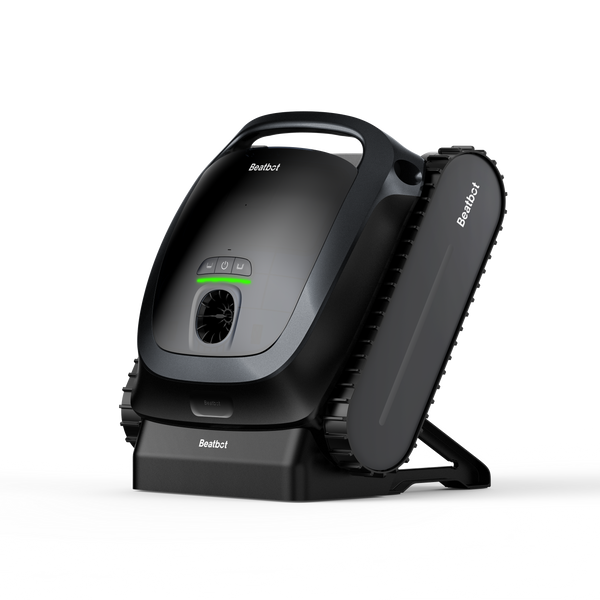
Manual skimming and brushing are the first chores to slip on a busy week. A cordless robotic pool cleaner like the Beatbot Sora 70 handles both in a single cycle. Its industry-first JetPulse water-surface cleaning uses dual converging jets to pull leaves, pollen, and surface debris inward, handling daily skimming on its own.
The same run also covers the floor, walls, waterline, and shallow areas as low as 8 inches. When cleaning finishes, smart water-surface parking floats it to the pool wall.
Step 6: Run the Pump 8 to 12 Hours a Day
Run your Intex pump long enough to circulate the full pool volume each day. For many home setups, that means about 8 to 12 hours, but larger pools, hot weather, and heavy use may require more.
Intex pumps are quieter and lower-powered than in-ground systems, so they move water more slowly and need more hours to do the same work. Time the pump for the warmest or busiest part of the day, when chlorine demand and swimmer use are highest.
Step 7: Rinse the Filter Cartridge Weekly
Rinse your cartridge filter at least once a week, and replace it when rinsing no longer restores good flow. The cartridge is the entire filtration system on most Intex pools, so its condition directly controls how clear your water stays.
To clean it, turn off the pump, remove the cartridge, and rinse it thoroughly with a garden hose, working the water between the pleats to flush out trapped dirt.
For a deeper clean, soak it periodically in a filter cleaning solution to dissolve oils and buildup that a hose cannot remove. Cartridges are consumable, so expect to replace them every few weeks of heavy use rather than nursing a gray, collapsed one through the season.
Step 8: Vacuum the Pool When Needed
Vacuum the pool whenever sediment builds up on the floor: after heavy rain, after a shock treatment that leaves dead algae behind, and at the end of the season before closing. Skimming and brushing won't catch fine material that settles to the bottom.
The standard Intex setup uses a manual vacuum head, a telescoping pole, and a vacuum hose that connects to the pool's strainer connector or skimmer intake. Walk the head slowly across the floor while the pump pulls the debris through the filter.
It works, but it is slow on a soft-sided pool where the floor flexes, and the cartridge clogs quickly under a heavy vacuum load, so expect to rinse it more than once during a thorough vacuum session.

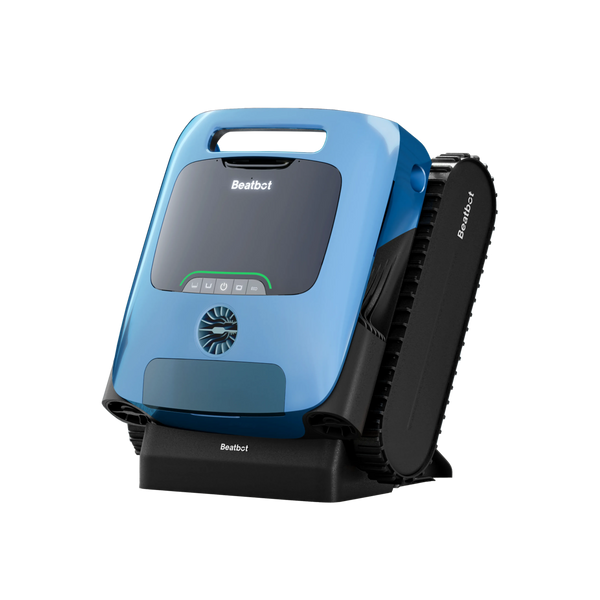
A cordless robotic pool cleaner like the Beatbot Sora 30 takes vacuuming off your hands. It moves across the floor, walls, and waterline with 6,800 GPH of suction, and its 5L basket holds enough debris to finish a heavy vacuum job without stopping mid-cycle.
When it finishes, smart water-surface parking floats it to the pool wall, and SmartDrain releases the internal water, so lifting the cleaner out is a one-handed job.
How Do You Manage the Water Level in an Intex Pool?
Water level changes in soft-sided pools affect chemistry directly. Heavy summer rain dilutes chlorine and alkalinity in a single afternoon, hot, dry days can evaporate an inch or more, and active swimming sends water out as splash-out. After any major level change, retest the water before adding chemicals.
Keep the water at the manufacturer's marked fill line on the pool wall, which usually places it at the skimmer's working height. Below that, the pump risks pulling air; above it, the skimmer can't reach floating debris. Top off with a garden hose when the level drops, and let the new water mix in for a couple of hours before retesting.
If the pool loses noticeably more than half an inch per day in mild weather, the loss is probably a leak rather than evaporation. Run a bucket test to confirm: float a bucket of water in the pool, mark the levels inside and outside the bucket, and check after 24 hours.
If the outside level drops faster, the pool is leaking. On Intex pools, leaks usually trace to a punctured liner or a loose fitting at the pump connections, both of which the Intex repair kit can handle.
Should You Use a Cover on Your Intex Pool During Summer?
A cover is one of the cheapest improvements for a soft-sided pool. It cuts evaporation, keeps leaves and bugs out, and protects chlorine from sunlight.
A solar cover, also called a bubble cover, floats on the water surface and traps heat from the sun, raising water temperature by several degrees over a few sunny days. It also cuts evaporation by 90% or more, which means less topping off and steadier chemistry. Use one when the pool isn't in active use for more than a few hours, especially overnight.

A debris cover sits across the top of the pool and keeps leaves, dust, and pollen out between swims. It doesn't heat the water, but it sharply reduces what your skimmer and filter have to deal with. If your Intex pool sits under trees or near a lawn, a debris cover saves more time than it costs.
You don't need both. Pick whichever solves the bigger problem in your yard, heat retention or debris.
What Are Common Intex Pool Problems and How Do You Fix Them?
Most Intex pool problems trace back to one of five recurring issues.
Foaming on the water surface usually means high levels of oils, lotions, or low-quality algaecide. Skim off as much foam as possible, run the pump on its highest setting, and switch to a polymer-based algaecide if you've been using a cheap copper-based one that foams. A water change is sometimes the only fix if dissolved solids have climbed too high.
Low pump flow is almost always caused by a clogged filter cartridge or an air leak at the hose connections. Turn off the pump, rinse the cartridge thoroughly, and check the hose clamps for tightness. If the flow doesn't return after a fresh cartridge, gurgling sounds at the pump usually mean air is entering through a loose fitting; tighten or replace the seal.
Liner wrinkles show up when the pool is set up on uneven ground or when chemistry damages the vinyl. Severe wrinkles can also appear if the pool was drained too far during cold weather, which contracts the liner. Minor wrinkles can sometimes be smoothed by partially draining and walking them out, but chemical damage is permanent.
Sediment on the floor is normal after rain or wind, and the fix is the vacuuming step covered above. Recurring sediment despite a working filter usually means the cartridge is too saturated to catch fine particles, and a fresh one solves it.
Slow water loss that exceeds normal evaporation points to a pinhole leak or a loose fitting. Run the bucket test described in the water level section, then inspect the liner near the floor seam and check every pump connection. The Intex repair kit covers small punctures, and loose fittings need re-tightening.
Does Maintenance Differ Across Intex Pool Models?
The core routine stays the same across every Intex pool, but how often you do each task changes with the model. The biggest factor is water volume. A small inflatable Easy Set pool holds far less water than a tall framed pool, so its chemistry swings faster, its sanitizer burns off sooner, and it usually needs more frequent testing and water changes to stay safe.

Easy Set pools behave almost like oversized kiddie pools. Their shape and soft walls make them a poor match for automated cleaning, so most owners maintain them by hand and refresh the water more often. Metal Frame and Oval Frame pools hold more water and stay balanced longer, making the weekly rhythm more predictable.
Larger Ultra Frame and Prism Frame pools are where maintenance starts to resemble a permanent above-ground pool. They hold thousands of gallons, keep their balance longer between adjustments, and have the rigid walls and floor area that suit hands-off cleaning routines.
A pool this size is also where automated cleaning earns the most value: the larger the floor, the more time a robotic cleaner saves over a manual vacuum head and pole.
What If Your Intex Pool Water Is Cloudy or Green?
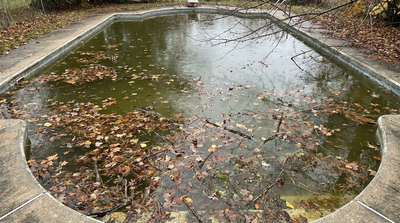
Cloudy or green water means your sanitizer has fallen behind, and the fix is to rebalance, shock hard, and filter continuously until it clears. Green is algae taking hold; cloudy is usually fine particles, weak chlorine, or unbalanced water. Both respond to the same recovery sequence, and most Intex pools clear within a few days of continuous treatment.
Start by testing and correcting pH, since shock works poorly in unbalanced water. Then shock the pool, using a heavier dose than your routine weekly treatment for visible algae, and run the pump around the clock until the water clears.
Brush the floor and walls daily to break algae loose so the chlorine can reach it, and rinse or replace the cartridge often, because it will load up with debris fast while the water recovers.
If the water still won't clear after several days of shocking and continuous filtration, the cartridge is likely overwhelmed, or the chlorine is being consumed faster than you can add it. At that point, draining and refilling is often quicker than fighting it, especially on a smaller Intex pool where a fresh start costs little water.
How Do You Open an Intex Pool at the Start of the Season?
Open your Intex pool by inspecting and cleaning everything before adding water, then refilling, balancing the chemistry, and shocking once before the first swim.
If the pool was drained and stored, inspect the liner and frame for damage before assembly. Check the pump and filter housing for cracks from cold storage, and rinse them out. If the pool stayed up through a mild off-season, brush the floor and walls thoroughly to break up any biofilm before turning the pump on.
Fill the pool to the marked fill line, then let the pump circulate for several hours before testing. Adjust alkalinity first, then pH, then bring chlorine up to 1 to 3 ppm. Shock the pool once at the start of the season to kill anything that survived storage or low-circulation winter conditions, and wait until free chlorine returns to the normal range before swimming.
How Do You Close an Intex Pool for the Season?
Close your Intex pool by balancing the water one last time, cleaning everything thoroughly, then either draining it or protecting it for winter, depending on your climate. In regions with hard freezes, most owners drain, dry, and store soft-sided pools completely, since trapped water can freeze and damage the liner and frame.
Rinse out the filter housing and pump after the final clean, and let every component dry fully. Packing away a damp liner invites mold and mildew that you'll be scrubbing off in spring. Fold the liner loosely rather than creasing it sharply in the same spots year after year, which is where soft-sided pools develop weak points.
In mild climates where the pool stays up, scale back rather than stop. Reduce pump runtime, keep a low sanitizer level, and cover the pool to cut down on debris and evaporation while it sits unused.
FAQs
Can I leave an Intex pool up all year?
A framed Intex pool can stay up year-round in mild climates, but not where temperatures drop below freezing. Frozen water expands and can split the liner and crack the frame, so in cold regions, the pool should be drained, dried, and stored. Easy Set inflatable pools are the least suited to staying up through winter.
What will ruin an Intex pool pump?
Running the pump dry, letting a clogged cartridge starve it of flow, and leaving it exposed to freezing water are the fastest ways to kill an Intex pump. The motor relies on water moving through it to stay cool, so a blocked filter or a low water level forces it to overheat. Keep the cartridge clean and the water above the intake.
Does vinegar or dish soap actually keep an Intex pool clean?
No. Vinegar and Dawn dish soap are common kitchen-fix suggestions, but neither sanitizes water nor kills the bacteria and algae that make a pool unsafe. Soap also foams and clouds the water and can damage the pump. Only chlorine, kept at a steady level, sanitizes the water.
How often should I replace the Intex filter cartridge?
Plan to replace the cartridge every few weeks during heavy use, and always at the start and end of the season. A cartridge that stays gray after rinsing, or no longer restores good flow once cleaned, has reached the end of its life and should be swapped rather than reused.
Will shocking get rid of dirt in an Intex pool?
No. Shocking raises the chlorine level to oxidize bacteria, algae, and chemical contaminants in the water, but it doesn't remove physical debris. Dirt, sand, and dead algae on the floor still need to be vacuumed out, and floating leaves still need to be skimmed.
Why do people put baking soda in an Intex pool?
Baking soda raises total alkalinity, the buffer that keeps pH from swinging. It is the same active ingredient as a store-bought alkalinity increaser, just cheaper. About 1.5 lbs of baking soda raises alkalinity by 10 ppm in a 10,000-gallon pool. Dose based on your tested level.