Most Popular


 Sora Series


 AquaSense Series

 Skimmer & Bundle

 Retail Edition


 Accessories


The fastest and safest way to get water off a pool cover after fall rain is to clear the fallen leaves first, then set a pool cover pump at the lowest point of the standing water and run the discharge hose well away from the pool. For a light puddle, a garden hose siphon or a wet-dry shop vac finishes the job. Fall makes this harder than summer rain, since leaves come down with the water and add weight that stretches the cover and pulls on its anchors. Clearing that water early protects the cover and stops dirty runoff from spilling into the pool when you finally pull the cover off.

Using a Pool Cover Pump to Remove Standing Water
A pool cover pump is the primary method for fall rain, because it clears large volumes of water without asking you to lift, drag, or lean on a loaded cover. Use it any time the water is deeper than a light puddle.
Start by removing the leaves and twigs before you pump anything. Use a leaf net or soft-bristle brush on a telescoping pole and work from the pool edge, never by stepping onto the cover. Skip metal rakes or garden tools, since a single snag can tear a cover that is already under tension. This step matters because wet leaf litter clogs the pump intake within minutes and drags more weight toward the center as it slides.
Choose the right pump for the load. An automatic submersible cover pump with a built-in float switch is the low-effort choice, since it shuts off on its own once the water drops below the intake, which protects the motor and lets you leave it unattended after a storm. A basic submersible sump pump works too if you are watching it. Most cover pumps move several hundred to over a thousand gallons per hour, so even a heavy fall soaking clears in well under an hour.
Set the pump at the lowest point where the water gathers, not near the edge where it is easier to reach. Edge placement leaves the heaviest water sitting in the center, which is the exact weight you want gone first. Guide it into position with a pool pole rather than walking on a sagging cover.
Rest the pump on a flat plastic tray, a cookie sheet, or an upturned flower pot instead of setting it directly on the fabric. A pump pressed into a low seam can siphon clean pool water up through the cover, and it also sucks in the leaf sludge that settles at the bottom of the puddle. A small platform keeps the intake clear and stops it from draining the pool below.
Run the discharge hose downhill and at least ten feet from the pool wall, the house foundation, and any walkway. In cool fall weather, water discharged onto a deck or patio can freeze overnight into a slip hazard, so send it toward a drainage area away from foot traffic. Let an automatic pump cycle until it stops on its own, or run a manual pump until it starts pulling air, then handle the last film separately.
If you have an automatic pool cover, remove the standing water before you operate it. A water load strains the fabric, tracks, ropes, and motor, so never open or close the cover while a puddle is sitting on top unless the system is specifically built to drain through a skimmer sump.

How to Get Water Off a Pool Cover Without a Pump
You can remove water without a pump when the puddle is shallow and the discharge end of the hose can sit lower than the water on the cover. A garden hose siphon is the main no-power option, and it moves water by gravity alone, so it suits small amounts and slow overnight draining rather than a heavy fall load.
The reliable way to start a siphon is the faucet method. Submerge one end of the hose in the puddle and weight it with a clean rock, connect the other end to an outdoor faucet, and run the water until every air bubble is pushed out of the hose. Shut the faucet, disconnect that end, and drop it below the pool level. The full hose starts pulling water off the cover on its own. Keep the intake end submerged, because the moment it sucks air the siphon stops and you have to prime it again.
You do not have to start a siphon by mouth. A drill-powered siphon pump attachment or a hand-pump primer bulb, like the acrylic hose sold for siphoning fuel, gets the flow going in seconds and is easy to restart after each storm. These move less water than a full garden hose but are dependable for light fall rain.
For a hands-off setup, some pool owners lay a hose from the cover to a driveway with no dips along the run, then use a plug-in timer to trigger a small pump for a minute twice a week. If there is water, one minute is enough to start the siphon. If the cover is dry, the pump just gurgles and shuts off. Running it in the afternoon gives any water frozen in the hose time to thaw.
Skip the siphon entirely when the water is more than a few inches deep, when the cover is visibly sagging toward the pool, or in near-freezing weather where residual water refreezes. In those cases a pump is the safer tool, and forcing a manual method risks pulling the cover into the pool.
Clearing the Last Thin Layer of Water
Most pumps and siphons leave a thin film behind, and a few finishing tools clear it without stressing the cover. A wet-dry shop vac, a soft push broom, and a towel wick each handle the last puddles and the corners that a pump cannot reach.
A shop vac works best after most of the water is already gone, or along edges and corners where the pump sits too high to drain. Remove the filter first so the vacuum can pull water, empty the tank often since it fills fast, and never kneel or stand on a stressed cover to reach the middle. If the fabric flexes under your weight, stop, because the risk is not worth a few extra gallons.
For solid winter covers, a soft-bristle push broom lets you nudge the last sheet of water toward the edges. Push gently and keep to soft bristles, since scraping a taut cover with a stiff or metal-edged tool can score or tear it. A rolled thick towel also works as a wick for very small puddles. Set one end in the water and drape the other over the side of the pool so it draws the water out slowly.
A leaf blower can push a thin sheet of water toward one edge on a tightly tensioned cover, which some owners prefer for a light film. Do not chase a perfectly dry cover. A light film evaporates or clears easily during final cover removal, and the priority is always the heavy standing water that concentrates weight.
Why Does Water Pool on a Cover Faster in Fall?
Water collects faster in fall because falling leaves ride down with the rain, settle into the cover's low spots, and hold water in place instead of letting it drain toward the edges. A cover that has lost tension develops a sag in the middle, and every storm deepens that same depression.
Cooler nights add a second source. Warm pool water evaporates, rises, and condenses against the cooler underside of the cover during fall temperature swings, so a cover gathers moisture even between storms. On solid covers none of that passes through, so it piles up until you remove it.
The weight adds up fast. A single inch of water weighs a little over five pounds per square foot, and spread across a full cover that becomes hundreds of pounds pulling on straps, seams, and anchors. Once late-fall temperatures drop, standing water and wet leaves can freeze into a heavy slab that is far harder to clear and much more likely to tear the material.
How to Keep Water From Pooling on a Pool Cover
The most effective way to stop water from pooling is to raise the center of the cover so rain and leaves shed toward the edges instead of gathering in the middle. A pool cover air pillow or a center support reshapes the surface and keeps a single deep puddle from forming after each fall storm.
Inflate an air pillow to roughly 60 to 80 percent, since an overfilled pillow goes rigid and stops redirecting water. Secure it in the center so wind and shifting leaves do not push it to one side. On above-ground pools especially, that raised center is what keeps a loaded cover from dragging inward on the walls, where water weight can bend the top rails.

Cover tension matters just as much. Check cables, straps, and anchor points monthly through the off-season and tighten sagging edges as soon as they appear, before water weight worsens them. Cover type sets the baseline too. A solid cover blocks debris and sunlight but traps all the water on top, so it needs active removal, while a mesh cover lets rain drain through into the pool and cuts down on pumping at the cost of more spring cleanup. If a cover sags no matter what you do, the fabric is likely stretched past recovery and should be measured for a replacement.
Cleaning the Pool After You Remove the Cover
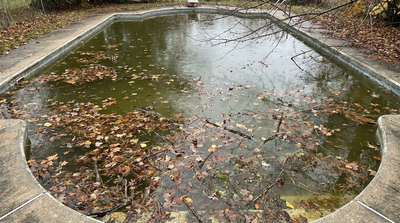
Once the cover comes off, dirty cover water, sunk leaves, and fine organic runoff end up in the pool, and pools kept open through fall collect the same debris directly. Clearing the surface and floor and clarifying the water early keeps that mess from settling into stains, cloudiness, or a clogged filter.
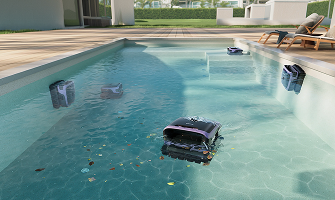
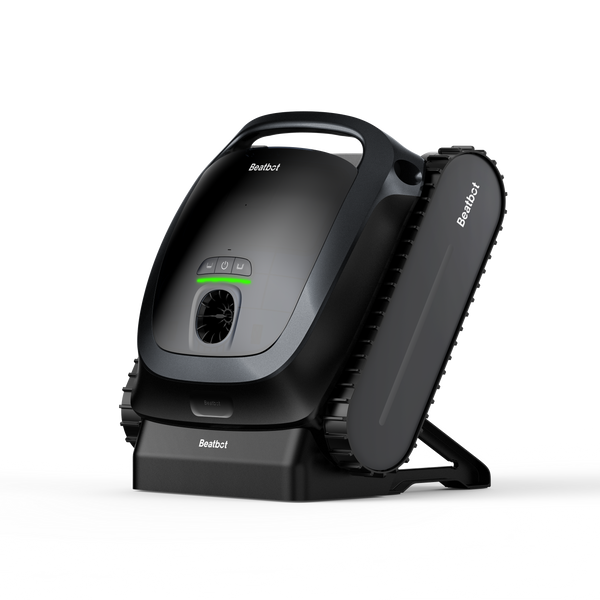
Fall debris arrives in two layers. Leaves, pollen, and seeds float first, then break down and drift to the floor as a fine sludge a skimmer alone cannot reach. The Beatbot AquaSense 2 Pro robotic pool cleaner reaches both layers because its buoyancy system lets it float to skim the surface and dive to vacuum the floor, so a single cleaning cycle takes the debris on top and the sludge below in one run. Up to 11 hours of continuous surface cleaning lets it keep skimming through a heavy leaf-drop stretch without constant restarts.
Cloudy water is the other fall problem, since decomposing leaves and cover runoff cloud a pool fast. The ClearWater™ Clarification System in the Beatbot AquaSense 2 Pro dispenses a skin-safe clarifier made from chitosan derived from recycled crab shells, which binds fine particles into larger clumps your filter can catch. That lifts the haze a filter cannot clear on its own while fall rain keeps adding organic matter.

FAQs
Does Rainwater Seep Through a Pool Cover?
Mesh covers let rain pass through into the pool, so puddles rarely form on top, but the pool level below can rise after heavy fall rain and put extra strain on the anchors. Solid covers hold the water on top, where it has to be pumped or siphoned off.
How Often Should You Clear Water Off a Pool Cover in Fall?
Check the cover after every heavy rain or windy storm, and look at least once a week through fall. Waiting until a deep puddle forms lets the weight concentrate in one spot, which is when a cover stretches, loosens anchors, or tears.
Will Water Evaporate Off a Pool Cover on Its Own in Fall?
A light film may, but standing water will not clear before it adds damaging weight. Cool fall temperatures slow evaporation while rain and condensation keep refilling the puddle, so remove anything deeper than a thin film rather than waiting it out.