Most Popular


 Sora Series


 AquaSense Series

 Skimmer & Bundle

 Retail Edition


 Accessories


In summer, run your pool pump 10 to 12 hours a day. That is longer than the 8-hour year-round baseline because heat accelerates chlorine loss, raises algae risk, and most pools see heavier use than any other season. On days above 90°F, aim for the higher end of that range or plan for two full water turnovers. If your pool turns cloudy or algae appears, run the pump continuously until the water clears.
Why Summer Demands More Run Time
Heat does two things that work against your pool chemistry at the same time. UV rays break down free chlorine faster than they do in cooler months, so the same chemical dose that holds for a week in spring may last only a day or two in peak summer. And warm water above 80°F creates conditions where algae can establish in stagnant zones within hours rather than days.
More swimmers add a third variable. Every person in the pool introduces body oils, sunscreen, sweat, and organic matter that consumes chlorine and adds to the filter's load. On a day with heavy pool traffic, the water can burn through sanitizer fast enough that normal run time leaves dead zones undertreated by the evening.
The combined effect is that summer pool water is under more stress during more hours of the day than at any other time of year. Running the pump longer is how you keep up with that increased demand.
How Many Hours to Run Your Pump by Temperature
A practical starting point for single speed pumps is one hour of run time for every 10°F of air temperature. At 80°F, that is 8 hours. At 90°F, 9 hours. In summer, add 2 hours on top of that baseline to account for the elevated chlorine demand and debris load that heat and pool use bring.
|
Air Temperature |
Minimum Daily Run Time |
Notes |
|
70–80°F |
8 hours |
Start of swim season; standard turnover |
|
80–90°F |
10 hours |
Peak summer; add time for heavy use days |
|
90–100°F |
10–12 hours |
High UV; consider two turnovers |
|
Above 100°F |
12–16 hours |
Extreme heat; two full turnovers recommended |
|
Algae or cloudy water |
Run continuously |
Until water fully clears |
These numbers cover one full water turnover per day. On extremely hot days or after heavy swim sessions, two turnovers are better. That means running the pump long enough to cycle all your pool water through the filter twice in 24 hours, which is typically 16 to 20 hours for most residential pools at standard pump flow rates.

When to Run Your Pump in Summer
Run your pump during the hottest part of the day, from late morning through the afternoon, when UV intensity peaks. This is when chlorine degrades fastest and algae conditions are strongest. Having the pump active during these hours keeps chemicals circulating when the pool needs it most.
That said, running only during peak hours means paying peak electricity rates for the full session. A split schedule handles both priorities: run part of the cycle during the midday heat and the remainder overnight when rates are lower. Most utility providers charge less between 10 PM and 6 AM. A timer makes this automatic.
|
Schedule Type |
Example |
Best For |
Drawback |
|
Midday block |
10 AM – 8 PM |
Combating UV and algae during peak heat |
Highest electricity rates |
|
Split day/night |
6–10 AM + 8 PM–2 AM |
Balance of UV coverage and off-peak savings |
Requires timer setup |
|
Overnight + midday |
11 PM–5 AM + 11 AM–3 PM |
Maximum off-peak savings |
Less coverage during peak UV hours |
|
Variable speed 24/7 |
Low speed all day, high speed midday |
Best efficiency, best water quality |
Higher upfront pump cost |
The pump does not need to run in one continuous block. As long as the total hours add up across 24 hours, filtration quality is the same. A timer that splits the cycle into two or three sessions gives you flexibility to hit both the peak UV window and off-peak electricity hours in the same day.

Variable Speed Pumps in Summer
Variable speed pumps handle summer demand more efficiently than single speed pumps. Run them at higher speed for 3 to 4 hours during the hottest part of the day for active chemical circulation and debris removal, then drop to low speed for the remaining hours. The low-speed hours cost a fraction of full-power operation, making a 12-hour schedule cheaper to run than a single speed pump running 8 hours.
Some pool owners run variable speed pumps 24 hours a day at low speed in summer. At low RPM the energy draw is low enough that continuous operation can cost less than shorter single speed cycles, while delivering more total turnovers per day and more consistent chemical distribution.
If your pool has a salt chlorine generator or heater, confirm the low-speed setting generates enough flow to trigger those systems before committing to an overnight low-speed schedule.
Signs Your Pump Is Not Running Long Enough
Cloudy water that does not clear within a day of correct chemical dosing is the clearest indicator. When pump run time falls short, some portions of the pool water never reach the filter during a given cycle. Chemicals added to stagnant zones stay concentrated near where they entered rather than distributing evenly. The result looks like a chemistry problem but is actually a circulation problem.
Green or yellow tinting along the walls or floor is algae starting to establish. Algae forms fastest in corners, under ladders, and along steps where circulation is weakest. If you see early discoloration during summer, add 2 hours to your daily run time immediately and brush the affected areas to bring debris into suspension where the filter can reach it.
A persistent chlorine smell stronger than usual can also signal inadequate turnover. Chloramines, the compounds that create that sharp chemical odor, build up when used-up chlorine has not been cycled through the filter and replaced. More pump run time and a shock treatment together usually resolve it within a day.
Reducing the Load on Your Pump
The more physical debris and organic matter enters the pool each day, the harder your pump has to work to keep the water clear in the same number of run hours. In summer, debris comes from more directions: heavy bather load, insects, wind-blown pollen, leaves, and increased sunscreen and oil residue. Each source adds to the filtration demand the pump must handle in its daily cycle.
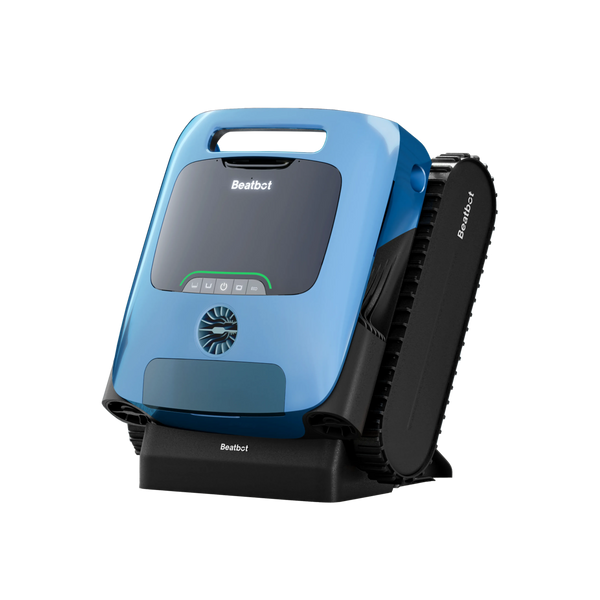
Removing debris from the pool directly, before it breaks down and enters the filter system, reduces that load. A robotic pool cleaner does this independently from your pump, collecting settled dirt, algae from the walls, waterline buildup, and debris from the pool floor into its own onboard basket rather than pushing it toward the skimmer.
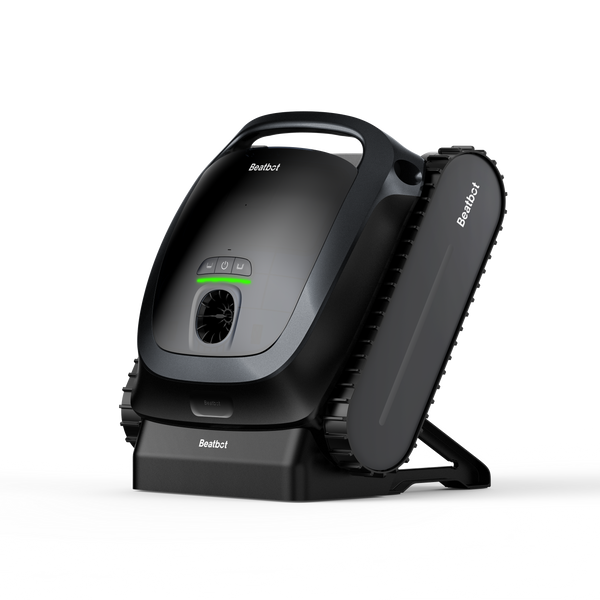
The Beatbot Sora 30 robotic pool cleaner covers the floor, walls, waterline, and shallow platforms down to 8 inches. In summer, when sunscreen residue and organic debris accumulate along the waterline faster than in other seasons, regular wall and waterline cleaning by the Sora 30 reduces the chemical oxygen demand your pump's filtration system has to process.
The Beatbot Sora 10 robotic pool cleaner covers the same underwater zones and parks itself at the waterline automatically at the end of each cycle, making daily retrieval straightforward during the season when cleaning frequency matters most. Both run on battery power with no connection to your pump, so they work in parallel with your regular pump schedule.

FAQs
How long should I run my pool pump in summer?
Run it 10 to 12 hours a day during summer as a baseline. On days above 90°F or with heavy pool use, increase to 12 to 16 hours. If algae appears or water turns cloudy, run it continuously until the water clears.
Is it OK to run a pool pump during the day in summer?
Yes, and it is recommended to run at least part of your cycle during the hottest hours of the day, typically 10 AM to 4 PM. UV rays degrade chlorine fastest during those hours, so having the pump circulating chemicals during that window slows the loss. For energy savings, split the schedule to include overnight hours as well.
Can I run my pool pump less in summer if I use a pool cover?
A pool cover reduces UV exposure, slows evaporation, and keeps out airborne debris, all of which reduce the demands on your filtration system. If you consistently cover the pool when not in use, you may be able to reduce run time by 1 to 2 hours compared to an uncovered pool. The water temperature and bather load still apply, so do not cut below one full daily turnover.
Should I run my pool pump twice a day in summer?
Running two separate sessions is fine and often better than one continuous block. It lets you hit the midday heat window and off-peak electricity hours in the same day. As long as the total hours add up, filtration results are the same.
What happens if I do not run my pool pump enough in summer?
Algae establishes in stagnant zones, chlorine levels drop unevenly, and water turns cloudy. Summer heat speeds up all of these processes compared to cooler months. A pool that stays clear on 8 hours of pump time in spring may show green walls within two to three days on the same schedule in peak summer heat.