Most Popular


 Sora Series


 AquaSense Series

 Skimmer & Bundle

 Retail Edition


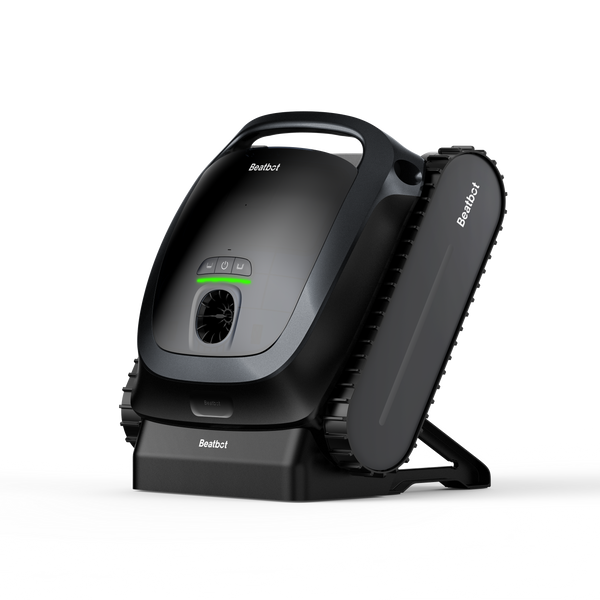
 Accessories


When pool chemistry starts acting up, most owners ask the same few questions. Is total alkalinity high or low? Do you fix alkalinity first or pH first? How do you correct one without sending the other out of range?
The cleanest way to handle it is to test total alkalinity and pH together, correct alkalinity first, let the water circulate, and adjust pH only if it still needs work. That order cuts down on wasted chemicals, bad retests, and repeat corrections. It matters even more in saltwater pools and pools with heavy aeration, where pH often climbs on its own.
How to Tell if Pool Alkalinity Is Too High or Too Low
You cannot correct alkalinity well from symptoms alone. Total alkalinity buffers pH, so an alkalinity problem often shows up as unstable pH before anything else.
For most residential pools, 80 to 120 ppm is a practical working range. Some pool care methods use 100 to 150 ppm to help pH stay steadier. The right target depends on how your pool behaves. If pH tends to rise on its own, there is little reason to keep alkalinity near the top end. If pH drops easily and never seems to hold, a somewhat higher alkalinity level can be easier to manage.
High alkalinity often shows up as pH that keeps rising, weaker chlorine performance, scale, cloudy water, and irritation. Low alkalinity often shows up as low pH, acidic water, and long term wear on pool surfaces and equipment. Test total alkalinity and pH together before you add anything. One reading without the other can send you toward the wrong fix.
What to Do Before You Adjust Pool Alkalinity
Do not add chemicals until you know three things: your current alkalinity, your current pH, and your pool volume. Blind dosing is one of the fastest ways to overcorrect.
Your test method matters too. Test strips are useful for quick checks and trend watching. A liquid test kit is better when you are making a real adjustment and want a cleaner before and after reading. Consistency matters most. Use the same method before and after treatment so the trend is easier to trust.
Take your water sample from the middle area of the pool, not right by a return jet or skimmer, and collect it about elbow deep. That gives you a reading that better reflects the water you are actually trying to balance.
Pool volume matters more than most owners expect. Guess low and you underdose. Guess high and you can push chemistry out of range fast. Measure water depth, not wall height. For a rectangular pool with one depth, use length × width × depth × 7.5. For a pool with a shallow end and deep end, use average water depth. For a round pool, use 3.14 × radius squared × depth × 7.5. If the shape is irregular, break it into simpler sections or use a pool volume calculator.
Run the pump and filter when you add chemicals so the water mixes fully. If you need more than one correction, do not stack them all at once. Add one product, let the water circulate for at least 30 minutes, then retest before the next move. If you are handling acid, wear gloves and eye protection.

How to Raise Alkalinity in a Pool
Low alkalinity is usually corrected with sodium bicarbonate. That may be sold as baking soda or as an alkalinity increaser, but the job is the same. It raises total alkalinity much more than it raises pH, which is why it is the standard fix when TA is low. When alkalinity needs more lift than pH, baking soda is a better fit than soda ash. It can still move pH up, so measured additions matter.
The amount you need depends on your current reading and your pool volume. A common reference point is about 0.75 pound for 5,000 gallons, 1.5 pounds for 10,000 gallons, 2.25 pounds for 15,000 gallons, and 3 pounds for 20,000 gallons to raise total alkalinity by about 10 ppm. Treat that as a starting point, not as a reason to force the full correction in one pass.
Add part of the required amount, let the water circulate, then retest both total alkalinity and pH. If alkalinity is still low, repeat with another measured portion. The goal is stable water, not one perfect number from a single treatment.

How to Lower Alkalinity in a Pool
High alkalinity is lowered with acid, usually muriatic acid or sodium bisulfate, which is often sold as dry acid or pH decreaser. The issue is not the product. The issue is trying to force the number down too fast.
A controlled reduction works better. Add a measured amount, let the water circulate, then retest before the next adjustment. Some pools show a quick pH drop before total alkalinity moves much. Others settle more slowly. That pause between doses matters.
Watch how pH and total alkalinity move together. If pH drops fast and total alkalinity barely changes, stop adding acid and let the pool settle before the next dose. If the pool has strong aeration from a salt system, waterfall, fountain, or deck jets, pH may rebound after treatment without meaning the alkalinity correction failed. The trend after circulation matters more than the first quick reaction.
A partial drain and refill can help in some cases, especially if the pool is dealing with more than one buildup issue at the same time. Fresh water dilution changes more than alkalinity. It can lower chlorine, stabilizer, and other readings too. It works best when you look at the full water balance, not just TA.
How to Keep Pool pH From Swinging When You Adjust Alkalinity
Correct alkalinity before you fine tune pH. If you reverse that order, pH often shifts again right after total alkalinity changes.
A quick read of the numbers can keep you out of trouble. If both total alkalinity and pH are low, soda ash can move both up. If total alkalinity is low and pH is already in a workable range, sodium bicarbonate is usually the cleaner correction. If total alkalinity is high and pH is already falling fast, stop adding acid and let the pool settle. If total alkalinity needs to come down but pH is running too low, pair the correction with aeration.
Most overcorrections come from moving too fast. A pool owner lowers alkalinity, sees pH fall, and pushes pH back up right away. Or they raise alkalinity, see pH climb, and start knocking it back down before the first correction has fully settled. That loop wastes chemicals and makes the water harder to read.
Use the readings to guide the fix. If both pH and alkalinity are low, soda ash can bring both up. If only pH is low, aeration is often the better move. A fountain, aerator, or other source of bubbles helps carbon dioxide leave the water, which lifts pH without raising alkalinity the way a chemical increaser does. If you need to lower alkalinity and keep pH from staying too low, acid plus aeration is often the most controlled path.
If your readings keep bouncing, slow the process down. One measured correction and one retest will tell you more than a string of fast doses.

Why Saltwater Pools and Water Features Make Alkalinity and pH Harder to Manage
Some pools do not drift once and settle down. They drift as part of normal operation. Saltwater pools and pools with active water features are the clearest examples.
In a saltwater pool, the salt chlorine generator tends to push pH upward over time. That can make each correction feel temporary if you only look at the last test result. In that setup, free chlorine and pH should be checked weekly. Total alkalinity should be checked monthly, along with calcium hardness. The salt cell should be inspected for scale on a regular basis, since buildup can affect how the system runs.
Waterfalls, fountains, deck jets, and other forms of aeration create a similar pattern for a different reason. They push carbon dioxide out of the water, which raises pH over time. In a pool with constant aeration, you can lower alkalinity, get a good reading, and still watch pH rise later. That does not always mean the alkalinity correction failed. It may mean the pool has a built in pH driver that needs to be managed as part of the normal routine.
If your pool drifts again and again, look at the whole pattern. Review salt cell run time, water features, refill water, recent storms, and chlorine products. Do not blame every repeat pH problem on alkalinity alone.
How to Keep Pool Alkalinity Stable After You Correct It
Stable alkalinity comes from routine, not from a single correction. Test your water weekly during pool season, and test more often after storms, algae, cloudy water, unusual heat, heavy swimmer load, or a large water change. Retest after backwashing, after a partial drain and refill, and after any larger chemistry adjustment.
Use one testing method consistently if you can. Switching between strips, store tests, and different kits makes trends harder to read. Keep a record of total alkalinity, pH, and what you added. The pattern matters more than one isolated number.
That is where a Beatbot robotic pool cleaner fits naturally into alkalinity maintenance. Once your chemistry is back in range, the next job is keeping leaves, dirt, and fine debris from building up again and putting more pressure on filtration and retesting.
If surface debris is the main problem, the Beatbot Sora 70 robotic pool cleaner is the strongest match. It combines JetPulse™ water surface cleaning with dual converging jets, 6,800 GPH suction, a 6L debris basket, and full pool coverage from the surface to the floor, walls, waterline, and shallow areas down to 8 inches.
If your pool does not need surface cleaning, the Beatbot Sora 30 robotic pool cleaner is built for steady full pool upkeep, with 6,800 GPH suction, shallow area cleaning down to 8 inches, a 5L basket, and 150 μm filtration for daily debris capture.
For lighter routine maintenance, the Beatbot Sora 10 robotic pool cleaner covers the floor, walls, waterline, and shallow areas down to 12 inches, using 6,800 GPH suction, a 5L basket that holds up to 650 leaves, and 150 μm filtration. In all three cases, the result is the same: less leftover debris, more stable day to day pool conditions, and fewer cleanup cycles between water tests.
FAQs
Does shocking a pool raise alkalinity?
Sometimes. Some shock products can raise alkalinity or pH, but shock is not the right tool for correcting total alkalinity.Balance alkalinity and pH first, then shock if the pool still needs it.
How long does it take alkalinity to adjust in a pool?
Give the pool at least 30 minutes of circulation before you retest.If the correction was larger, the water may need more time to settle before the next adjustment.
Is pool alkalinity increaser just baking soda?
Usually, yes. Most pool alkalinity increasers use sodium bicarbonate, which is the same active ingredient as baking soda.The pool version is simply sold and labeled for water balance.
What causes pool alkalinity to drop?
Rain, fresh water dilution, and acid additions are the most common causes.Low alkalinity often shows up after heavy rain, refill water changes, or repeated pH lowering treatments.
Is 60 alkalinity good for pools?
No. For most residential pools, 60 ppm is low. At that level, pH is more likely to swing and the water is more likely to turn acidic.
Is 140 alkalinity too high for a pool?
Sometimes. A reading of 140 ppm can still be workable if pH stays steady.
If pH keeps rising, chlorine works poorly, or scale starts forming, 140 ppm is too high for that pool.