Most Popular


 Sora Series


 AquaSense Series

 Skimmer & Bundle

 Retail Edition


 Accessories


Run your pool pump at least 8 hours a day. That is enough time for most residential pools to complete one full water turnover, which means all the water has passed through the filter at least once. In hot weather or heavy use periods, increase that to 10 to 12 hours.
If you are dealing with algae or cloudy water, run it continuously until the water clears. Your exact number depends on your pool volume and pump flow rate, and the calculation takes about 30 seconds.
How to Calculate Your Exact Run Time
Divide your pool's total volume in gallons by your pump's flow rate in gallons per hour. The result is the number of hours your pump needs to run to complete one full turnover.
For a 20,000-gallon pool with a pump rated at 2,500 GPH: 20,000 divided by 2,500 equals 8 hours. For a 15,000-gallon pool with a pump at 1,875 GPH: 15,000 divided by 1,875 also equals 8 hours. Most residential pool setups land near 8 hours when sized correctly.
|
Pool Volume |
Pump Flow Rate (GPH) |
Daily Run Time Needed |
|
10,000 gal |
1,250 GPH |
8 hours |
|
15,000 gal |
1,875 GPH |
8 hours |
|
20,000 gal |
2,500 GPH |
8 hours |
|
25,000 gal |
3,000 GPH |
~8.3 hours |
|
30,000 gal |
3,750 GPH |
8 hours |
If you do not know your pump's GPH, check the label on the pump motor or the manufacturer's spec sheet. The number may be listed as GPM (gallons per minute). Multiply GPM by 60 to convert it to GPH.

When 8 Hours Is Not Enough
Temperature is the main variable that pushes run time above the 8-hour baseline. UV rays break down chlorine faster in hot weather, and warm water creates better conditions for algae growth. A simple rule: run your pump one hour for every 10°F of air temperature. At 80°F, run it 8 hours. At 90°F, run it 9 hours. At 100°F, run it 10 hours.
|
Water / Air Temperature |
Recommended Daily Run Time |
Notes |
|
Below 60°F |
4–6 hours |
Off-season or cool climates |
|
60–70°F |
6–8 hours |
Spring and fall swim season |
|
70–80°F |
8 hours |
Standard summer baseline |
|
80–90°F |
8–10 hours |
Peak summer heat |
|
90°F and above |
10–12 hours |
High UV, faster algae risk |
|
Algae outbreak or cloudy water |
Run continuously |
Until water clears |
Heavy pool use is the other common reason to add hours. When more people swim, more debris and body oils enter the water. The filter needs additional run time to process the added load. On days with heavy use, add 2 hours beyond your standard schedule.
After adding chemicals, always run the pump immediately to distribute them evenly through the water. After shocking, run it for at least 8 hours. After a rainstorm that washes debris and contaminants into the pool, run it for a full cycle before swimming.

Does the Pump Need to Run Continuously?
No. The 8 hours do not need to be consecutive. You can split the run time into two or three sessions across the day as long as the total adds up. Running the pump for 4 hours in the morning and 4 hours in the evening achieves the same filtration result as running it for 8 straight hours.
The best time to run your pump is during the hottest part of the day, typically midday through the afternoon. This is when UV rays are most intense and chlorine degrades fastest. Running the pump during these hours keeps chemicals circulating when they are most needed.
Running during off-peak electricity hours can reduce your energy bill. Contact your electricity provider to find out which hours are billed at lower rates. Many pool owners run a split schedule: a few hours during the day to circulate chemicals, then a longer stretch overnight at off-peak rates.
Variable Speed Pumps: Run Time Works Differently
Variable speed pumps can run longer than single speed pumps without the same energy cost. Because they operate at lower RPM for routine filtration, the electricity draw drops sharply. A variable speed pump running 12 hours at low speed often costs less to operate than a single speed pump running 8 hours at full power.
A common schedule for variable speed pumps is 3 to 4 hours at higher speed for active cleaning and chemical circulation, then 8 to 9 hours at low speed for steady background filtration. Some pool owners run their variable speed pump 24 hours a day at low speed and find it cost-effective compared to shorter single speed cycles.
One important note: if your pool has a salt chlorine generator or a heater, those systems require minimum water flow to activate. Make sure your pump's low-speed setting still generates enough flow to trigger those sensors. Check the manufacturer's minimum flow requirements before setting the low-speed schedule.

What Happens If You Run the Pump Too Little
Skipping pump time or cutting cycles short consistently leads to predictable problems. Algae growth starts when water sits still and chlorine levels fall in dead zones with no circulation. Cloudy water is usually the first visible sign that turnover is not happening fully. Debris settles on the floor and walls instead of making its way to the filter.
Chemical imbalance follows quickly. Chlorine added to stagnant water stays concentrated near the point where it entered rather than distributing through the pool. pH and alkalinity readings become unreliable because the water is not homogeneous. If your pool is consistently unclear despite correct chemical dosing, inadequate pump run time is usually the first thing to check.
What the Pump Does Not Handle
Your pump keeps water moving through the filter. It does not scrub the pool floor, remove algae from the walls, clean the waterline, or collect leaves and debris sitting on the surface or settled on the bottom. Those tasks require physical cleaning, which the pump system is not designed to do regardless of how many hours it runs.
Physical debris in the water also adds to the pump's filtration load. Leaves, dirt, and organic matter that the pump must process reduce how efficiently it can maintain water chemistry during its run hours. Removing debris before it enters the filtration loop keeps the pump working on water quality rather than solid waste.
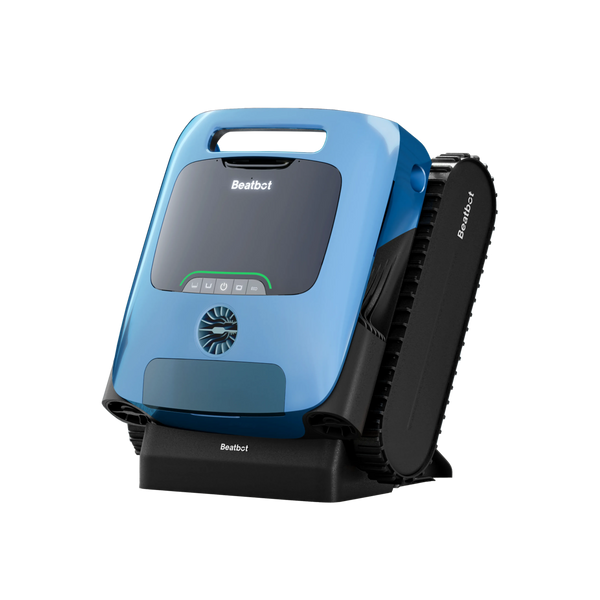
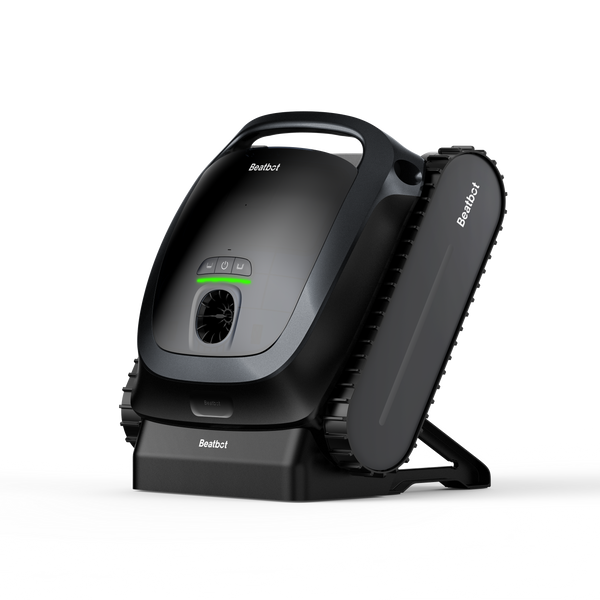
A robotic pool cleaner handles the physical side of this independently from your pump. The Beatbot Sora 70 robotic pool cleaner covers the floor, walls, waterline, shallow platforms, and the water surface. Its JetPulse system collects floating debris before it sinks and adds to the filtration load your pump has to process.
The Beatbot Sora 30 robotic pool cleaner covers the same underwater zones, reaching platforms and steps as shallow as 8 inches. Both run on battery power with no connection to your pump system, so they can operate at the same time as your pump or on a separate schedule.
FAQs
How long should I run my pool pump every day?
At least 8 hours a day for most residential pools. That is enough time to complete one full water turnover. In temperatures above 90°F or on high-use days, increase run time to 10 to 12 hours.
Does the pump need to run 8 hours straight?
No. You can split the run time into multiple sessions across the day. Two 4-hour sessions produce the same filtration result as one 8-hour block, as long as the total hours add up.
What is the best time of day to run a pool pump?
Midday through the afternoon is the most effective time, when UV exposure is highest and chlorine degrades fastest. Running the pump during these hours keeps chemicals circulating when the pool needs it most. For energy savings, split the schedule to include some overnight hours when electricity rates are lower.
How do I calculate how long to run my pool pump?
Divide your pool volume in gallons by your pump's flow rate in GPH. The result is the number of hours needed for one full turnover. For example, a 20,000-gallon pool with a 2,500 GPH pump needs 8 hours.
Should I run my pool pump every day?
Yes. Skipping days allows water to become stagnant, which accelerates algae growth and chemical imbalance. Even in cooler months or off-season, running the pump for at least 4 to 6 hours a day keeps the water from deteriorating.
Can I run my pool pump too much?
Running the pump more than necessary does not harm the pool, but it does add to your electricity bill without improving water quality beyond what one full turnover achieves. The exception is variable speed pumps at low speeds, where running longer at lower power can be cost-effective compared to shorter single speed cycles.