Most Popular


 Sora Series


 AquaSense Series

 Skimmer & Bundle

 Retail Edition


 Accessories


A cartridge filter usually delivers clearer water and uses far less water, while a sand filter often makes more sense for large pools, heavy debris loads, and owners who want quicker routine maintenance. Neither one is universally "better." The right choice depends on your pool size, the kind of debris you deal with, your local water costs, and how much hands-on cleaning you actually want to do.
This guide breaks down how each filter works, where each one wins, and which scenario points clearly toward one over the other. It also covers one factor that works in your favor, no matter which filter you run: keeping debris out of the system in the first place.

How Do Sand and Cartridge Filters Actually Work?
Sand filters push pool water through a bed of specialized sand, while cartridge filters pass water through a pleated fabric element. Both trap dirt as water flows through, but they capture it in very different ways, and that difference drives almost everything else about owning them.
A sand filter relies on a tank packed with fine pool-grade sand. Water enters from the top, sinks through the sand bed, and the rough grains snag debris as it passes.
Clean water exits through the bottom and returns to the pool. Over time, trapped dirt clogs the bed and pressure climbs, so you reverse the flow and flush the waste out a drain line. That process is called backwashing, and it is the defining maintenance task of a sand filter.
A cartridge filter uses a cylindrical element made of pleated polyester fabric. The pleats create a large surface area in a compact tank, and water passes through the fabric while the weave traps particles. There is no backwashing.
When pressure rises, you pull the cartridge out, hose it down, and drop it back in. The fabric catches smaller particles than sand does, which is the main reason cartridge filters tend to produce clearer water.
What Are the Main Differences Between Sand and Cartridge Filters?
The core difference is the filter media, and everything else follows from it. Sand traps debris in the gaps between coarse grains, while a cartridge traps it in a fine fabric weave. Because the fabric weave is tighter, a cartridge catches smaller particles, which means clearer water.
Because sand is cleaned by reversing the water flow rather than by hand, a sand filter is faster to service but loses water with every cycle. Those two facts, finer media and a different cleaning method, branch out into the four things owners actually compare: clarity, maintenance, water use, and cost.
The table below lines those factors up side by side, so you can see at a glance where each filter leans.
|
Factor |
Sand Filter |
Cartridge Filter |
|---|---|---|
|
Filtration |
20 to 40 microns |
10 to 20 microns |
|
Maintenance Method |
Backwash, no disassembly |
Remove and hose off the element |
|
Water Use |
Higher, from backwashing |
Minimal, no backwashing |
|
Heavy Debris |
Handles it well |
Clogs faster |
|
Upfront Cost |
Lower |
Higher |
|
Media Replacement |
Sand every 5 to 7 years |
Element every 2 to 4 years |
|
Energy Use |
Slightly higher pressure |
Slightly lower pressure |
|
Best For |
Large pools, heavy debris |
Clearer water, water savings |
Which Filter Traps Finer Debris?
Cartridge filters trap finer particles than sand filters, and that single fact shapes how clear your water looks. The micron gap in the table above seems small on paper, but it often shows up in the water, especially in pools that deal with fine dust, pollen, or dead algae. A cartridge holds onto the kind of sediment a sand bed tends to let slip through on the first pass.
This is why owners chasing glassy, polished water often prefer cartridges. Sand filters can be pushed toward finer filtration with a clarifier or with specialty media that replaces the sand, but out of the box, the cartridge usually has the edge on clarity.
The practical takeaway is simple. If you frequently see a faint cloudiness that you cannot quite clear up with normal water balancing, a cartridge filter will often handle it better than sand.
Which Filter Is Better for Heavy Debris?
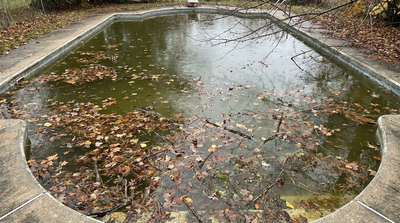
Sand filters usually handle heavy, frequent debris loads more gracefully than cartridge filters. When a pool takes on a constant stream of leaves, dust, and organic matter, a sand bed keeps flowing, and you simply backwash more often. A cartridge under the same conditions tends to clog faster, which means more frequent rinsing and more wear on the element.
Pools surrounded by trees, exposed to heavy pollen seasons, or used by a lot of swimmers often lean toward sand for this reason. The backwash cycle is a fast reset, and you avoid scrubbing a fouled element by hand in peak leaf season.
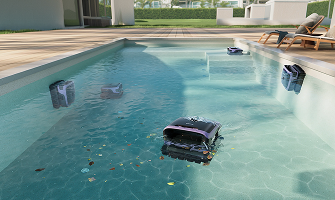
The load on either filter drops sharply when most of the debris never reaches it in the first place. A robotic pool cleaner pulls leaves, twigs, sediment, and other debris straight out of the water and traps it in its own onboard basket, so far less material ends up circulating to the main filter.
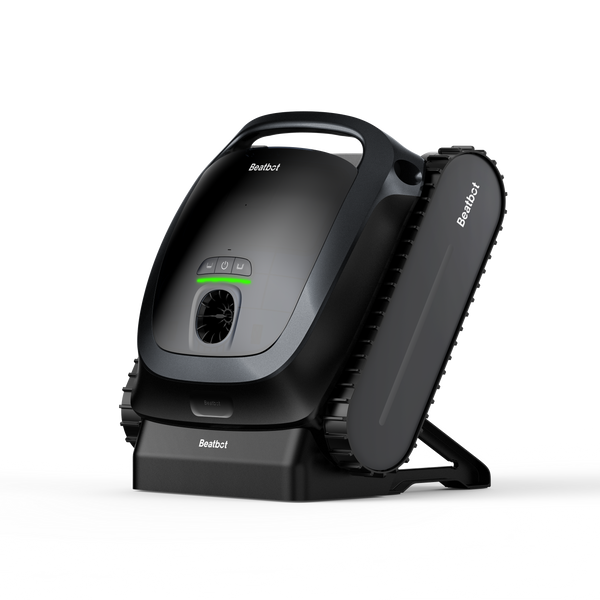
The Beatbot Sora 70 cordless robotic pool cleaner runs a 6L debris capacity with 150-micron filtration as its standard setup, capturing leaves, twigs, insects, and sediment before they put strain on a sand or cartridge system.
For smaller and mid-sized pools, the Beatbot Sora 30 offers a more compact version of the same idea, with a 5L basket and the same 150-micron everyday filter. Either model leaves the main filter with less debris to handle, which for sand-filter owners often means fewer backwash cycles and less treated water sent down the drain.

How Much Maintenance Does Each One Need?
Sand filters are quicker to service but lose water each time, while cartridge filters take more hands-on time but waste almost none. The maintenance question is really a trade between speed and water.
Servicing a sand filter mostly means backwashing when the pressure gauge climbs about 8 to 10 PSI above its clean baseline. Backwashing takes only a few minutes and requires no disassembly, which is what makes sand filters feel low-effort day to day. How often you do it depends on your debris load and pool use, so a heavily used pool under trees may need it far more often than a quiet pool in the open.
A cartridge filter asks for more from you, but in a different way. You clean it by removing the element and rinsing it with a hose, often every four to six weeks, then deep cleaning it with a filter cleaner solution a couple of times a season. There is no backwashing and no water sent to the drain, but rinsing by hand takes more of your time, and how thoroughly you do it affects how long the element lasts.
If you would rather spend a few quick minutes at the valve than time rinsing an element, sand fits your routine better. If you would rather do a longer rinse now and then in exchange for saving water, the cartridge fits better.
Do Sand and Cartridge Filters Cost Different Amounts?
Sand filters usually cost less to buy, while cartridge filters often save money on water over time but require more replacement elements. The full picture depends on your local water price, your pool size, and how heavily it is used.
Sand filters generally have a lower purchase price, and the sand inside is inexpensive to replace every five to seven years or so. Their main ongoing cost is the treated water lost to backwashing, which matters most where water is expensive or restricted. A small, lightly used pool may backwash rarely, while a large pool under heavy debris may do it often enough that the water cost becomes noticeable.
Cartridge filters cost more upfront, and the replacement elements are not cheap, with most needing a new one every two to four years, depending on use. They sidestep backwash water entirely, and in many regions, that water saving offsets the element cost over a few seasons.
Cartridge filters also tend to run at slightly lower pressure than sand, which can let the pump work a little more efficiently. The energy difference is modest for most pools, but it leans slightly in the cartridge's favor over a long season.
Does Filter Size Matter as Much as Filter Type?
Filter size matters just as much as filter type, and getting it wrong undermines either choice. Before you settle on sand or cartridge, the filter has to be matched to your pool volume and your pump's flow rate, or the system will not perform the way the specs suggest.
A filter that is undersized for the pump gets pushed too hard, which traps less debris and wears out faster. An oversized filter wastes money and space. The rule of thumb is to know your pool's volume in gallons, check your pump's flow rate, and pick a filter rated to keep up with both.
Most manufacturers publish a sizing chart that pairs pool size and flow rate with the right filter capacity, and it is worth checking that chart for either filter type rather than guessing.
This is also why a bigger pool often points toward sand. Reaching the needed capacity with a cartridge can mean a larger or multi-cartridge unit, which raises the price gap that already favors sand on upfront cost.
What About DE Filters?
Diatomaceous earth (DE) filters are a third option worth knowing about, even when the real decision is sand versus cartridge. A DE filter coats a grid with a fine powder made from fossilized diatoms, and it filters finer than either sand or a cartridge, often down to around 3 to 5 microns, which produces the clearest water of the three.
That clarity comes with trade-offs. DE filters cost more, need the powder replenished after backwashing, and require more involved upkeep, including handling the powder carefully. For owners who battle very fine particles or want the sharpest possible clarity, DE can be worth it. For most households choosing between simplicity and cost, sand or cartridge usually remains the more practical pick.
Sand or Cartridge: How to Decide
For pure water clarity and water conservation, choose a cartridge filter, especially on a small to mid-sized pool in a drought-prone or high-water-cost area. For low upfront cost, fast routine maintenance, and handling constant leaves or pollen, choose a sand filter, especially on a large pool or one ringed by trees.
Whichever filter you land on, keeping debris out of it in the first place extends its life and reduces its workload. A robotic cleaner like the Beatbot Sora 70 for larger pools, or the Sora 30 for more compact ones, traps debris before it reaches the main filter, and the optional 3-micron ultra-fine accessory on the Sora 70 can polish out fine particles that a standard sand or cartridge system tends to leave behind.
FAQs
How often should I clean each type of filter?
A sand filter is backwashed when its pressure gauge rises about 8 to 10 PSI above normal, which for many pools happens every few weeks. A cartridge is rinsed on a similar pressure cue, often every four to six weeks, plus a deep clean a couple of times a season. Heavier debris loads shorten both intervals.
Are sand filters cheaper than cartridge filters?
Sand filters usually cost less to buy, and the sand inside is inexpensive to replace every five to seven years. The catch is the treated water lost to backwashing, which can raise your running costs in areas where water is expensive or restricted.
Is a cartridge filter worth it?
For many owners, yes, especially where water clarity or water conservation is the priority. The higher upfront price and periodic element replacement are offset over time by water savings and slightly lower pump energy use.
Can a sand filter make pool water crystal clear?
It can get close, but sand alone often leaves a faint haze from very fine particles. Adding a clarifier, switching to a finer specialty media, or running a robotic cleaner with an ultra-fine filter helps a sand system reach the clarity a cartridge gives more easily.