Most Popular


 Sora Series


 AquaSense Series

 Skimmer & Bundle

 Retail Edition


 Accessories


Black algae is one of the most stubborn pool problems you can face. Unlike green or yellow algae that wash out with a shock treatment, black algae is technically a rooted cyanobacteria protected by a slimy biofilm, with roots that anchor deep into porous plaster, gunite, and concrete.
A single round of chemical treatment rarely kills it. What works is a multi-day approach combining physical disruption, chemical penetration, and consistent follow-through.
Black algae also produces cyanotoxins, which can cause skin irritation, nausea, and more serious effects if contaminated water is ingested. Keep swimmers out of the pool until treatment is complete and water chemistry is rebalanced.
What You Need to Treat Black Algae
Gather everything before starting. Stopping mid-process to get supplies disrupts the treatment timeline.
-
Pool water test kit (strips or liquid kit that measures pH, alkalinity, and chlorine)
-
Water balancing chemicals (pH increaser/decreaser, alkalinity increaser)
-
Calcium hypochlorite pool shock (cal-hypo granules)
-
Black algae-specific algaecide (look for copper-based formulas for persistent cases)
-
Stainless steel bristle brush for plaster, concrete, or gunite (nylon brush for vinyl or fiberglass)
-
Telescoping pole
-
Chlorine tablet (for spot treatment, see Step 3)
-
Pool vacuum and filter cleaner
-
Metal sequestrant if your pool uses copper-based products (prevents staining)

How to Remove Black Algae from Your Pool
This process runs over several days. Each step builds on the one before it.
Step 1: Test and Balance Your Water Chemistry
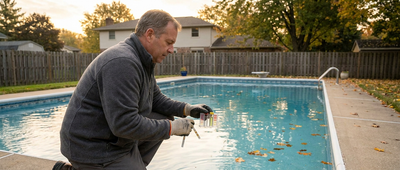
Test your pool water and balance it before adding any chemicals. pH should be between 7.2 and 7.6. High pH significantly reduces chlorine effectiveness, which is one of the most common reasons a treatment fails to kill black algae. Total alkalinity should be between 80 and 120 ppm.
If you're using copper-based algaecide, also check copper levels. Above 0.6 ppm, you risk staining once the algaecide is added. Use a metal sequestrant beforehand to bring it down.
Step 2: Scrub Every Black Spot Hard
Attach your stainless steel wire brush to the telescoping pole and scrub every black spot as hard as you can. The goal is to break through the protective biofilm covering the bacteria. Without this step, chlorine will sit on the surface without penetrating, and even a quadruple-dose shock won't reach the roots.
Scrub in a back-and-forth motion rather than circular. Pay close attention to corners, shaded areas, behind steps and ladders, and the waterline, where circulation is reduced and black algae most often takes hold. For vinyl or fiberglass pools, use a nylon brush with firm but not aggressive pressure.
Step 3: Spot-Treat with a Chlorine Tablet
Break a chlorine tablet in half and rub it directly onto each visible black algae spot. This delivers concentrated chlorine into the exposed bacteria after scrubbing strips the biofilm. It won't fully kill the roots on its own, but it dramatically improves the penetration of the shock treatment that follows.

Step 4: Shock the Pool at Quadruple Dose
Use calcium hypochlorite shock (cal-hypo) at a quadruple dose relative to your pool size. Broadcast the granules directly into the deep end while the pump is running. Shock in the evening, as sunlight degrades chlorine rapidly.
The goal is to drive free chlorine to roughly 30 ppm and hold it there long enough to overwhelm the bacteria. Run the pump continuously for at least 24 hours after shocking. Keep swimmers out until the free chlorine level returns to 1 to 4 ppm.
Step 5: Add Black Algae-Specific Algaecide
After the shock treatment, add a black algae-specific algaecide. Copper-based formulas are generally the most effective because copper disrupts the cellular processes of cyanobacteria. Pour the algaecide around the perimeter of the pool rather than directly over one spot. The typical dose is 12 oz per 10,000 gallons, but follow the label for the specific product you're using.
Add a metal sequestrant 24 hours after any copper-based treatment to prevent staining from excess copper in the water.
Step 6: Brush Daily Until the Spots Are Gone
Return to scrubbing every day for as long as black spots remain visible, and continue for at least a week after they appear to be gone. Dead algae doesn't always come off the surface immediately, and there may be surviving root cells that aren't yet visible.
As the treatment works, dead black algae typically turns gray, white, or brown. Spots that lighten to those colors and brush away easily are dead. Spots that remain dark and feel firmly attached are still alive and need more scrubbing and another round of chlorine contact.
Step 7: Clean Your Filter Thoroughly
Black algae debris that brushes off the walls will collect in your filter. If you don't clean it out, you're recirculating the bacteria back into the pool. Backwash sand or D.E. filters and add a filter cleaner to break down biological buildup. For cartridge filters, remove and rinse thoroughly, then soak in a filter cleaner solution.
If your pool has a vacuum-to-waste setting, use it when vacuuming up settled debris. This routes the water out of the pool entirely instead of back through the filter.
Step 8: Retest and Rebalance Water Chemistry
Retest your water after the algae is cleared and the pump has been running for 24 or more hours. Bring pH back to 7.2 to 7.6, total alkalinity to 80 to 120 ppm, and confirm free chlorine is between 2.0 and 4.0 ppm before letting anyone back in the pool.
What If Black Algae Keeps Coming Back?
Recurring black algae usually means one of two things: either the original treatment didn't kill the roots, or new contamination is entering from outside the pool. New contamination almost always traces back to natural bodies of water swimsuits, towels, and pool toys that visited a lake, river, or ocean can carry cyanobacteria back into your pool.
For persistent cases, repeat the entire process. Some pool professionals recommend a second round of quadruple shock 48 hours after the first. Copper-based algaecide products are widely reported by pool owners and professionals to be the most reliable for black algae that survives a standard treatment cycle.
In very severe cases where black algae has deeply penetrated old, worn plaster, resurfacing may be the only permanent solution. Once cyanobacteria roots into micro-fractures in aged plaster, chemical treatment can't reliably reach every cell.
How to Prevent Black Algae from Coming Back
-
Shock weekly, not just when you notice a problem. Maintaining elevated chlorine levels prevents bacteria from establishing a foothold.
-
Brush pool walls at least once a week, including corners and shaded areas where circulation is lower.
-
Keep pH and alkalinity in range. High pH is one of the most common reasons chlorine underperforms.
-
Use a multi-purpose algaecide weekly as part of your routine chemical program.
-
Wash swimsuits in a machine and scrub pool toys with a diluted bleach solution after any visit to a lake, river, or ocean.
Black algae most often establishes itself along walls and the waterline, where circulation is weakest and chemical contact is least consistent. Frequent mechanical contact in those zones is one of the strongest passive defenses you can put in place between weekly maintenance treatments.
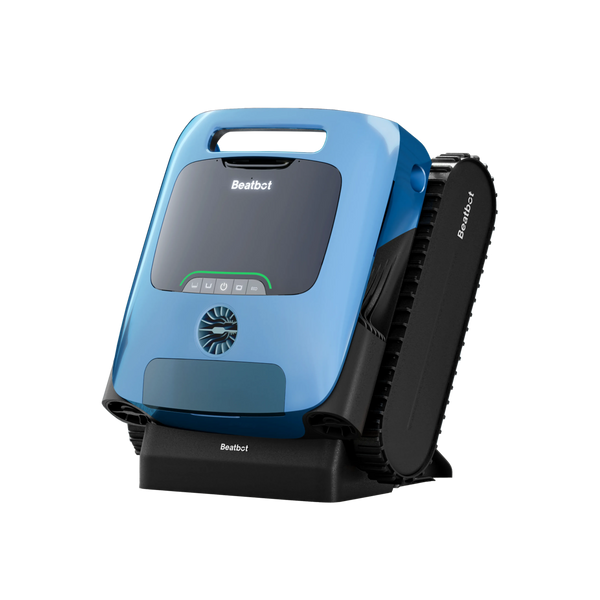
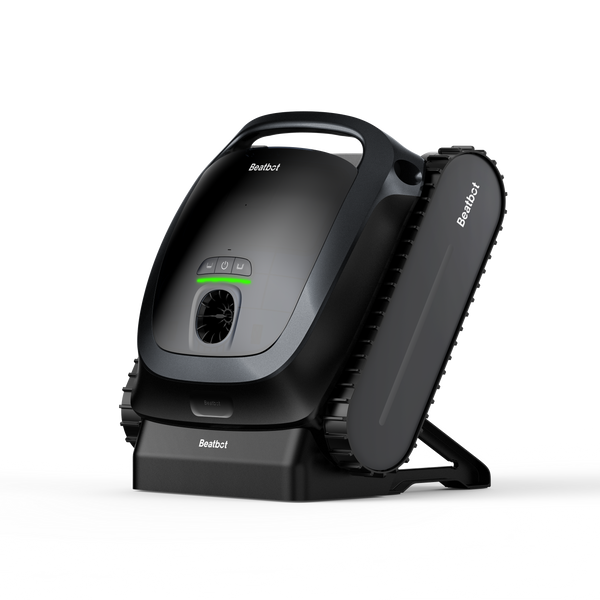
The Beatbot Sora 70 robotic pool cleaner climbs walls at angles up to 90 degrees and runs an intensive scrubbing pass along the waterline during every cleaning cycle, which keeps biofilm from settling and rooting in the exact areas where black algae would otherwise return first.

Does a Robotic Pool Cleaner Help with Black Algae?
A robotic pool cleaner won't remove an active black algae outbreak on its own. The brushes in even a high-performance pool robot are not a substitute for the targeted, hard manual scrubbing needed to break the protective biofilm during treatment.
Where a robot earns its place is during recovery and long-term prevention. Running a robotic cleaner after the shock and algaecide have circulated helps collect dead algae debris off the floor before it resettles. Once the outbreak is cleared, regular automated cleaning along the waterline and walls keeps the high-risk zones under constant mechanical pressure.
The Beatbot AquaSense 2 Ultra robotic pool cleaner is built around this prevention logic. Its Dual-Pass Waterline Cleaning scrubs the waterline twice on every pass instead of once, doubling mechanical contact in the area where black algae most often returns first.
Its Dual-Group Roller Brush System runs four roller brushes in a 2x2 configuration across a 305mm cleaning path, delivering significantly higher scrubbing pressure on walls and floors than standard two-brush robots. For pools that have already had a black algae outbreak, that combination is what keeps biofilm from re-establishing between weekly chemical treatments.
FAQs
Can I swim in a pool that has black algae?
No. Black algae produces cyanotoxins that can cause nausea, rashes, and more serious effects with prolonged exposure. Keep the pool closed to swimmers until treatment is complete and water chemistry is back in range.
Can you get rid of black algae permanently?
Yes, in most cases, with consistent prevention. Once the roots are killed and the affected area is no longer being recolonized, black algae will not regrow on its own. The challenge is that pools that have had an outbreak are statistically more likely to see one again, so weekly shocking, brushing, and balanced water chemistry are what make the result permanent.
Will draining a pool kill black algae?
No. Draining the pool removes the water, but black algae roots remain anchored in the pool surface itself. Once you refill, the surviving roots will regrow. Draining can also damage plaster and gunite pools and is generally not recommended. Treat the pool full instead.
Will cold weather kill black algae in the pool?
No. Black algae goes dormant in cold water but does not die. Pools closed for winter with active black algae will see the same spots reappear in spring once water temperatures rise. Treat the outbreak before closing the pool, not after.
Is black algae different from green algae?
Yes, significantly. Green algae is free-floating and responds quickly to chlorine shock. Black algae is a rooted cyanobacteria with a protective outer layer and deep anchoring into porous surfaces. Standard shock doses that clear green algae within a day or two are usually insufficient against black algae.