Most Popular


 Sora Series


 AquaSense Series

 Skimmer & Bundle

 Retail Edition


 Accessories
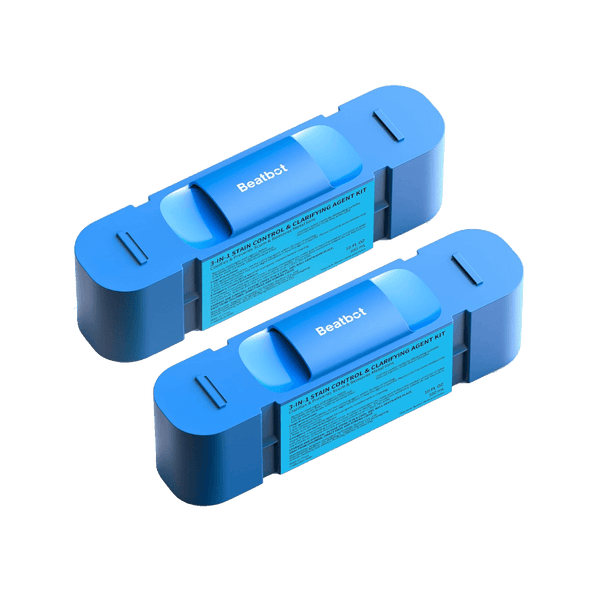


A pool clarifier is a chemical that causes tiny suspended particles to clump together into clusters large enough for your filter to catch. That is the entire job. It does not sanitize, balance chemistry, or kill algae. When a pool stays persistently hazy despite correct chlorine and pH levels, a clarifier addresses the particle problem that chemistry and filtration alone are not resolving.
Knowing when that is actually the issue, rather than a chemistry imbalance or an undersized filter, determines whether a clarifier will do anything useful or just add another variable to an already complex water problem.

How Pool Clarifier Works
Pool water becomes hazy when it contains particles too small to be caught by standard pool filtration. Sand filters typically capture particles down to 20 to 40 microns. Cartridge filters reach 10 to 15 microns.
Fine particles from dead algae, body oils, sunscreen residue, dust, pollen, and calcium precipitation can all fall below those thresholds and pass through the filter repeatedly without being removed.
Clarifiers work through a process called coagulation. The active ingredient in most clarifiers is a positively charged polymer (polyDADMAC or similar compounds). Fine suspended particles in pool water typically carry a slight negative charge, which keeps them dispersed and prevents them from clumping naturally.
The positively charged polymer neutralizes that charge on contact, which allows the particles to bind together into larger clusters called floc. Once those clusters reach a size the filter can capture, typically 20 microns or larger, they are removed during the next filter cycle.
The process takes time. Most clarifiers require 24 to 48 hours of continuous pump operation after dosing for the coagulation to work and the resulting clusters to reach the filter. Skipping that circulation window is the most common reason a clarifier appears not to work.
Flocculants are a related but different product. A flocculant causes particles to clump into much heavier masses that sink to the pool floor rather than traveling to the filter. The pool must be vacuumed to waste (bypassing the filter) to remove those settled masses.
Flocculants work faster than clarifiers but require more hands-on work and are better suited to severely cloudy pools where waiting 48 hours for a clarifier is not practical.

When You Should Use a Pool Clarifier
A clarifier is the right tool in specific situations. Using it outside those situations adds cost and filter load without addressing the actual problem.
After an algae treatment
Killing an algae bloom leaves behind a large volume of dead algae cells that are too fine for most filters to catch efficiently. The water often turns grey or dull after a successful shock treatment precisely because the dead cells are suspended throughout the water column.
A clarifier after the algae is confirmed dead (green has turned grey, chlorine is holding above 1 ppm) helps the filter process that fine organic load faster than it would on its own.
After heavy bather use or a pool party
High bather loads introduce significant amounts of body oils, sunscreen, and fine organic matter into the water in a short period. The filter handles the bulk of it over subsequent pump cycles, but very fine particles from these sources stay suspended and create a subtle but persistent haze that does not clear on its own within a day or two.
A single clarifier dose after a high-use event, with correct chemistry confirmed first, is a straightforward fix.
After a heavy rainfall or windstorm
Rain introduces fine particulates, dust, and organic debris from the surrounding environment directly into the pool water. Wind deposits pollen, fine soil, and atmospheric particles on the surface. Both events can push the suspended particle load beyond what normal filtration clears between cycles.
A clarifier used after rebalancing the chemistry that rain disrupts (alkalinity and pH in particular) gives the filter a manageable task rather than an indefinite one.
When the water is persistently hazy with correct chemistry
If pH is between 7.4 and 7.6, chlorine is holding at 1 to 3 ppm, and total alkalinity is in range, but the water still lacks clarity, the problem is almost certainly suspended particles below the filter's capture threshold. This is the clearest use case for a clarifier: chemistry is not the issue, and the filter needs help catching what it is currently missing.
When a Clarifier Will Not Help
When the chemistry is out of range
A clarifier cannot compensate for incorrect chemistry. High pH causes calcium carbonate to precipitate continuously, creating new suspended particles faster than any clarifier can address. Low chlorine means ongoing algae growth is producing fine organic matter faster than coagulation can clump it.
Correct the chemistry first. A clarifier added to a pool with pH above 7.8 or chlorine below 1 ppm will not produce lasting results because the source of the cloudiness is still active.
When the filter is dirty or undersized
A clarifier makes fine particles large enough to be caught by the filter. If the filter is clogged, operating at reduced pressure, or simply too small for the pool volume, the newly clumped particles still will not be removed efficiently.
Backwash or clean the filter before dosing, and confirm the filter is sized correctly for the pool's gallonage. A clarifier does not fix a filtration capacity problem, it amplifies whatever filtration capacity already exists.
During an active algae bloom
A clarifier is not an algae treatment and will not help while green or black algae is actively growing. The right sequence is shock first to kill the algae, confirm it is dead (water turns grey, chlorine holds), then use a clarifier to help clear the resulting fine debris. Using a clarifier during an active bloom adds polymer to a water column full of living algae and does not address the cause of the cloudiness.
When the pool was recently shocked with high chlorine
Very high chlorine levels (above 5 to 10 ppm) can break down the polymer chains in clarifier products, reducing their effectiveness. If the pool was shocked recently, wait until chlorine drops below 5 ppm before adding a clarifier. Testing before dosing is a step that most product instructions mention but many users skip.

How to Use Pool Clarifier Correctly
The process is straightforward, but the sequencing matters. Skipping any of these steps reduces effectiveness and often wastes a full bottle of product.
Step 1: Confirm chemistry is in range
Test the water before adding anything. pH should be between 7.4 and 7.6. Free chlorine should be between 1 and 3 ppm. If either is out of range, correct it first and allow an hour of circulation before proceeding. Adding clarifier to chemically unbalanced water is the most reliable way to get no result from the treatment.
Step 2: Clean or backwash the filter
A clarifier will produce clumped particles that all head to the filter at once over the next 24 to 48 hours. Starting that process with a clean filter gives those particles the best chance of being captured on their first pass. If the filter has not been cleaned or backwashed in the last week and the pool is noticeably hazy, do it before dosing.
Step 3: Dose according to pool volume, not appearance
Follow the product's dosing instructions based on the pool's gallon capacity, not how cloudy the water looks. Overdosing is a common mistake that makes the problem worse: too much polymer can overwhelm the filter or cause the particles to re-disperse rather than clump.
More is not better with clarifiers. If the first dose does not produce clear water within 48 hours, check the chemistry and filter before adding more.
Step 4: Add with pump running and distribute broadly
Pour the clarifier slowly around the perimeter of the pool with the pump running, not in a single spot. Most liquid clarifiers can be added directly to the water with the pump on. Some tablet or concentrated forms require pre-dilution. Check the product label. The goal is even distribution through the water column before coagulation begins.
Step 5: Run the pump continuously for 24 to 48 hours
This is the step most often skipped. Coagulation takes time, and the resulting clusters need to reach the filter during active circulation. Running the pump on a shortened timer cycle during this window means a portion of the floc settles to the pool floor instead of reaching the filter. Settled floc on the pool floor needs to be vacuumed out manually or removed by a robotic pool cleaner.
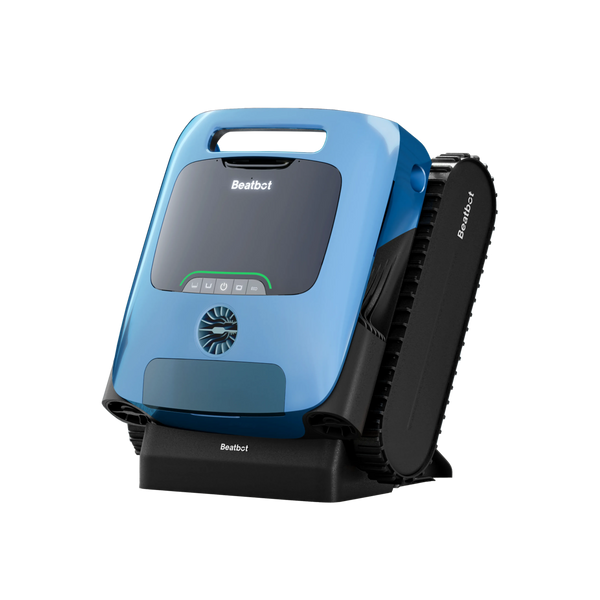
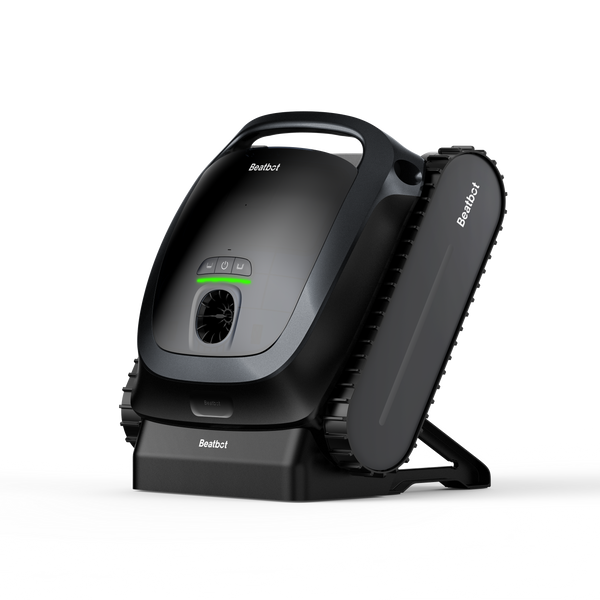
If some settling does occur, the Beatbot Sora 70 6,800 GPH suction and optional 3-micron ultra-fine filter are specifically suited to this scenario: the fine filter captures floc particles that a standard 150-micron filter basket would pass over, and the dual roller brushes dislodge any settled material from the floor and waterline without dispersing it back into the water column.
Running a Sora 70 cleaning cycle after 48 hours of clarifier treatment removes what the main filter missed and leaves the water column genuinely clear rather than just less hazy.
Step 6: Check clarity at 48 hours and retest chemistry
At the 48-hour mark, test the water again and assess clarity. If the pool is noticeably clearer but not fully clear, a second dose at half the original rate is reasonable. If there is no visible improvement, the problem is not fine suspended particles and a clarifier is not the right tool.
Check the filter condition, re-examine the chemistry for pH drift or chlorine depletion, and consider whether a different approach is needed.
Common Pool Clarifier Mistakes
Overdosing
The most common mistake with clarifiers is adding too much. Excess polymer can cause particles to re-disperse instead of clumping, or it can create a thick gel-like residue that coats the filter media and reduces flow. Dose based on pool volume per the label. If the first dose at the correct rate does not work, the issue is usually chemistry or filtration capacity, not dose size.
Adding clarifier without fixing the underlying chemistry first
A clarifier addresses the symptom (suspended particles) not the cause. If pH is drifting high, calcium is precipitating continuously. If chlorine is low, biological material is growing. In both cases, the source of the cloudiness is still active while the clarifier is trying to coagulate what is already there. Fix the chemistry, then use the clarifier to clear the residual haze.
Reducing pump run time during treatment
Running the pump for only four to six hours a day while a clarifier is working produces incomplete results. The coagulated clusters need sustained circulation to reach the filter. If they settle to the floor because the pump was off, they need to be physically removed.
Run the pump continuously for at least 24 hours after dosing, and do not backwash during that window as it flushes away whatever the filter has just captured.
Backwashing too soon after dosing
Backwashing within the first 24 hours of adding a clarifier reverses the work in progress. The captured floc in the filter is flushed out before more can be added to it, and the polymer concentration in the water drops before coagulation is complete. Wait until at least 48 hours after dosing, then backwash to clear the accumulated material from the filter.
Using clarifier as a substitute for shocking
Clarifiers do not oxidize organic compounds, kill bacteria, or address combined chlorine. A pool that smells of chloramines, has visible algae, or tests with high combined chlorine needs a shock treatment, not a clarifier. Adding a clarifier to a pool that actually needs shocking delays the correct treatment and adds unnecessary chemical load to the water.

Pool Clarifier vs. Flocculant: Which One Do You Need?
Both clarifiers and flocculants address cloudy water caused by fine suspended particles, but they work differently and suit different situations.
A clarifier works slowly, over 24 to 48 hours, by coagulating particles into filter-catchable clusters. The filter does the removal work. No vacuuming is required. It is the better choice for mild to moderate haze where the pool is still usable and the owner wants a low-effort treatment.
A flocculant works faster but requires more effort. It causes particles to clump into heavy masses that sink to the floor within 8 to 12 hours. The pool pump must be turned off while the floc settles.
Once settled, the floor sediment must be vacuumed to waste (with the filter valve set to bypass, so the settled material is not pushed back through the filter and returned to the pool). The pool cannot be used during or immediately after treatment.
Flocculants are better suited to severely cloudy water where waiting 48 hours for a clarifier is not practical or where the particle load is too high for the filter to handle through normal coagulation.
The choice comes down to severity and effort tolerance. Mild haze with a clean filter: clarifier. Water so cloudy you cannot see the bottom: flocculant, followed by vacuuming to waste and a clarifier dose once the bulk of the material has been removed.
FAQs
How long does pool clarifier take to work?
Most clarifiers require 24 to 48 hours of continuous pump operation to fully coagulate fine particles and move them through the filter. Some pools show visible improvement within 12 to 24 hours. If there is no noticeable improvement after 48 hours, the problem is likely chemistry or filter condition rather than particle load, and adding more clarifier will not help.
Can you swim in a pool after adding clarifier?
Most liquid clarifiers are safe to swim in immediately after adding, or within a short waiting period specified on the label. Check the product instructions, as formulations vary. That said, running the pump continuously for the first 24 to 48 hours without heavy bather load gives the clarifier the best chance to work before new particles are introduced.
Why is my pool still cloudy after using clarifier?
The most common reasons are: chemistry out of range (particularly high pH causing ongoing calcium precipitation), a dirty or undersized filter that cannot capture the coagulated particles, chlorine too high at time of dosing (above 5 to 10 ppm breaks down the polymer), or pump run time too short during the treatment window. Work through those in order before adding a second dose.
Can you use too much pool clarifier?
Yes. Overdosing is a real problem. Excess polymer can cause particles to re-disperse rather than clump, produce a gel-like coating on filter media, or create new water clarity problems. Follow the dosing rate on the label based on pool volume. If the correct dose did not work, increasing the dose is rarely the solution.
Is pool clarifier the same as pool flocculant?
No. Both address cloudy water from fine particles, but differently. Clarifier coagulates particles slowly into filter-catchable clusters over 24 to 48 hours, with the filter doing the removal work.
Flocculant causes particles to drop to the pool floor within 8 to 12 hours, requiring the pump to be off during settling and the floor to be vacuumed to waste afterward. Clarifiers are lower effort. Flocculants work faster but require more active intervention.
Does clarifier affect pool chemistry?
Clarifier does not directly change pH, chlorine, alkalinity, or calcium hardness. It does add a small amount of polymer to the water, which is consumed as it coagulates particles. At correct doses, it does not meaningfully affect water balance.
At significant overdose levels, some clarifiers can temporarily affect pH or reduce chlorine effectiveness slightly, which is another reason to stay within the recommended dosing range.