Most Popular


 Sora Series


 AquaSense Series

 Skimmer & Bundle

 Retail Edition


 Accessories


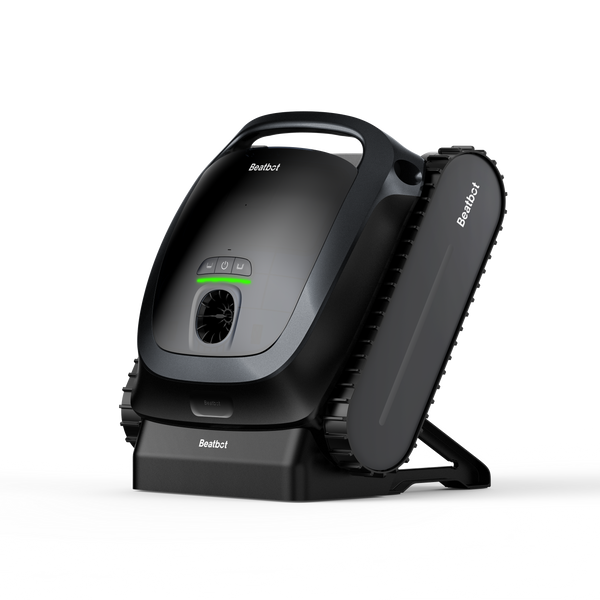
If you are new to pools, the robotic cleaner you choose decides how much work the pool will be. We make three cordless cleaners for that job. The Beatbot Sora 30 covers the core cleaning, the Beatbot Sora 70 adds water-surface skimming, and the Beatbot AquaSense 2 Ultra maps your pool with an AI camera and helps clear the water. Which one fits comes down to your pool and how hands-off you want to be.
What a Beatbot Pool Cleaner Cleans
A Beatbot cleaner takes on the parts of the pool you would otherwise do by hand. It vacuums the floor, climbs the walls, and runs along the waterline to clear the greasy scum ring that floor-only cleaners leave behind.
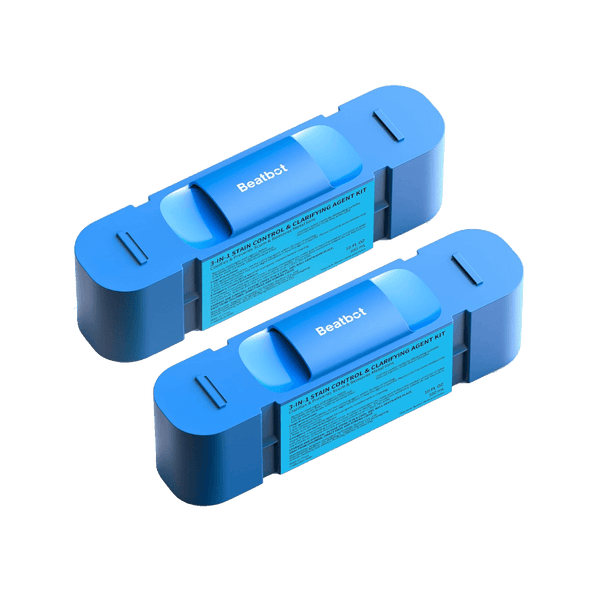
The Sora 70 and AquaSense 2 Ultra also skim leaves and pollen off the surface before they sink, and when the water looks cloudy, the AquaSense 2 Ultra's ClearWater system releases a skin-safe clarifier that binds the fine particles into clumps it can then vacuum up, leaving the water clearer.
Strong suction lifts debris instead of nudging it around, 6800 GPH on the Sora models, drawing sand and grit up through the brushes in one pass. The cleaner covers the whole pool rather than wandering, following a route its sensors plan out, with the AquaSense 2 Ultra mapping your pool by camera first and targeting any leftover debris it spots. That hands the skimming, brushing, and vacuuming to the robot and leaves you only a weekly water test.
Pool Types and Surfaces a Beatbot Handles
Whatever pool you have, a Beatbot cleaner is built to work in it. The Sora and AquaSense models run in both in-ground and above ground pools of any shape, on vinyl, fiberglass, concrete, and tile, and in saltwater, so you do not have to match a cleaner to your setup. The Sora models are built for pools up to about 3,200 square feet and the AquaSense 2 Ultra for up to 3,875, which covers most backyards.
Steps and odd shapes are where beginners expect a robot to get stuck. The Sora models avoid that by reading the pool with ultrasonic sensors and steering around drains, ladders, and steps while still reaching platforms as shallow as eight inches.
The AquaSense 2 Ultra goes further, using an AI camera to see the layout and clean raised and multi-level platforms on its own, which a sensor-only robot cannot do. To stand up to the years of chemicals a pool puts a cleaner through, the Sora models are tested in more than 100 real pools and 480 hours of salt spray.
Corded vs. Cordless for Beginners
For almost every beginner, cordless means far less hassle. A cordless cleaner has no booster pump, hose, or floating cord to set up, so starting a clean is just dropping it in and pressing a button.
Two worries usually come with cordless. The first is the battery quitting mid-clean, which the Sora 30 and Sora 70 handle with a 10,000mAh battery that runs up to five hours of floor cleaning, enough to finish a typical pool on one charge.
The second is hauling a heavy, water-filled robot out at the end, which SmartDrain solves by draining the water the robot is holding and floating it to the surface, so the lift is one-handed. Safety is the easy part, since a cordless robot keeps mains power out of the water, and the build carries global safety certifications, 17 on the Sora 70.
If the battery ever fails, the warranty covers it, two years on the Sora 30 and three on the Sora 70 and AquaSense 2 Ultra. A corded cleaner still suits very large or heavily wooded pools, but for a normal backyard, cordless is the simpler call.
Long-Term Value and Running Costs
The value for a beginner is straightforward. One robot replaces the skimming, brushing, and vacuuming, plus the weekly hours or the service fees that come with paying someone else to do it. It is built to keep earning that back, with corrosion-resistant titanium charging contacts and a warranty of two years on the Sora 30 and three on the Sora 70 and AquaSense 2 Ultra.
Day to day it costs next to nothing to run, because it works off its own rechargeable battery and collects debris in its own basket, with no booster pump, hose, or extra chemical to buy.
Which Beatbot Pool Cleaner to Choose
Pick by what your pool collects and how hands-off you want to be.
|
Model |
Cleans |
Key Features |
Best For |
|
Beatbot Sora 30 |
Floor, walls, waterline |
SonicSense navigation, surface parking |
A straightforward first robot |
|
Beatbot Sora 70 |
Floor, walls, waterline, surface |
JetPulse skimming, 6L basket |
Pools that collect floating debris |
|
Beatbot AquaSense 2 Ultra |
Floor, walls, waterline, surface |
HybridSense AI mapping, ClearWater |
Complex pools, the most hands-off care |
The Sora 30 is the simple starting point. It handles the floor, walls, and waterline and parks at the surface for an easy lift, which is all a standard pool needs. The Sora 70 suits pools that collect leaves and pollen, adding JetPulse skimming to clear the surface and a 6-liter basket so you empty it less often, plus a remote-control mode for spot cleaning.
The AquaSense 2 Ultra is the most hands-off, with an AI camera that maps your pool so it can clean the surface and raised platforms on its own, and a ClearWater system that keeps the water clear, all run from an app that schedules cleans and flags maintenance.
All three are cordless and self-draining, with a two-year warranty on the Sora 30 and three years on the Sora 70 and AquaSense 2 Ultra.
FAQs
How often should a beginner run an automatic pool cleaner?
Two or three times a week keeps most pools clear, and more often during heavy leaf or pollen periods. A pool with light use and little debris is usually fine with once or twice a week.
Can I leave a Beatbot pool cleaner in the water between cleanings?
No. Take it out to charge it and store it in the shade between cleans. Leaving it in full-time exposes it to chemicals and sun for no reason.
Do I need to run my pool pump while the cleaner works?
No. Each cleaner has its own motor and filter, so it cleans whether or not the pump is on. Running the pump alongside it only helps general water circulation.