Most Popular


 Sora Series


 AquaSense Series

 Skimmer & Bundle

 Retail Edition


 Accessories


Gunite pools cost more to build, more to maintain, and more to run — but they last longer and add more to resale value. Container pools cost less across almost every category but carry a narrower feature set and a weaker appraisal track record. Neither is cheaper in every situation. The answer depends on how long you plan to stay in the home, what climate you're in, and which cost categories matter most to you.
What Does a Gunite Pool Cost to Install?
A gunite pool in the U.S. typically runs between $50,000 and $100,000 for installation, with complex shapes, water features, or large footprints pushing costs higher. The process is labor-intensive: a crew excavates the site, steel rebar is placed, and a pneumatically applied concrete mixture is sprayed over the frame. After curing, the interior receives a plaster, pebble, or tile finish. That finish layer adds another $5,000 to $15,000 depending on material.
Permits, decking, fencing, electrical work, and landscaping are almost always separate line items. When you add those in, a mid-range gunite pool project in most U.S. markets lands between $65,000 and $110,000 total. High-cost metros like Los Angeles or Miami often exceed that range.
The upside is structural permanence. A gunite shell, properly maintained, can last 50 years or more. That longevity matters when you're evaluating cost per year of use.
What Does a Container Pool Cost to Install?
Container pools are typically built from repurposed or purpose-made shipping containers, fitted with plumbing, filtration, and interior finishes. Purchase prices range from roughly $20,000 to $50,000 for the pool unit itself, with installation and site preparation adding another $5,000 to $20,000 depending on the complexity of the placement, local permit requirements, and whether excavation is needed to sink the container partially or fully into the ground.
The lower upfront cost is real, but it comes with a narrower feature set. Container pools are generally rectangular, limited in depth customization, and smaller than a standard gunite pool. If you want a shallow sun shelf, a custom shape, or a pool longer than 40 feet, a container will not accommodate it without significant modification.

How Do Ongoing Maintenance Costs Compare?
Gunite pools have higher baseline maintenance costs than container pools. The plaster or pebble interior is porous, which means it absorbs calcium, oils, and algae more readily than the smooth surfaces of a container pool. Gunite pool owners typically need to resurface the interior every 10 to 15 years, a project that costs $5,000 to $15,000 depending on the finish material. The chemical demand is also higher because the porous surface consumes more sanitizer over time.
Container pools use steel or fiberglass-lined interiors that are non-porous and easier to keep chemically balanced. Chemical costs tend to run lower, and resurfacing is not a recurring line item in the same way. That said, steel container walls can corrode if the water chemistry drifts acidic, and replacing or recoating the interior of a container pool is not a trivial repair.
Across both pool types, the single most controllable maintenance variable is debris management. Pools with heavy leaf fall, pollen, or organic debris require more frequent cleaning and faster filter changes. A robotic pool cleaner handles the day-to-day debris load in both pool types, which directly reduces chemical consumption by keeping the water cleaner between service visits.
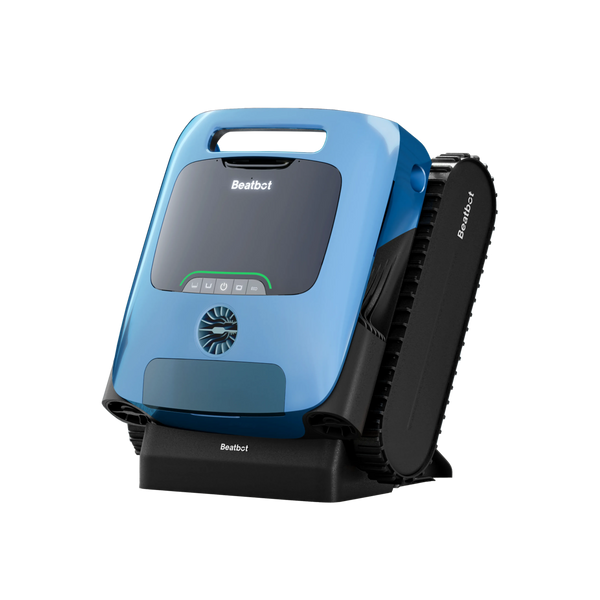
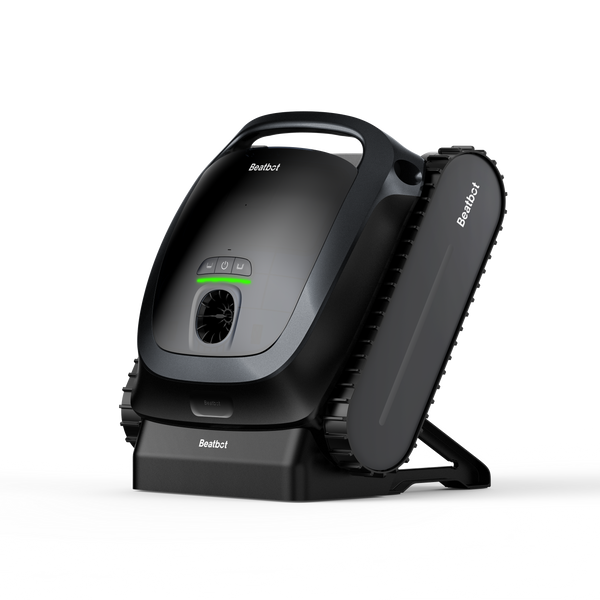
The Beatbot Sora 70 robotic pool cleaner is rated for all common pool surfaces, including concrete, ceramic tile, fiberglass, and polyethylene, making it compatible with both gunite and container pool interiors.
Which Pool Type Costs More to Run Each Month?
Energy is the largest recurring cost for both pool types. Pool pumps, heaters, and lights run year-round in warm climates and seasonally elsewhere. Gunite pools are typically larger, which means larger pumps, more water to heat, and higher electricity consumption. A full-size gunite pool in a warm climate can cost $150 to $300 or more per month in energy depending on equipment efficiency, pool size, and local utility rates.
Container pools are smaller in volume, so energy costs are lower by default. A container pool with a variable-speed pump and solar heating can run on significantly less electricity per month than a full-size gunite pool. That advantage is proportional to size difference: it narrows if heating schedules and pump run times are equivalent.

How Does Pool Cleaning Affect Long-Term Costs?
Manual cleaning labor is one of the more overlooked cost categories in pool ownership. Weekly pool service in most U.S. markets runs $100 to $200 per month, or $1,200 to $2,400 per year. Over ten years, that adds $12,000 to $24,000 to the cost of any pool, gunite or container.
A robotic pool cleaner reduces how often you need professional service, because debris removal is the task that drives most weekly service calls.
Owners who run a robotic cleaner several times a week can often shift from weekly professional service to biweekly or monthly, which cuts that $1,200 to $2,400 annual cost by a third to half. Over ten years, that is a $4,000 to $12,000 reduction in service spend, before counting the lower chemical use that comes from cleaner water.
How much a cleaner saves depends on whether it covers the full pool in one cycle. The Beatbot Sora 70 robotic pool cleaner cleans the floor, walls, waterline, and water surface, so debris is captured before it sinks and before it forces a service call.
Its JetPulse system uses dual converging water jets to pull floating leaves and pollen toward the suction inlet, and its 6L debris basket and 6,800 GPH suction let it clear heavy leaf loads without stopping mid-cycle. Coverage that complete is what allows it to replace, rather than supplement, routine manual cleaning.
The surface material changes how quickly algae adheres and how aggressively the robot needs to brush, but the underlying benefit is the same in both pool types: debris removed before it sinks consumes less sanitizer, puts less strain on the filter, and extends the life of the interior surface.
Does Pool Type Affect Home Resale Value?
A gunite pool adds measurable resale value in most U.S. markets, particularly in warm-climate states like Florida, Texas, Arizona, and California. The National Association of Realtors has noted that an in ground pool can increase home value in warm climates, though the exact percentage varies by neighborhood, pool condition, and buyer demand. In cold-climate markets, the effect is smaller or neutral because buyers factor in seasonal shutdown costs.
Container pools are a less established category in real estate appraisals. Some buyers will see them as a practical amenity; others will view them as temporary structures or require negotiation over removal. As container pools become more common, appraisal treatment may shift, but they do not currently carry the same consistent resale premium as an in-ground gunite pool.
What Is the 10-Year Cost of Owning Each Pool Type?
The table below uses mid-range estimates for a typical U.S. market. Actual costs vary by climate, pool size, local labor rates, and equipment choices.
|
Cost Category |
Gunite Pool |
Container Pool |
|
Installation (all-in) |
$65,000 – $110,000 |
$25,000 – $70,000 |
|
Interior resurfacing (10 yr) |
$5,000 – $15,000 |
Minimal to none |
|
Chemical & maintenance (10 yr) |
$8,000 – $18,000 |
$5,000 – $12,000 |
|
Energy costs (10 yr) |
$18,000 – $36,000 |
$10,000 – $22,000 |
|
Professional service (10 yr) |
$12,000 – $24,000 |
$10,000 – $20,000 |
|
Estimated 10-yr total |
$108,000 – $203,000 |
$50,000 – $124,000 |
The gap is largest at the low end. A well-equipped container pool with heating, a cover, and a robotic cleaner can approach mid-range gunite costs over a decade. The comparison also does not include any resale value contribution from the gunite pool, which may offset part of the cost difference in warm-climate markets.
Which Pool Type Is the Better Financial Choice?
Container pools cost less to buy and less to run year over year. If your planning horizon is under ten years, you live in a climate that limits pool use to a few months, or you want a functional pool without a major capital commitment, the container pool is the financially efficient choice.
Gunite pools cost more in almost every category except long-term durability and resale value. They make stronger financial sense for homeowners in warm climates who plan to stay in the home long-term, want a larger or custom-shaped pool, or are in a market where an in ground pool materially affects property value.
FAQs
How much can a robotic pool cleaner save on pool maintenance?
A robotic cleaner can reduce professional service costs by a third to half by letting owners move from weekly to biweekly or monthly service. On a typical $1,200 to $2,400 annual service budget, that is $400 to $1,200 saved per year, plus lower chemical use from cleaner water. The exact figure depends on debris load and how often the cleaner runs.
Is a container pool a permanent structure or can it be removed?
A container pool can be removed more easily than a gunite pool, since it is a self-contained steel unit rather than a poured concrete shell. That portability is an advantage if you may relocate, but it is also why appraisers and buyers sometimes treat it as a semi-permanent feature rather than a fixed improvement to the property.
Does a container pool add value to a home?
Container pools do not carry the same consistent resale premium as gunite pools in most real estate markets. In-ground gunite pools are recognized by appraisers as permanent improvements, particularly in warm climates. Container pools are a newer category and appraisal treatment varies.
What is the biggest hidden cost in gunite pool ownership?
Interior resurfacing. Gunite plaster or pebble finishes typically need full replacement every 10 to 15 years, and depending on the finish material and pool size, that single service can cost $10,000 to $20,000 or more.