Most Popular


 Sora Series


 AquaSense Series

 Skimmer & Bundle

 Retail Edition


 Accessories



The most expensive part of a pool is usually its structure, meaning the shell of an in ground pool or the liner of a vinyl or above-ground pool. This component drives the largest share of the initial build and the largest single repair bills.
Over the full life of the pool, though, heaters, resurfacing, and ongoing maintenance can add up to more than the shell once you tally up repairs and replacements across ten or twenty years. The shell is the biggest check you write once. The recurring costs are the ones that decide whether the pool stays worth owning.
Why the Pool Shell Costs the Most to Build
For an in ground pool, the shell is the single most expensive part. The shell is the structural body of the pool, and for concrete or gunite pools it is formed on site with rebar, sprayed concrete, and a finish coat such as plaster or pebble. There is no cutting corners here without weakening the pool itself. Excavation and shell work together eat up close to half the build budget, which is why the shell lands as the biggest line on any estimate you get.
Fiberglass pools shift this cost into a single molded shell that arrives prebuilt, while vinyl-liner pools rely on a steel or polymer wall frame fitted with a vinyl liner.
The pool type sets the overall range: vinyl-liner builds tend to start around $25,000 to $65,000, fiberglass runs roughly $45,000 to $100,000, and a concrete pool can climb past $120,000 once fully customized. In every case, the part that holds the water is the part you spend the most on first, and everything else, including pumps, heaters, and decking, is built around it.
What Costs the Most Over the Life of a Pool?
Over the full life of a pool, recurring costs usually exceed the price of any single component, and the heater and the surface finish are the two parts most likely to cost more than the original shell. A pool heater is expensive to buy, expensive to run, and has a shorter lifespan than the pool itself, so most owners replace it at least once.
A gas heater can add $200 to $400 a month to run during heating season, while an electric heat pump runs closer to $100 to $200, and gas units often need replacing after five to ten years.
Resurfacing is the other long-term expense that catches owners off guard. A plaster finish on a concrete pool wears down and needs to be redone every seven to fifteen years, a job that commonly runs $8,000 to $15,000. A vinyl liner has to be replaced on a similar cycle when it cracks, fades, or tears, usually $4,000 to $8,000 each time. Either way, the surface you already paid for at the build comes back around as a bill you pay again.
Day-to-day operation adds the rest. Pumps run for hours daily and are often the single largest recurring cost, chemicals get consumed continuously, and water gets replaced after heavy use or repairs. Routine upkeep alone tends to run a few thousand dollars a year before any repairs, which is how a pool quietly becomes more expensive to own than to build.

Does Pool Type Affect What Costs the Most?
Pool type changes both which component is the most expensive and how the costs land over time. A concrete or gunite pool has the highest structural cost upfront and the highest resurfacing cost later, since plaster finishes wear and need redoing. It is the most customizable build and also the most expensive to own across decades.
A fiberglass pool moves the major cost into the prebuilt shell, which lowers ongoing surface maintenance because the gelcoat finish resists algae and does not need replastering. The smooth surface also consumes fewer chemicals than concrete, and a fiberglass shell can go 15 to 20 years before any major refinishing.
The tradeoff is a higher relative cost for the shell itself and limited shape options. A vinyl-liner pool has the lowest entry cost, but the liner is a recurring replacement on a regular cycle, so its cheapest part at purchase becomes one of its more predictable future bills.
Which Pool Repairs Are the Most Expensive?
The most expensive pool repairs are structural ones, because the damaged area is the hardest to reach and the hardest to fix. Repairing or replacing a cracked concrete shell or a damaged structural section commonly runs $5,000 to $20,000, since the work can require draining the pool, breaking into surrounding surfaces, and rebuilding by hand.
An underground plumbing leak sits in the same tier once excavation is involved. Detection alone costs $400 to $1,000, and a buried pipe repair under concrete can reach $1,800 or more. These jobs hit hard for the same reason the shell cost so much to build, you are paying to break back into the part of the pool that was buried and sealed.
Equipment failures sit a tier below and are far more common. Replacing a pool pump typically costs $700 to $1,300, a new filter $250 to $1,700, and a failed heater $1,500 to $5,000 to replace outright. Each of these parts wears out well within the life of the pool, which is why a homeowner is more likely to replace a heater twice than to repair the shell once.
The split that matters is severity against frequency. Structural repairs are rare but severe, while equipment repairs are routine and usually land in the hundreds to low thousands. Budgeting for only one of the two is how pool owners get caught off guard.
Does Maintenance Cost More Than the Pool Itself?
Across a long enough timeline, maintenance can cost more than the pool itself, especially if you pay someone else to handle it. Doing the upkeep yourself runs roughly $2,000 to $3,500 a year for chemicals, electricity, and supplies, while a weekly service contract pushes that to $4,000 to $6,500 a year.
Routine upkeep means balancing chemicals, cleaning the water and surfaces, running the pump and filter, and servicing equipment before it fails. Each task is small on its own, but they come back every week for as long as you own the pool, and that steady drip is how maintenance quietly passes what you paid to build it.
Cleaning is the recurring cost most within your control, since the labor and service visits it drives are the part you can take off the books. Debris, algae, and waterline buildup return constantly, so skimming the surface, vacuuming the floor, scrubbing walls, and clearing the waterline never really finish. A cordless robotic pool cleaner absorbs that routine work, which trims the weekly service you might otherwise pay for and keeps the cost from compounding.
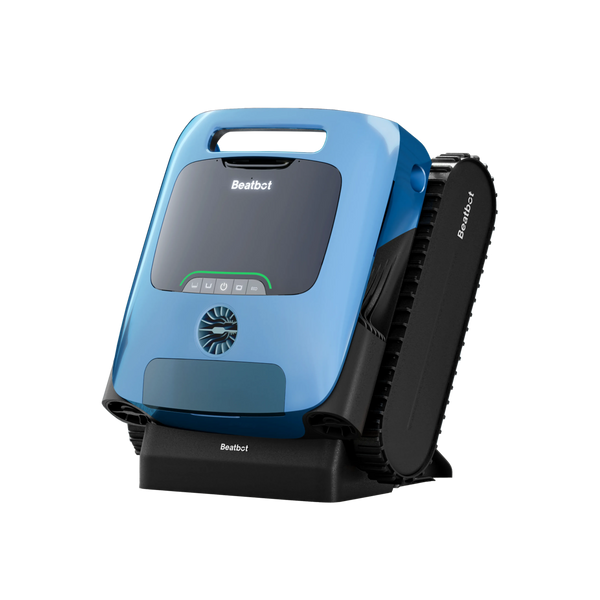
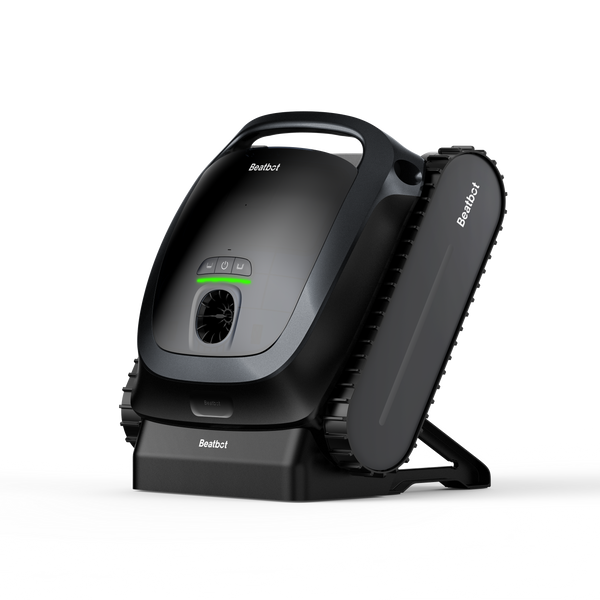
The Beatbot Sora 30 is built for exactly this. As a cordless robotic pool cleaner, it cleans the floor, walls, and waterline in one cycle and reaches shallow areas and platforms as low as 8 inches, covering the spots that otherwise need manual scrubbing. Its 5L debris basket holds a full season's leaf load between empties, so the routine runs without you stopping to intervene.
How to Keep Pool Costs Down
The best way to keep pool costs down is to spend small on the cheap parts so you do not spend big on the expensive ones. Balanced water chemistry prevents the etching and staining that shortens the life of a plaster surface or a vinyl liner. Clean filters and a well-maintained pump take the strain off the equipment most likely to fail. And regular cleaning keeps algae from getting a foothold and spreading.
Preventive habits matter more than any single purchase. A heater running in clean, balanced water lasts longer than one fighting scale buildup, an algae-free surface needs resurfacing less often, and consistent cleaning keeps the small problems that lead to big repairs from taking hold. The structural shell, the most expensive part of all, lasts longest when the water it holds stays in balance and the surrounding equipment gets serviced before it breaks.
How easy that cleaning stays depends a lot on the setting. A pool ringed by trees collects leaves and pollen on the surface faster than it sinks, and skimming that by hand is the chore most likely to get skipped.
For those conditions the Beatbot Sora 70 adds water-surface cleaning the Sora 30 does not have. Its JetPulse system uses converging jets to pull floating debris toward the suction inlet, capturing leaves and pollen in the same cycle that cleans the floor, walls, and waterline.
FAQs
What hidden costs do pool builders leave out of a quote?
Initial quotes often exclude site-specific work like rocky-soil excavation, retaining walls for sloped yards, and tree removal, which can add several thousand dollars. Permits, decking, and electrical hookups for equipment are also commonly quoted separately.
Can you resurface a pool yourself?
Replastering a concrete pool is difficult to do well without experience, since the finish has to be mixed and troweled in one continuous session before it sets. Vinyl liner replacement is more DIY-friendly, though large pools still benefit from professional fitting.
Does a bigger pool cost a lot more to maintain?
Yes. A larger pool holds more water, so it uses more chemicals, runs the pump longer, and takes more time to clean, which raises nearly every recurring cost. Heating is where size hits hardest, since a bigger volume takes far more energy to warm.
Is an inground or above-ground pool cheaper over time?
Above ground pools cost far less to build and are easier to repair, but their liners and equipment wear out sooner. Inground pools cost much more upfront yet last decades, so the gap narrows the longer you keep the pool.