Most Popular


 Sora Series


 AquaSense Series

 Skimmer & Bundle

 Retail Edition


 Accessories


Converting to a salt water pool means adding a salt chlorine generator that turns dissolved salt into chlorine, so your pool sanitizes itself instead of relying on store-bought chlorine. The appeal is softer-feeling water, far less chemical handling, and steadier chlorine levels.
The drawbacks are a higher upfront cost, periodic salt cell replacement, and corrosion risk to metal fixtures and some pool surfaces. A salt water pool is still a chlorine pool, just one that makes its own chlorine. Whether the switch pays off depends less on price than on how you want to spend your time and what your pool is built from.
What Does Converting to a Salt Water Pool Involve?
A conversion adds a salt chlorine generator, often called a salt cell, to your existing equipment line and dissolves pool-grade salt into the water at roughly 2,700 to 3,400 parts per million. The generator passes an electrical current through the salt water, a process called electrolysis, which produces chlorine continuously while the pump runs.
A salt water pool is not chlorine-free. The generator makes the chlorine on site from the dissolved salt instead of you adding it by hand, so the water still sanitizes like any chlorinated pool.
You keep your existing pump, filter, and plumbing. The salt cell plumbs in after the filter, and the salt dissolves directly into the pool, so there is no need to drain or refill for the conversion itself. The initial fill takes several hundred pounds of salt for an average inground pool, after which the system tops up its own chlorine.
The salt level stays low enough that most swimmers never taste it. Ocean water sits near 35,000 ppm, while a salt water pool runs at about a tenth of that, so at around 3,000 ppm the water reads as smooth rather than salty.

Pros of Converting to a Salt Water Pool
The main upsides are softer-feeling water, much less hands-on chemical work, and steadier sanitation across the week.
Softer, Gentler Water
The low salt level gives the water a smoother feel on skin, eyes, and hair than a pool you chlorinate by hand, and many owners notice less of the sharp chlorine smell on skin and swimsuits. That smell comes from chloramines that build up in unevenly dosed pools, not from chlorine itself. Salt water is also easier on swimwear, since it does not strip color the way concentrated chlorine can.
Steadier Chlorine and Fewer Algae Swings
Steady chlorine production removes the weekly peaks and troughs. A manually chlorinated pool swings between too much and too little as tablets dissolve and get used up, which is when algae tends to take hold. A generator trickles chlorine in whenever the pump runs, so levels stay even day to day.
Less Chemical Handling and Cost
You stop buying, hauling, and storing buckets of chlorine tablets, and you stop second-guessing how much to add. Salt pools also usually spend less per year on sanitizing chemicals, often a few hundred dollars less, though that figure depends heavily on pool size and climate. For owners who swim often, the lighter routine is the strongest reason to convert.

Cons of Converting to a Salt Water Pool
The main drawbacks are the upfront equipment cost, ongoing salt cell replacement, corrosion to metal and some surfaces, and the need for a service tech who knows salt systems.
Corrosion to Metal and Surfaces
Salt water gradually attacks metal, including rails, ladders, light rings, automatic cover tracks, and pump seals, and it can wear plaster and some natural stone faster than fresh water does. Fiberglass pools tolerate salt best. Vinyl liners are fine on the surface but can expose galvanized steel walls to corrosion if the liner ever leaks. Sealing stone decking and choosing salt-rated fixtures prevents most of this damage.
Salt Cell Replacement and Cleaning
The salt cell is a wear part, not a one-time purchase. Most cells last three to seven years depending on use and water chemistry, and replacement typically runs from a few hundred to over a thousand dollars once you include the cell and any control board work. High calcium also scales the cell, so it needs periodic descaling to keep chlorine output steady.
Specialized Service for Repairs
A salt system adds equipment that a basic pool service may not handle. The generator, control board, and cell occasionally need diagnosis or replacement, and you will want a technician familiar with chlorine generators rather than chlorine pools alone. In most areas this is easy to find, but it is worth confirming local service before you convert.
Electricity and Yard Impact
The generator draws electricity whenever it runs, and splashed or spilled salt water can kill surrounding grass and some plants. Neither is a dealbreaker on its own, but together with the points above they show why a salt water pool is not the maintenance-free system it is sometimes sold as.

Salt Water Pool Pros and Cons at a Glance
Here is the trade-off in one view.
|
Pros |
Cons |
|
Softer water on skin, eyes, and hair |
Higher upfront conversion cost |
|
No harsh chlorine smell |
Salt cell replacement every few years |
|
Steady chlorine, fewer algae swings |
Corrosion to metal and some surfaces |
|
Less chemical handling and storage |
Needs a salt-experienced service tech |
|
Lower yearly chemical spend |
Still requires physical cleaning |
The pros are mostly about comfort and ease, while the cons are about cost, corrosion, and the cleaning that does not disappear after the switch.
Do Salt Water Pools Save Money?
Not as much as many owners expect. A salt water pool usually costs less in day-to-day sanitizing chemicals, but the upfront generator and the recurring cost of replacing the salt cell tend to offset those savings, so over the full life of the pool the two systems often land close to even.
The upfront cost comes first. Converting an average inground pool commonly runs roughly $1,000 to $2,500 once you include the generator, the initial salt, and installation labor, and larger or premium systems push higher.
The recurring cost is the salt cell. Replacing it every few years, plus the occasional control board, claws back a meaningful share of the chemical savings. Those savings are real, often a few hundred dollars a year, but they accumulate slowly while a cell replacement lands as one larger bill.
Converting is a comfort and convenience decision more than a money-saving one. If you go in expecting softer water and a lighter weekly routine, a salt water pool usually delivers. If you go in expecting to come out ahead financially, the math rarely supports it.
Is a Salt Water Pool Easier to Maintain?
It reduces chemical maintenance, not physical maintenance. A salt chlorine generator handles sanitizing on its own, but it does nothing about leaves, dirt, sediment, or the buildup that collects along the waterline. You still test and balance the water weekly, descale the salt cell, and physically remove debris from the pool.
The chemistry side gets easier, but the physical cleaning is identical to any other pool. Skipping it is how shallow steps and platforms turn into the spots where algae starts.
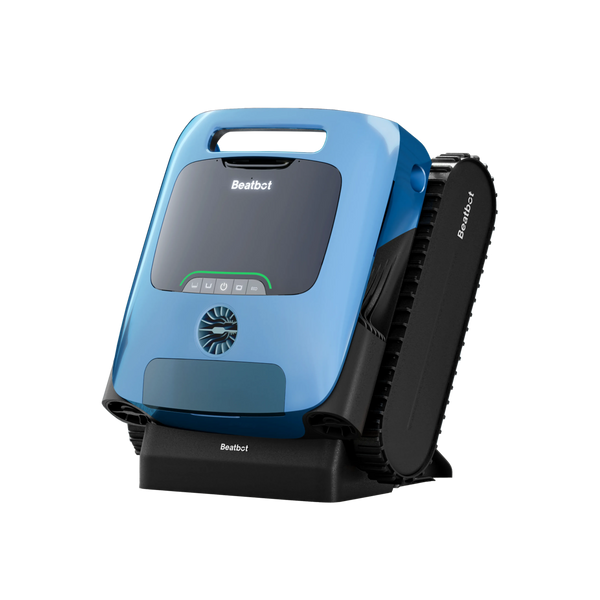
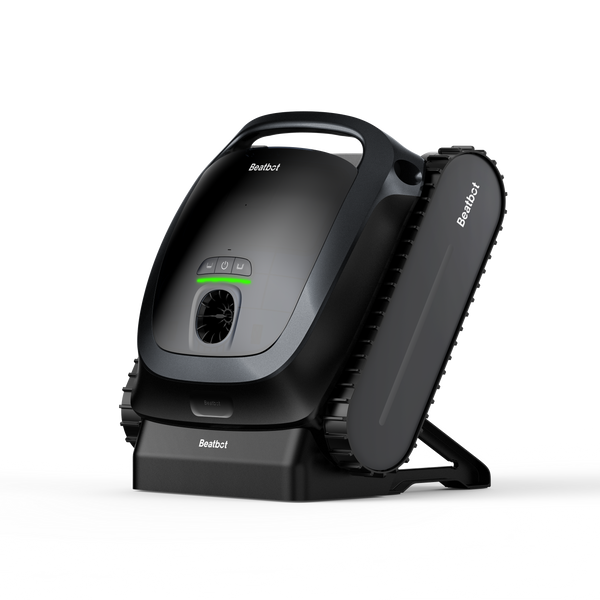
An automated cleaner takes that physical work off your hands. A cordless robotic pool cleaner like the Beatbot Sora 70 cleans the floor, walls, waterline, and water surface in one cycle, so converting to salt does not swap a chemical chore for a scrubbing one.
Its industry-first JetPulse system is what sets the surface cleaning apart. Two side jets create converging streams that pull floating leaves and pollen toward the central intake, capturing them on the first pass before they sink. A 6L basket and 6,800 GPH suction handle seasonal debris, and it reaches shallow steps as low as 8 inches, where algae tends to start.
Who Should Convert to a Salt Water Pool?
A salt water pool makes the most sense for owners who swim often, dislike handling chlorine, and want steadier water with less weekly chemical work, and whose pool has salt-friendly surfaces and fixtures. It makes less sense on a tight budget, on pools with exposed metal or soft stone, or for anyone converting mainly to save money.
Pool construction is often the deciding factor. Fiberglass handles salt best, and vinyl liner pools are generally fine as long as the liner stays intact. Concrete and plaster pools can be converted too, though the plaster may wear faster, and any pool with metal walls behind the liner, metal cover tracks, or copper heater components carries a higher corrosion risk that is worth pricing out first.
The mismatch to avoid is expecting salt to be set-and-forget or to save money, since it reliably does neither. If your priority is swimmer comfort and a lighter chemical routine, and your pool and fixtures are compatible, converting is usually worth it. If your budget is tight or your equipment is salt-sensitive, a well-managed traditional chlorine pool may serve you better.

FAQs
Can you swim in a salt water pool right after converting?
Usually within about 24 hours. The salt needs time to fully dissolve and circulate with the pump running before the generator produces a steady chlorine level. Check that salt and chlorine readings sit in range before anyone gets in.
How often do you need to add salt to a salt water pool?
Only a few times a year for most pools. Salt is not used up when it makes chlorine, so it mainly leaves through splash-out, backwashing, and rain overflow. Top it up whenever a test shows the level below the generator's range.
Can you convert an above-ground pool to salt water?
Yes, if the pool and its hardware are salt-compatible. Above ground pools with resin frames handle salt well, while those with exposed steel or aluminum components can corrode and may need salt-rated parts or extra protection first.