Flagship


 Sora Series


 AquaSense Series


 Skimmer & Bundle

 Retail Edition


 Accessories


 Extended Warranty


Most above ground pools sold in the US have wall heights of 48, 52, or 54 inches, and the actual water depth sits about 4 to 6 inches below the top of the wall. That puts usable swim depth between roughly 42 and 48 inches for standard models, with deeper variants possible through expandable liners or a dished-out floor.
Choosing the right depth comes down to who is swimming, what activities you want, and how much yard prep you are willing to do. The rest of this guide breaks down standard depths, deeper options, and the trade-offs that matter once the pool is in the ground.
How deep is a standard above-ground pool?
Standard above ground pools hold between 42 and 48 inches of water, depending on wall height. The wall is built in 48, 52, or 54-inch sizes, and the waterline sits 4 to 6 inches below the top so the skimmer can pull surface debris correctly. Going taller than 54 inches is uncommon at the residential level because the structural cost rises sharply and the extra two inches of swim depth add little practical value.
The reason for the gap between wall height and water depth is mechanical, not aesthetic. Skimmers are factory-mounted a few inches below the top edge, and filtration only works properly when the waterline stays at the midpoint of that opening. Filling above that line risks overflow during rain or heavy use, and filling below it starves the pump.
The table below shows the three wall heights you will see at most US retailers and the swim depth they actually deliver.
|
Wall Height |
Typical Water Depth |
Best For |
|
48 inches |
About 42 inches |
Families with younger kids |
|
52 inches |
About 46 inches |
Mixed-age households |
|
54 inches |
About 48 inches |
Adult swimmers and sports |
These numbers assume a flat, sand-based floor and a standard liner. Anything outside that setup, including dished bottoms or expandable liners, will shift the depth by several inches.

Why is water depth always less than wall height?
Water depth runs about 4 to 6 inches shallower than the wall because of two unavoidable layers: the sand base under the liner and the skimmer cutout near the top. Together they remove between 4 and 8 inches of usable depth from the printed wall measurement.
A typical above-ground installation places 1 to 2 inches of leveled sand beneath the liner. That cushion protects the vinyl from rocks and roots and gives the floor a softer feel, but it also raises the bottom of the swim area. At the top, the skimmer cutout requires the water to sit at its midline, which is usually 4 to 6 inches below the rail. Subtract both, and a 52-inch wall becomes about 46 inches of swim depth.
Sand is the standard base material for a reason. Mason or pool-grade sand compacts evenly under the liner, drains well, and stays in place when the water settles in. Plain dirt or topsoil holds organic matter that decomposes and shifts, which creates soft spots and visible dips in the floor within a season or two. Some installers use a foam pad over packed earth as an alternative, but pure dirt under the liner is not recommended.
Filling closer to the top is possible for short stretches, but pools are not designed to be filled to the rim. Wind action, splash-out during use, and skimmer overflow all assume the standard fill line.

Can an above-ground pool have a deep end?
Yes. An above-ground pool can have a deep end of 6 feet or more if you use an expandable liner and dig a hopper or sloped bowl into the floor before installation. The wall height stays the same; the extra depth comes from excavating the ground inside the pool footprint and letting the stretchy liner conform to that shape.
Expandable liners include roughly 12 inches of additional vinyl on the side panel, and they keep stretching to fit dished or hopper-shaped floors. Combined with a dig of 2 to 3 feet in the center, they routinely produce 6-foot center depths in larger oval pools. Some installations push to 8 feet, though slope safety and pool engineering set practical limits.
The trade-off is preparation. You need a builder who has done expandable-liner pools before, a slope no steeper than about 1 foot of drop per 3 feet of run, and confirmation that your specific pool model supports the upgrade. Not every kit does. Smaller round pools, in particular, rarely accept deep-end conversions because the diameter is not wide enough to hide a safe slope.
Can you bury an above-ground pool to lower its profile?
Yes, many above ground pools can be installed semi-inground, which means burying the pool partially in the yard so the wall sits 12 to 24 inches above grade instead of the full 48 to 54 inches. The water depth inside stays the same; only the visible profile changes. This is a popular choice for homeowners who want the cost and maintenance of an above-ground pool without the tall wall dominating the backyard view.
Not every kit handles burial. Steel-walled pools need a corrosion-resistant outer wrap and proper drainage around the perimeter, and resin-walled pools tolerate ground contact better than coated steel. Going fully in-ground is rarely supported by manufacturer warranties because the wall was not engineered to resist sustained earth pressure from all sides.
Semi-inground installs also change ladder and deck planning. A buried pool needs less height for entry and exit, but it adds excavation cost and complicates liner replacement later. Confirm with the manufacturer or dealer how deep your specific model can be buried before you dig.
How do you choose the right above-ground pool depth?
Pick depth based on the youngest and oldest swimmers you expect to use it regularly. A 48-inch wall delivers about 42 inches of water, which lets most kids stand comfortably and lowers the barrier for entry and exit. A 54-inch wall gives roughly 48 inches, which is closer to chest-deep for an average adult and works better for laps, water sports, and resistance exercise.
Households that mix age groups tend to settle on 52 inches as the middle ground. It gives older kids and adults real swimming room while keeping shorter swimmers in reach of the bottom. The two-inch step up to 54 inches is real but small enough that many families pick based on price or available stock instead.

If diving is on your list, the answer is no: residential above ground pools are not built or rated for diving, regardless of wall height or hopper depth. Even a 6-foot center is too shallow for safe head-first entry from a deck or board.
How does pool depth affect cleaning and maintenance?
Deeper pools hold more water, which means longer heating cycles, slightly higher chemical use, and more time per cleaning pass. The relationship is roughly linear: a 54-inch pool of the same footprint as a 48-inch one holds about 12 to 15 percent more water and takes a proportionally longer time to balance after rain or a heavy bather load.
If you went the expandable-liner route and added a hopper or dished bottom, the cleaning question changes shape. A flat-floor robot can stall or skip coverage on slopes, and a 6-foot center depth means more vertical swing during each pass.
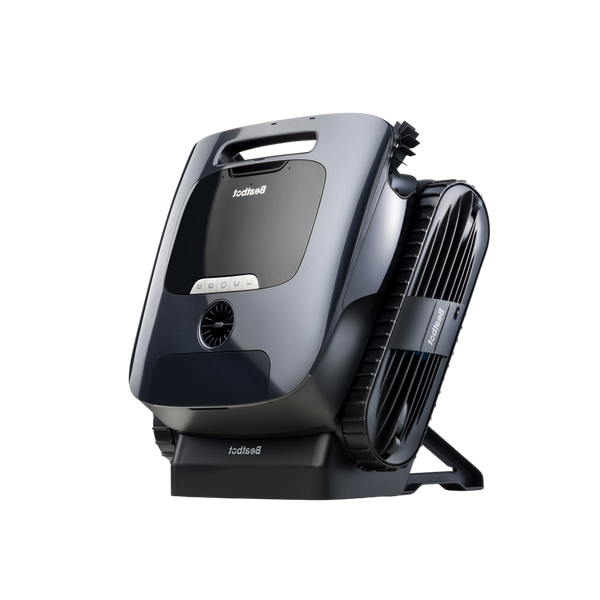
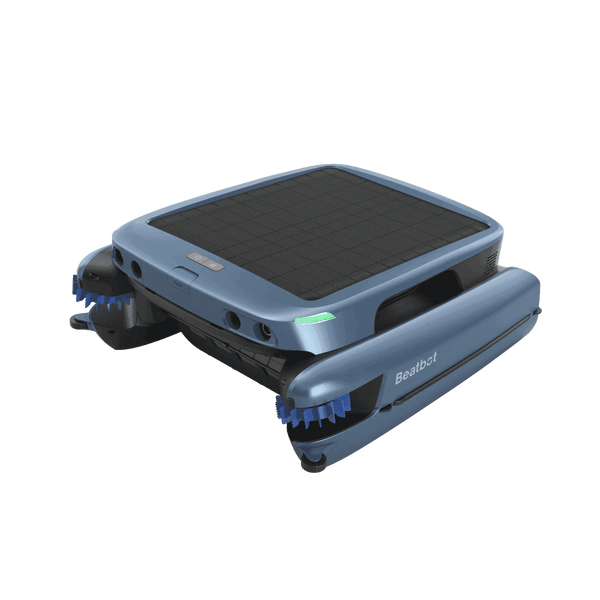
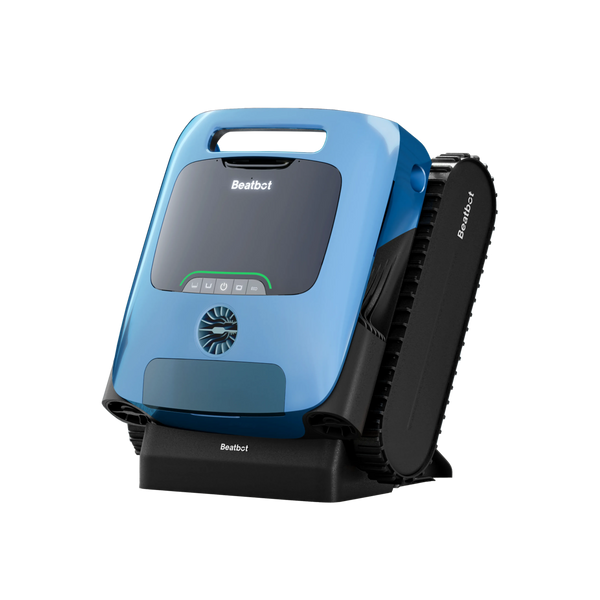
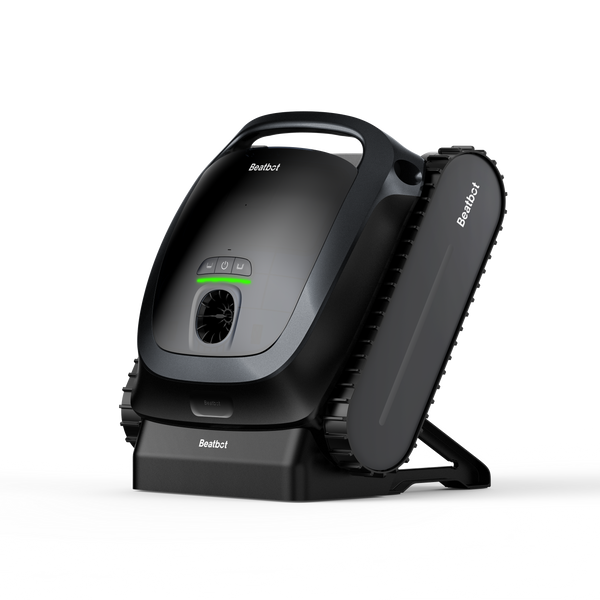
The Beatbot AquaSense 2 Ultra robotic pool cleaner is built for this kind of irregular layout. Its CleverNav navigation pairs with AI-powered obstacle detection and self-extrication so the unit handles dished bottoms, slope changes, and hopper transitions without getting stuck mid-cycle. For any above-ground pool where the floor is not a single flat plane, that adaptive routing matters more than raw suction.
Larger above ground pools, the 18-by-33-foot ovals and bigger, hold significantly more water at the same wall height, and a single cleaning cycle has to cover more square footage and more debris. Endurance becomes the limiting factor.
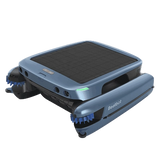
The Beatbot Sora 70 cordless robotic pool cleaner pairs a 10,000mAh battery with up to 5 hours of floor cleaning and a 6L debris basket, which lets it finish a large above-ground pool in one cycle without a midway recharge or filter dump. The 6L capacity is roughly enough to hold 650-plus leaves at a time, which matters most in fall or after storms when above ground pools without an enclosure tend to fill up fast.
What about shallow areas and entry steps?
Shallow zones in above ground pools include built-in entry steps, swim-out platforms in semi-inground installs, and ledges in oval models that include a built-in seating area. These spots typically sit in 8 to 18 inches of water and are awkward to clean by hand because the angle is wrong for a brush and the surface collects fine debris fast.
If your pool is on the shorter side, around a 48-inch wall, or has any of these shallow features, a robot has to be able to actually enter and clean those zones. The Beatbot Sora 30 cordless robotic pool cleaner operates in water as shallow as 8 inches and cleans accessible platforms with a minimum surface area of about 3.3 by 3.3 feet, which covers the most common above-ground entry steps and tanning ledges.
That shallow-water capability is the deciding factor for any pool that is not a single flat-floor rectangle, since cleaners with higher minimum operating depth simply skip these areas.
FAQs
How deep are most Intex and Bestway pools?
Most soft-sided Intex and Bestway pools sit between 30 and 48 inches in wall height, with water depths usually 4 to 6 inches shallower than the wall. Their largest framed pools reach the same 52-inch range as steel-walled models, but the inflatable-ring versions stop closer to 30 inches.
What is the most popular above-ground pool depth in the US?
The 52-inch wall has been the best-selling height for over a decade, giving roughly 46 inches of water and balancing cost, swim depth, and ladder access. The 54-inch wall is gaining ground at the higher end of the market, but the practical difference between the two is only two inches of water.
How deep is too deep for an above-ground pool?
Eight feet is the practical ceiling for a custom above-ground build with an expandable liner, and even that is rare. Beyond 8 feet, slope safety, water pressure on the liner, and excavation cost all push owners toward an in-ground installation instead. Most above-ground deep-end builds top out at 6 feet for this reason.
Do above ground pools shrink in depth over time?
The pool itself does not shrink, but the sand base can settle unevenly during the first couple of seasons, which makes one side feel deeper than the other. Routine liner replacement, every 8 to 15 years for vinyl, is the right time to relevel the floor and restore the original depth profile.