Flagship



 Sora Series


 AquaSense Series


 Skimmer & Bundle

 Retail Edition


 Accessories




 Extended Warranty



An above-ground pool deck is not just a platform — it is the difference between a pool that feels like a temporary fixture and one that becomes the center of your backyard. The right deck gives you safe, comfortable access, a space for lounging, and a finished look that adds real value to your property. Building one is a realistic DIY project, but it requires careful planning before the first board goes down.
Design Your Above-Ground Pool Deck Before You Build
Start with the pool itself. Measure the diameter or dimensions and identify where the pool wall sits relative to your yard boundaries, any utility lines, and your home's foundation. Most local codes require a minimum setback from property lines, and pool decks often fall under the same rules as permanent structures. A partial deck on one side of the pool costs significantly less than a wraparound design and can still deliver everything you actually need: entry access, a seating area, and a place for equipment.
Decide early whether the deck will be freestanding or attached to your house. Freestanding decks are simpler to permit and allow the pool structure to flex seasonally without stressing the deck framing. Attached decks create a more connected indoor-outdoor flow but require a ledger connection to the house that must be engineered to handle the load.
Height is the other key design variable. Above ground pools typically sit 48 to 54 inches tall, which means the deck surface needs to reach the pool's top rail. Taller decks require more substantial framing and, in most jurisdictions, mandatory railings on any side that sits more than 30 inches above the surrounding grade.

Do You Need a Permit?
In most U.S. jurisdictions, any deck over 200 square feet, any deck over 30 inches above grade, or any deck attached to a dwelling requires a building permit. Pool decks frequently meet one or more of these thresholds. Contact your local building department before you start — not after. Unpermitted decks can trigger fines, mandatory tear-downs, and complications when selling your home.
Many counties also require a fence permit separately for the safety barrier around the pool. Plan both permits simultaneously so your timeline does not stall mid-build.
Should You Build It Yourself or Hire a Contractor?
A straightforward partial deck on a round above-ground pool is within reach for a confident DIYer with basic carpentry skills. The work is physically demanding — setting concrete footings, cutting structural lumber, and managing large composite or pressure-treated boards — but the process is linear and well-documented. Budget roughly 30 to 50 hours of labor for a 200-square-foot deck.
Hire a professional contractor when the design is complex, when the deck is elevated more than four feet, or when your yard presents grading challenges. For wraparound designs or decks attached to the house, professional involvement is strongly recommended to ensure the ledger connection and structural members are engineered correctly.
What Is the Cheapest Way to Build a Deck Around an Above-Ground Pool?
The biggest cost lever is scope. A partial deck on one side of the pool covering 100 to 150 square feet can cost roughly a third of a full wraparound design. Pressure-treated wood is the least expensive surface material; composite costs more upfront but eliminates resealing costs over time. DIY labor eliminates contractor markup entirely, which on a straightforward partial deck can represent 40 to 50 percent of total project cost.
Other cost-reduction strategies: use a simple rectangular deck footprint rather than a curved or multi-level design, limit the deck height to avoid the additional framing and guardrail requirements that kick in above 30 inches, and source lumber from a local lumberyard rather than a big-box retailer for better pricing on structural members.
How to Build a Pool Deck Around an Above-Ground Pool
The build follows a fixed sequence: site prep, footings, framing, decking, then railings and stairs. Each phase has specific code and structural requirements that determine how long the deck holds up safely.
Site Preparation
Install the pool before breaking ground on the deck. The pool structure needs to settle and be confirmed level and in its final position before you frame around it.
Once the pool is in place, clear the deck footprint of all vegetation and topsoil down to undisturbed earth. Mark the layout using batter boards and string lines. Check your layout for square by measuring diagonals — they must be equal. Spray the exposed soil with a non-selective herbicide or lay landscape fabric to prevent vegetation from growing up under the deck boards later.
Setting the Footings
Footings carry the entire weight of the deck and transfer it to the ground below the frost line. In most of the continental U.S., footings must extend at least 12 to 36 inches below grade depending on your climate zone — check local frost depth tables or your permit drawings for the correct depth.
Dig the footing holes with a power auger, then pour concrete tube forms (typically 8- or 10-inch diameter Sonotubes). Let the concrete cure for at least 48 hours before loading the structure. Post bases or adjustable standoffs attached to the cured footings keep the wood posts out of direct contact with the concrete, significantly extending the life of the framing.
Installing the Frame
Use pressure-treated lumber rated for ground contact (UC4B or higher) for any member close to the pool or to grade. Standard residential deck framing uses doubled 2x10 or 2x12 beams spanning between posts, with 2x8 or 2x10 joists spaced 16 inches on center for structural boards, or 12 inches on center for composite decking to prevent deflection.
For most above-ground pool decks, 2x8 joists at 16 inches on center are sufficient for spans up to 10 feet with standard wood decking. Move to 2x10 when spans exceed 10 feet, when using heavier composite or PVC boards, or when the deck will carry significant live loads like hot tubs or large groups of people. Undersizing joists is one of the most common structural errors on DIY decks and shows up later as noticeable flex underfoot.
Frame the deck to run as close to the pool wall as practical. A gap of 1 to 3 inches between the deck frame and the pool wall allows for the pool's seasonal movement without putting lateral pressure on the structure. Run decking boards beneath the pool's top rail by notching or trimming boards to fit inside the rail uprights — this creates a tighter, more finished look and eliminates the gap that would otherwise collect debris.

Laying the Deck Surface
Start decking from the pool side and work outward. This approach ensures the most visible boards — those closest to the pool — are full-width and cut cleanly. Use hidden fastening systems where possible: face screws work fine structurally, but hidden fasteners give the surface a cleaner appearance and eliminate potential trip hazards from raised screw heads.
Maintain a consistent 1/8-inch gap between boards to allow drainage and airflow. For composite decking, follow the manufacturer's gap specifications exactly, as composite expands and contracts with temperature at a different rate than wood. Snap chalk lines across the joists before installing to keep rows perfectly straight.
Installing Railings, Stairs, and a Safety Gate
Any deck surface more than 30 inches above grade requires a railing. Local codes typically specify a minimum height of 36 inches for decks under 30 inches above grade, and 42 inches for decks over 30 inches. Balusters must be spaced so that a 4-inch sphere cannot pass between them — the standard designed to prevent small children from falling through or getting stuck.
Position the stairs away from the pool wall and incorporate a self-closing, self-latching gate at the top of the stair opening. Pool safety codes in most states require this gate to latch at a height unreachable by young children (typically 54 inches from the deck surface or positioned on the pool side of the gate). Fencing the entire pool area should be budgeted from the start — many jurisdictions require it, and it is the single most effective barrier against child drowning.
Above-Ground Pool Deck Materials Compared
Material choice determines how much maintenance the deck needs, how long it lasts, and how it looks ten years from now. Pool environments are demanding: constant UV exposure, frequent wet/dry cycles, chlorine splash, and foot traffic from swimmers create conditions that expose every weakness in a material's durability.
Pressure-Treated Wood
Pressure-treated lumber is the most common choice for pool deck framing and is also used for deck surfaces. It is widely available, easy to work with, and cost-effective. The trade-off is ongoing maintenance: PT wood should be cleaned annually, allowed to dry fully after installation, and sealed or stained every two to three years to prevent cracking, checking, and weathering.
Treated lumber also contains copper-based preservatives that can corrode some aluminum pool components at contact points — use stainless steel fasteners throughout.
Composite Decking
Composite decking is manufactured from a blend of wood fiber and recycled plastic. It does not rot, warp, or splinter, and it requires no staining or sealing — a significant advantage in a high-moisture pool environment. The surface stays cooler underfoot than PVC-only boards and offers a wood-like appearance that pressure-treated lumber loses over time. The upfront cost is higher than wood, but the lower lifetime maintenance cost often makes composite the more economical option over a ten-year horizon.
Trex is the most widely recognized composite brand and a common search reference point. It performs well around pools, though like all composites it gets warmer in direct sun than wood — a legitimate consideration for bare feet on a pool deck.
Trex and similar capped composites are resistant to chlorine, moisture, and fading, and most carry 25-year fade and stain warranties. When installing any composite around a pool, follow the manufacturer's spacing and fastener requirements precisely; composite expands more than wood in heat, and insufficient gapping causes boards to buckle in summer.
PVC and Other Synthetic Options
Full-PVC decking contains no wood fiber, making it completely impervious to moisture and rot. It is the right choice when the deck will be continuously wet or in a shaded environment where drying is slow. PVC surfaces can feel hollow underfoot and get very hot in direct sun — a real consideration for barefoot swimmers. Capped composite products split the difference: a wood-fiber core with a full polymer shell that resists staining and moisture while providing a more natural feel.
Concrete and Pavers
Poured concrete or precast pavers are used for ground-level or low-rise pool surrounds rather than elevated deck structures. Concrete is durable and easy to clean but requires control joints to manage cracking, and bare concrete gets uncomfortably hot in summer sun. A brushed or exposed-aggregate finish adds texture that reduces slip risk. Paver systems allow individual units to be lifted and reset if frost heaving causes settling, making them more forgiving in northern climates.

Pool Deck Details That Affect Long-Term Performance
Beyond the structural framing, three decisions consistently separate decks that age well from those that create problems within a few years: equipment access, drainage, and how pool cleaning is managed once the deck is in place.
Build a Separate Structure to House Pool Equipment
Pool pumps, filters, and automation equipment are often installed in the cavity beneath or alongside the deck. Without a deliberate housing strategy, these components are exposed to weather and become a tangled, difficult-to-service mess. Build a dedicated access panel or small enclosure on the exterior of the deck framing that allows the equipment to be serviced, inspected, and replaced without cutting into the deck structure. Adequate airflow in the enclosure prevents heat buildup that shortens pump life.
Plan for Drainage Before You Frame
Water that cannot drain off a pool deck pools on the surface, accelerates wood rot, and creates slip hazards. Pitch the deck surface at least 1/8 inch per foot away from the pool edge. On elevated decks, ensure the framing allows water to fall freely to the ground below rather than running horizontally along joists. Gutters or drainage channels are worth considering at the base of stairs and at any point where water consistently concentrates.
Pool Cleaning with a Robot When You Have a Deck
A deck increases how often the pool gets used, which means more sunscreen, organic debris, and surface oils entering the water. Water surface cleaning becomes a real maintenance task, not an occasional one.
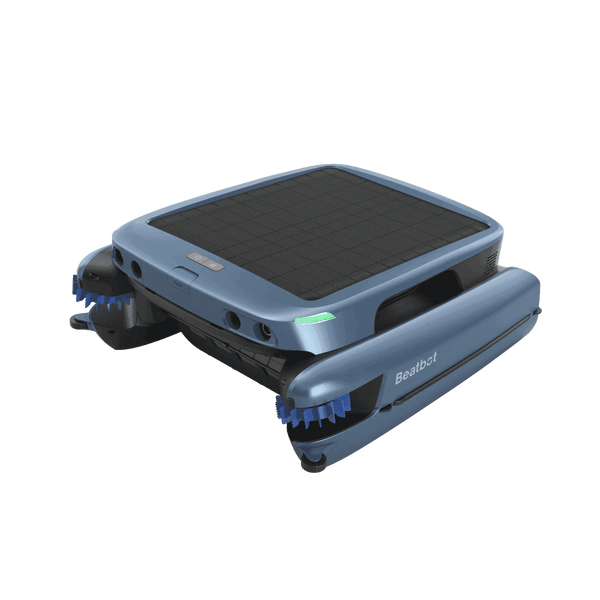
The Beatbot Sora 70 robotic pool cleaner addresses this directly with JetPulse water surface cleaning — a dedicated surface mode that uses high-flow water jets to collect floating debris and oils across the entire surface, not just push them around.
It also covers floor, wall, and waterline in a single cycle and works with above ground pools of any shape, so one robot handles everything without requiring the owner to re-enter the pool or lean over the railing between cycles.
Pool Deck Maintenance by Material
Consistent maintenance prevents minor deck issues from becoming structural ones. The schedule varies by material, but every deck type benefits from an annual inspection of the framing, hardware, and fasteners regardless of the surface material.
Wood Decking Maintenance
Pressure-treated wood needs annual cleaning with a deck cleaner designed to remove mildew, dirt, and chlorine residue. Allow the wood to dry completely before applying a penetrating sealant or semi-transparent stain.
Reapply every two to three years, or whenever water stops beading on the surface. Inspect all fasteners annually and replace any that show significant rust — even stainless screws can corrode over time in high-chlorine environments. Check the structural posts and beam connections for signs of checking or splitting, which can be addressed with a flexible wood filler before they propagate.
Composite Decking Maintenance
Composite surfaces require cleaning once or twice per year with a composite deck cleaner and a soft brush. Avoid pressure washing at high settings, which can damage the cap layer on capped composites. The main maintenance concern with composite around pools is organic staining from sunscreen, algae, and debris sitting in the gaps between boards. Cleaning promptly after heavy use prevents these stains from setting.
Concrete and Paver Maintenance
Concrete pool surrounds should be sealed every three to five years with a penetrating concrete sealer to prevent chlorine and water absorption. Inspect control joints annually and fill any cracks before they allow water infiltration that can widen under freeze-thaw pressure.
Paver systems are simpler to maintain: re-leveling individual pavers that have shifted due to frost heaving requires no professional help. Both surfaces benefit from regular cleaning with a mild detergent to prevent algae growth, particularly in shaded areas.

Keeping Your Pool Clean After the Deck Is Built
A deck brings more foot traffic, sunscreen, and organic debris into the water, while making manual vacuuming less convenient. A cordless robotic pool cleaner resolves both sides of that problem.
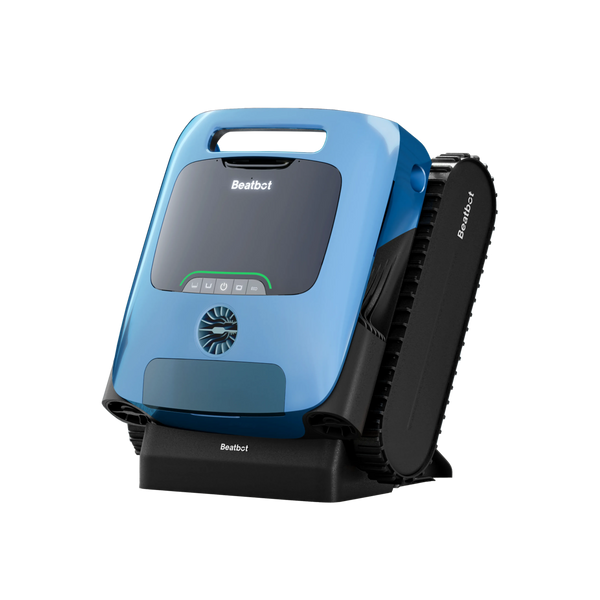
A pool deck means no good place to run a power cord — outlets are typically at the house, and running a cord across a deck is a trip hazard. A cordless robotic pool cleaner fits this setup cleanly. The Beatbot AquaSense 2 Ultra robotic pool cleaner runs on a 13,400mAh battery and docks to a wireless charging station at the pool edge, so there is no cord to manage.
The more meaningful benefit in a deck context is ClearWater technology: as the robot cleans, it automatically disperses a clarifying agent throughout the water, binding fine particles and organic residue — sunscreen, body oils, and microscopic debris — that filtration alone does not remove. On a frequently used pool with deck access, this makes a visible difference in water clarity between sessions.
For pools up to 3,200 square feet that do not need the full feature set, the Beatbot Sora 30 robotic pool cleaner covers floor, wall, waterline, and platform areas in a single charge. Its smart surface parking brings the robot to the water surface automatically when cleaning is done, so retrieval from the deck requires no reaching into the water.
FAQs
How long does an above-ground pool deck last?
A properly built and maintained wood deck lasts 15 to 25 years depending on climate and maintenance consistency. Composite decking typically carries a 25- to 30-year manufacturer warranty and requires significantly less upkeep to reach that lifespan.
What accounts for most deck structural failures?
Ledger board connections and post-to-beam connections are where most deck collapses originate. Inadequate fasteners, missing hardware like joist hangers and post caps, and wood rot at ground-contact points account for the majority of failures. Using the correct hardware throughout and keeping wood framing out of direct soil contact eliminates most of these risks.
Is it cheaper to pour concrete or build a wood deck around a pool?
For a ground-level pool surround, concrete is typically less expensive than a raised wood deck when comparing material costs. A raised above-ground pool deck requires structural framing, posts, and hardware that concrete does not, making wood more expensive at elevation.
Concrete has higher long-term repair costs in freeze-thaw climates. Composite decking costs more than both options upfront but less over a 10- to 15-year window when maintenance costs are included.
What should I put around the base of an above-ground pool deck?
The space between the deck perimeter and the surrounding yard benefits from a clean, stable ground cover. Pea gravel or crushed stone drains well, discourages vegetation, and is easy to level and maintain. Mulch is a common alternative but holds moisture and can harbor insects. Paver borders give a more finished edge and make mowing adjacent lawn easier. Avoid bare soil, which compacts and drains poorly under a deck.
Can you use Trex decking around an above-ground pool?
Yes. Trex and other capped composite products are well suited to pool environments. They resist moisture, chlorine splash, and UV fading, and most carry long-term fade and stain warranties. The main consideration is surface temperature — composite gets warmer in direct sun than wood, so decks in full sun exposure with no shade structure are worth evaluating for comfort in peak summer heat.