Most Popular


 Sora Series


 AquaSense Series

 Skimmer & Bundle

 Retail Edition


 Accessories


Most above ground pool liners last six to ten years. In mild climates, a well-cared-for vinyl liner can sometimes stretch toward twelve. That vinyl sheet does two jobs at once: it holds the water in the pool and gives the interior its finished look.
How long it lasts depends on water chemistry, sun exposure, debris contact, winterization, and waterline care. The good news is that most of those stress points are manageable, and a liner usually gives you clear warning before it fails.
Average Above Ground Pool Liner Lifespan
Six to ten years is the realistic planning range for an above ground vinyl liner. Higher-gauge vinyl in a mild climate, with steady off-season care, can reach twelve to fifteen years. Standard twenty-mil vinyl in a high-sun region with inconsistent chemistry may wear out closer to five.
Twenty-five- or thirty-year warranties do exist, but they are usually prorated heavily enough that they do not reflect normal replacement timing.
Liner failure rarely happens all at once. It usually starts at the waterline, where the vinyl takes the most ultraviolet exposure and the most contact with body oils, lotions, and airborne debris. Fading is not the same as failure. Color loss is mostly cosmetic and can show up years before the vinyl stops doing its real job, which is keeping water inside the pool.
What Affects How Long a Pool Liner Lasts
Vinyl thickness is chosen up front. Water chemistry, sun exposure, debris contact, and winter care are shaped by what happens week after week during the pool season.
Vinyl thickness and quality
Standard above ground liners are usually twenty mil at the wall. Heavier gauges, usually twenty-five to thirty mil, stand up better to punctures and fading and are more likely to reach the upper end of the lifespan range. Reinforced seams and a UV-resistant top coat can add more usable life, especially for the strip of vinyl that sits above the water and bakes in direct sun.
Water chemistry
Chlorine does the most chemical damage when it drifts out of range. Free chlorine held around three parts per million is the working recommendation from pool industry sources because over-chlorination can fade vinyl, make it brittle, and leave it more likely to tear. pH matters for the same reason. Water that runs too acidic can strip plasticizers from the vinyl, while water that runs too alkaline encourages scale along the waterline.
Sun and UV exposure
Ultraviolet radiation breaks down vinyl through photodegradation, and the damage is concentrated at and just above the waterline. The same liner installed in a southern, high-sun region will typically age one to three years faster than one installed farther north. Using a pool cover during the off-season is one of the simplest ways to slow that wear.
Debris contact and abrasion
Leaves and organic debris can stain vinyl when they sit against it for days and release tannins. Sand and grit dragged across the floor over a full season can scuff the printed surface. Brushing and vacuuming regularly keep that abrasion from building up. Once cleanings slip by a week or more, staining and surface wear have time to compound.
Winter care
In hard-winter regions, freeze and thaw cycles make vinyl contract and expand against the pool wall, which can lead to cracks and tears over time. Completely draining an above ground pool can also damage the liner. Once the vinyl is no longer supported by water, it can shrink and lose its shape.
Signs Your Pool Liner Needs Replacing
Unexplained water loss is the signal to take most seriously. If the pool drops more than one inch per day or three inches per week, there is likely a leak somewhere in the vinyl. Small one- or two-inch tears can sometimes be patched on a younger liner. Older vinyl often no longer has enough elasticity to bond well with a patch, which makes replacement the better fix.
Cracking is the next clear warning sign. Cracks usually show up first at or just above the waterline because that strip of vinyl gets the most UV exposure. Once cracks appear, they tend to spread. A cracked liner that is not leaking yet is often on its way there. Heavy fading paired with stiffness usually means the plasticizers are gone and the vinyl is no longer flexible enough for normal use.
Wrinkles, bulges, and visible stretching often point to a problem under the liner, such as groundwater pushing up or age-related shrinkage. A few small wrinkles are normal. Persistent buckling that comes back after smoothing means the liner is no longer sitting cleanly against the wall, and replacement is usually the cleaner solution.

How to Extend Your Pool Liner's Lifespan
A liner lasts longer when the biggest stressors are handled at the source. In-range chemistry, quick debris removal, regular waterline scrubbing, and a cover during downtime each target a common failure point. Together, those habits can move most liners from the lower end of the lifespan range toward the upper end.
Keep water chemistry in range
Test the water at least twice a week during the swim season. Keep free chlorine near three parts per million and pH between 7.2 and 7.6. When adjusting levels, avoid pouring undiluted chemicals directly onto the liner. Concentrated chlorine or shock can bleach and weaken vinyl on contact.
Get debris out before it settles
Leaves left to break down on a vinyl floor release tannins that stain. Pollen and body oils on the water surface drift to the waterline within days, where they create the dark ring that makes a liner look older than it is. Frequent cleaning matters more than the exact tool, though a tool that covers the whole pool in one cycle makes that routine much easier to keep.
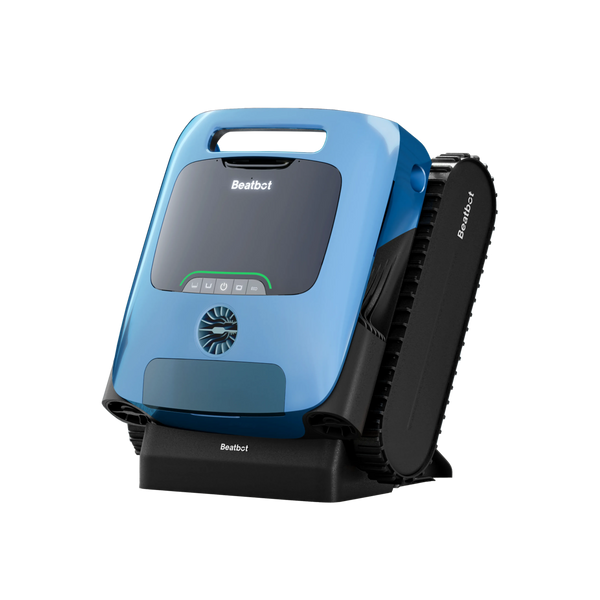
The Beatbot AquaSense 2 Pro robotic pool cleaner helps by cleaning all four zones plus the water surface in a single cycle, so floating leaves and pollen are removed before they sink to the floor or collect along the waterline.
Its ClearWater clarification system dispenses a chitosan-based clarifier, derived from recycled crab shells, into the water during cleaning. The clarifier binds fine suspended particles into larger clumps that the robot can capture, clearing the cloudy haze that can hide early staining at the liner edge.
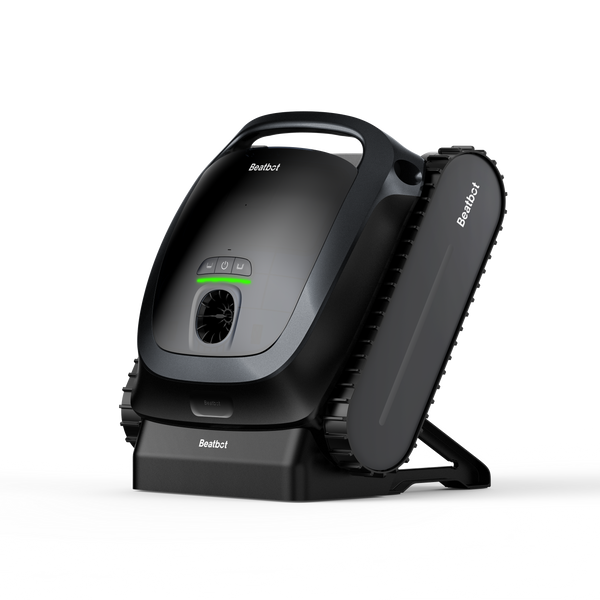
The Beatbot Sora 70 cordless pool cleaner takes a more active approach to floating debris with its JetPulse system. Two side-mounted jets send converging water streams that pull leaves, insects, and pollen toward the central suction inlet instead of letting them drift past.
The 6L debris basket uses a 150-micron filter for everyday debris and accepts an optional 3-micron filter for finer particles like algae spores and pollen, so you can match filtration to the season without sacrificing flow.
Scrub the waterline regularly
Sunscreen, body oils, pollen, and airborne dust collect at the waterline and harden into stains over time. Both the Beatbot AquaSense 2 Pro and the Beatbot Sora 70 scrub the waterline as part of their cleaning cycles, which reduces how often you need to do it by hand. For owners who clean manually, a soft vinyl-safe brush and a non-abrasive vinyl cleaner used weekly help keep the band from setting.
Cover the pool when not in use
A cover blocks much of the UV that damages the upper band of vinyl, slows evaporation, and keeps debris out of the water. In high-sun regions, this single habit can move a liner from the lower end of the lifespan range toward the top.
Winterize properly if your pool is seasonal
Do not drain the pool below the manufacturer's recommended winter level. Leaving water in the pool keeps the liner supported against the wall and helps prevent the contraction-expansion cycle that leads to cracking. Use a winter cover, lower chemistry to off-season levels, and check the cover after storms so accumulated weight does not pull the liner out of alignment.

Repair vs Replace: When to Choose Each
Patch a liner that is under seven years old, has one small isolated tear, and still looks and feels flexible. Replace a liner that is past the eight- to ten-year mark and has waterline cracks, heavy color loss, or stiffness to the touch. Patch adhesives bond best to vinyl that still has its plasticizers, and most aged liners no longer do.
Patch kits are reliable on younger liners but become less dependable as vinyl ages. If a second leak appears within one season of the first patch, replacement is usually the more economical path. Chasing leaks on a failing liner also risks damage to the pool itself, since water under the liner can erode the base material and the ground beneath the pool.
Replacement is also a chance to upgrade the liner specification. Heavier-gauge vinyl, a UV-resistant top coat, and better seam construction will usually outlast a lower-grade liner of the same age, and the installation labor cost is often similar either way.
FAQs
How much does it cost to replace an above ground pool liner?
Replacement costs for above ground vinyl liners usually start with a few hundred dollars for the liner itself, plus installation. The final total depends on pool size, vinyl gauge, and whether you handle the swap yourself. It is worth getting two or three local quotes because labor often varies more than the liner material.
Can a pool liner last 20 years?
Above ground vinyl liners rarely make it to twenty years. A well-maintained above ground liner usually tops out around twelve to fifteen years. Some inground vinyl liners can reach twenty under ideal conditions, but the thinner gauge used in many above ground liners and the full sun exposure on the upper wall band make that lifespan uncommon.
Why is my pool losing 2 inches of water a day?
Two inches a day is far beyond normal evaporation in most climates and almost always points to a leak in the liner or plumbing. Evaporation alone rarely exceeds a quarter inch per day. Start by checking for tears at the waterline, then inspect fittings and skimmer connections.
A bucket test, where a water-filled bucket sits on a step and the pool and bucket levels are compared after twenty-four hours, can separate evaporation from a true leak.
Do you have to empty a pool to replace the liner?
Yes. Replacing a liner requires draining the pool, removing the old liner, inspecting the wall and base for damage, and fitting the new liner against the cleaned structure. Schedule the work during mild weather because an empty above ground pool wall is more vulnerable to wind damage and ground movement. Refilling and rebalancing the water usually takes one to two days after installation.
Do saltwater pools shorten liner lifespan?
Not significantly. Saltwater above ground pools and traditionally chlorinated above ground pools usually fall within similar liner lifespan ranges. Salt systems generate chlorine at low, steady levels instead of the sharper chemical spikes that can fade vinyl. The bigger concern in a saltwater above ground pool is corrosion of the metal wall behind the liner, which is a separate maintenance issue.