

 Flagship


 Sora Series


 AquaSense Series


 Skimmer & Bundle

 Retail Edition


 Accessories



 Extended Warranty


Muriatic acid is used in a pool to lower high pH. In many pools, it helps lower total alkalinity over time too. That helps chlorine work better and lowers the chance of scale and dull water.
Muriatic acid does not sanitize the pool, remove debris, or solve every water problem on its own. Once that role is clear, it is easier to tell when muriatic acid is the right fix and when the pool needs a different solution.
What Does Muriatic Acid Do for a Pool
Muriatic acid lowers pool pH. That is the main reason people use it.
In pool care, muriatic acid is liquid hydrochloric acid diluted for pool use. Add the right amount, and overly basic water moves back toward balance. That matters since high pH weakens chlorine performance. A pool can still have chlorine in the water and be harder to keep clear when the pH is too high.

Muriatic acid can lower total alkalinity too. Total alkalinity acts as a buffer for pH. Buffers help prevent sharp swings, but high alkalinity can keep pH drifting up. So muriatic acid is doing more than pushing pH down for the moment. It also helps reduce the chemical pressure that keeps sending the water out of range.
This is why muriatic acid is often linked to clearer water, better chlorine performance, and less scale. It does not clean the pool by itself. It improves the water balance that supports those results.

What Muriatic Acid Does Not Do
Muriatic acid handles water balance. It does not sanitize, stabilize, or clean the pool.
It does not kill algae the way chlorine does. It does not work like cyanuric acid, which protects chlorine from sunlight. It does not remove leaves, dirt, or fine debris from the water. It does not directly lower calcium hardness either. Lower pH can reduce the chance of scale forming, yet the hardness minerals stay in the pool.
Cloudy water is a good example. High pH can make pool water look cloudy, so lowering pH may help in that case. Cloudy water can just as easily come from weak filtration, low sanitizer, heavy debris, or early algae growth. When one of those is the real cause, muriatic acid will not clear the pool on its own.

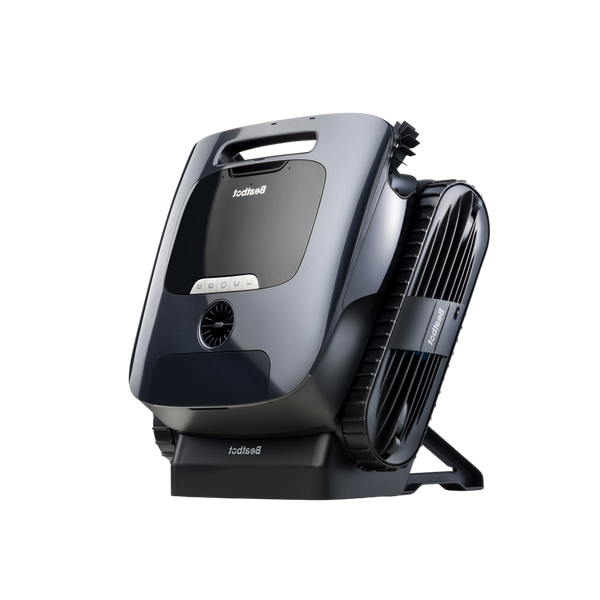
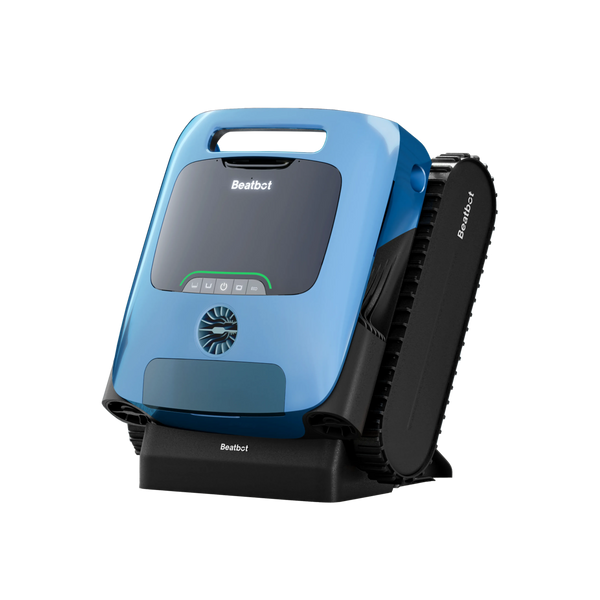
That is where pool cleaning still matters. If the chemistry is back in range but the pool still has debris or fine suspended particles, the fix is filtration and cleaning. Beatbot Sora 70 cleans the floor, walls, waterline, and water surface in one robot, and its optional 3 μm filter can help in low debris conditions when the goal is catching finer particles.
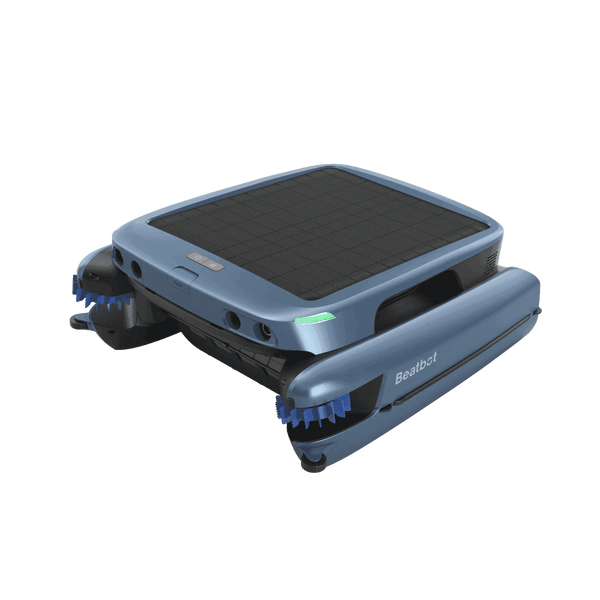
For larger pools or owners who want less manual upkeep, Beatbot AquaSense X adds water clarification and a self-cleaning station, which helps with the dirt and particle side that acid cannot solve.
When Does a Pool Need Muriatic Acid
A pool needs muriatic acid when testing shows that pH is too high, total alkalinity is too high, or both are pushing the water out of balance.
For most pools, pH should stay in the mid-7s. Once it rises too far, often above 7.8, chlorine works less effectively and scale becomes more likely. The water may look dull, swimmers may notice irritation, and the pool can get harder to keep clear. In that situation, muriatic acid is a targeted correction.
High total alkalinity is another common reason to use it. Many pool owners see the same pattern. The pH drops after treatment, then climbs back up soon after. That usually means alkalinity is still high in the background.
Some pools run into this more than others. Saltwater pools often see upward pH drift. Pools with waterfalls, spillovers, spa spillways, or strong return jets can do the same. New plaster can raise pH as it cures.
Fill water can do it too if it already comes in with high alkalinity. Use muriatic acid when the test results call for it, not just since it is a common pool chemical.
Why Does Pool pH Rise After Muriatic Acid?
If pool pH rises after muriatic acid, something in the pool is still pushing pH upward.
High total alkalinity is the most common cause. Water with too much alkalinity tends to push pH back up after each correction.
Aeration can speed that up. Waterfalls, spillovers, spas, deck jets, and return jets aimed upward all move carbon dioxide out of the water. As that gas leaves the water, pH tends to rise.
Some pool setups make this more common. Saltwater chlorine generators often lead to rising pH over time. New plaster can do the same. Fill water with high alkalinity can restart the cycle after every water refill. So if it feels like you are always adding acid, look at the water chemistry and the pool setup, not just the last dose.
Check pH and total alkalinity together. Muriatic acid lowers pH, but long term control comes from bringing alkalinity into a more manageable range and reducing the factors that make pH climb quickly.
Conclusion
Muriatic acid has one main job in pool care. It lowers high pH, and it can help bring total alkalinity down over time. That supports clearer, more stable water. It does not replace chlorine, filtration, or cleaning.
Use it when testing shows the water is too basic. If the real problem is algae, debris, or weak filtration, the pool needs a different fix.
FAQ
Do I run the pump when adding muriatic acid to the pool?
Yes. Running the pump helps the acid spread through the water and lowers the chance of one area getting too strong a dose.
How long should I wait to retest pool water after adding muriatic acid?
Wait until the water has circulated well with the system running. In many pools, that means about 20 minutes to an hour before you retest pH and alkalinity.
Should I add muriatic acid and chlorine at the same time?
No. Keep them separate. Pool chemicals should not be mixed together, and muriatic acid should never be combined directly with chlorine products.
How long does muriatic acid take to work in a pool?
It starts affecting pH soon after it disperses in moving water. The practical checkpoint is the retest after circulation, not the first few minutes right after you add it.
Can I use dry acid instead of muriatic acid?
Yes. Dry acid, usually sodium bisulfate, is the main alternative. It can lower pH too, though many pool owners choose between them based on handling preference and overall water chemistry.


