Most Popular


 Sora Series


 AquaSense Series

 Skimmer & Bundle

 Retail Edition


 Accessories


Pool foam forms when organic compounds, surfactants, or chemical residues lower the surface tension of the water, so air bubbles from jets, swimmers, or a pool cleaner stack on the surface instead of popping.
In a backyard pool, three sources cause almost all of it: body care residue from swimmers, algaecides that contain quaternary ammonium compounds, and total dissolved solids that climb through the season. A smaller set of cases come from low calcium hardness or from air being drawn into the plumbing. Each cause has a different fix.
Is Pool Foam Caused by Body Care Products and Sunscreen?
Yes, and this is the most common source in residential pools. Sunscreens, hair conditioners, styling products, body lotions, deodorants, and laundry detergent residue on swimsuits all carry surfactants that stabilize foam.
The load spikes after a busy swim day, then usually shows up the next morning and persists for several days, because chlorine at normal levels cannot oxidize a heavy bather load fast enough to keep up.

Does Algaecide Cause Pool Foam?
Yes, when it contains a quaternary ammonium compound. Cheap quat algaecides and, to a lesser degree, polyquat 60 formulas act as surfactants by design. At the correct dose the amount is low enough that foam does not form, but overdosing, layering with other treatments, or dosing into already-loaded water produces visible foam within hours. If foam appears shortly after an algaecide treatment, the algaecide is the cause.
An overdose can also stain pool surfaces and drain sanitizer. Copper-based formulas leave green or blue-gray marks on plaster, vinyl, and fiberglass at high concentrations. Quat overdoses consume free chlorine as the sanitizer breaks down the excess compound, so chlorine readings drop until the algaecide clears.
Does High TDS Cause Pool Foam?
Yes, once the reading climbs far enough above the fill-water baseline. Total dissolved solids (TDS) is everything dissolved in the water: salts, minerals, stabilizers, dead organics, and oxidation byproducts. As TDS rises, some of those byproducts act as weak surfactants, and shock treatments become less effective because the sanitizer has more material to work through. Around 1,500 ppm above the fill-water baseline, foam, dull water, and sluggish chlorine response tend to appear together.
Why Does My Pool Foam When the Pump Runs?
Foam that only appears while the pump is running, and subsides when it shuts off, usually points to air being drawn into the suction side of the plumbing, not a water chemistry problem. Common sources are a low water level that uncovers the skimmer, a loose pump lid or worn lid O-ring, a damaged skimmer basket, or cracks in the suction line between the pool and the pump. Air entering the system gets pushed back into the pool through the return jets and whips up visible foam at the surface.
Can Low Calcium Hardness Cause Pool Foam?
Yes, and it often gets missed because other readings look fine. When calcium hardness falls below about 150 ppm, the water becomes soft enough that agitation holds foam more easily. The same soft water also pulls calcium from plaster and grout, causing surface damage over time. Raising hardness to the 200 to 400 ppm range addresses both the foam and the corrosion risk.
|
Cause |
Typical Trigger |
Foam Pattern |
First Fix |
|---|---|---|---|
|
Body care residue |
Heavy swim day, sunscreen, hair products |
Morning-after foam, clears in 2 to 4 days |
Shock, filter run, skim |
|
Quat algaecide |
Recent algaecide dose |
Fast-forming, dense, persistent |
Dilute, filter, wait |
|
High TDS |
Late season, infrequent refills |
Recurring foam after every fix |
Partial drain and refill |
|
Air in plumbing |
Low water level, loose pump lid, cracked line |
Foam only when pump runs |
Check skimmer, seals, suction line |
|
Low calcium hardness |
Soft fill water, infrequent hardness testing |
Persistent light foam with normal chemistry |
Raise calcium to 200 to 400 ppm |
|
Cheap water feature additives |
Fountain or waterfall enhancer use |
Foam around agitation points |
Discontinue product, filter |
How Do You Get Rid of Foam in a Swimming Pool?
Start with physical removal, not chemistry. Skim the surface, run the filter continuously for 24 to 48 hours, and shock with a strong oxidizer to break down organic surfactants. If the foam followed an algaecide dose, skip further algaecide and let dilution finish the job. Defoamers sold at pool stores only hide foam and leave the underlying compound in the water.
When the cause is organic load, a clarifier speeds things up by binding suspended oils and particles into clumps that settle to the floor for vacuuming. Chitosan-based clarifiers (made from recycled crab shells) are skin-safe, work faster than aluminum-based products, and do not add to TDS the way metal-based clarifiers do.

Can a Robotic Pool Cleaner Help Prevent Pool Foam?
Yes, on two fronts. The right robot removes floating organics before they break down and become surfactants, and it can dispense clarifier evenly as it moves through the pool, so suspended oils and particles bind into clumps the filter can capture or the robot can vacuum off the floor. A cleaner that handles only the floor leaves both jobs undone, which is why floor-only models rarely affect foam frequency.
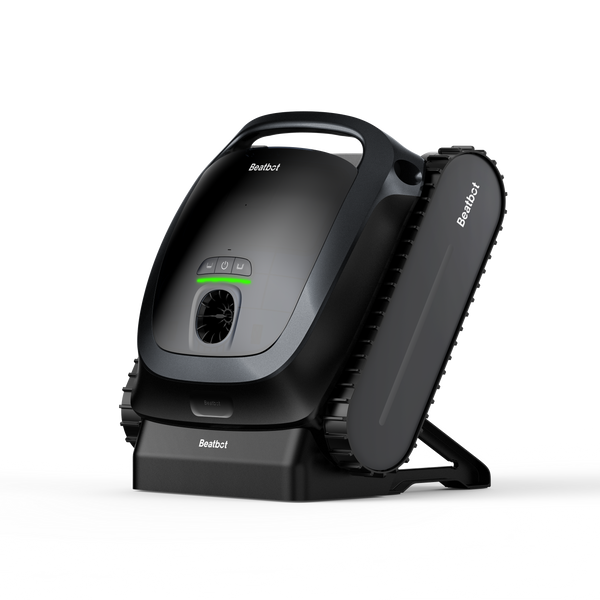
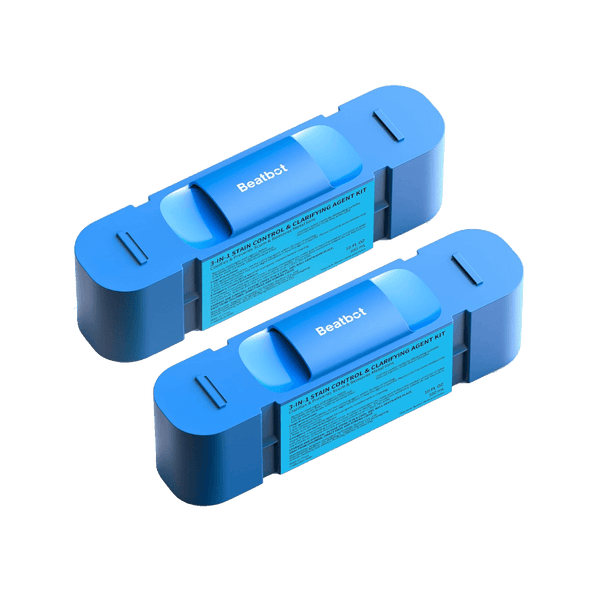
The Beatbot AquaSense 2 Pro robotic pool cleaner covers both. Its 5-in-1 system handles water surface, waterline, floor, walls, and water clarification, and the built-in ClearWater™ Clarification System releases a chitosan-based clarifier while the robot cleans.
The clarifier binds oils, metals, and microscopic particles into larger clumps that settle to the pool floor, where the robot vacuums them up on the same cycle. For pools that foam after heavy bather loads, activating clarification before running surface cleaning strips the organic load out of the water rather than letting it re-surface.
The Beatbot Sora 70 robotic pool cleaner targets the surface layer differently, through a JetPulse™ twin-jet system. Inward water streams from each side converge to guide floating leaves, pollen, and insect residue toward the central suction inlet; outward streams form barriers that block water from bypassing around the robot, so more of the organic-laden top layer reaches the filter.
App-controlled targeting lets owners send the robot to downwind corners or areas near water features where surface residue concentrates.

When Should You Drain and Refill a Foaming Pool?
Drain when foam keeps returning after shock, clarifier, and sustained filter runs have already been tried. Two readings confirm the call: TDS well above the fill-water baseline, and cyanuric acid past 80 ppm, which blunts chlorine.
A partial drain of 25 to 50 percent followed by a refill and rebalance resolves dissolved-load foam far more reliably than any added product. A full drain is rarely needed and can stress plaster, vinyl, and fiberglass surfaces.
If foam persists after a partial drain, fresh fill, and rebalance, the cause is a residual algaecide or additive rather than water age, and the problem moves back to dilution and filtration.
FAQs
Is pool foam dangerous to swim in?
Pool foam itself is not directly harmful, but it signals a water quality issue worth resolving before heavy use. Foam from overdosed algaecide can irritate skin and eyes. Foam from body care residue or high TDS typically comes with weakened sanitizer performance, which raises bacterial risk.
Will pool foam go away on its own?
Light organic foam often clears within a day or two as chlorine oxidizes the surfactants and wind disperses the film. Foam from overdosed algaecide, high TDS, or a persistent air leak will not resolve on its own and tends to worsen until the underlying cause is addressed.
Can too much chlorine cause pool foam?
High chlorine alone does not cause foam. What looks like chlorine-driven foam is almost always the oxidizer reacting with a heavy organic load or reacting with an algaecide already in the water. The foam reflects what the chlorine is breaking down, not the chlorine itself.
Will baking soda or vinegar remove pool foam?
No. Baking soda raises total alkalinity and can shift pH further off target, which often makes chemistry-driven foam worse. Vinegar lowers pH and has no pool-scale dosing guide. Both work occasionally by accident when the pH correction happens to address the underlying cause, but neither targets surfactants.