Most Popular


 Sora Series


 AquaSense Series

 Skimmer & Bundle

 Retail Edition


 Accessories


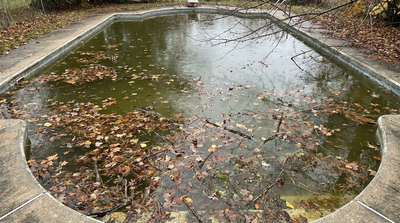
No. A green pool is not safe to swim in. Green water means an active algae bloom is present, which means free chlorine has dropped low enough, or been absent long enough, to allow biological colonization of the water.
Algae itself is not typically the direct health threat. The problem is what algae growth signals: the same conditions that allowed the algae to establish have almost certainly allowed bacteria, including pathogens, to proliferate in the same water.
Swimming in a green pool carries real health risks, and the degree of green is not a reliable guide to how dangerous the water is. A lightly tinted pool can carry the same pathogen load as one that is opaque.

Why a Green Pool Is Unsafe to Swim In
Green water means free chlorine has failed, bacteria are accumulating alongside the algae, and the pool floor is likely invisible. Any one of those three conditions is enough to stop swimming. Together, they make a green pool one of the clearest no-swim situations in pool maintenance, regardless of how light or deep the tint appears.
Algae growth means chlorine has failed
Algae spores are present in virtually every outdoor pool at all times. They are introduced through wind, rain, bather activity, and fill water, and they are kept in check by free chlorine maintained above 1 ppm at correct pH.
When chlorine drops below that threshold, or when pH rises high enough to reduce chlorine's sanitizing activity (above 7.8, active chlorine drops to roughly 20 percent of the total), algae can establish and begin multiplying rapidly.
Green water means the bloom has been active long enough to reach a visible concentration. By that point, free chlorine is typically at or near zero. A pool with no effective chlorine is an unprotected water environment.
Bacteria thrive under the same conditions
The chlorine failure that allows algae to bloom also removes protection against bacteria. E. coli, Pseudomonas, and other pathogens that are normally inactivated within minutes by adequate free chlorine begin accumulating in a pool where chlorine has lapsed.
Algae blooms and bacterial overgrowth develop in parallel, not sequentially. By the time water is visibly green, the bacterial load is likely already elevated to levels that pose a genuine infection risk. Gastrointestinal illness, ear infections, skin infections, and eye infections are all documented outcomes of swimming in inadequately sanitized pool water.
Visibility is compromised, creating physical hazards
A green pool reduces or eliminates underwater visibility. At moderate to heavy bloom levels, the pool floor is not visible from the surface.
This creates physical safety hazards that are independent of the chemistry: a swimmer in distress cannot be seen by a bystander, a submerged object or obstacle is invisible, and depth cues are absent. Most public pool health codes require closure when visibility of the pool floor is obstructed for this reason, in addition to the sanitation concern.
Algae on surfaces creates slip hazards
Algae that has established on pool surfaces, particularly on the floor and steps, creates a slippery film that significantly increases the risk of falls on entry and in the shallow end. This is a separate hazard from the water quality issue and persists even after the water has cleared, until the surface algae has been physically scrubbed off and the chemical residue treated.
Does the Type of Algae Change the Risk?
All four algae types mean stop swimming immediately, but the type tells you how hard the treatment will be. Green algae is the most common and easiest to clear. Mustard algae is chlorine-resistant and requires higher doses.
Black algae is the most difficult, with root structures that penetrate the pool shell. Blue-green algae (cyanobacteria) is the most serious: certain strains produce toxins that cause gastrointestinal illness and liver damage, and it should be treated as a medical-level contamination event.
Green algae
Green algae is the most common type and the easiest to treat. It grows in the water column (causing the green color) and on surfaces, where it appears as a slippery green film. It establishes quickly when chlorine drops and is killed effectively by shock treatment at the appropriate dose.
Green algae does not produce toxins. The health risk in a green pool comes primarily from the bacterial environment that develops alongside the algae bloom, not from the algae itself. Treatment typically involves a single aggressive shock, brushing, and continuous filtration until the water clears.
Yellow or mustard algae
Mustard algae is a chlorine-resistant strain that grows in shaded areas of the pool, typically in corners, along walls, and on steps. It looks like yellow-brown dust or pollen and is often mistaken for dirt.
Because it is more resistant to standard chlorine levels, it tends to persist in pools that appear otherwise well-maintained, and it requires higher shock doses and more aggressive brushing to eliminate. A pool with mustard algae has a more persistent sanitation gap than one with standard green algae, even if the water color does not appear as dramatically affected.
Black algae
Black algae is the most difficult to treat and signals the most significant sanitation failure. It forms as dark spots, typically on rough concrete or plaster surfaces, and sends root-like structures into the pool shell that protect the organism from chlorine contact. The visible spots are actually protective layers over the living algae below.
Treating black algae requires aggressive wire brushing to breach the protective surface layer, repeated hyperchlorination, and in severe cases, acid washing the shell surface. A pool with established black algae has had a sustained sanitation failure over an extended period. Do not swim until treatment is complete and chemistry is fully restored.
Blue-green algae (cyanobacteria)
Blue-green algae is technically a bacterium, not a true algae, and it represents the most serious health risk of the four types. Certain strains of cyanobacteria produce cyanotoxins that cause skin irritation, gastrointestinal illness, liver damage, and in high-exposure cases, neurological effects.
Blue-green algae in pools is uncommon in well-maintained systems but has been documented. It typically appears as a blue-green or teal tint to the water and a distinct musty or earthy odor. If blue-green algae is suspected, the pool should be cleared of all swimmers immediately and not used until the bloom is completely eliminated and water has been tested clean.

How to Fix a Green Pool: The Correct Sequence
Fix a green pool in this sequence: test and correct pH first (shock fails at high pH), then shock aggressively based on bloom severity, brush all surfaces before and after to expose attached algae, run the filter continuously and backwash every 8 to 12 hours, add clarifier once chlorine drops back below 5 ppm, run a robotic cleaner to remove dead algae from surfaces, and retest chemistry before allowing anyone back in the water.
Step 1: Test the water before adding anything
Test free chlorine, pH, alkalinity, and cyanuric acid before starting treatment. pH must be between 7.4 and 7.6 for shock treatment to work at full efficiency. High pH (above 7.8) dramatically reduces the effectiveness of chlorine-based shock.
If cyanuric acid is above 80 ppm, the stabilizer is limiting how much of the chlorine can remain in its active sanitizing form, and a partial drain and refill may be needed before shocking will produce the required result. Correct pH and alkalinity first, then proceed to shock.
Step 2: Shock the pool aggressively
Use calcium hypochlorite (unstabilized) shock at a dose appropriate to the severity of the bloom. For light green water, a standard shock dose of 1 pound per 10,000 gallons is a starting point. For moderate to heavy green water, double or triple dosing is typically required.
Add shock in the evening to prevent UV from degrading it before it has time to work. Run the pump continuously throughout treatment. The target is to raise free chlorine high enough (above 10 to 30 ppm depending on severity) to kill the algae and oxidize the organic matter in the water.
Step 3: Brush all surfaces thoroughly
Brush the pool floor, walls, steps, and waterline before and after shocking. Brushing dislodges algae attached to surfaces and exposes it to the chemical treatment.
Algae on surfaces is significantly more resistant to chlorine than free-floating algae because the surface provides partial physical protection from chemical contact. Brushing is not optional: pools that are shocked without brushing take significantly longer to clear and often have persistent algae spots on walls even after the water appears clean.
Step 4: Run the filter continuously and backwash frequently
Run the pump and filter around the clock during recovery. The filter's job is to remove the dead algae cells and organic debris that the shock treatment has killed and oxidized. As the filter loads with this material, flow rate drops and efficiency falls.
Backwash or clean the filter every 8 to 12 hours during active recovery, rather than waiting for pressure to build, to maintain filtration efficiency throughout the process. A clogged filter during algae recovery extends the clearing time by days.
Step 5: Add a clarifier once the algae is confirmed dead
The water often turns grey or dull after a successful shock treatment, as dead algae cells remain suspended in the water column. A clarifier added at this stage, once free chlorine has dropped back below 5 ppm (high chlorine breaks down clarifier polymers), helps the filter capture the fine dead-algae particles that would otherwise take days to clear through filtration alone. Do not add clarifier while chlorine is still at shock levels.
Step 6: Clean pool surfaces to remove dead algae and residue
After the water has cleared and chemistry is back in range, a thorough robotic cleaning cycle removes the dead algae layer from the floor, walls, and waterline before it can re-establish or contribute to the next chemistry imbalance.
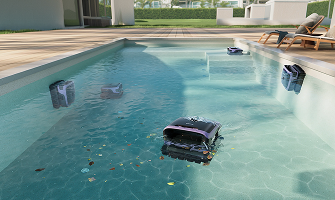
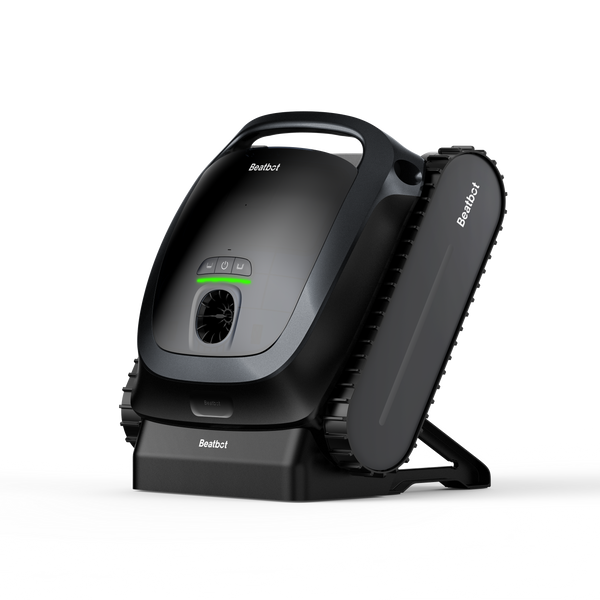
The Beatbot AquaSense 2 Ultra is well suited to this post-treatment stage: its 5-in-1 cleaning system covers the floor, walls, waterline, and water surface in a single cycle, with HybridSense AI mapping that plans the most efficient path across the full pool layout.
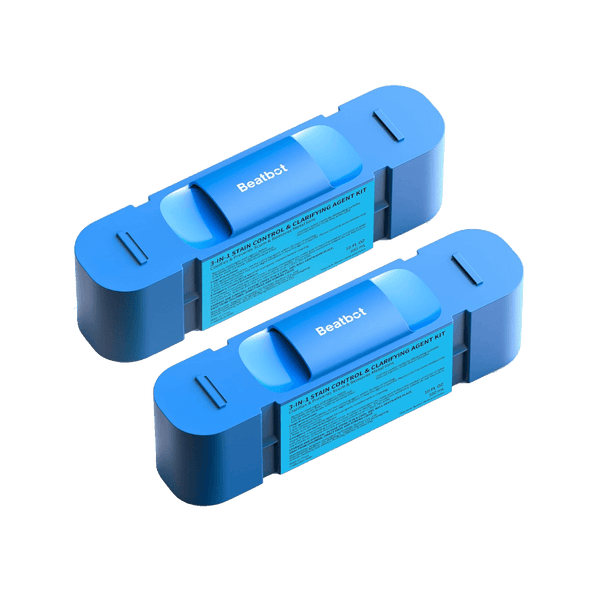
The dual-pass waterline cleaning removes the algae residue and oil layer at the waterline that often survives shock treatment and contributes to the next bloom cycle. Its ClearWater natural clarification system, which automatically disperses a skin-safe clarifier during the cleaning cycle, addresses any remaining fine particulate in the water column simultaneously with the physical cleaning pass.
Running the AquaSense 2 Ultra immediately after chemistry is restored shortens the total recovery window and ensures the physical surface contamination is removed before it contributes to a recurring problem.
Step 7: Retest and confirm before reopening
Do not allow swimming until free chlorine is between 1 and 3 ppm, pH is between 7.4 and 7.6, and the water is fully clear with the pool floor visible. Retesting after apparent recovery is not optional: a pool that looks clear may still have elevated combined chlorine or persistent surface algae that will cause the bloom to return within days if the underlying chemistry issue has not been fully resolved.

What Causes a Pool to Turn Green in the First Place?
Most green pools trace back to the same core failures: chlorine depleted by heat or UV faster than it was replaced, cyanuric acid too low to protect chlorine in sunlight, heavy bather load spiking the demand beyond what the dosing schedule covers, or the pump left off long enough for stagnant water to allow algae to settle and establish.
The one worth specific attention is low CYA: a pool with no stabilizer can lose most of its free chlorine in a single sunny afternoon, making blooms almost inevitable in summer without mid-day dosing.
Chlorine depletion from high UV and heat
Free chlorine is degraded by UV radiation at a rate that increases with sunlight intensity. In hot summer weather with extended daylight hours, an outdoor pool can lose a significant portion of its free chlorine within a single day without cyanuric acid stabilizer, or within a few days even with stabilizer if the baseline chlorine level is low.
Pools that test correctly on Monday morning after dosing can fall below the protective threshold by Wednesday afternoon during peak summer conditions without mid-week chemical additions.
Insufficient cyanuric acid stabilizer
Cyanuric acid (CYA) protects chlorine from UV degradation in outdoor pools. Without it, free chlorine has a half-life of a few hours in direct sunlight. Outdoor pools without stabilizer, or with CYA below 30 ppm, are highly vulnerable to rapid chlorine loss on sunny days.
The CYA target range for outdoor pools is 30 to 50 ppm. Below 30 ppm, chlorine depletion in summer conditions can be fast enough to allow algae to establish between dosing intervals even when the pool is tested regularly.
High bather load consuming chlorine faster than dosing replaces it
Every swimmer consumes free chlorine by introducing organic matter (sweat, body oils, sunscreen) that reacts with available chlorine. A pool calibrated for light daily use can be depleted to unsafe levels within a few hours of a pool party. If the dosing schedule does not account for heavy-use events, a bloom can establish within 24 to 48 hours of the demand spike.
Extended periods without running the pump
Stagnant water with no circulation allows algae spores to settle and establish on surfaces without being exposed to the filtration and chemical distribution that circulation provides. Pools left unattended for even a few days during summer without the pump running can develop visible algae growth.
Minimum recommended pump run time for algae prevention is six to eight hours per day, with continuous operation preferred during hot weather.
Algae introduction through fill water, rain, or wind
Algae spores are ubiquitous in outdoor environments. Fill water from municipal sources, rainwater, windblown debris, and even swimwear worn in natural bodies of water can introduce algae strains into a pool.
This is not preventable, which is why the response is not to try to keep spores out but to maintain the chlorine level at which they cannot establish. A pool with consistent free chlorine above 1 ppm at correct pH does not develop algae regardless of spore introduction, because the spores are killed before they can grow.
How to Prevent a Pool from Turning Green
The core of algae prevention is maintaining free chlorine above 1 ppm at all times, keeping CYA between 30 and 50 ppm to protect that chlorine from UV, running the pump at least six to eight hours daily, and brushing surfaces weekly to physically disrupt early-stage algae colonies before they seed the water.
Proactive shocking after heavy use or rain prevents the demand spikes that let blooms establish between regular testing intervals.
Maintain free chlorine above 1 ppm at all times. Test at least twice a week, and daily during sustained hot weather or after heavy use. A single day below the protective threshold during peak summer conditions is enough for a bloom to begin establishing on surfaces.
Keep cyanuric acid between 30 and 50 ppm for outdoor pools. This is the single most effective tool for preventing rapid chlorine loss between dosing intervals in sunlit environments. Test CYA monthly and adjust if it has drifted below 30 ppm through splash-out and backwashing, or above 80 ppm through accumulation from stabilized chlorine products.
Run the pump for at least six to eight hours per day, and continuously during hot weather or after periods of heavy use. Circulation distributes chlorine evenly through the water column, prevents thermal stratification that creates untreated zones, and ensures spores are continuously exposed to the filter and sanitizer rather than allowed to settle undisturbed on surfaces.
Brush pool surfaces weekly, even when the water looks clean. Algae establishes on surfaces before it becomes visible in the water. Regular brushing physically removes the early-stage surface colonies before they have grown enough to seed the water column.
The waterline, corners, steps, and shaded wall areas are the highest-priority zones because they have slower water movement and lower effective chlorine contact time than the main pool body.
Shock the pool proactively after any event that significantly increases the organic load: heavy rain, high-bather gatherings, windstorms, or periods of very hot weather. Reactive shocking after a bloom appears requires significantly higher chemical doses and more time than proactive shocking before conditions deteriorate.

FAQs
Can you get sick from swimming in a green pool?
Yes. A green pool signals that chlorine has failed to the point where algae has established. The same conditions that allow algae growth also allow bacteria and other pathogens to accumulate in the water.
Gastrointestinal illness, ear infections, skin infections, and eye infections are all documented risks of swimming in inadequately chlorinated water. Do not swim in green water regardless of how lightly tinted it appears.
How long does it take to clear a green pool?
It depends on the severity of the bloom and how consistently the treatment steps are followed. A lightly green pool treated with correct shock dose, continuous brushing, and continuous filtration can clear within 24 to 72 hours.
A heavily green or opaque pool typically takes 3 to 7 days of active treatment. Skipping brushing, running the pump on a reduced schedule, or adding clarifier before chlorine has returned to normal range all extend the recovery time significantly.
Is it safe to swim in a pool that was green but now looks clear?
Not until you have confirmed the chemistry with a test. A pool that looks clear after treatment may still have elevated combined chlorine, pH out of range, or persistent surface algae that will cause the bloom to return within days. Test free chlorine (must be between 1 and 3 ppm), pH (7.4 to 7.6), and confirm the pool floor is fully visible before allowing swimming.
Can algae in a pool make you sick directly?
Common green pool algae (Chlorophyta) is not directly pathogenic to humans. The health risk in a green pool comes primarily from the bacterial environment that develops when chlorine fails, not from the algae itself.
The exception is blue-green algae (cyanobacteria), which certain strains can produce toxins capable of causing skin irritation, gastrointestinal illness, and in high-dose exposures, more serious effects. If the water has a teal or blue-green color with an earthy or musty smell, treat it as a cyanobacteria situation and keep everyone out until the bloom is fully eliminated.
Why does my pool keep turning green even after treatment?
Recurring green water usually indicates one of three persistent problems: cyanuric acid too low (allowing rapid chlorine loss between treatments), pH consistently drifting high (reducing chlorine effectiveness even when levels look adequate on a test), or incomplete algae removal from surfaces during the treatment cycle.
If the walls or floor have persistent dark spots or a slippery film after the water clears, surface algae was not fully eliminated and will re-seed the water quickly. Brush aggressively, re-shock, and confirm chemistry is in range before concluding treatment.
Does shocking a green pool work immediately?
No. Shock treatment kills algae and oxidizes organic matter, but the dead cells and debris remain suspended in the water and must be removed by the filter over the following 24 to 72 hours. The water typically looks worse before it looks better: green water often turns grey after a successful shock as dead algae cells lose their pigment but remain in suspension.
This is normal and is a sign the treatment is working. Continue running the pump and backwashing the filter regularly until the water clears completely.