Flagship


 Sora Series


 AquaSense Series


 Skimmer & Bundle

 Retail Edition


 Accessories



 Extended Warranty


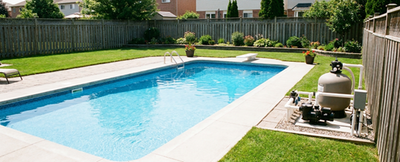
Rust stains in a pool are orange or brown discolorations on the floor, walls, or waterline caused by iron or other metals. You do not need to drain the pool to remove them. Ascorbic acid (vitamin C) dissolves rust spots on contact, and dry acid or a commercial stain remover handles heavier buildup.
What Causes Rust Stains in a Pool
Rust stains in a pool almost always trace back to iron or steel somewhere in or near the water. The most common culprits are corroding metal fittings, ladder anchors, pool light housings, or return jet covers. A forgotten bobby pin, coin, or hairpin left on the pool floor can also leave a rust ring within hours. In pools with well water or older plumbing, dissolved iron in the fill water itself is frequently the cause.
When iron-containing metal oxidizes and that oxidized material contacts the pool surface, it bonds and stains. High pH, low chlorine, or poorly balanced water accelerates the corrosion that kicks off the process. Once a stain is set, it cannot be vacuumed or brushed away — it has to be dissolved chemically.

How to Tell if It Is a Rust Stain
Rust stains are orange to reddish-brown, usually round or oval, and tend to appear directly below a metal object or in areas with heavy foot traffic near metal fittings. Organic stains (from leaves, algae, or insects) tend to be green, brown, or black and spread in irregular shapes. Calcium scaling is white or gray and feels rough or chalky.
The simplest field test: press a vitamin C tablet directly onto the stain and hold it for 30 seconds. If the stain lightens or disappears, it is a metal stain. If nothing happens, you are dealing with an organic or mineral deposit, which requires a different treatment.
How to Remove Rust Stains from a Pool

Ascorbic Acid (Vitamin C)
Ascorbic acid is the fastest and most targeted treatment for rust stains in a pool. For a small spot, press one or two vitamin C tablets directly onto the stain and hold them in place for 30 to 60 seconds. The discoloration typically dissolves almost instantly. For a larger area, crush several tablets, pour the powder into a sock or mesh bag, and rub it directly over the stain using a pool pole. This keeps the acid concentrated on the stain rather than dispersing into the water.
Ascorbic acid is safe for pool surfaces and will not cloud the water or affect pH significantly when used in small amounts for spot treatment. For widespread iron staining across the entire pool floor, a broadcast treatment using a larger quantity of ascorbic acid powder is more effective, though this does temporarily lower pH and requires balancing the water afterward.
Dry Acid (Sodium Bisulfate)
Dry acid, sold as sodium bisulfate, works on stubborn stains that vitamin C does not fully clear. Put a measured amount into a sock, attach it to a pool pole, and hold it over the stain for 5 to 15 minutes. Dry acid is more aggressive than ascorbic acid, so wear gloves and eye protection when handling it, and test on a small, inconspicuous area first if you are working on a vinyl or painted surface. Do not pour it directly onto the pool floor in concentrated form, as it can damage certain finishes.
Commercial Metal Stain Removers
Products formulated specifically for pool metal stains, such as Jack's Magic Stain Solution or similar metal-targeted removers, are worth using when staining is widespread or recurring. These products work by reducing and chelating iron ions so they can be captured by the filter rather than redepositing on pool surfaces, and they are formulated to address copper and manganese as well. Follow the manufacturer's dosage instructions and run the filter throughout the treatment period.
What to Do After Removing Rust Stains
Rust stain removal, particularly with ascorbic acid or dry acid, lowers pH. Test your water chemistry immediately after treatment and adjust as needed. Target a pH between 7.4 and 7.6, alkalinity between 80 and 120 ppm, and restore your chlorine level before allowing swimming. Adding a metal sequestrant after treatment is strongly recommended.
A metal sequestrant does not remove iron from the water, but it keeps dissolved metals in suspension so they cannot deposit on pool surfaces. Add it according to label directions and run the filter to capture as much iron as possible over the following 24 to 48 hours. This is particularly important if your fill water contains iron, since treating stains while continuing to add iron-laden water is a losing battle without sequestrant support.
Filter performance is the bottleneck during this window. Iron particles only leave the water when they reach the filter, so any time fine sediment settles out before that happens, it can re-bond to surfaces and start a new stain.
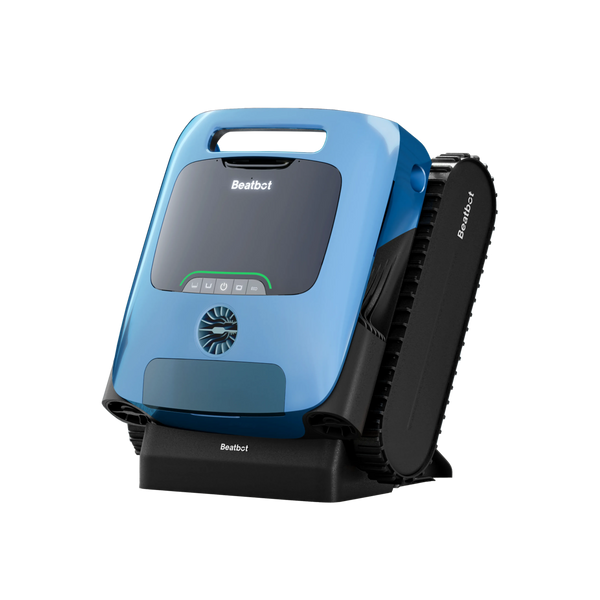
The Beatbot Sora 30 robotic pool cleaner is built for this stage. Its 6,800 GPH suction draws debris off the floor and walls into a 5L filter basket with 150-micron filtration in a single cycle, and an optional 3-micron ultra-fine filter captures the microscopic iron particles that standard pool filters often miss. Pulling these particles into the basket before they settle is what keeps freshly treated surfaces from staining again.
How to Prevent Rust Stains from Coming Back
Start by inspecting all metal components in and around the pool: ladders, light housings, anchors, skimmer baskets, and return fittings. Replace any visibly corroded steel or iron hardware with stainless steel, plastic, or coated alternatives designed to resist pool chemistry.
If your source water contains elevated iron, test the fill water separately and establish a regular sequestrant dosing schedule.
The American Chemistry Council recommends checking pool water for metals at the start of each season, and if iron exceeds 0.3 ppm, a sequestrant should be part of your standard maintenance routine. Keep pH in range consistently, since acidic water (below 7.2) accelerates metal corrosion while high pH (above 7.8) can cause iron to precipitate and stain surfaces.
Consistent floor cleaning is the other half of prevention. Iron particles that settle and sit on the pool floor for days begin bonding to the surface; brushing alone disturbs them but does not remove them.
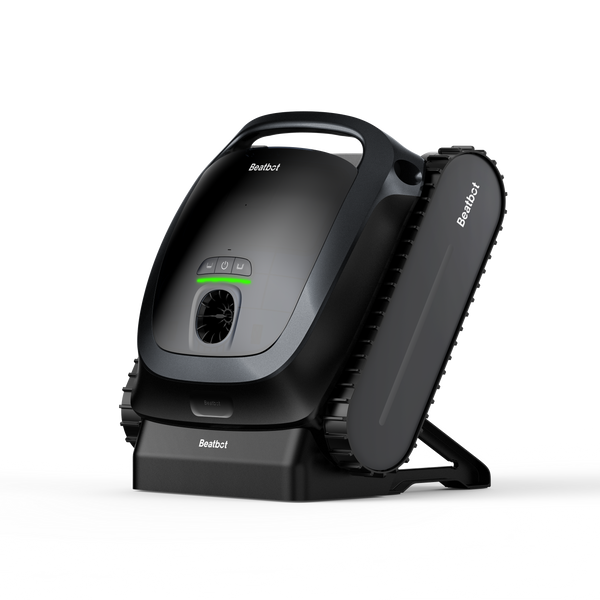
The Beatbot Sora 10 robotic pool cleaner runs full floor, wall, and waterline cycles with 6,800 GPH suction and a 5L filter at 150-micron filtration, pulling settled particles off the surface and trapping them in the basket before they have time to set.
For pools with persistent iron in the fill water, an optional 3-micron ultra-fine filter can be used between heavier cleaning cycles to capture the finer particles that drive recurring spotting.

When to Call a Professional
A professional acid wash or drain-and-clean may be necessary if staining is deep-set and has been present for years without treatment, if the staining recurs within days of each treatment (which points to a structural source of iron that needs to be identified and removed), or if the pool has a plaster finish and the stain has penetrated deeply enough to require resurfacing.
If stains keep returning despite sequestrant use and correct water chemistry, a water analysis for total metals and a pool service inspection of the plumbing and equipment are the right next steps.
FAQs
Can I swim in the pool right after treating rust stains?
Wait until the water chemistry is back in range before swimming. pH should be between 7.4 and 7.6 and chlorine should be at normal levels (typically 1 to 3 ppm). If you used ascorbic acid or dry acid in significant amounts, this typically takes a few hours of filtration and adjustment.
Is rust in a pool bad?
Rust itself is a cosmetic problem, not a health hazard at typical pool concentrations, but the underlying iron contamination can stain swimwear, irritate eyes, and over time corrode pool equipment such as heater elements, pump seals, and metal fittings. Treating stains and managing iron with a sequestrant prevents the staining cycle from accelerating equipment damage.
Can I use vinegar or WD-40 to remove pool rust stains?
No. Household vinegar is too dilute to cut through bonded iron stains in a pool, and adding meaningful quantities throws off pH and chlorine balance. WD-40 is petroleum-based and should never be introduced into pool water, since it disrupts sanitizer effectiveness and leaves an oily residue. Stick with ascorbic acid, sodium bisulfate, or a pool-specific metal stain remover.
Will muriatic acid remove rust from a pool?
Muriatic acid will dissolve rust on contact, but it is too aggressive for general use on submerged pool surfaces and can damage plaster, vinyl, and grout if applied incorrectly. It is sometimes used during a professional drain-and-acid-wash, not as a homeowner spot treatment. For DIY removal, ascorbic acid and sodium bisulfate are the safer effective options.
Does shocking the pool remove rust stains or get rid of iron?
No to both. Chlorine shock oxidizes dissolved iron and pushes it out of solution, which causes existing stains to set harder and creates new staining on pool surfaces. A reducing agent (ascorbic acid or dry acid) does the opposite, dissolving iron back into solution so a sequestrant or filter can remove it. Treat rust stains and iron contamination before shocking, never after.