Most Popular


 Sora Series


 AquaSense Series

 Skimmer & Bundle

 Retail Edition


 Accessories


A saltwater pool is still a chlorine pool. That one fact explains most of its maintenance issues, which come down to the same handful of failures every season. The big five are pH creep, scale on the salt cell, over-salting, the wrong kind of shock, and slow metal corrosion.
A salt chlorine generator handles one job, making chlorine, and leaves the rest to you. It will not balance your pH, hold down calcium, or decide how much salt the water needs. None of these problems is hard to head off, and staying ahead of them beats scrambling to rescue a pool that has already turned cloudy or scaled up.
Why Salt Pools Drift Out of Balance
Salt pools drift out of balance because the generator makes chlorine at one fixed rate, while the pool's demand for it never sits still. When a heat wave, a busy weekend of swimming, or a passing storm pushes demand above what the cell can produce, free chlorine drops and the water can cloud up or go green.
The answer is to nudge the generator's output up for the season and give it a temporary boost after heavy use, instead of reaching for tablets or shock by hand.
With hand-dosing, the big swings of chlorine you pour in mask how much the water really wants. A generator runs at one steady rate, so the gap shows up the moment demand climbs past supply, and the water can cloud over before you ever touch the setting.
If you keep cranking the output up, the real culprit is usually a chemistry problem feeding that demand. Extra phosphates, organic gunk from leaves and body oils, and a stabilizer level that has slipped too low all make the water chew through chlorine faster.
Keeping cyanuric acid in a moderate range shields the chlorine from sunlight, so the cell is not fighting the sun all day. Pouring in chlorine by hand mostly papers over the very problem the generator was about to point out.
Rising pH and Total Alkalinity
The Issue: Salt pool pH creeps up because the generation process, and the water movement it stirs up, both push pH higher over time. Left alone, pH drifts past 7.6, which weakens the chlorine the cell makes, stings skin and eyes, and speeds up scaling.
The Fix: Hold total alkalinity on the low side, around 70 to 80 ppm, and add muriatic acid regularly to keep pH in the 7.2 to 7.6 range.
Total alkalinity works as a buffer against pH swings, so keeping it near the bottom of the range slows how fast pH climbs between corrections. Let it run too high and pH takes off, which has you adding acid more often than you should.
In a salt pool, rising pH is the norm, so plan on adding acid rather than base. Test pH at least once a week and correct in small, measured doses. Pools with fountains, spillways, or other water features that splash and aerate see pH climb faster, so they usually need acid on a tighter schedule.
Salt Cell Scaling
The Issue: Salt cell scaling happens because the cell creates a pocket of high pH right on its metal plates as it makes chlorine, and that is exactly where calcium crystallizes into white, flaky deposits. The scale gets in the way of the current, so chlorine output drops and the unit has to work harder to keep up.
The Fix: Check the cell every three months, and when you spot buildup, soak it in a diluted muriatic acid solution, usually about four to five parts water to one part acid.

A quick hose rinse only knocks off loose debris, so it leaves behind the bonded calcium that is actually choking the cell. During an acid soak you will see it fizz as the scale dissolves, and a badly scaled cell can take more than one soak before the fizzing quits. Make sure the solution covers the whole inside of the cell, then flush it well so the loose calcium chunks rinse out.
Acid is rough on the cell coating, too, so cleaning more often than you need to will shorten the cell's life. The better move is to keep calcium hardness and pH in line so scale forms slowly in the first place, and only soak the cell when you can actually see deposits, not on a set calendar.
Over-Salting
The Issue: Salt does not evaporate, and the generator does not use it up, so the only way it leaves the pool is through splash-out, backwashing, or draining. Add salt every time the control panel asks for it and you will push the level too high over time.
The Fix: Test the salinity yourself before you add any salt, and only add it after rain or a partial drain has actually watered the pool down, keeping the level inside the generator's range, usually around 3,000 to 3,400 ppm.

The trap is that low-salt warning. A dirty or aging cell has trouble passing current, and it throws the same warning a truly low salt level would. Tossing in more salt makes the current flow easier for a while and clears the alert, so the level creeps up a little more every time the warning comes back. Sooner or later no amount of salt clears it, and now the pool is over-salted.
Too much salt brings its own headaches. Past roughly 4,500 ppm a lot of generators shut themselves down to stay safe, and the extra salinity speeds up corrosion on heaters, rails, and decking. Treat a low-salt warning as a cue to test, not a cue to pour in salt. If you have already over-salted, the only real fix is to drain off some water and refill to bring salinity back into range.
Choosing the Wrong Shock
The Issue: Calcium hypochlorite, or cal hypo, is a popular shock, but it dumps calcium into water that already leans toward scaling, which drives even more buildup onto the cell and the walls.
The Fix: Keep cal hypo out of a salt pool and reach for liquid chlorine (sodium hypochlorite) or a non-chlorine shock (potassium peroxymonosulfate) when you need to superchlorinate.
Most generators have a boost or superchlorinate setting that ramps up output for routine upkeep, so day-to-day maintenance needs nothing extra added to the water. When you need to knock down algae or clear a cloudy bloom fast, a separate dose of liquid chlorine works quicker than waiting on the cell.
A salt pool is already fighting calcium buildup on the cell every single day, so a shock that raises calcium hardness just piles onto that load. Sticking with liquid or non-chlorine shock keeps you from making the scaling worse while you are trying to stay on top of it.
Metal Corrosion and Staining
The Issue: Salt water is a little harder on handrails, ladders, light rings, and heater parts, and dissolved iron and copper are behind most of the rust-colored and greenish stains you see.
The Fix: Keep the water balanced, hose down the deck and metal fixtures with fresh water every few weeks, and use a sequestrant to lock up dissolved metals before they stain.

Balanced water does most of the protecting on its own, since water that stays in range is far less likely to drop metals onto surfaces or corrode fittings. The metals already dissolved in the water are a separate job, and that is where a sequestrant or clarifier comes in.
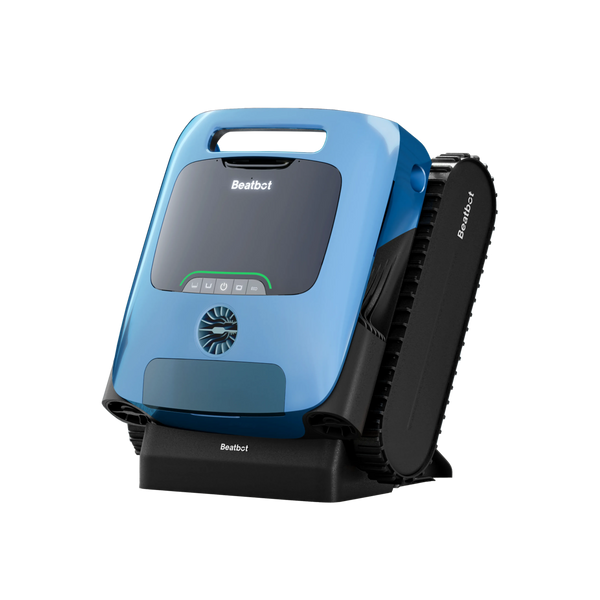
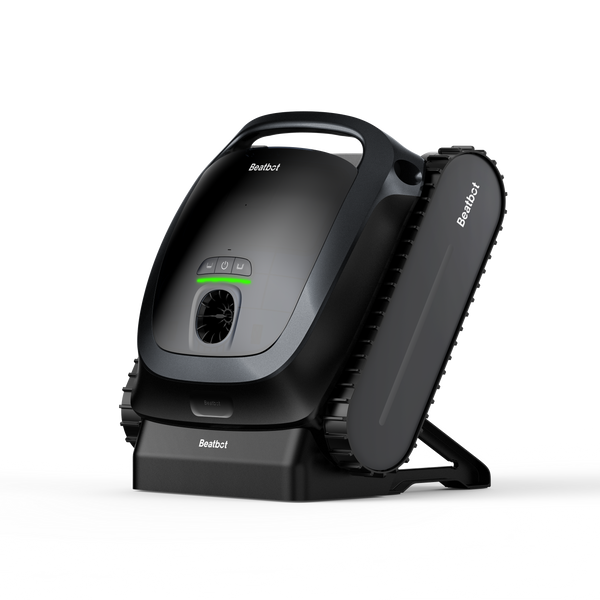
The Beatbot AquaSense 2 Ultra robotic pool cleaner takes that clarifier step off your hands. It dispenses clarifier evenly through its ClearWater™ system as it cleans, so the dose spreads across the whole pool with no hand-mixing.
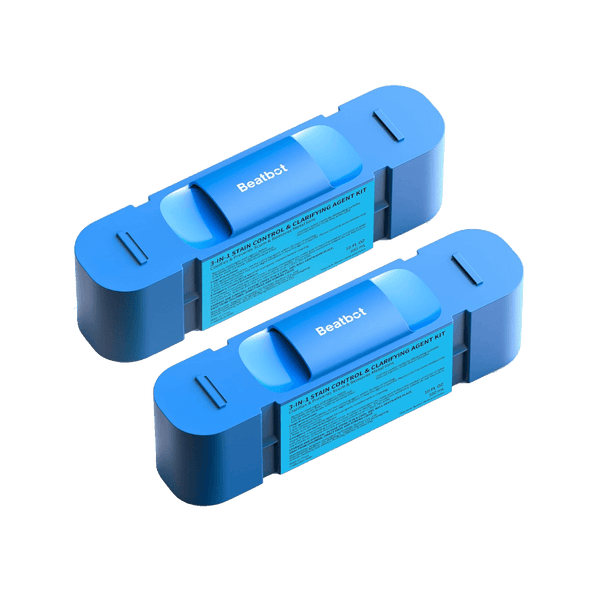
The compatible Beatbot AquaRefine™ 3-in-1 Clarifier, which is pH-neutral and works in saltwater pools, removes dissolved iron, copper, and manganese so they cannot stain surfaces, and it does that without touching the pH you worked to balance.
Debris and Cloudy Water
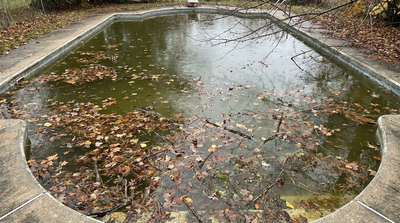
The Issue: Chlorine sanitizes the water, but it cannot scoop out leaves, pollen, dead algae, or fine sediment. That debris clouds things up and feeds chlorine demand as it breaks down, which makes the generator run longer and can leave the water looking dull even when the chlorine reading checks out.
The Fix: Pair steady filtration with regular physical cleaning, so debris gets pulled out of the water instead of breaking down in it.
The more organic load the water is carrying, the harder the cell has to work to hold a chlorine level, so clearing out debris is one of the cheapest ways to bring a salt pool's chlorine demand down.
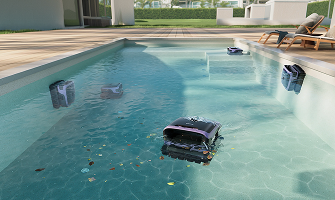
The Beatbot AquaSense 2 Ultra robotic pool cleaner does that physical work across the floor, walls, waterline, and water surface in a single cycle, and its dual-layer filtration traps particles down to 150 microns. Set it on a schedule and it pulls leaves, pollen, and fine sediment out before they have a chance to break down, which keeps the water clear between your weekly chemical checks.

FAQs
Do salt cells work in cold water?
Not well. Most salt chlorine generators slow down or stop producing chlorine once the water drops below about 60 to 65°F. Through the cold months, lower the salt output and add chlorine another way so the pool keeps a sanitizer residual.
How long does a salt cell last?
A salt cell usually lasts three to seven years, depending on sizing, run time, and how well the water stays balanced. Before you replace one, confirm salinity is in range and clean the cell, since scale and low salt can both mimic a worn-out cell.
How many hours a day should a salt system run?
Run it long enough to meet the pool's daily chlorine demand, often somewhere around 8 to 12 hours in summer at a moderate output. Bump the run time or output up during heat waves and heavy use, then ease it back as the water cools.