Most Popular


 Sora Series


 AquaSense Series

 Skimmer & Bundle

 Retail Edition


 Accessories


Rainy weather affects your pool in three connected ways: it dilutes sanitizer and chemistry, it delivers contaminants (airborne dust, pollen, organic debris, runoff-borne phosphates), and it pushes pH and alkalinity out of range. Together, these are enough to trigger cloudy water or early algae within 24 to 48 hours if left untreated. Most pool problems homeowners describe as "out of nowhere" actually started with the last rainfall.
What Happens to Pool Water When It Rains?
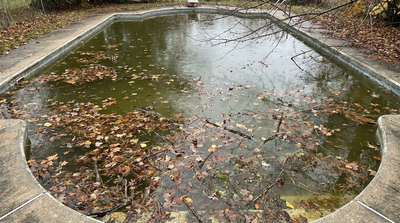
Rainwater adds volume that dilutes chlorine, pH, alkalinity, cyanuric acid, and calcium hardness at the same time. It carries airborne particles (dust, smog, pollen, nitrates) that feed algae and increase sanitizer demand. And wind-driven debris (leaves, grass clippings, twigs, insects) lands on the surface and sinks into the water, where it decomposes and keeps drawing chlorine for days.
The dilution is larger than it looks on paper. A half-inch of rain on a 20x40 foot pool contributes roughly 250 gallons of fresh water. On a 20,000 gallon pool, that is about 1.25 percent dilution, which is enough to move free chlorine from a safe 2 ppm down toward the 1 ppm threshold where algae begins to grow. Cyanuric acid falls proportionally, and once it sits below roughly 30 ppm in a sunlit outdoor pool, chlorine burns off within a day.
Rain itself is slightly acidic, typically sitting between 5.0 and 5.5 pH even in clean air, and lower in regions with heavier air pollution. A prolonged soak pulls pool pH below its ideal 7.4 to 7.6 range, which reduces chlorine effectiveness at the exact moment demand spikes. Left uncorrected over repeated storms, low pH also begins to corrode metal fittings like heaters, ladders, and handrails.

Why Does My Pool Turn Green or Cloudy After Rain?
Pools turn green or cloudy after rain when the sanitizer drops faster than contaminants can be neutralized. Cloudiness is almost always the early stage, caused by fine organic particles (pollen, dust, dead algae, oils) suspended in water with weakened chlorine. Green is the later stage: free-floating algae has started to bloom because chlorine fell below its effective threshold long enough for cells to multiply.
The other common trigger is phosphate introduction. Rain and runoff carry phosphates from lawns, fertilizers, and decaying leaves into the pool, and phosphates are algae food. A pool that enters a storm with borderline sanitizer and picks up a phosphate load from runoff is the classic setup for waking up to a green pool.
How Much Rain Is Too Much for a Pool?
Any rainfall above roughly half an inch is enough to warrant testing and rebalancing. Light drizzle adds minor dilution and usually resolves itself if your chemistry was stable going in. Sustained rain over an inch, or any storm with visible runoff from the surrounding yard, is where real problems start: the water level rises, sanitizer dips meaningfully, and organic load enters from multiple directions at once.
Heavy storms introduce a second issue: overflow. Once water reaches the top of the skimmer, debris that would normally be caught floats out onto the deck or spills over, and runoff flows into the pool instead of away from it. If your pool is full and more rain is forecast, draining a few inches before the storm is simpler than cleaning up contamination after.
A rough threshold guide for typical response levels:
|
Rainfall |
Main Effect |
Response Needed |
|
Under 0.5 inch |
Minor dilution, slight pH drop |
Test within 24 hours |
|
0.5 to 1 inch |
Noticeable chlorine loss, some debris |
Test, skim, rebalance |
|
1 to 2 inches |
Significant dilution, phosphate load |
Shock, clean, check stabilizer |
|
Over 2 inches |
Overflow risk, heavy runoff entry |
Drain excess, full reset |
Current chemistry going into the storm matters as much as the rainfall total. A half-inch of rain after a dry week on a well-balanced pool barely registers; the same half-inch on a pool already running low on chlorine can turn it cloudy overnight.
Season changes how fast the damage shows up. Summer rain lands on warm water under strong UV, which burns off stabilizer and chlorine faster and gives algae a 24-hour head start; a storm in July that drops chlorine to 1 ppm can turn the pool green by the next afternoon. Cool-season rain moves slower — algae barely multiplies below 60°F — but pH and alkalinity drift still accumulates, so spring reopening often reveals months of quiet chemistry damage from winter storms.
What to Do to Your Pool After It Rains
Test the water, skim surface debris, brush and vacuum, rebalance alkalinity then pH then chlorine, and clean the filter. Done in that order within 24 to 48 hours, most storms leave no lasting damage.
1. Test the water within 24 hours
Check free chlorine, pH, total alkalinity, and cyanuric acid. Free chlorine is the most time-sensitive reading; if it sits under 1 ppm, treat the pool as at risk of an algae bloom regardless of how the water looks. pH is the second priority, because rain usually pushes it low and low pH makes the sanitizer you do have less effective.
2. Skim and remove surface debris
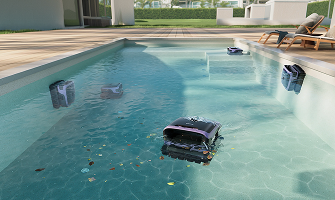
Storms deposit leaves, twigs, pollen film, and insects on the water. Get them out before they sink. A skimmer net works for light loads; a robotic pool cleaner with surface cleaning is the practical choice after heavy storms, because surface debris that sinks and decomposes is the single largest sanitizer drain in the 48 hours after a rainfall.
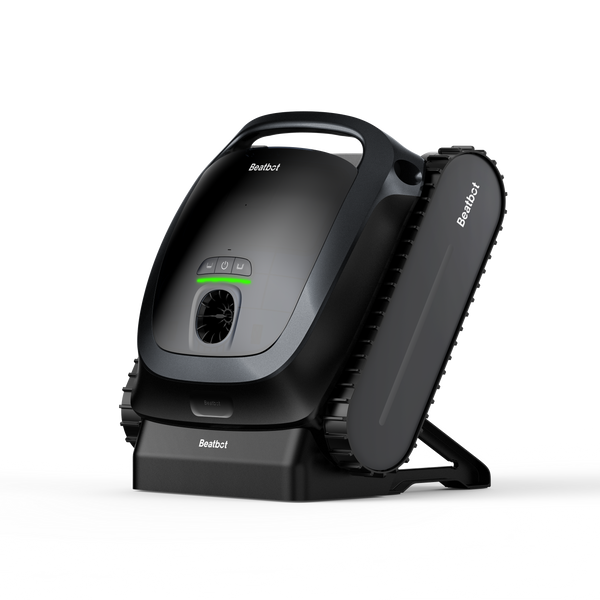
The Beatbot Sora 70 cordless robotic pool cleaner is built for this scenario. Standard pool vacuums push a bow wave that scatters floating debris sideways instead of pulling it in.
The Sora 70's JetPulse water surface cleaning solves this with two side-mounted jets that fire both inward and outward at once, creating four coordinated streams that funnel leaves, pollen, and insects into the central suction inlet while the outward flow blocks bypass. A 6L debris basket, 2 to 3 times the size of standard robots, holds a full post-storm load in a single cycle.

3. Brush, vacuum, and rebalance
Brush the walls and floor to lift settled debris into suspension, then vacuum or run your robotic cleaner. Rebalance in order: alkalinity first, then pH, then chlorine. If your cyanuric acid is under 30 ppm, add stabilizer before adding more chlorine, otherwise the UV will burn it off within a day.
4. Address cloudiness before it becomes algae
Cloudy water after rebalancing usually points to fine suspended particles the filter alone cannot capture quickly. Running the pump continuously for 24 to 48 hours helps. A clarifier speeds this up by binding microscopic particles into larger clumps the filter or robot can remove.
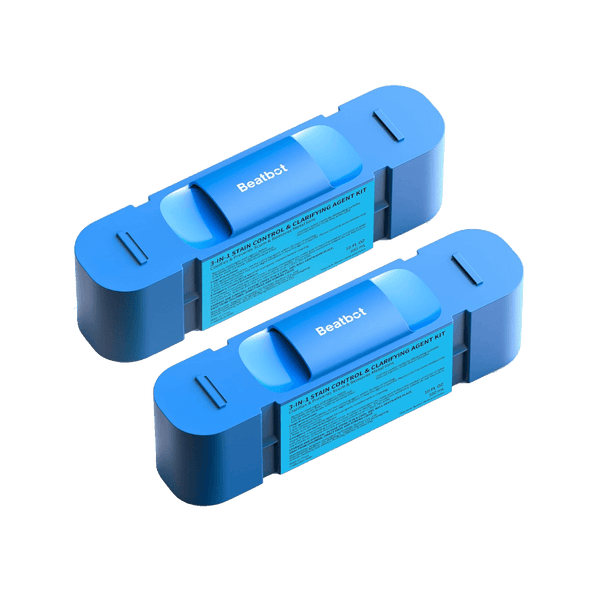
The Beatbot AquaSense 2 Pro robotic pool cleaner automates this step through its ClearWater Clarification System.
While the robot cleans, it evenly dispenses a natural chitosan-based clarifier (derived from recycled crab shells) that binds the dust, pollen, oils, and microscopic organic particles responsible for post-storm haze into clumps large enough for the robot or your pool filter to capture. It works roughly four times faster than manually mixed clarifiers, so a cycle that would otherwise take a pump running for two days finishes in hours.
5. Check and clean the filter
Heavy debris loads from rain clog filters quickly. A clogged filter cannot polish cloudy water no matter how well the chemistry is balanced. Backwash a sand or DE filter, or rinse a cartridge filter, before you assume the chemistry is wrong.
How to Protect Your Pool from Rain
Enter each storm with strong baseline chemistry and less debris exposure. Rain will always fall in; what you control is how much sanitizer is available to absorb the hit and how much organic load ends up in the water.
Keep free chlorine in the 2 to 3 ppm range and cyanuric acid between 30 and 50 ppm during the rainy season. Run the pump longer (10 to 12 hours per day instead of 6 to 8) when storms are in the forecast, so turnover can keep up with contaminant load. Trim back trees and shrubs that drop leaves into the water, and keep lawn fertilizer off the deck and surrounding slope, because fertilizer runoff is the biggest external phosphate source for most residential pools.
A pool cover eliminates most of the debris and rainwater problem, but it also traps humidity and blocks UV, which can shift chemistry in its own way. If you use one, still test the water within a day or two of the storm; do not assume the cover did all the work.

FAQs
Should I shock my pool after every rainstorm?
Not always. Shock after heavy rain (over an inch), after any storm that dropped visible debris load, or when free chlorine tests under 1 ppm. Light rain with intact chemistry rarely needs shock; a pH and chlorine correction is usually enough.
Can I swim in the pool right after it rains?
Only after testing. If free chlorine is at least 1 ppm, pH is between 7.2 and 7.8, and the water is visibly clear, swimming is generally safe. Skip it if the water looks cloudy or green, or if the storm included lightning or flooding.
Why do people add baking soda to a pool after rain?
Baking soda (sodium bicarbonate) is the standard way to raise total alkalinity, which rain almost always pulls down. Alkalinity stabilizes pH, so correcting it before touching pH or chlorine makes the rest of the rebalance hold. Use the dosing chart on your product bag, retest after six hours, and adjust pH only after alkalinity sits inside the 80 to 120 ppm range.
Should I run the pool pump during the rain?
Yes, keep it running. Circulation during and after rainfall distributes diluted chemistry evenly, pushes debris toward the skimmer and main drain, and helps the filter catch the fine particles that cause cloudiness. The only reason to shut it off is a severe storm with lightning or power surge risk.