Most Popular


 Sora Series


 AquaSense Series

 Skimmer & Bundle

 Retail Edition


 Accessories


Pool shock is a concentrated dose of chlorine — or a chlorine-free oxidizer — added to your pool water to destroy chloramines, kill bacteria, and clear contamination that regular chlorination leaves behind. The core purpose is superchlorination: pushing your free chlorine high enough to break the molecular bonds of combined chlorine and restore the water's sanitizing power.
Most pool owners should shock once a week or every two weeks during swimming season, using 1 lb of granular chlorine shock per 10,000 gallons of water as a baseline. That amount doubles or triples when algae is visible or after heavy use. Shock at dusk so UV rays do not burn off the chlorine before it can work.
What Does Pool Shock Do?
Pool shock eliminates combined chlorine, also called chloramines, which form when free chlorine binds to nitrogen from sweat, urine, sunscreen, and fertilizers. Chloramines are the reason pool water develops that sharp "chlorine" smell and causes red eyes. That smell is not a sign of too much chlorine — it signals not enough free chlorine to break down what has accumulated.
The process is called breakpoint chlorination. To reach it, you need to add ten times the amount of combined chlorine currently in the water. Once you hit that threshold, the chloramine bonds shatter, free chlorine is restored, and the water returns to effective sanitization. Shocking also handles algae, certain bacteria, and organic debris that slow chlorine cannot manage on its own.

How Often Should You Shock Your Pool?
Shock your pool once a week during active swimming season, or every two weeks if usage is light. The higher the bather load, the more often chloramines build up, and the more frequently shocking becomes necessary.
Beyond the regular schedule, specific situations require an immediate extra treatment. Shock after a pool party or any heavy use event, since free chlorine levels drop sharply when many people are in the water. After a severe rainstorm or high winds, runoff introduces contaminants and dilutes your chemistry.
Shock at pool opening in spring, because algae almost always establishes itself over winter regardless of how well you closed. At seasonal closing, shock again so the water stays inhibited through months with no circulation. And if there has been a fecal incident, close the pool and superchlorinate before anyone swims.
Shock is also the right response when free chlorine reads zero on a test, when combined chlorine exceeds 0.3 ppm above free chlorine, or when water turns cloudy or green.
When Is the Best Time of Day to Shock a Pool?
Dusk or evening is the best time to shock a pool. The sun's UV rays rapidly degrade unstabilized chlorine, and most shock products, particularly calcium hypochlorite and dichlor, are not stabilized. Adding shock in the afternoon means a significant portion burns off before it can reach breakpoint chlorination.
Shocking at night lets the product work at full concentration for the hours your pump runs overnight. By morning, free chlorine levels will have dropped from the treatment peak to a safe swimming range. If you use non-chlorine shock, timing is less critical since it is not affected by UV, and you can swim again in as little as 15 minutes.
How Much Shock to Add to Your Pool
The standard maintenance dose is 1 lb of granular chlorine shock per 10,000 gallons of pool water. For a typical residential pool of 20,000 gallons, that is 2 lbs per treatment. Most shock products are sold in 1 lb bags, making the calculation straightforward once you know your pool volume.
When opening your pool for the season, use the same 1 lb per 10,000 gallons as a starting point, but test the water first. If the pool has sat all winter and shows algae growth, visible green water, or very low free chlorine, treat it as an algae situation.
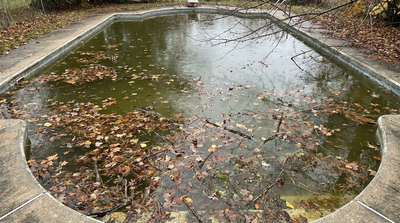
For light green water, use 2 lbs per 10,000 gallons. For dark green or black water, you may need 3 lbs or more. After treating, brush the pool walls and floor to dislodge algae and keep the pump running continuously until the water clears. Non-chlorine shock is not effective against algae, so use a chlorine-based product in these cases.
One important note on pH: the effectiveness of chlorine drops sharply above pH 7.6. Before adding shock, test and adjust pH to the 7.4 to 7.6 range. A correct pH reading means less shock is wasted and breakpoint chlorination is reached faster.
Types of Pool Shock and When to Use Each
There are four main types of pool shock, and choosing the right one depends on your pool type, current chlorine levels, and how soon you need to swim again.
|
Type |
Chlorine % |
Dissolve First |
Wait to Swim |
Best For |
|
Calcium Hypochlorite (Cal-Hypo) |
65–75% |
Yes |
8 hours |
Algae, low FC, regular shock |
|
Dichlor |
50–60% |
Usually no |
8 hours |
Saltwater pools, dual-use |
|
Non-Chlorine (Potassium Monopersulfate) |
None |
No |
15 minutes |
Weekly oxidizing, swim-soon |
|
Lithium Hypochlorite |
35% |
No |
8 hours |
High-calcium pools |
Calcium hypochlorite is the most common choice for routine shocking and algae treatment. Dichlor works well for saltwater pools and situations where you also want to dose cyanuric acid.
Non-chlorine shock is useful when you want to oxidize the water without waiting eight hours, but it cannot kill algae and should not replace chlorine shock when free chlorine is depleted. Lithium hypochlorite is increasingly hard to source and is mainly relevant for pools with already-high calcium hardness.
Most saltwater generators include a superchlorinate mode that increases chlorine output directly, which can substitute for an external shock treatment under normal conditions.

How to Shock a Pool
The full process takes about 30 minutes of active work plus 8 to 12 hours of pump circulation overnight. Before starting, put on protective goggles, chemical-resistant gloves, and clothes you can afford to bleach. Skim the surface and vacuum the floor first — physical debris consumes chlorine and reduces how effectively the shock can hit breakpoint.
Step 1: Test the Water
Check free chlorine, total chlorine, and pH before adding anything. If free chlorine is below total chlorine, you have combined chlorine that needs to be broken. Adjust pH to between 7.4 and 7.6 for maximum shock effectiveness. Also check calcium hardness if you are using cal-hypo, since it adds calcium to the water with each treatment.
Step 2: Calculate Your Dose
Use your pool volume and the situation — standard maintenance, opening dose, or algae treatment — to determine how many pounds you need. Work in 1 lb increments and do not mix different shock types in the same bucket or even the same session without rinsing your bucket first.
Step 3: Pre-Dissolve If Required
Calcium hypochlorite must be dissolved before adding to your pool, particularly with vinyl liners. Fill a 5-gallon bucket three-quarters full with pool water, then slowly add the shock granules. Stir until dissolved. Never add water to a bucket that already contains shock, and never mix two types of shock together.
Step 4: Pour Around the Perimeter With the Pump Running
Turn on your pump and filter at full speed. Walk slowly around the perimeter of the pool and pour the dissolved shock evenly along the edges. For products that do not require pre-dissolving, pour directly around the perimeter the same way. Do not add shock through the skimmer, especially if you have an automatic chlorinator, because mixing shock with a chlorine puck creates a dangerous gas reaction.
Step 5: Run the Pump and Retest
Keep the pump running for 8 to 12 hours. Retest the water before anyone swims. Wait until free chlorine returns to the 1 to 4 ppm safe swimming range.
Pool Shock Safety Rules
Improperly stored chlorine products can release toxic gas or, in extreme cases, cause fires and explosions.
Never mix different types of shock together. Combining calcium hypochlorite with dichlor or non-chlorine shock triggers a violent chemical reaction. Always empty and rinse your bucket completely between uses if you are switching products in the same session.
Always add chemical to water, never water to chemical. Pouring water onto dry shock granules can cause a rapid exothermic reaction. Fill your bucket with pool water first, then add the shock slowly.
Do not add shock through the pool skimmer. If your pool has an automatic chlorinator attached to the filtration line, mixing shock with the chlorine tablets inside it can cause a dangerous gas buildup. Always pour shock directly into the pool water around the perimeter.
Store shock in a cool, dry place away from heat sources, direct sunlight, and other chemicals. Open only one bag at a time, empty it completely, and do not reseal a partially used bag for long-term storage. Wear your gloves and goggles every time, even for small doses.

Why a Clean Pool Makes Shock Work Better
Every leaf, twig, and patch of fine sediment sitting in your pool consumes chlorine before that chlorine can do its job. The more debris on the floor and walls, the more shock you need to hit breakpoint, and the longer the water takes to clear after treatment.
Skimming, brushing, and vacuuming before each shock cycle is the single biggest thing that makes the chemistry work — but doing all three by hand, every week, is what makes pool maintenance feel like a chore.
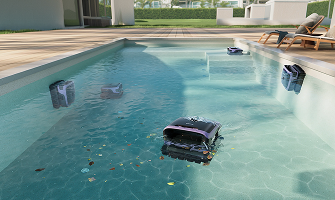
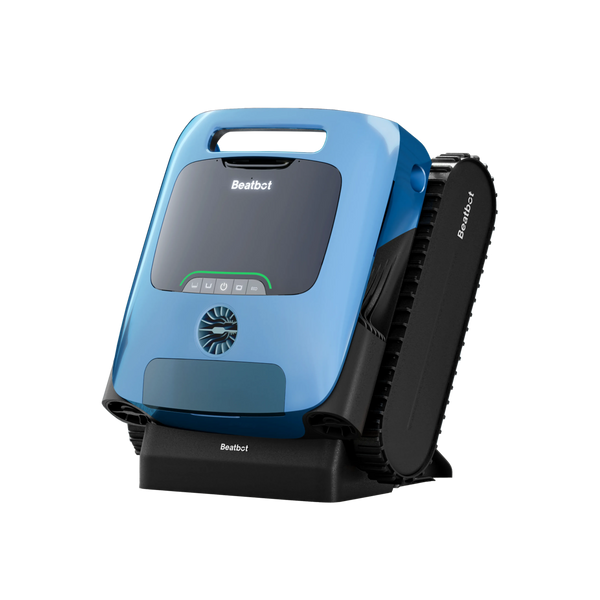
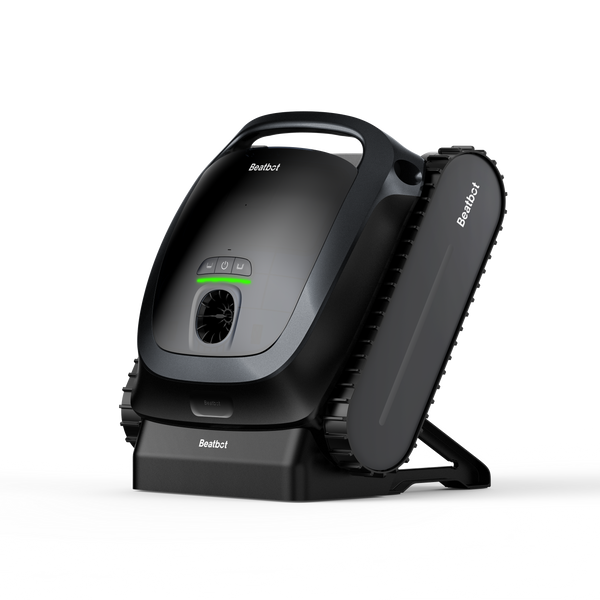
This is where a robotic pool cleaner pays off. The Beatbot Sora 70 robotic pool cleaner runs an automated cycle covering floor, walls, and waterline, and adds water surface cleaning that lifts floating leaves and pollen out before they sink and start feeding chloramines.
With 6,800 GPH of suction and a 6L debris basket, a single cycle handles the kind of organic load that would otherwise demand a full hand-vacuum the day before shocking. Less debris going into shock day means less shock product, less wait time, and clearer water faster.
If your pool has steps, ledges, or shallow tanning shelves where leaves and silt collect, the Beatbot Sora 30 robotic pool cleaner is built for that geometry — it cleans water as shallow as 8 inches, which is where most automatic cleaners give up and where debris quietly accumulates between manual cleanings.
FAQs
How much shock do I need for a 10,000 gallon pool?
Use 1 lb of granular chlorine shock for routine maintenance. Double it to 2 lbs for light algae or after heavy pool use, and triple it to 3 lbs for a heavy algae bloom or dark green water. Liquid chlorine works at roughly 1 gallon per 10,000 gallons as a maintenance dose.
How long does it take for shock to work?
Breakpoint chlorination starts within minutes of the shock dissolving and circulating, but visible results depend on what you are treating. Cloudy water from chloramines usually clears within 24 hours. An algae bloom can take 2 to 5 days, with daily brushing and continuous filtration, before the water turns from green to clear blue.
Do I need to run the pump when I shock my pool?
Yes. Without circulation, shock concentrates in one area and can bleach vinyl liners, damage pool surfaces, and fail to reach breakpoint elsewhere in the pool. Run the pump at full speed before, during, and for at least 8 hours after adding shock.
Can I shock my pool two days in a row?
Yes, when treating a stubborn algae bloom or recovering from heavy contamination. A second shock dose 24 hours later helps push lingering chloramines past breakpoint when the first dose was insufficient. Test free chlorine before re-shocking — if it is still elevated above 4 ppm, wait for the level to drop before adding more.