Flagship


 Sora Series


 AquaSense Series


 Skimmer & Bundle

 Retail Edition


 Accessories



 Extended Warranty


Pool opening shock comes down to dose. Start with pool size, then adjust for water condition and shock type. For a standard opening, a solid baseline is 2 pounds of chlorine shock per 10,000 gallons.
That is the double shock rate used to clear out winter contamination at the start of the season. Liquid chlorine needs a different calculation since the right amount depends on product strength, not just how many gallons you pour in.
The goal is to raise free chlorine high enough to reach breakpoint chlorination, the point where combined chlorine breaks apart and the water gets a real reset.
How Much Chlorine to Shock a Pool at Opening
For most pool openings, use 2 pounds of chlorine shock per 10,000 gallons of water after the pool is cleaned and the water is balanced. That opening baseline works for both chlorine pools and salt systems.
That number is a starting dose for a normal opening. It is not the right answer for every pool. A clean pool that closed well may respond fast. A pool with green water, heavy debris, or weak balance can burn through chlorine much faster.
Shock does more than raise chlorine for a few hours. It pushes free chlorine high enough to reach breakpoint chlorination. That is why opening shock is different from routine chlorination. Tablets and small maintenance doses do not do the same job.

How to Calculate Pool Opening Shock by Pool Size
The base formula is simple. Use 2 pounds of chlorine shock for each 10,000 gallons.
That means a 15,000 gallon pool needs about 3 pounds. An 18,000 gallon pool needs about 3.6 pounds. A 20,000 gallon pool needs 4 pounds. A 25,000 gallon pool needs 5 pounds. A 30,000 gallon pool needs 6 pounds.
That approach works better than vague advice like adding a few bags and hoping for the best. Pool size gives you a reliable starting point. Water tests show whether that starting point needs to change.
Liquid chlorine needs its own calculation. A fixed rule such as 2 gallons per 10,000 only works when the strength is named. One gallon of 5.25% bleach raises free chlorine by a little over 5 ppm in a 10,000 gallon pool. Shock range starts around 10 ppm or higher.
So a 10,000 gallon pool would need about 2 gallons of 5.25% bleach to get there. Stronger liquid chlorine, such as 10% or 12.5%, needs less. Liquid shock should be tied to pool volume, product strength, and your target free chlorine level.
This matters even more in smaller pools. Bag shock is often packed for 10,000 gallons. In a pool below that size, liquid chlorine gives you finer control and lowers the chance of overshooting the dose.

What to Check Before You Shock
The right dose can still disappoint if the pool is dirty or badly out of balance. Opening shock works best when the pool is ready for it.
Start with debris. Leaves, dirt, and organic buildup use up chlorine fast. If a pool opens with a lot of winter mess, remove as much of it as you can before the shock goes in. That lowers chlorine demand and lets the dose work on the water itself instead of surface waste.
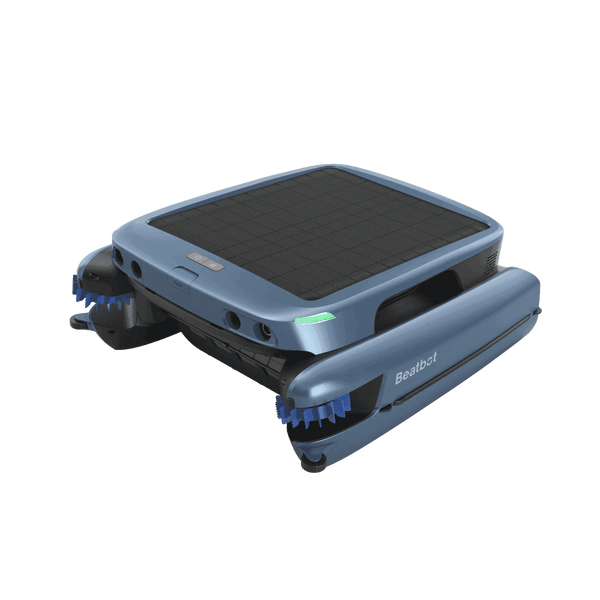
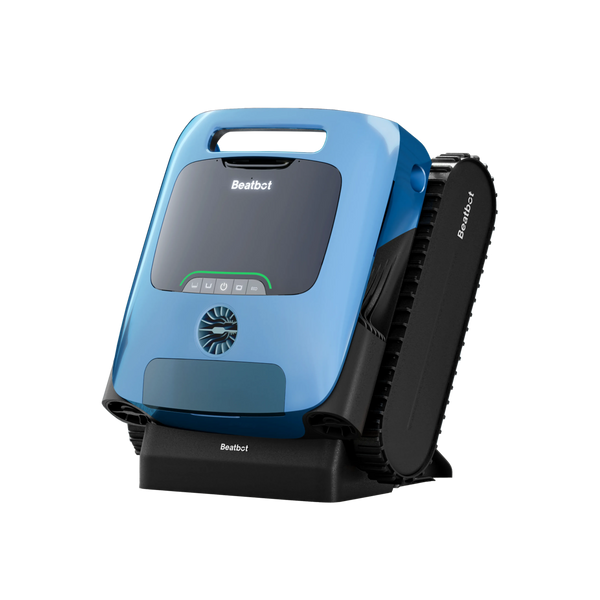
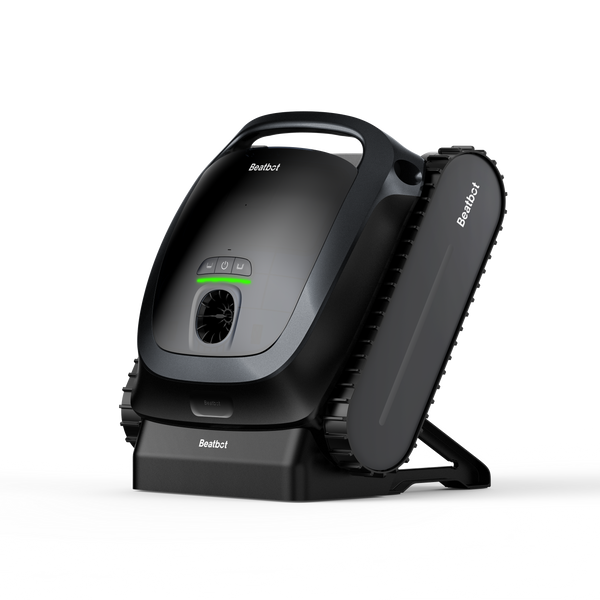
Beatbot Sora 70 robotic pool cleaner fits this stage better than a basic cleaner that only handles the floor. As a 4-in-1 robotic pool cleaner, it cleans the water surface, floor, walls, and waterline in one run, which matters at opening when debris is spread across the whole pool, not stuck in one zone.
Its dual port suction is built to catch floating debris and settled debris at the same time, and its 6L debris basket is better suited to the heavier load that comes with pool opening. That means less organic material stays in the water, so less of your chlorine gets spent on cleanup before sanitation begins.
After cleanup, balance the water in the right order. Adjust total alkalinity first, then pH, then calcium hardness. At this stage, chlorine is not the first problem to solve. Balance comes before shock.
pH has a direct effect on chlorine performance. If pH is too high, chlorine loses strength. Alkalinity matters too since it helps hold pH steady. CYA plays a different role.
Too little CYA lets sunlight burn off unstabilized chlorine fast. Too much CYA can weaken chlorine. That is one reason a pool can look underdosed when the real issue is the water chemistry around the chlorine.

How to Shock the Pool at Opening
Once the pool is clean and balanced, add the opening shock and let the system circulate it. If you are using cal hypo, add it at dusk or at night so sunlight does not strip the chlorine too fast.
After the shock goes in, run the filter for 24 hours. That full day of circulation helps mix the chlorine, trap dead algae, and clear the fine debris left from winter.
If the water looks a little cloudy the next day, that does not always mean the shock failed. In many cases, it means the chlorine did its job and the filter is still catching up.
Apply the right opening dose, circulate it for a full day, and let the filter finish the cleanup.
Tablets still do not belong here. They work for routine sanitation. They are not a substitute for opening shock.
When a Standard Opening Shock Dose Is Not Enough
A standard opening and a problem opening are not the same thing. If the water is green, packed with organics, or already showing algae, the baseline dose may not finish the job.
For green water or algae, cal hypo shock is the strongest option. It is built for hard cleanup. Non chlorine shock is not enough for that kind of opening. It can help oxidize waste, yet it does not raise free chlorine high enough to solve a real algae problem on its own.
Shock type matters in a few special cases. Salt water pools are usually better off with dichlor or liquid chlorine than with repeated cal hypo doses, since cal hypo adds calcium and can push scale issues in a salt cell. Small pools often do better with liquid chlorine since the dose is easier to control.
If your chlorine keeps disappearing, do not treat that as a sign to keep dumping in more shock.
First ask what is using it up. Debris, algae, weak balance, low CYA, and very high CYA can all drag chlorine down fast. The better move is to retest, clean more if needed, and adjust the next dose with fresh numbers in hand.
When It Is Safe to Swim Again
The safe swim rule comes from the test result, not the clock. After opening shock, wait until free chlorine drops back into the normal 1 to 3 ppm range before anyone swims.
If you use cal hypo, wait at least 8 hours. That is only a floor. A fresh test still matters more than time alone. If free chlorine is still high, keep filtering and test again later.
Too much chlorine is not better sanitation. It can irritate skin and eyes, wear on surfaces, and make the pool harder to use. If the water is still cloudy after the first shock, give the filter more time, then retest the chemistry before you add more product.
Salt water pool owners should follow the same order. Shock and balance the pool first. Let chlorine drop into the normal range. Then add salt or bring the salt system fully back online.
Use 2 pounds of chlorine shock per 10,000 gallons as the standard opening dose, clean the pool before you shock, balance alkalinity and pH first, run the filter for 24 hours, and retest before you swim or add more chlorine.
FAQ
How much liquid chlorine should I use to shock a 10,000 gallon pool at opening?
That depends on strength. One gallon of 5.25% bleach raises free chlorine by a little over 5 ppm in 10,000 gallons. Shock range starts around 10 ppm or higher, so stronger liquid chlorine needs less product.
Do I shock before or after balancing pH and alkalinity?
Shock after balancing. At opening, adjust alkalinity first, then pH, then calcium hardness. The shock works better once the water is in range.
Can I swim the same day after shocking my pool?
Only if free chlorine has dropped back into the normal range. If you used cal hypo, wait at least 8 hours, then test again.
Can chlorine tablets replace shock at pool opening?
No. Tablets are for routine chlorination. Opening shock needs a much stronger dose to reset the water after winter.
What if the pool is still green after the opening shock?
Retest the water before adding more chlorine. Green water can point to algae, heavy debris, weak balance, or a CYA issue.
Is one bag of shock enough to open a pool?
Sometimes yes. Sometimes no. It depends on pool size and bag strength. Use the pool volume formula instead of a one bag guess.