Most Popular


 Sora Series


 AquaSense Series

 Skimmer & Bundle

 Retail Edition


 Accessories


A pool liner is the inner surface that sits between your pool structure and the water. It seals the floor and walls against leaks, protects the shell underneath, and gives the pool its finished look.
Your choices fall into four main groups: vinyl attachment styles, liner thickness, patterns and finishes, and non-vinyl surfaces such as tile, plaster, fiberglass gelcoat, and PVC membrane. The right choice depends on your pool structure, depth profile, climate, and how long you want to go before the next replacement.
What Is a Pool Liner?
A pool liner is the watertight membrane or finish that covers the inside of a swimming pool. It keeps water from leaking into the pool structure or surrounding soil, gives the pool its visible surface, and creates a smoother feel underfoot.
Not every pool uses a liner in the same way. Vinyl-lined pools need one because the liner is the waterproof barrier. Concrete pools do not rely on a liner for structure, but most owners still use tile, plaster, or a vinyl finish to protect the shell, cover stains, and make algae harder to cling to. Fiberglass pools come with a gelcoat surface built into the shell, so they do not need a separate liner.
Vinyl Liner Attachment Types
Vinyl liners attach to the pool wall in seven main ways. The attachment style affects installation difficulty, upfront cost, and how simple the liner will be to replace later.
Overlap Vinyl Liner
An overlap vinyl liner is a flat sheet of vinyl that drapes over the top edge of the pool wall. The extra material folds down the outside of the wall and is held by coping strips. There is no track and no bead. Once the liner is positioned and the pool starts filling, the strips lock the edge in place and the excess vinyl is trimmed.
This is the lowest-cost vinyl option and one of the most common choices for DIY aboveground pool installs. Because the liner overlaps the wall, it can absorb small measurement errors that a beaded liner cannot. That makes it more forgiving for first-time installers.
The trade-off is appearance. Trimmed excess can be visible on the outside of the pool wall, and getting the inside surface smooth takes patience. Pattern selection is also narrower than it is with beaded liners, with most options limited to solid blues and simple tile prints.
Best for: Aboveground pools, DIY installations, and owners prioritizing cost over finish quality.
J-Hook Vinyl Liner
A J-hook vinyl liner has a J-shaped hook sewn into the top edge. That hook drops over the pool wall and holds the liner in place without extra hardware. The hook sits against the inside of the top rail, and the weight of the water keeps it seated.
This is the simplest vinyl liner to install. There is no bead receiver to line up, no coping strip to place, and no overlap to trim. You hang the hook over the wall and start filling. For aboveground pools without an existing bead track, J-hook is usually the fastest way to get a clean finished surface.
The limitation is fit. J-hook liners are made for a specific wall height, usually 48, 52, or 54 inches, and they do not adjust well if your wall measures differently. If the height is off by even an inch, the liner can bunch at the floor or pull away from the floor seam.
Best for: Aboveground pools with a standard wall height and no bead receiver.
Beaded Vinyl Liner
A beaded vinyl liner has a stiff top edge, called a bead, that snaps into a matching track mounted at the top of the pool wall. That track, called the bead receiver, holds the liner in place and gives the installation a cleaner finish.
A beaded liner is easier to replace than overlap or J-hook styles because you can usually swap it out without taking apart the top rail or coping. That is why many homeowners add a bead receiver during the original pool build. Beaded liners also offer the widest pattern selection, including tile borders, mosaic edges, and natural stone looks.
They do cost more than overlap liners, and they depend on the receiver being installed correctly. If the track is poorly set or the liner shifts, a small gap can show above the waterline. Beaded liners work best on aboveground pools or in-ground vinyl pools that already have a bead receiver.
Best for: Pools with an existing bead receiver, or owners who plan to replace the liner more than once.

Unibead Vinyl Liner
A unibead vinyl liner gives you two attachment options in one liner. It can snap into a bead receiver like a beaded liner, or it can hang over the wall like a J-hook liner. The top edge is shaped so the installer chooses the method during installation.
This helps solve a common replacement problem on older aboveground pools. If your current liner uses a J-hook and you are not sure whether a bead receiver was added during a past repair, a unibead liner can work either way. That flexibility can prevent ordering the wrong liner.
Unibead liners are usually among the higher-priced vinyl options. Like beaded liners, they also install best after the vinyl has warmed in the sun, which makes the material easier to stretch and smooth.
Best for: Replacement projects where the existing attachment method is unclear, or owners who want flexibility for the next replacement cycle.
Duobead Vinyl Liner
A duobead vinyl liner is a beaded liner with a foldable top edge. When folded, it snaps into a bead receiver. When unfolded, it works like a J-hook liner that hangs over the wall.
That fold gives installers more room to work on older pool walls where the bead receiver does not perfectly match modern stock liners. Duobead and unibead are often used interchangeably in product marketing, but the fold is the real difference. Ask specifically for duobead if your pool has a non-standard track or you are trying to match an older rail profile.
Best for: Older aboveground pools with non-standard wall or rail dimensions.
EZ-Bead Vinyl Liner
An EZ-bead vinyl liner combines a true bead and a J-hook into one attached edge. Unlike a unibead liner, where you choose one attachment method, EZ-bead uses both at the same time. The bead snaps into the receiver, and the J-hook section hangs over the rail as a second point of support.
That dual attachment helps the liner stay flush against pool walls that have shifted slightly over time. It can also reduce the chance of the bead pulling free when pool water levels rise and fall.
EZ-bead liners sit near the top of the vinyl price range. Like other liners that need a tight, smooth fit, they install best on a warm, sunny day.
Best for: Aboveground pools where the wall or rail has shifted, or owners who want belt-and-suspenders attachment security.
Expandable Vinyl Liner
An expandable vinyl liner is a heavier-gauge overlap liner made to stretch into pools with a deep end or hopper bottom, often up to 72 inches deep. The vinyl flexes into the sloped floor without thinning out the way a standard overlap liner might.
Expandable liners need heat to flex correctly. Installers usually schedule them for sunny days when the vinyl is soft enough to shape. Cold installation can leave wrinkles that never fully smooth out, even after the pool fills.
They cost more than flat overlap liners but less than custom-fit beaded options.
Best for: Aboveground or semi-inground pools with a deep end or hopper bottom.
Non-Vinyl Pool Finishes
Concrete and fiberglass pools have finish options that vinyl pools do not. These surfaces usually last longer, cost more upfront, and change the way the pool feels underfoot.
Tile Liner
A tile liner is a continuous finish made from waterproof ceramic, porcelain, glass, or stone tiles bonded to the inside of a concrete pool. Tile does not stretch or flex. It is installed piece by piece over a prepared concrete surface and sealed with waterproof grout.
Tile is the longest-lasting liner option for concrete pools. A well-installed tile finish can outlast vinyl by decades, resists algae binding, and handles pool chemicals and UV exposure without fading. It also gives the water a depth and reflectivity that vinyl patterns try to imitate but rarely match, especially with glass tile or mosaic designs.
Tile installation can run from around $3,000 for a waterline-only band to $20,000 or more for a full tile finish, with material choice driving much of the cost difference. Repairs are slower than vinyl repairs. A cracked tile means matching the surrounding material and re-grouting, not patching a sheet.
Best for: Concrete pools where long-term durability and finish quality justify the upfront cost.

Waterproofing Plaster
Waterproofing plaster is a cement-based finish, sometimes mixed with marble dust or quartz aggregate, that is troweled onto the inside of a concrete pool. It bonds to the concrete shell and creates a smooth, sealed barrier roughly 1/4 to 3/8 inch thick.
Plaster sits between vinyl and tile in both cost and lifespan. Standard white plaster typically lasts 7 to 12 years before resurfacing. Premium aggregate finishes, such as exposed pebble or quartz, can last longer. The look is more uniform than tile and softer underfoot, though the color range is narrower than vinyl pattern options.
Plaster is hard to patch invisibly. Noticeable damage often means resurfacing a full wall or the entire pool. Stains from algae, metals, or water imbalance also show more clearly on plaster than on tile.
Best for: Concrete pools where owners want a smooth, durable finish at a lower price than tile.
Fiberglass Gelcoat Finish
A fiberglass gelcoat finish is the smooth, colored resin layer sprayed onto a fiberglass pool shell during manufacturing. The shell and gelcoat arrive as one pre-molded unit, so fiberglass pool owners do not buy or install a separate liner.
Gelcoat is one of the longest-lasting pool surfaces in normal residential use. A well-maintained gelcoat shell typically lasts 20 to 30 years before resurfacing is needed. Its non-porous surface resists algae binding and usually needs fewer chemicals than vinyl or plaster pools.
When gelcoat starts to fade, chalk, or develop pinhole pitting, resurfacing means spraying a new gelcoat layer over the shell. Resurfacing typically costs $5,000 to $15,000, depending on pool size and condition.
Best for: Fiberglass pool owners, or homeowners choosing a pool type with the lowest long-term resurfacing frequency.
PVC Membrane
A PVC membrane is a reinforced polyvinyl chloride sheet, usually 60 mils thick with a polyester mesh layer for tear resistance. It is heat-welded on-site to cover the full pool surface. Installers place it over a felt geotextile underlay that protects the existing shell and gives the surface a slightly cushioned feel.
Because the membrane is welded into one continuous waterproof layer, it can be installed over concrete, steel, aluminum, fiberglass, and even older vinyl-lined pools that have started to leak. The welded construction avoids the grout joints and panel seams that can crack or shift in tile, plaster, and traditional vinyl finishes.
PVC membrane was first developed for commercial pools and is still more common in hotels, public facilities, and waterparks.
Residential use is growing, especially for older concrete pool renovations where removing the existing surface would cost more than welding a new membrane over it. Manufacturers typically warrant welded seams for 10 to 20 years, and many early installations from the 1990s are still in service.
Best for: Renovation projects on older concrete pools, or owners who want the longest-lasting surface short of tile.
Pool Liner Thickness: How Mil and Gauge Affect Lifespan
Vinyl liner thickness is measured in mils. One mil equals one-thousandth of an inch. Some manufacturers use "gauge" as if it means the same thing, though mil and gauge are technically different industry units. Standard vinyl liners come in three thickness tiers, plus combined-gauge versions that use two thicknesses in one liner.
20 Mil: Entry-Level Vinyl Liners
20 mil is the thinnest standard vinyl liner. It is common on budget overlap liners and many aboveground pool kits. It is also the most affordable option.
The trade-off is durability. 20 mil liners tear more easily under heavy debris, pet claws, or rough handling during installation. They also tend to show chemical wear 2 to 3 years sooner than thicker liners.
Best for: Sheltered or indoor pools, budget aboveground installations, owners who plan a short ownership window.
25 to 30 Mil: Mid-Range Vinyl Liners
25 to 30 mil is the most popular thickness range for vinyl liners. It offers noticeably better puncture resistance than 20 mil, holds print color longer under UV exposure, and usually costs only 20 to 30 percent more. Most beaded, unibead, and J-hook liners sold for in ground pools fall in this range.
Best for: Most outdoor residential pools, mid-budget owners, standard climate conditions.
35 to 40 Mil: Heavy-Duty Vinyl Liners
35 to 40 mil is heavy-duty territory, sometimes sold as "winterized" or "commercial-grade." It gives the strongest resistance to punctures, chemical wear, and freeze-thaw stress among standard vinyl liners. In harsh conditions, the heavier gauge often pays back its higher price within one replacement cycle.
Best for: Cold-climate pools, salt-chlorinated pools, pools with pets, heavy-debris locations.
Combined Gauge (28/20 and Similar)
Some premium liners use a combined gauge, with thicker vinyl on the wall where wear is highest and lighter vinyl on the floor. These liners are labeled with two numbers, such as 28/20, meaning the wall is 28 mils and the floor is 20 mils.
Best for: Owners who want longer wall life without paying for uniform heavy-duty thickness across the entire liner.
Pool Liner Patterns, Colors, and Finishes
After attachment style and thickness, the next choice is appearance. Most vinyl liner designs fall into three practical categories.
Standard Print Patterns
Standard print patterns are the most common choice. These include deep blues such as cobalt or Caribbean blue, sandy or stone-textured prints that mimic natural pool floors, and small mosaic prints that imitate ceramic tile.
Most printed liners include a decorative tile border near the top of the wall, just below the waterline, which creates a visual line between the water and deck. Darker prints absorb more sunlight and make the water look deeper. Lighter prints make floor debris easier to see.
Best for: Traditional pool aesthetics, owners who want a printed border at the waterline.
Borderless Designs
Borderless designs remove the printed tile border. The wall print continues straight up to the coping for a cleaner, more modern look. The trade-off is that waterline changes from evaporation, rain, or backwashing are easier to notice without a border to anchor the eye.
Best for: Contemporary backyard design, pools with real tile or stone coping, owners who plan to monitor water level closely.
Specialty Finishes
Specialty finishes include shimmering or pearlescent surfaces that catch light across the water, embossed textures that mimic stone or slate, and slip-resistant floor textures for stairs and shallow ledges. Tile pools create similar effects with glass mosaic, iridescent glaze, or natural stone. Plaster pools use aggregate blends such as exposed pebble or quartz for texture and color variation that plain white plaster cannot deliver.
Best for: Owners who want functional features like slip resistance on stairs, or distinctive visual effects beyond standard prints.
How Do You Choose the Right Pool Liner?
The right pool liner matches your pool structure, depth profile, climate, and replacement expectations. Vinyl-lined pools narrow the choice to vinyl attachment style, thickness, and finish. Concrete pools open up tile, plaster, and PVC membrane. Fiberglass pools use their factory gelcoat by default.

Pool Size and Shape
Larger pools need more liner material and more labor, so cost rises with size. Shape matters too. Rectangular pools are usually easier and less expensive than freeform or kidney-shaped pools because the liner does not have to flex around curves and the installer makes fewer adjustment cuts.
Custom shapes usually push the project toward beaded or custom-fit liners because overlap liners do not follow tight curves cleanly. For anything beyond a standard rectangle, have an installer measure the pool before ordering. PVC membrane is the most flexible option for irregular shapes because it is welded on-site to match the existing structure.
Thickness for Your Climate
Start with what the liner will face all year. Indoor pools, sheltered installations, and short-season pools can often use 20 mil and replace sooner.
Most outdoor residential pools land at 25 to 30 mil. Move up to 35 to 40 mil if your pool faces several stressors at once, such as freezing winters, salt chlorination, swimming pets, or heavy seasonal debris. When conditions stack up, the heavier gauge usually pays back within one replacement cycle.
Color, Pattern, and Finish
Decide first whether you want a printed border or a borderless look, since that choice defines the style more than the exact shade of blue. Dark prints work well when you want deeper-looking, more reflective water. Light prints help you spot debris sooner. Specialty finishes are most useful on stairs and shallow ledges, where slip resistance matters more than looks alone.
Concrete pool owners face a different choice. Plaster colors are limited to white, gray, blue, and a few aggregate blends. Tile gives you far more color and pattern options, but the installation labor is much higher.
Budget and Replacement Cycle
Pool liner cost and lifespan vary widely by material. The table below compares typical installed cost and service life for each main option.
|
Liner Type |
Installed Cost |
Lifespan |
Replacement Approach |
|
Vinyl liner |
$1,000 – $4,000 |
7 – 12 years |
Full liner replacement |
|
Plaster |
~$4 per sq ft |
7 – 12 years |
Full resurfacing |
|
PVC membrane |
$20 – $40 per sq ft |
15 – 25 years |
Patch weld or full replacement |
|
Fiberglass gelcoat |
Built into pool |
20 – 30 years |
$5,000 – $15,000 to resurface |
|
Tile |
$3,000 – $20,000 |
20 – 30+ years |
Individual tile repair |
The long-term math often favors tile or fiberglass for owners who plan to keep the pool for decades. Vinyl makes more sense for shorter ownership windows, lower upfront budgets, or pools where the owner wants the option to change the look every replacement cycle.
How Does Pool Liner Type Affect Cleaning?
Pool liner type affects which cleaning tools are safe to use and which problems show up first on the surface.
Vinyl liners wear mostly from contact, not normal pool chemistry. Stiff bristles and high-suction cleaners made for concrete can scrape the printed pattern in 2 to 3 seasons, and debris left on the floor can stain the print quickly.
Tile and plaster tolerate tougher tools, but they struggle at the waterline, where oils, lotions, and biofilm form a ring that stains grout and can etch plaster if left alone. Fiberglass gelcoat is the easiest day to day, but abrasive tools made for plaster can permanently dull its gloss. PVC membrane behaves more like vinyl, with the added need to inspect welded seams over time.
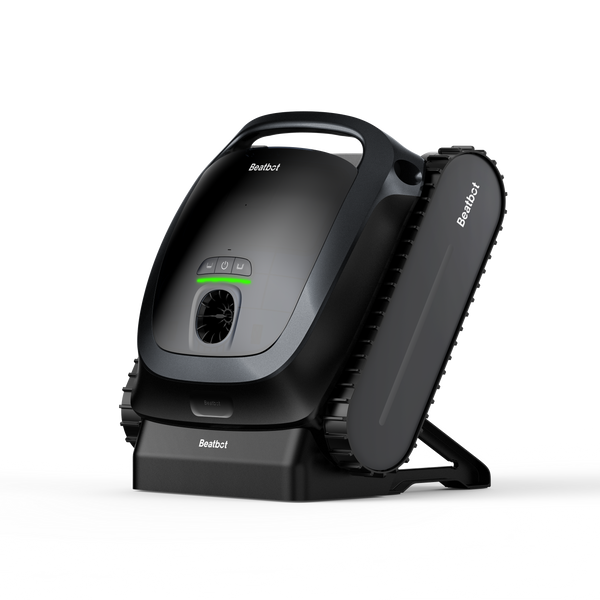
The Beatbot Sora 70 cordless robotic pool cleaner is rated for vinyl, concrete, ceramic tile, and fiberglass, so one robot can cover mixed-surface pools without changing equipment.
Its dual-group roller brush system pairs twin 5-inch brushes with independent left-right control to create a 10-inch cleaning path, and the bottom-hugging design helps maintain suction contact across pool surfaces. As the robot climbs the wall, it pauses at the waterline and scrubs continuously to remove oils, lotions, and organic buildup before they turn into bathtub-ring stains.
For smaller pools or owners who do not need water-surface cleaning, the Beatbot Sora 30 cordless pool robot covers the same surface materials. It uses its own dual-group roller brush system for wall traction, scrubs the waterline automatically, and reaches platforms and shallow zones as low as 8 inches deep.
FAQs
What shortens a pool liner's lifespan?
Vinyl pool liners wear out faster when water chemistry stays out of range, especially with high chlorine or low pH. Direct UV exposure on uncovered pools, sharp debris like sticks and stones, and pet claws also shorten liner life. Salt-chlorinated pools can also wear liners 1 to 3 years sooner than freshwater chlorine pools.
Can you install a pool liner yourself?
Overlap and J-hook vinyl liners are the most realistic DIY options because they do not require precise track alignment or custom measurement. Beaded, unibead, duobead, EZ-bead, tile, plaster, and PVC membrane installations are better handled by a professional because fit errors are hard to correct after water is added.
What is the difference between an aboveground and in ground pool liner?
Aboveground pool liners are made for straight-walled, prefabricated pool structures and use overlap, J-hook, beaded, unibead, duobead, or EZ-bead attachment systems. In-ground vinyl liners are custom-measured to the pool's exact dimensions and almost always use a beaded attachment system because in ground pool walls do not have a wraparound top rail to drape over.
Can you patch a pool liner instead of replacing it?
A vinyl pool liner with a single small puncture or tear under about 3 inches can usually be patched with an underwater vinyl repair kit, and the patch may hold for several years. Liners with multiple tears, brittle or faded vinyl, seam leaks, or shrinkage around fittings are past the patching stage and need replacement.