Most Popular


 Sora Series


 AquaSense Series

 Skimmer & Bundle

 Retail Edition


 Accessories


A leaf net and a winter pool cover solve two different problems, so the real question is rarely one or the other. A winter cover is the main barrier that stays on your pool through the entire off-season to block sunlight, keep out debris, and stop algae. A leaf net is a lightweight mesh sheet you lay on top of that cover during the fall to catch leaves before they pile up and rot. For most pools that sit under trees, the best result comes from using both together, with the leaf net doing the short-term work in autumn and the winter cover carrying the season. If you can only add one, the winter cover is the piece your pool actually needs.

What Is a Leaf Net?
A leaf net is a lightweight, loosely woven mesh sheet that sits on top of your winter cover in the fall to catch falling leaves and coarse debris. Because the weave is open, water, fine dirt, and sunlight pass straight through it, so it is built for one job only: holding leaves off the cover until you clear them.
You install a leaf net for the few weeks when trees are actively dropping leaves. When it fills up, you lift it, dump the leaves, and put it back, which keeps a wet, decomposing layer from forming on top of your pool. Pulling the net taut over the pool makes this cleanup faster and lets you blow or rake leaves off with less effort.
On its own, a leaf net is not built to carry a pool through winter. It works as a helper that keeps a winter cover clear, which is the setup most pool owners under trees end up with.

What Is a Winter Pool Cover?
A winter pool cover is the primary barrier that stays on your pool through the whole off-season to keep out debris, block sunlight, and prevent algae from taking hold. It is heavier and more protective than a basic tarp, and it is meant to stay put from closing until spring.
Winter covers come in two main types. Solid covers block everything, including sunlight and fine silt, which keeps the water dark and dramatically cuts algae growth. The trade-off is that rain and melting snow collect on top, so you usually need a cover pump to clear standing water. Mesh winter covers use a tight weave that lets water drain through while still blocking most debris and enough light to hold algae back. They are easier to manage than solid covers, but they let more fine material and light reach the water.
The right choice depends on your climate and how much cleanup you want to do in spring. A solid cover gives the cleanest opening if you are willing to manage water on top, while a mesh winter cover trades a little clarity for far less standing-water maintenance.

What Is the Difference Between a Leaf Net and a Winter Cover?
The core difference is job and duration. A winter cover is your season-long protection, and a leaf net is a short-term fall accessory that makes that cover easier to manage. A winter cover decides whether your pool stays clean and algae-free through the off-season, while a leaf net mostly decides how much mess you deal with when you open in spring.
These differences come down to a few practical points.
|
Feature |
Leaf Net |
Winter Cover |
|
Primary Job |
Catch falling leaves |
Protect pool all off-season |
|
Weave |
Loose open mesh |
Solid or tight mesh |
|
Blocks Sunlight |
No |
Yes |
|
Stops Fine Debris |
No |
Yes |
|
Handles Snow Load |
No |
Yes |
|
Time on Pool |
A few weeks in fall |
Full off-season |
|
Use Alone |
No |
Yes |
The winter cover leads on every protection measure because that is its job, while the leaf net earns its place by keeping that cover clear so it stays lighter and easier to lift off in spring.
Can You Use a Leaf Net Instead of a Winter Cover?
No, a leaf net should not be used as your only winter cover. Its open mesh lets sunlight and fine debris reach the water, and sunlight is what fuels algae, so a pool left under only a leaf net tends to turn green by spring.
The longer the pool sits, the worse it gets. Fine silt and dust settle through the mesh, and with no light barrier, algae has months of closure to take over before you open again.
Snow load is the second issue. A leaf net is built to hold the weight of leaves, not a season of snow. Heavy snow can tear the net, and on an above-ground pool it can put dangerous stress on the wall. A leaf net keeps leaves manageable in the fall, but it cannot do the protective work a winter cover is made for.
Should You Use Both a Leaf Net and a Winter Cover?
Yes, using both is the most reliable setup for any pool that sits under trees. The winter cover protects the water all season, and the leaf net keeps leaves from collecting and rotting on top of that cover, which makes spring opening far cleaner and extends the life of the cover underneath.
The order matters. Install the winter cover first and secure it tightly around the edge, then lay the leaf net directly on top and hold it in place with water bags, cover clips, or anchors. This keeps a heavy, decomposing leaf layer from forming on the winter cover and stops that mess from draining into your water later.
Take the leaf net off once the trees are bare and before the first heavy snow, usually by early to mid winter. Removing it at that point leaves a clean winter cover in place for the rest of the cold months and spares you from lifting snow-weighted netting.

How Do You Keep Leaves Out of the Pool Before You Close It?
Before you close the pool, the most effective way to keep leaves out is to clear them off the water surface regularly while the pool is still open in early fall. A leaf net only starts working once the cover is on, so the weeks before closing are when floating leaves have the easiest path into your water, and every leaf that sinks and decomposes makes your spring opening harder.
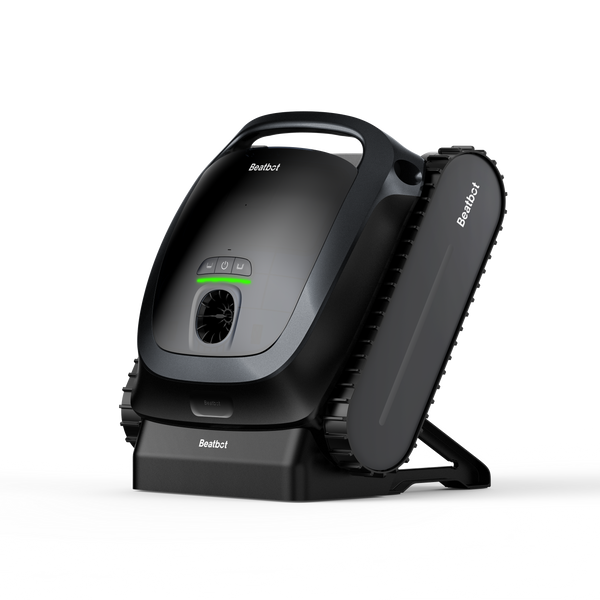
Hand skimming helps, but leaf fall in autumn often outpaces it. A robotic pool cleaner with water-surface cleaning covers this gap by pulling leaves off the top of the water on its own. The Beatbot Sora 70 robotic pool cleaner uses its JetPulse™ system to draw floating leaves and debris inward and capture them without a skimmer, and its 6.7-inch suction port and 6L debris basket are sized to take in whole leaves rather than pushing them around. Because it also cleans the floor, walls, and shallow areas, it clears the leaves that have already sunk before you close.
Closing a leaf-free pool means less organic matter breaking down under the cover all season, which leaves you with clearer water and fewer chemicals at spring opening.

When Should You Install Your Leaf Net and Winter Cover?
Install your winter cover after your final cleaning and water balancing, once swimming season ends and water temperatures stay consistently cool, then add the leaf net on top as the leaves begin to fall. For most regions this lands in mid-to-late fall, after the water is treated but before the first frost.
Timing the leaf net around the trees, not the calendar, gives the best result. Put it on when leaves start dropping in earnest, clear it whenever it fills, and remove it once the branches are bare. Getting the winter cover on before a hard freeze protects the water, and pulling the net before heavy snow protects the net.
FAQs
Is a mesh winter cover the same as a leaf net?
No. A mesh winter cover is tightly woven to block most sunlight and fine debris and is built to stay on all winter. A leaf net has a loose, open weave, does not block light, and is only meant to catch leaves during the fall.
Will a leaf net hold up under snow?
No. A leaf net is rated for the weight of leaves, not snow. Heavy snow can tear it or, on an above-ground pool, stress the wall. Remove the net before the first significant snowfall and let the winter cover handle the season.
Do you need an air pillow under a winter cover?
In freezing climates, yes. An air pillow sits under the cover to absorb the pressure of expanding ice and to help rain and melt run toward the edges instead of pooling in the center, which reduces strain on the cover and the pool.
Can you reuse a leaf net and winter cover next season?
Both can last several seasons with proper care. Clean and fully dry each one before storing it in a cool, dry place, since trapped moisture and debris are the main causes of mildew and early wear.