Most Popular


 Sora Series


 AquaSense Series

 Skimmer & Bundle

 Retail Edition


 Accessories


Closing a saltwater pool follows the same winterizing logic as any pool, with one task that is unique to salt systems: the salt cell has to come out and spend the winter indoors so it does not freeze and crack. Start the process only once your water temperature stays consistently below 65°F (18°C), which keeps algae dormant while you work. From there the sequence is straightforward: deep clean the pool, balance and shock the water, shut down and store the salt system, protect the plumbing from freezing, and cover the pool. Rushing any of these steps is how most people end up with a green pool or a cracked cell in spring.

When Should You Close a Saltwater Pool?
Close your saltwater pool once the water temperature holds steadily below 65°F (18°C), not just on the first cool night. Below that threshold, algae growth effectively stops, so the chemicals you add before covering have a much better chance of keeping the water clear all winter. Close too early, while the water is still warm, and any leftover organic material can feed an algae bloom under the cover before the season is even over.
Climate decides how much of this checklist applies to you. Hard-freeze regions need the full plumbing and equipment protection covered below, while mild-winter pools that never approach freezing can skip most of it. Let the freeze risk to your pipes and equipment set how far you take the close, not the calendar date.
What Makes Closing a Saltwater Pool Different?
The one difference that matters is the salt chlorine generator. A standard pool has nothing electronic in the plumbing to store for winter, but a saltwater pool has a salt cell that both freezing water and months of idle, imbalanced water can damage. So a saltwater close adds one job a regular close does not: taking the cell out and storing it safely for the season.
There is also a chemistry detail specific to salt systems. When you shock the pool before closing, chlorine levels spike well above normal. Running the salt generator during that window, or adding certain winterizing products too soon, wastes them and can shorten the cell's life. The rest of the process treats a saltwater pool much like any other, but these two points are where salt owners most often go wrong.
Deep Clean the Pool Before You Cover It (About 1 Week Out)
Physically removing debris before you close is the step that prevents most spring algae, because organic material left on the floor and walls becomes food for algae the moment the water warms up again. About a week before closing, work through the whole pool:
-
Skim the surface and empty the skimmer baskets so floating debris does not sink and decay under the cover.
-
Brush the walls, steps, and waterline to loosen the film and buildup that a vacuum alone will miss.
-
Vacuum the floor thoroughly to lift every bit of sediment, since anything left behind will still be there in spring.
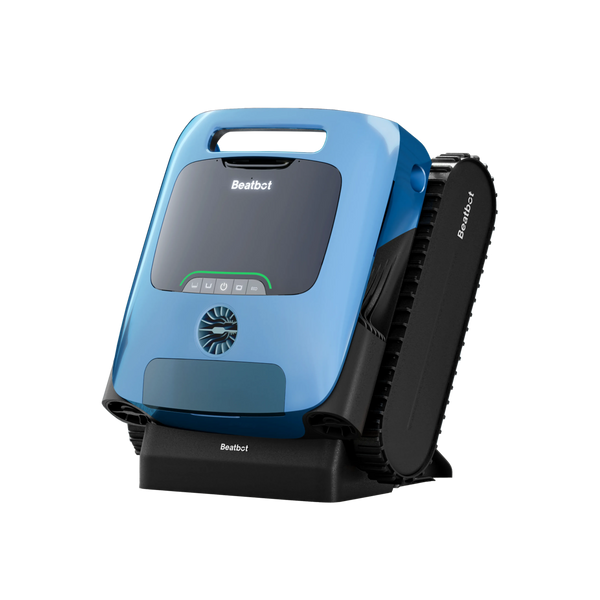
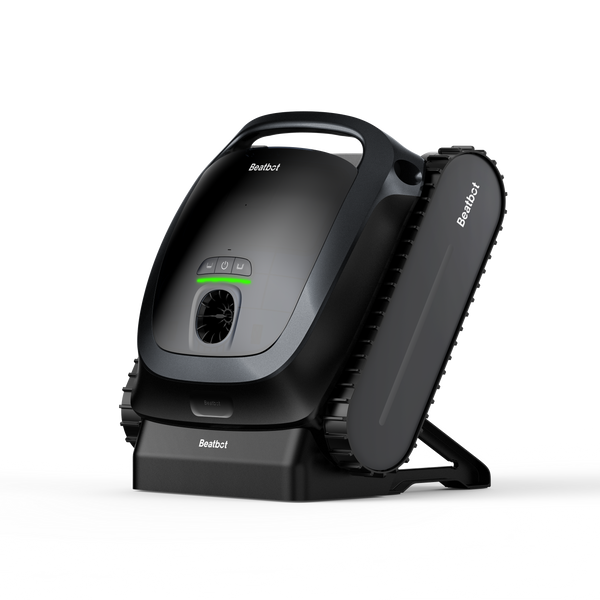
A cordless robotic pool cleaner handles most of this step while you deal with chemicals and equipment. The Beatbot AquaSense 2 Ultra robotic pool cleaner suits a saltwater close because it cleans the floor, walls, waterline, and water surface in one cycle, pulling out the organic load that would otherwise feed under-cover algae. It runs in saltwater, chlorine, and hybrid pools and works on concrete, tile, vinyl, and fiberglass, so it fits a final deep clean whatever your pool is made of. Clearing the surfaces before you lower the water level also leaves less to scrub and less staining or algae to fight when you reopen.
Balance the Water Chemistry (3 to 5 Days Out)
Balanced water protects your liner and surfaces from scaling and corrosion through months of sitting still, so test and adjust it a few days before closing rather than on closing day. Aim for these standard ranges:
-
pH: 7.2 to 7.6
-
Total alkalinity: 80 to 120 ppm
-
Calcium hardness: 200 to 400 ppm
-
Salinity: within the range your chlorine generator specifies, which is printed on the unit or in its manual
Once those are in range, shock the pool with chlorine to kill off any remaining bacteria. Do not add winterizing algaecide at the same time as the shock, because the high chlorine level destroys it before it can work. Wait until chlorine drops back toward normal, usually 24 to 48 hours after shocking, then add your winter algaecide or a slow-release enzyme and run the pump for at least 8 hours so everything circulates evenly. Getting this order wrong is the most common reason a closed pool still turns green by spring.

Remove and Store the Salt Cell
Once the water is balanced and the chemicals have circulated, take the salt cell out of the plumbing and store it indoors, since leaving it installed over a cold, stagnant winter shortens its life. Work through the shutdown in this order:
-
Turn off the power to the salt chlorine generator completely so it is not trying to produce chlorine on stagnant water.
-
Unscrew and remove the salt cell, then install a temporary bypass pipe or winterizing unions in its place so water can still flow through the line during the rest of the close.
-
Clean the cell with a garden hose, or a dedicated salt cell cleaner if there is visible scale, and let it dry.
-
Store the dry cell somewhere frost-free, such as a garage shelf or utility closet, where it will not freeze or get crushed.

Protect the Plumbing and Equipment From Freezing
In any climate where pipes can freeze, water left in the plumbing is the biggest threat over winter, because it expands as it freezes and cracks pumps, filters, and lines. If your region never freezes, you can skip most of these steps. Otherwise, protect the system in this order:
-
Lower the water level to roughly 3 to 6 inches below the skimmer mouth so water is not sitting in the skimmer and return lines.
-
Remove the drain plugs from the pump, filter, and heater, and keep them together in the pump basket so they are easy to find in spring.
-
Blow out the skimmer and return lines with an air compressor or shop vac to force out the remaining water.
-
Insert expandable freeze plugs into the return jets and skimmer lines, and add non-toxic pool antifreeze to the lines for extra protection against any water you could not clear.
-
Place an ice compensator, sometimes called a Gizzmo, in the skimmer to absorb the expansion of any ice that forms and keep the skimmer wall from cracking.
You know this stage is done when no open line still holds standing water and every drain plug is out and stored. If you are not confident the lines are clear, that is the point to bring in a professional rather than gamble on a cracked pump.
Cover and Secure the Pool
A cover finishes the close by keeping debris, sunlight, and weather out of the balanced water you just prepared. Unfold your winter cover, center it over the pool, and secure it so wind cannot lift it. Solid covers are held down with water bags around the perimeter, while safety covers anchor into the deck; use whichever matches the cover you own. Keep a cover pump on top to remove melting snow and rainwater, since a pool of standing water on the cover strains the anchors and can pull debris underneath. Check the cover and water level a few times over winter, and clear standing water or debris before it drags the cover down.

FAQs
Can I leave a saltwater pool open all winter instead of closing it?
In a mild climate where the water and plumbing never approach freezing, yes. Many owners in warm regions keep the pool circulating on a reduced schedule and simply maintain chemistry through winter, which avoids removing the salt cell and blowing out lines. The full closing process exists mainly to protect equipment from freeze damage, so if freezing is not a risk where you live, running the pool at a lower level is a valid alternative.
Do I need to drain a saltwater pool to close it for winter?
No. You lower the water level a few inches below the skimmer to protect the plumbing, but you do not empty the pool. Fully draining removes the balanced, chemically treated water that protects the surfaces over winter, and it can even risk structural or liner damage on some pools. Leave the pool mostly full and let the covered, balanced water sit through the season.
Should I adjust the salt level before closing a saltwater pool?
Check it, but you usually do not need to raise it. Confirm salinity sits within the range your chlorine generator specifies before you shut the system down, so the water is not left corrosive or scale-forming. Since the generator is off and the cell is removed for winter, there is no reason to boost salt higher than normal, and adding more just leaves you correcting it at spring startup.