Most Popular


 Sora Series


 AquaSense Series

 Skimmer & Bundle

 Retail Edition


 Accessories


After the final cleaning, you close a pool by adding chemicals in a set order. Balance the water first, then shock, then a stain and scale preventer, and finally a winter algaecide, with an optional slow-release floater or enzyme treatment. That order protects your surfaces and keeps each chemical working through months of still water. One rule matters most. Don't add everything at once. Balanced water and a debris-free pool let the shock and algaecide do their job, while dumping chlorine shock and algaecide in together wastes both. Done right, the pool opens clear in spring instead of green.

Why Does the Order of Closing Chemicals Matter?
The order matters because each step depends on the conditions the one before it creates. Balanced water lets shock and algaecide work at full strength, a clean pool keeps debris from eating through them, and leaving time between the shock and the algaecide protects the algaecide from a high chlorine level.

Get the sequence wrong and you pay for products that cancel each other out. Chlorine shock is a strong oxidizer, so algaecide added while the chlorine is still high gets broken down before it can work. Adding chlorine shock and algaecide within a few hours of each other is the most common closing mistake.
Unbalanced water wastes chemicals in a quieter way. Off pH or low calcium hardness can etch or scale surfaces over the off-season and blunts how well the shock and algaecide perform. Each step assumes the one before it is done.
Start With a Clean, Debris-Free Pool
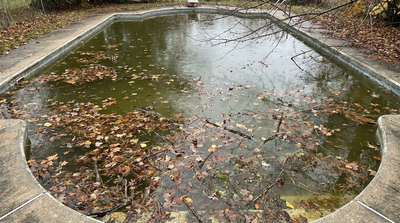
Closing chemicals only work in a pool that's already clean, so a thorough final cleaning of the floor, walls, waterline, and water surface comes before any chemical goes in. Leaves, dirt, and fine particles left in the water consume shock and algaecide through the winter and rot under the cover, which is what turns water green by spring.

A clean start means brushing the walls and steps, skimming the surface, and vacuuming the floor so little organic material is left when you cover the pool. You can do this by hand or with a robotic pool cleaner that reaches every zone in one pass.
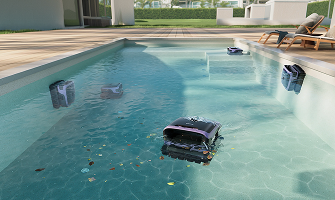
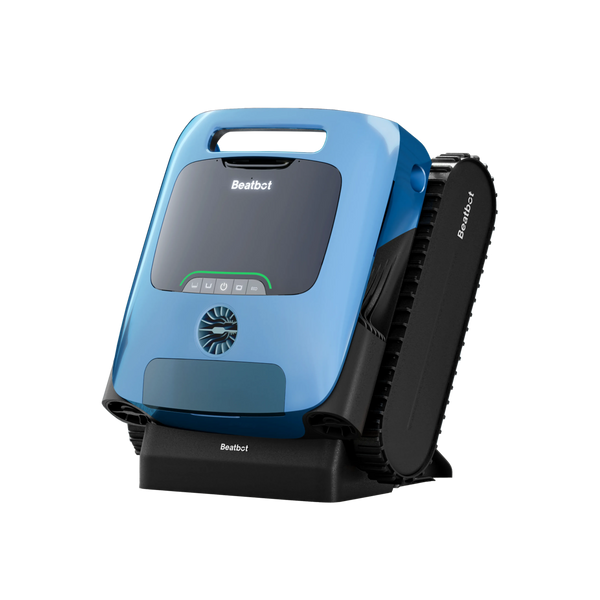
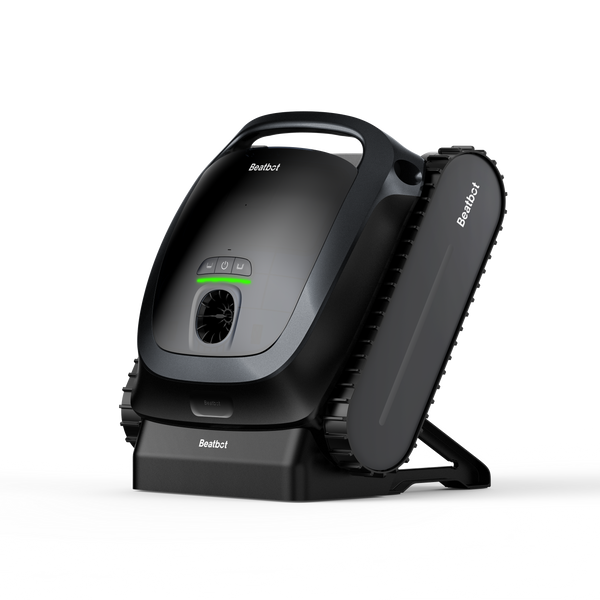
The Beatbot AquaSense 2 Ultra robotic pool cleaner covers the floor, walls, waterline, and water surface in one session, which fits a closing clean that needs the whole pool handled at once. Its AI-powered cruise debris detection targets remaining debris such as leaves, the main concern in fall when leaf drop peaks right before closing. The dual-layer filtration on the Beatbot AquaSense 2 Ultra captures fine particles down to 150 μm, so less organic material stays behind to feed algae under the cover. A final clean removes debris but doesn't balance or sanitize the water, so the chemical steps still apply.
Balance the Water Before Adding Anything Else
Balance the water first, ideally two or three days before closing, and bring pH, total alkalinity, and calcium hardness into their normal ranges. Balanced water shields surfaces from etching and scaling while the pool sits idle, and it lets the shock and algaecide perform as intended. Test with a reliable kit before you adjust anything.

Typical closing targets sit around pH 7.2 to 7.6, total alkalinity 80 to 120 ppm, and calcium hardness 200 to 400 ppm, though the right numbers shift with your pool surface and water source. Some owners set pH toward the top of the range at closing to buffer the natural drop over winter. Your test kit reading and the dosing chart on each balancer's label decide how much you add, based on your pool's gallons.
Balancing is the step you can't skip, since every chemical you add afterward depends on it.
Shock the Pool
Shock the pool to oxidize any lingering bacteria and organic contaminants, using either a chlorine shock or a non-chlorine oxidizer. With chlorine shock, add it a few days before closing and let the level fall below roughly 4 to 5 ppm before the algaecide goes in. Run the pump for several hours so it circulates fully.

There's no separate winter shock product. A standard chlorine or non-chlorine shock does the job, as long as the timing before the algaecide holds. Chlorine shock works best two to five days ahead so the level has time to drop, and a non-chlorine oxidizer can go in the evening before closing without spiking chlorine or stressing a floating cover.
A very high chlorine reading can damage covers and liners over a long closure and destroys algaecide on contact, so keep it in range before moving on.
Add a Stain and Scale Preventer
Add a stain and scale preventer, also sold as a metal sequestrant, about a day before closing once the chlorine from the shock has dropped, and let it circulate for at least eight hours. It binds dissolved metals and minerals so they don't stain or scale surfaces while the water sits still for months. Add it before you lower the water level so the pump can still spread it around.
This step earns its place with hard water or metals from a well source, which are what leave rust-colored stains and rough scale over a long closure. A high chlorine level weakens the bonds a sequestrant forms with metals, so adding it after the shock has settled keeps it working.
Add Winter Algaecide Last
Add a winter algaecide last, once the chlorine has dropped back down and usually right before the cover goes on. A long-lasting winter formula keeps algae spores dormant through months of still, untreated water. Added too soon after shocking, it gets broken down by the high chlorine before it can settle in.
The common winter choices are a 60% polyquat, a chelated copper algaecide, or a quat formula, all of which hold up through a closed season. Copper works well but can stain surfaces in unbalanced water, so pair it with a stain preventer and take extra care on plaster pools. Mesh or loosely fitting covers let in light and debris, so a double dose at closing or a second dose in early spring helps there.
Which Optional Extras Are Worth Adding?
A slow-release winter floater, an enzyme treatment, and an oil-absorbing sponge are optional, worth adding mainly when your cover lets light or debris through. The floater trickles sanitizer into the water all winter, enzymes break down oils and organics that cause waterline scum, and the sponge soaks up surface oils. A clean pool under a tight solid cover usually needs none of them.
Match the extra to the situation. Mesh covers, heavy spring pollen, urban dust, and a history of green openings are where a floater and enzymes pay off. A chlorine floater should be filled and tied off near the center of the pool so it can't drift against a wall or rest on a step, where concentrated chlorine can stain plaster or bleach a vinyl liner. For a pool closed clean and covered tightly, extras are usually money you don't need to spend.
What Not to Add, and Mistakes to Avoid
Don't add everything at once, don't add algaecide right after chlorine shock, and never pour antifreeze into the pool water. Pool-grade, non-toxic antifreeze goes only inside the plumbing lines to keep them from freezing, and automotive antifreeze has no place near a pool. Dumping a whole kit in together is the fastest way to waste it.
A few errors show up again and again at closing time:
- Skipping the water test, so the shock and algaecide work at half strength in unbalanced water
- Adding chlorine shock and algaecide the same afternoon, which neutralizes the algaecide
- Lowering the water level before the stain and scale preventer has circulated, so it never mixes in
- Using automotive antifreeze instead of pool antifreeze, which can damage surfaces and is unsafe
Circulation matters for every addition. With the pump running or the water stirred by a brush, each chemical should spread out instead of sitting against one surface.
When to Add Each Closing Chemical
The table lines up the core closing chemicals with their usual timing so a closing day runs in the right sequence. Use it as a default schedule and adjust to your shock type and cover.
|
Chemical |
When To Add |
Why |
|
Water balancers |
2 to 3 days before |
Primes every other chemical and protects surfaces |
|
Shock |
Chlorine 2 to 5 days before; non-chlorine evening before |
Chlorine must drop below 4 to 5 ppm before algaecide |
|
Stain and scale preventer |
About 1 day before |
Circulate 8 hours before lowering the water |
|
Winter algaecide |
Just before covering |
Works only after chlorine has dropped |
|
Winter floater or enzymes |
Just before covering |
Optional, mainly for mesh or loose covers |
The spacing is what matters, not the exact hour. Balancers go in early, shock goes in with enough lead time for the chlorine to fall, stain and scale follows, and algaecide goes in last. A pool closed clean, balanced, and in this order reopens with the least work in spring.
FAQs
Can I close my pool without adding any chemicals?
In most climates, no. Closing an untreated pool invites algae, staining, and scale, and you trade a small closing cost for a heavy spring cleanup. In very warm southern regions some owners run a lighter routine, but shock, algaecide, and a stain preventer still protect the water and surfaces.
How long do winter pool chemicals stay effective?
Dosed correctly in a clean pool under a good cover, closing chemicals generally last the full six to eight month off-season. A pool closed with lingering debris, or one under a mesh or ill-fitting cover, may need a top-up of algaecide or non-chlorine shock as the water warms in early spring.
Should I add closing chemicals before or after lowering the water level?
Add the stain and scale preventer and any enzymes before lowering the water, so the pump can circulate them for several hours. Save the winter algaecide for after the level drops, right before you put the cover on.
What if I already shocked my pool last week?
If your free chlorine has returned to a normal range, you may not need to shock again at closing. Test first, and if the reading is in range, move straight to the algaecide rather than adding another oxidizer the pool doesn't need.