Flagship


 Sora Series


 AquaSense Series


 Skimmer & Bundle

 Retail Edition


 Accessories




 Extended Warranty


Pool liner replacement costs $1,200 to $7,500 in 2026. Aboveground pools usually land near the lower end. Inground vinyl pools cost more because the liner has to be measured and fitted around the floor, walls, steps, corners, and deep-end shape. A well-installed replacement should last 8 to 12 years, which puts a typical inground job at about $400 to $600 per year of use.
What Does Pool Liner Replacement Cost in 2026?
The national average sits between $2,500 and $4,500 in 2026, but that number can be misleading because aboveground and inground projects often get blended together.
It helps to separate the three common price bands. Aboveground replacements usually run $500 to $2,500 all-in, including labor. Standard inground rectangular pools typically fall between $3,000 and $5,500.
Custom or complex inground pools, including L-shapes, freeform pools, vanishing edges, attached spas, and tanning ledges, can reach $6,500 to $7,500 or more once draining, disposal, and uncovered floor repairs are included. Any inground quote under $1,500 deserves a second look.
|
Pool Type |
Typical 2026 Total |
What Drives the Number |
|
Aboveground (round) |
$500 to $1,500 |
Standard sizes, fewer custom seams |
|
Aboveground (oval) |
$900 to $2,500 |
Buttress straps, more cutting |
|
Inground (rectangular) |
$3,000 to $5,500 |
Custom fit, steps, deep end |
|
Inground (L-shape or freeform) |
$5,000 to $7,500+ |
Custom panels, more labor hours |
|
Inground with attached spa or ledge |
$6,500 to $9,000+ |
Multi-piece liners, precision fit |
How Liner Type Affects Replacement Cost
Liner type changes both the material price and the installation time, which is why two pools with the same footprint can still come in $1,000 apart. The three common attachment styles are overlap, beaded, and uni-bead.
Overlap liners are the lowest-cost option and the easiest to install. The vinyl drapes over the top of the pool wall and is secured with coping strips. Beaded liners lock into a track around the top edge, which creates a cleaner look but requires tighter measurements.
Uni-bead liners can be installed either way, so they usually fall in the middle on price. For inground pools, nearly every replacement is beaded by design.
|
Liner Type |
Material Only |
Best For |
|
Overlap |
$200 to $600 |
Aboveground pools on a tight budget |
|
Beaded |
$400 to $1,000 |
Owners who want a finished, clean edge |
|
Uni-bead |
$300 to $900 |
Flexibility during install, broader fit |
|
Custom inground (beaded) |
$700 to $2,400 |
Inground rectangular, L-shape, freeform |
Vinyl thickness, measured in mil, also affects the bill. A 20-mil liner is the usual entry point. Moving up to a 27 to 30-mil liner adds $200 to $700 in material and can buy two to four extra years when water chemistry is managed well. A thicker liner is rarely worth the upgrade on a pool that already burns through liners every five years because of chemistry problems.
How Pool Size Affects Replacement Cost
Pool size changes the price in two ways: more vinyl and more labor. The 2026 rule of thumb is about $5 per square foot of floor and wall area for the full job, but large pools climb faster than that once custom panels are needed.
|
Pool Size (ft) |
Approx. Surface Area |
2026 Total Range |
|
12 x 24 |
~430 sq ft |
$1,700 to $2,800 |
|
14 x 28 |
~570 sq ft |
$2,300 to $3,800 |
|
16 x 32 |
~770 sq ft |
$3,000 to $5,000 |
|
18 x 36 |
~950 sq ft |
$3,800 to $6,200 |
|
20 x 40 |
~1,150 sq ft |
$4,500 to $7,500+ |
Region can move those numbers another 10 to 25 percent. Northeast and West Coast inground jobs tend to sit at the top of the range because labor costs are higher and the installation season is shorter. Midwest and Southeast pricing usually lands closer to the middle.
Which Costs Do Most Quotes Leave Out?
The line items that surprise homeowners are usually found after the pool is opened up. Draining, disposal, refill water, startup chemicals, and hidden floor or wall repairs can add $400 to $2,000 to the final invoice. That is why an itemized quote matters more than a low headline price.
Draining and Disposal
Draining a typical inground pool with a submersible pump takes 8 to 14 hours. Many municipalities now charge a fee or require discharge into the sewer instead of the street. Disposal of the old vinyl liner usually adds $75 to $200 because most landfills treat it as a non-recyclable composite.
Refilling Water and Restarting Chemistry
Refill water is one of the easiest costs to underestimate. A 20,000-gallon inground pool refilled at municipal rates can cost $90 to $350 in water alone.
Trucked-in water in drought-restricted areas can run $400 to $900. After the refill, chemistry has to be rebuilt from scratch, which adds $80 to $200 in startup chemicals such as stabilizer, alkalinity increaser, calcium hardness adjuster, and sanitizer before the pool is ready to swim in.
Floor and Wall Repairs Discovered After the Old Liner Comes Out
Once the old liner is removed, the contractor can inspect the surface underneath. Washed-out vermiculite or sand floors, rust on steel walls, and cracks in concrete are common findings. Spot repairs usually cost $150 to $600. A full floor rebuild on an inground vinyl pool can add $1,200 to $3,000. Skipping the repair is a bad trade because the weak floor will show through the new liner and shorten its life.
Permits That May or May Not Apply
Permit rules vary by city. Most municipalities do not require one for a like-for-like liner swap. Some do require a permit for any drain-and-refill during active water restrictions. Ask the contractor or local building department before paying for a permit that may not apply to your project.

Pool Liner Repair vs. Replacement: When to Choose Which
Repair makes sense when the liner is under seven years old, the damage is isolated, and the rest of the vinyl still feels flexible. A DIY vinyl patch kit costs $20 to $50, and a professional patch usually runs $150 to $500. Replacement becomes the smarter call once the liner passes the eight-year mark, already has several patches, or keeps slipping out of the track.
Lean toward repair when:
-
The tear is under 3 inches and away from seams, steps, the skimmer, or the main drain
-
A dye test isolates the leak to a single location
-
Wrinkles are minor and the floor underneath still feels solid
Lean toward replacement when:
-
The vinyl feels brittle when pinched at the waterline
-
Multiple patches are already holding the liner together
-
The bead pulls out of the track even with liner locks installed
-
The pattern has faded enough that the waterline ring no longer shows
-
The floor has clearly moved or washed out underneath
A practical rule works well here: if you would not feel comfortable leaving the pool unattended for a two-week trip, the liner is probably closer to replacement than repair.
Should You DIY the Install or Hire a Pro?
Replacing an aboveground overlap liner is realistic for an experienced pool owner. Skipping the $250 to $800 labor fee is the obvious appeal. Replacing an inground liner is a different job. The custom fit, the heat-and-stretch process, and the vacuum-assisted seating around steps require tools and experience most homeowners do not have.
There are two good reasons to hire out even an aboveground install. First, many liner warranties require professional installation to stay valid. Second, an incorrectly seated liner can wrinkle within weeks. Wrinkles trap debris, hold algae, and create UV stress points, turning a 10-year liner into a 4 to 6-year liner and wiping out the labor savings.
When Is the Best Time to Replace a Pool Liner?
The best replacement window in most of the U.S. runs from late fall through early spring, before peak demand. Booking between October and February often saves 10 to 20 percent on labor compared with a May to July replacement because contractors are working through the slower season.
Freeze-prone climates are the exception. In Minnesota, upstate New York, and much of the Northeast, avoid installation when overnight lows are forecast below 32 F within the next two weeks. Vinyl loses elasticity in the cold, which makes wrinkles more likely. The safer window is early spring after the last hard freeze or late September while the water is still warm enough for the vinyl to stretch into place.
Aboveground pools are more flexible because they can often be drained, relined, and refilled in one warm afternoon. Inground replacements usually take 2 to 4 days from start to finish, so one rain delay can push the job into a colder window.
What Pool Liner Replacement Costs Over 15 Years
The real cost of a vinyl pool is not one replacement. It is how often you have to repeat the job over 15 years. Chemistry swings and debris contact usually do more damage than the original liner thickness.
A liner that should last 12 years can fail in 4 if pH stays below 7.2 for a few weeks or if shock is poured directly onto the floor instead of being diluted first.
A homeowner replacing a $4,500 inground liner every 10 years spends about $6,750 over 15 years. The same homeowner replacing every 5 years because of chemistry damage spends closer to $13,500. The project is the same. The ownership cost doubles.
|
Liner Lifespan |
Replacements in 15 Years |
Approx. 15-Year Cost |
Driver |
|
12+ years |
1 to 2 |
$4,500 to $9,000 |
Balanced chemistry, low debris contact |
|
8 to 10 years |
2 |
$9,000 to $11,000 |
Average maintenance |
|
5 to 7 years |
2 to 3 |
$13,500 to $16,500 |
Chemistry swings, sun, heavy debris |
|
Under 5 years |
3 to 4 |
$18,000+ |
Chronic imbalance, skipped winterization |
Getting a liner from 7 years to 10 years is usually a better return than upgrading from 20-mil to 30-mil vinyl. Thickness can add 1 to 3 years when everything else is right. Better cleaning and steadier chemistry can add 4 to 6 years on top of whatever thickness you choose.
How Much Does a Robotic Pool Cleaner Save on Liner Cost?
A robotic pool cleaner does not make one replacement cheaper. It helps delay the next one. If better cleaning helps a vinyl liner last 10 to 12 years instead of 5 to 7, the savings can equal one full replacement over a 15-year window: about $4,500 on a standard inground pool and $7,500+ on a complex one.
The difference shows up in daily wear. Without scheduled mechanical cleaning, debris often sits on the floor overnight before weekly netting catches it. The waterline may get brushed only once in a while. Chemicals may be poured into one spot instead of being distributed through the water.
With a robotic pool cleaner running 3 to 5 times a week, debris is captured earlier, the waterline is scrubbed more consistently, and water-care products are spread more evenly. That shift can move the pool one or two rows up the 15-year cost table, or $4,500 to $7,500+ in avoided liner replacements.
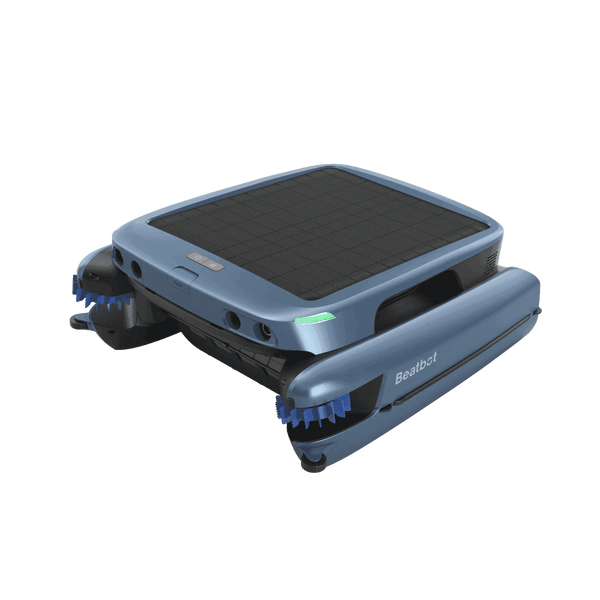
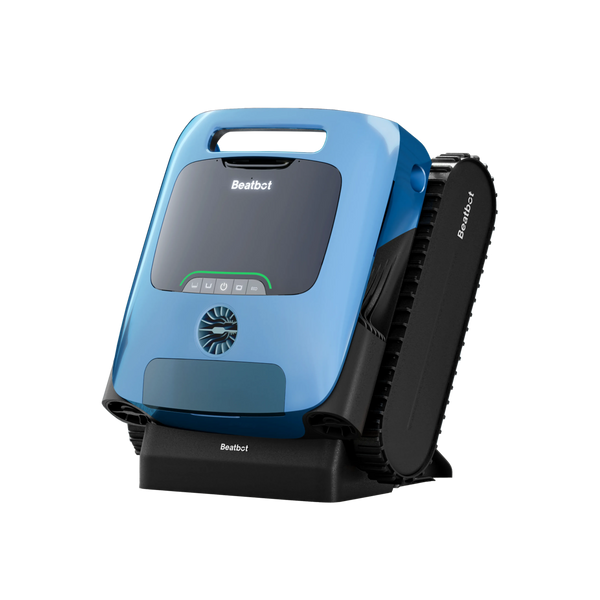
Three liner-killing variables map to specific Beatbot machines. The Beatbot Sora 70 pool cleaning robot uses its industry-first JetPulse water-surface system, in which twin water jets create inward flows that guide leaves, insects, and pollen toward a 6.7-inch central suction inlet, while outward flows help keep debris-laden water from bypassing the robot. Debris is captured before it sinks to the floor, where abrasion begins.
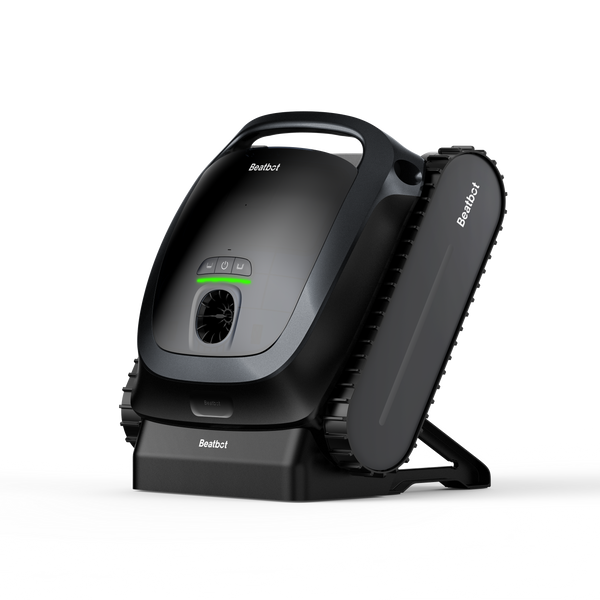
The Beatbot AquaSense 2 Pro robotic pool cleaner uses dual-pass waterline cleaning, scrubbing the waterline twice on each pass to remove oils and pollen before the film hardens into a permanent ring.
The Beatbot AquaSense 2 Pro also carries a ClearWater clarification system that dispenses a chitosan-based biodegradable clarifier evenly through a dedicated reagent pump motor as the robot moves. Even distribution replaces the manual pour-and-hope method that often leaves clarifier concentrated in one corner of the deep end, where many vinyl pools show early chemistry-related discoloration.
A quality robotic pool cleaner is a low-four-figure purchase. Against one avoided $4,500 liner replacement, it can pay back within a single extension cycle. Against an avoided $7,500+ replacement, the math gets even stronger.
How to Extend Liner Life and Lower Long-Term Cost
Three habits have the biggest effect on the 15-year number. Two protect the liner already in the pool. One helps keep the next replacement bill under control.
Keep pH and Chlorine in Range Every Week
Test the water at least once a week during swim season and after every heavy rain. Keep pH between 7.4 and 7.6, free chlorine between 1 and 3 ppm, and calcium hardness between 200 and 400 ppm. An automatic chlorinator or salt cell can keep chemistry steadier than weekly hand-dosing, which is what helps the liner last long enough to move up the cost table.
Winterize Properly in Freeze Climates
Poor winterization is the second-leading cause of early liner failure in northern states. Lower the water below the skimmer, but never below the shallow-end floor. Add a winterizing chemical kit. Use a tight-fitting cover that keeps debris and direct UV off the liner all winter. A liner left exposed under a torn cover for two winters is rarely worth patching.
Book and Quote the Next Replacement Strategically
When the current liner reaches end of life, four moves can lower the next bill.
-
Book off-season. October to February instead of May to July can save 10 to 20 percent on labor, and the crew is not juggling six other pools.
-
Get three written quotes that itemize draining, disposal, water, and chemicals. Bundled quotes are harder to compare and harder to negotiate.
-
Choose a plain stock pattern. Tile-look and custom-print liners add $300 to $700 with no longevity benefit. The vinyl underneath is the same.
-
Skip the upsells that rarely pay back: ultra-premium thickness on a pool with chemistry history, decorative borders that fade in 2 to 3 seasons, and express install pricing during peak summer.
FAQs
How Long Does a Pool Liner Replacement Project Take?
Aboveground replacement typically takes one day. Inground vinyl liner replacement takes 2 to 4 days, depending on drain-and-refill time and any floor or wall repairs found after the old liner comes out. Cold weather or rain can add another day because new vinyl needs warmth to stretch into position.
Is It Worth Switching to Fiberglass or Concrete Instead of Replacing the Vinyl Liner Again?
Usually only at the second or third liner replacement, and only if you plan to stay 8 to 10 more years. Fiberglass conversions run $35,000 to $65,000, and concrete rebuilds run $55,000 to $100,000+, so the break-even point against continued vinyl liner replacements is long unless deck, coping, or plumbing work also needs to be bundled in.
Does Homeowner Insurance Cover Pool Liner Replacement?
Standard homeowner policies do not cover liner replacement caused by normal wear, UV exposure, or chemistry damage. Coverage is more likely after a sudden event, such as a fallen tree branch puncturing the liner during a storm. Check the deductible before filing because it can be higher than the repair cost.
Will a New Liner Fix a Leak the Old One Was Hiding?
Sometimes. A new liner fixes leaks through the vinyl itself, not leaks through plumbing penetrations at the skimmer, return jets, main drain, or light niches. If the pool was losing more than a quarter inch per day, have the contractor pressure-test the lines while the pool is drained.
How Does Saltwater Affect Pool Liner Cost Over Time?
A saltwater system does not shorten a vinyl liner's life as long as chemistry stays in range, with typical lifespan still 8 to 12 years. Saltwater is harder on metal fittings, ladders, and steel aboveground pool walls, so plan for slightly higher hardware replacement costs.