

 Flagship


 Sora Series


 AquaSense Series


 Skimmer & Bundle

 Retail Edition


 Accessories



 Extended Warranty


Pool flocculant is a chemical treatment used to clear severely cloudy pool water by binding microscopic debris (dead algae, bacteria, fine dust, and other suspended particles) into heavy clumps that sink to the pool floor. Once settled, you vacuum the debris directly to waste, bypassing the filter entirely. It is the fastest method available for clearing a pool that standard filtration has failed to clean, often restoring visibility within 24 hours.
What Is Pool Flocculant?
Pool flocculant (also called pool floc or pool flock) is a coagulant chemical, most commonly aluminum sulfate, that works by attracting the microscopic particles suspended in cloudy pool water. On its own, debris like algae spores, dead bacteria, and fine sediment is too light to sink and too small for a standard filter to capture. Flocculant gives those particles something to bind to: once they clump together into larger aggregates, gravity does the rest, pulling the mass down to the pool floor.
The result is a layer of settled sediment at the bottom of the pool, typically visible as a ring or cloud formation, that you then vacuum out on the "waste" setting. The filter is deliberately bypassed during vacuuming to prevent the floc from clogging it or re-releasing into the water.
Pool Flocculant vs. Pool Clarifier
Flocculant and clarifier are both coagulants, but they produce very different outcomes and require different levels of effort. The right choice depends on how cloudy the water is, how quickly you need it cleared, and what filter system your pool uses.
Flocculant works fast, often within 8 to 24 hours, but it requires you to vacuum the settled debris directly to waste, which means losing some pool water and spending real time on cleanup. Clarifier works more slowly, typically over several days, but it coagulates particles just enough for the filter to catch them, so no manual vacuuming is required. You can also continue swimming while clarifier works.
There is one hard constraint: flocculant should not be used with cartridge filters. The settled debris must be vacuumed on waste mode, and cartridge systems do not support that setting. Sand filters are the standard setup for flocculant use. Clarifier is compatible with all filter types.
The table below breaks down the key differences:
|
Flocculant |
Clarifier |
|
|
Speed |
8–24 hours |
Several days |
|
Effort |
High (vacuuming required) |
Low (filter handles it) |
|
Filter Compatibility |
Sand filter only |
All filter types |
|
Swim During Treatment |
No |
Usually yes |
|
Best For |
Severe cloudiness, algae blooms |
Mild to moderate cloudiness |
If your pool is only mildly cloudy, start with a clarifier. If you cannot see the bottom of the pool, or if your filter has been running for days without improvement, flocculant is the right call.
When to Use Pool Flocculant
Flocculant is the right tool when cloudiness is severe and persistent. The clearest signal is that your filtration system has been running for a full cycle or more without visible improvement. Other situations where flocculant makes sense include: after a significant algae bloom where most of the algae has been killed by shock but the water remains murky, after heavy rain that introduced sediment, or at the start of a new season when pool water has gone green from neglect.
It is not the right first step for mild haziness. In those cases, checking and adjusting your water chemistry, running your filter longer, and adding a clarifier is a better starting point.

How Much Flocculant to Use
Dosage depends on your pool's volume and the severity of the cloudiness. Most liquid flocculants recommend approximately 1–2 oz per 1,000 gallons of pool water for standard treatment. For a severely green or cloudy pool, the upper end of that range is more effective. As a working example, a standard 10,000-gallon pool needs roughly 10–20 oz of liquid flocculant per treatment.
Calculate your pool volume before adding anything. For a rectangular pool, multiply length × width × average depth × 7.5 to get gallons. For oval or kidney-shaped pools, use length × width × average depth × 5.9. If you are unsure, your pool builder or local pool supply store can confirm the volume from your original installation records.
Avoid adding more flocculant than the label recommends. Overdosing does not clear the pool faster and can make the settled debris harder to vacuum.
How to Use Pool Flocculant: Step by Step
The process takes roughly two days from start to finish. Plan for it on a weekend or any stretch when the pool will not be needed.
-
Raise the water level. You will lose some water during the vacuuming step, so top the pool off to its highest mark before starting. This keeps the pump from running dry.
-
Balance the pH to around 7.4–7.6 and adjust total alkalinity. Flocculant performs best when the water chemistry is in range. Turn off any salt chlorine generator during the process.
-
Dilute and add the flocculant. Use the dose calculated in the section above, mix it in a bucket of water, and pour it slowly around the perimeter of the pool.
-
Set your pump to "recirculate" and run it for 2–4 hours. This distributes the flocculant throughout the water without sending it through the filter media, where it would be captured too early.
-
Turn off the pump completely and let the pool sit undisturbed for 8–24 hours. Do not swim.
-
Vacuum to waste. Once you can see a distinct layer of settled debris on the pool floor, switch your filter valve to the "waste" or "drain" position. Vacuum slowly and carefully.
-
Top off the water and backwash the filter to clear any residual floc.

Common Mistakes That Make Flocculant Fail
Running the filter instead of recirculating is the most common one. If the pump is set to filter, the flocculant gets captured in the media before it has a chance to work in the water. Always use the recirculate setting during distribution.
Not waiting long enough is the second most common problem. Eight hours is the minimum, and 24 hours produces noticeably better results in most pools. If you vacuum before the debris has fully settled, you will cloud the water and need to start over.
Vacuuming too aggressively disrupts the sediment layer. The debris on the pool floor is loosely packed and disturbs easily. Move the vacuum head slowly and methodically, working from the deep end toward the shallow end.
Using flocculant with a cartridge filter will damage the filter and does not work as intended. There is no waste setting on cartridge systems, so the settled debris cannot be removed properly.
Skipping water chemistry balancing before adding flocculant can reduce its effectiveness. If the pH is significantly out of range, the coagulation process is less efficient and the results will be incomplete.
What to Do After Using Flocculant
Once vacuuming is complete and the water is clear, test and re-balance your water chemistry. The flocculant process can shift pH and alkalinity, so a fresh test is important before resuming normal pool use. Add any needed chemicals and run the filter for a full cycle.
If the water clouds up again within a few days, there are two possible causes worth separating. The first is unresolved chemistry: if a contamination source is still active, such as an algae bloom that was not fully killed by shock, the cloudiness will keep coming back, and another round of flocculant only treats the symptom. Treat the root cause first.
The second cause is purely physical, and it catches most pool owners off guard. Flocculant pulls the finest particles out of suspension, but once it has done its job, new micro-particles, things like windborne dust, pollen, and the last traces of algae residue, start drifting back to the floor over the following days.
A standard sand or cartridge filter cannot catch most of them before they settle, which is why a pool can look pristine on Monday and slightly hazy by Friday. The fix here is mechanical: vacuum the floor and walls daily so the residue is removed before it has a chance to accumulate.
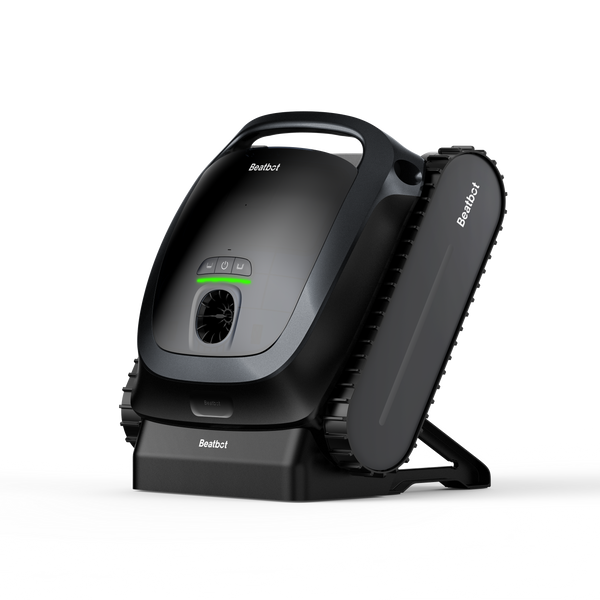
Doing that manually defeats the point of having just cleared the pool, which is where a robotic cleaner earns its keep. The Beatbot Sora 30 robotic pool cleaner is built for this kind of fine-particle pickup. Its 5L filter pairs a 150-micron primary mesh with an optional 3-micron ultra-fine filter that captures the same microscopic particles flocculant targets, and its 6,800 GPH suction pulls fine sand and algae residue off the floor before they have a chance to redistribute.
Running it on a daily cycle turns floc cleanup from a recurring chore into a one-time fix. For pools that have not dealt with severe cloudiness and just need consistent daily upkeep, the Beatbot Sora 10 robotic pool cleaner is a lighter option that parks itself at the waterline at the end of each cycle for one-handed retrieval.
FAQs
Can you swim while flocculant is in the pool?
No. The pool must remain completely still during the settling period, and flocculant is not safe to swim in while it is actively working. Wait until vacuuming is complete, water is refilled, and the filter has run a full cycle.
Can you use flocculant and shock at the same time?
Not at the same time. Shock the pool first, allow the chlorine level to drop back to a safe range (generally below 5 ppm), and then add flocculant. Shocking kills the algae and bacteria; flocculant removes what is left. Combining them simultaneously reduces the effectiveness of both.
How long does flocculant last in a pool?
Flocculant finishes its job within 8 to 24 hours of being added, after which it has fully bound to the debris and settled to the floor. Any residual aluminum sulfate is removed during the vacuum-to-waste step and the post-treatment backwash. Once you complete the full process and re-balance the water, no active flocculant remains in the pool.
What happens if you put too much flocculant in a pool?
Overdosing creates a denser, stickier layer of sediment that is harder to vacuum cleanly and more likely to re-cloud the water if disturbed. It can also push aluminum levels above what is comfortable to swim in. If you over-applied, let the pool settle the full 24 hours, vacuum slowly to waste, and run an extra backwash cycle before re-balancing chemistry.
Is flocculant safe for your pool?
Yes, when used correctly with a sand filter and the right dose. Flocculant is widely used as a routine pool maintenance product and does not damage liners, plaster, or fiberglass surfaces at standard concentrations. The only real risk is using it with a cartridge filter, which can be damaged by the heavy sediment load, or skipping the vacuum-to-waste step, which leaves residue in the water.
What happens if flocculant does not settle completely?
If the debris has not fully settled after 24 hours, the most likely causes are water agitation during the rest period, water chemistry that is significantly out of balance, or insufficient dose. Do not vacuum yet. Let it sit another 12 hours and check again. If it still has not settled, re-test your chemistry and adjust pH before adding a small additional dose of flocculant.


