Flagship


 Sora Series


 AquaSense Series


 Skimmer & Bundle

 Retail Edition


 Accessories



 Extended Warranty


High pH and high total alkalinity are two of the most common water chemistry problems pool owners deal with, and they almost always show up together. Both measurements are driven by the same dissolved carbonates in your water, so when one climbs, the other usually follows. The challenge is that lowering one affects the other, and overcorrecting can swing your water from scale-forming and cloudy to corrosive and aggressive in a single afternoon.
The fix is straightforward: muriatic acid or sodium bisulfate (dry acid) reduces both pH and alkalinity. Aeration lets you raise pH back up without adding alkalinity, which gives you independent control over each number. This guide covers how to bring them down safely, why both readings rise,and how to keep your pool balanced long-term with less manual testing.
How to Lower pH and Alkalinity With Acid
Muriatic acid (hydrochloric acid) and sodium bisulfate (dry acid) are the two chemicals that lower both pH and total alkalinity. Both work by adding hydrogen ions to the water, which convert bicarbonate alkalinity into carbonic acid and dissolved CO2. The pH drops because the water becomes more acidic; the alkalinity drops because bicarbonate is consumed in the reaction.
Muriatic acid is the more common choice for residential pools. It is sold in liquid form at most pool supply stores and home improvement retailers, typically at 31.45% concentration (20 Baumé). A general starting point is 1 pint of muriatic acid per 10,000 gallons to reduce alkalinity by roughly 10 ppm, though exact results depend on your current water chemistry. Always add acid to the pool, never pour pool water into acid.
Diluting the acid in a bucket of pool water before pouring it around the deep end perimeter reduces the chance of etching plaster or bleaching vinyl.
Sodium bisulfate (dry acid) is a granular alternative that's easier to store and handle. It dissolves quickly when broadcast across the water surface with the pump running. Dry acid is a good option for pool owners who prefer not to work with liquid acid, though it costs more per equivalent pH reduction. Roughly 2 pounds of sodium bisulfate per 10,000 gallons lowers alkalinity by about 10 ppm.
After adding either acid, run the pump for at least 30 minutes to circulate fully, then wait 4 to 6 hours before retesting. Making multiple small additions over several days is safer and more accurate than dumping a large dose at once. Large single doses risk overcorrecting pH into the corrosive range below 7.0, which can damage metal fittings, heat exchangers, and pool surfaces.

How to Lower Alkalinity Without Dropping pH Too Far
Lowering alkalinity without crashing pH is the part of pool chemistry that frustrates most owners. Acid reduces both numbers simultaneously, so if alkalinity needs to come down 40 ppm, the pH will also drop well below 7.0 during the process. The solution is a two-step approach: use acid to reduce alkalinity, then use aeration to bring pH back up without adding any alkalinity.
Aeration works by accelerating the release of dissolved CO2 from the water. As CO2 leaves, pH rises. The key difference between aeration and chemical pH raisers like soda ash is that aeration does not add any alkalinity to the water. Soda ash (sodium carbonate) raises both pH and alkalinity, which defeats the purpose when alkalinity is already too high.
You can aerate your pool by pointing return jets upward so they break the surface, running a waterfall or spillover feature, or using a dedicated aerator attachment. Even a garden hose spraying into the pool creates some surface agitation that off-gasses CO2. The more turbulence at the water surface, the faster pH climbs.
The practical sequence is: test your water, add acid to bring alkalinity down to target (accepting that pH will temporarily drop low), then aerate until pH returns to the 7.4–7.6 range. Repeat the cycle if alkalinity is still above 120 ppm after the first round. This method gives you independent control over the two measurements that acid alone cannot provide.

How Does a Robotic Pool Cleaner Help With Water Balance?
Water chemistry and physical cleanliness are connected. Organic debris sitting on the pool floor and walls consumes chlorine, introduces phosphates, and breaks down into compounds that interfere with pH stability. Leaves, pollen, and fine dust that accumulate between manual cleanings create a constant demand on your sanitizer, which means you add more chlorine, which means pH shifts more frequently. Removing debris before it decomposes reduces the chemical load that destabilizes your water.
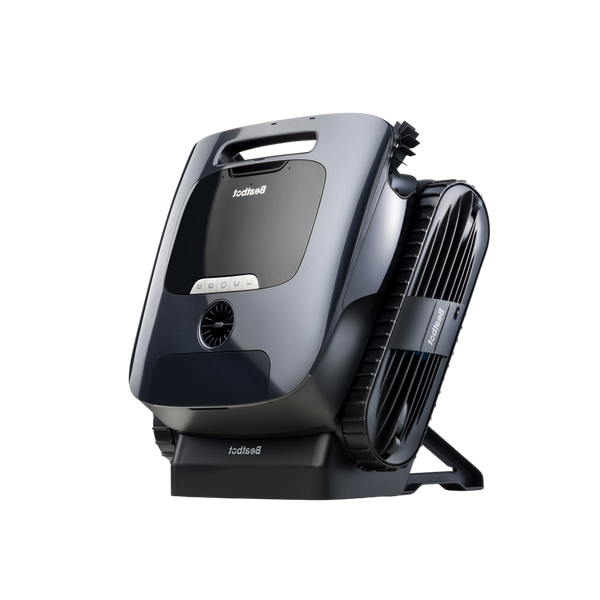
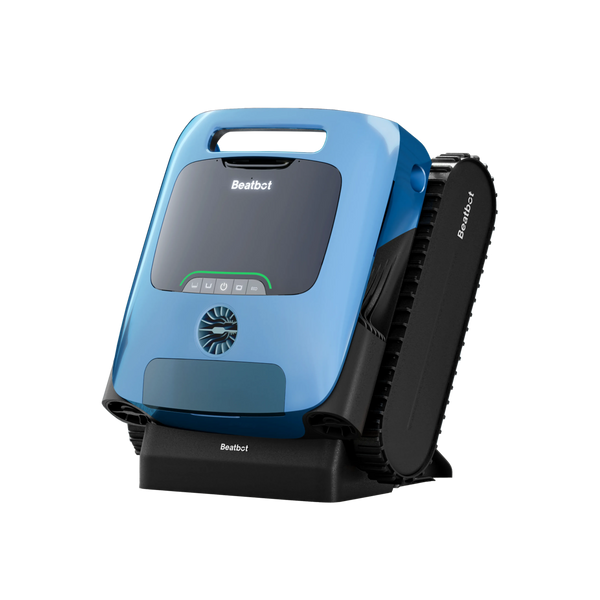
The Beatbot AquaSense X robotic pool cleaner addresses this at the source. Its 6,800 GPH suction and 150 µm filtration pull fine particles out of the water that manual skimming and standard pool pumps leave behind. The HybridSense® AI Vision navigation with 29 sensors maps the pool and runs efficient coverage patterns, so dead algae, pollen, and fine sand are removed before they break down and push alkalinity-influencing compounds back into the water.
After each cleaning cycle, the AstroRinse™ self-cleaning station empties the debris bin and rinses the filter in about 3 minutes, so the robot is ready for the next run without manual maintenance.
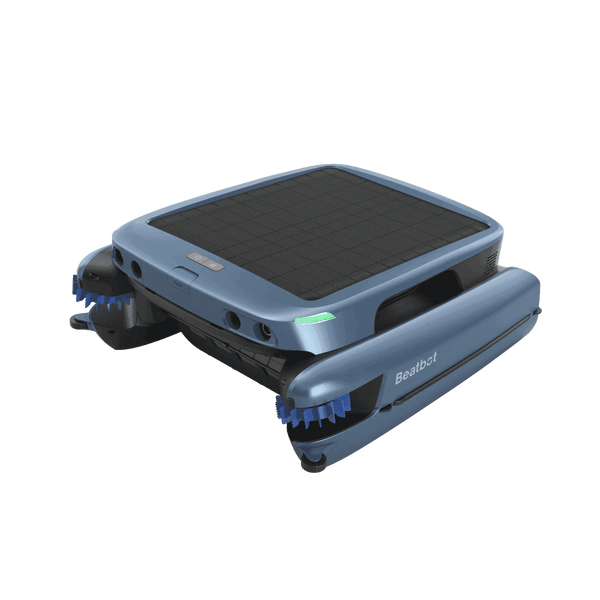
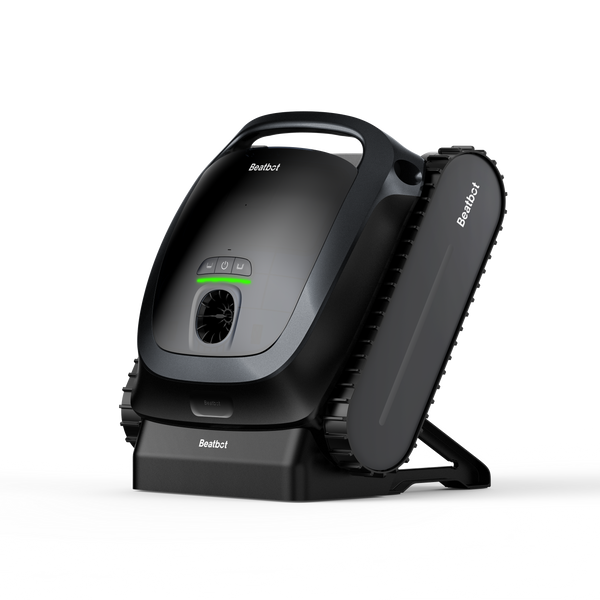
For pool owners looking for a strong all-around cleaning solution, the Beatbot AquaSense 2 Ultra robotic pool cleaner combines AI camera mapping through its HybridSense™ system with 27 sensors, 5,500 GPH suction, and surface skimming capability.
The dual-pass waterline scrubbing targets the calcium scale and organic residue that accumulate at the waterline when pH and alkalinity run high. Keeping the waterline clear reduces the visual symptoms of high-alkalinity water and removes a surface where scale continues to build. Both models cover up to 3,875 sq. ft. and clean in-ground and above ground pools on concrete, vinyl, fiberglass, and tile surfaces.
What Do pH and Alkalinity Actually Measure?
pH measures how acidic or basic your pool water is on a scale from 0 to 14, with 7.0 as neutral. The Centers for Disease Control and Prevention (CDC) recommends keeping pool pH between 7.0 and 7.8, with most pool professionals targeting 7.4 to 7.6 for the best balance of chlorine effectiveness, swimmer comfort, and equipment protection. Anything above 7.8 weakens chlorine's germ-killing ability and promotes calcium scale buildup on tile, heaters, and plumbing.
Total alkalinity (TA) measures the concentration of dissolved carbonates, bicarbonates, and hydroxides in your water, expressed in parts per million (ppm). The Pool & Hot Tub Alliance (PHTA) recommends maintaining total alkalinity between 80 and 120 ppm for most sanitizer types. Alkalinity acts as a pH buffer: when TA is within range, it absorbs small chemical additions and environmental changes without letting pH swing wildly. When TA is too high, it locks pH in an elevated position and resists correction.
The two measurements are chemically linked through dissolved carbon dioxide. CO2 in pool water forms carbonic acid, which keeps pH in check. When CO2 escapes through aeration, splashing, or water features, pH rises. The remaining bicarbonate alkalinity then holds pH at that higher level. This relationship is why high alkalinity and high pH tend to appear together and why treating them requires understanding both the acid side and the aeration side of the equation.
Why Do pH and Alkalinity Rise?
pH and alkalinity rise because your pool constantly loses dissolved carbon dioxide to the atmosphere. Every time water moves, splashes, or passes through a return jet, CO2 escapes. The less CO2 remains dissolved, the more basic the water becomes. Pools with water features, spillovers, or heavy swimmer activity lose CO2 faster and experience more frequent pH drift upward.
Certain sanitizers accelerate the climb. Liquid chlorine (sodium hypochlorite) and calcium hypochlorite both carry a high pH, so every dose pushes the water more basic. Salt chlorine generators produce sodium hydroxide at the cell during electrolysis, which raises pH steadily throughout the season. Pools using these sanitizers need more frequent acid additions than those running trichlor tablets, which are acidic and tend to suppress pH over time.
Source water chemistry is another common driver. Municipal tap water in many U.S. regions carries total alkalinity above 150 ppm and pH above 8.0. Every time you top off the pool after evaporation or backwash, you add more buffering capacity that pushes both numbers higher. Plaster and pebble pool finishes can also leach calcium carbonate into the water during the first year after resurfacing, raising both alkalinity and pH until the surface cures.
What Happens If You Don't Lower Them?
Leaving pH and alkalinity above their recommended ranges creates compounding problems. The most immediate effect is reduced chlorine performance. The CDC notes that as pH rises above 8.0, chlorine's ability to kill bacteria and viruses drops significantly. A pool that tests 3 ppm free chlorine at pH 8.2 has far less active sanitizer than the same reading at pH 7.4. Swimmers are exposed to higher pathogen risk even though the test strip looks normal.
Scale formation is the second major consequence. Calcium carbonate precipitates out of solution when pH and alkalinity are both elevated, depositing a white, chalite film on tile lines, inside heaters, and across salt cell plates. Scale reduces heater efficiency, shortens salt cell lifespan, and clogs filter media. Over a full season, the cost of scale-related equipment damage often exceeds what the pool owner would have spent on acid.
Cloudy water is the visible symptom most pool owners notice first. High alkalinity promotes suspended calcium particles that scatter light, giving the water a hazy or milky appearance that no amount of filtration alone can resolve. The root cause is chemistry, not filtration capacity, and clearing the water requires bringing pH and alkalinity back into range before the filter can finish the job.
How Often Should You Test pH and Alkalinity?
Test pH at least twice per week during swimming season and once per week during the off-season. The CDC recommends testing pH and chlorine at least twice per day for public pools, but residential pools with lower bather loads can maintain good control with less frequent testing. The key is consistency: testing at the same time of day, using the same method, and recording results so you can spot trends before they become problems.
Total alkalinity changes more slowly than pH, so testing once per week is sufficient for most residential pools. Test alkalinity any time you add acid, top off the pool with fresh water, or notice that pH is drifting faster than usual. A sudden increase in pH drift often signals that alkalinity has crept up, and catching it early means a smaller acid dose to correct.
Liquid reagent test kits (DPD kits) provide more accurate results than test strips for both pH and alkalinity. Test strips are convenient for quick checks between full tests but can give readings that are off by 0.2 pH units or more, which matters when you are trying to dial in a precise correction. If your water has been consistently hard to balance, upgrading to a drop-based test kit is one of the most cost-effective changes you can make.
FAQs
Can You Lower Alkalinity Without Lowering pH?
Not directly. Acid lowers both alkalinity and pH at the same time because the chemical reaction consumes bicarbonate and adds hydrogen ions.
The workaround is to lower alkalinity with acid first, then aerate the pool to raise pH back up without adding alkalinity. This two-step process gives you separate control over each measurement.
Is Muriatic Acid or Dry Acid Safer for Vinyl Pools?
Both are safe for vinyl-lined pools when diluted and distributed properly. Muriatic acid should always be diluted in a bucket of pool water before pouring it in, and the addition point should be the deep end with the pump running.
Dry acid (sodium bisulfate) is easier to handle because it is granular, but it should still be broadcast across the surface rather than dumped in one spot to avoid localized low-pH contact with the liner.
How Long After Adding Acid Should You Wait to Swim?
Wait at least 30 minutes with the pump running to allow full circulation, then retest pH before swimming. If pH reads between 7.2 and 7.8 and the water is clear, the pool is safe to enter.
For larger acid doses intended to lower alkalinity significantly, waiting 4 to 6 hours and retesting is a better practice to ensure the chemistry has stabilized.