

 Flagship


 Sora Series


 AquaSense Series


 Skimmer & Bundle

 Retail Edition


 Accessories



 Extended Warranty


Cyanuric acid (CYA) is the stabilizer that shields chlorine from UV degradation, and it comes in two forms: liquid and granular (powder). Liquid works immediately and is easy to dose, but it costs significantly more per unit of CYA. Granular is far cheaper, especially in bulk, but it dissolves slowly and requires more care during application. The better form depends on whether you need fast results or cost-efficient long-term maintenance.
What Is Pool Stabilizer?
Pool stabilizer is cyanuric acid (CYA), a compound that binds to free chlorine molecules and slows their breakdown under sunlight. Without it, UV can destroy the majority of your pool's chlorine within a few hours on a sunny day. Liquid and granular stabilizer contain the same active compound but behave very differently once added to water, and that difference directly affects application method, speed, and ongoing cost.

How Does Liquid Stabilizer Work?
Liquid cyanuric acid is a pre-dissolved solution, typically at a concentration around 45%. Because it is already in solution, it disperses through the pool water quickly once added while the pump is running. You can pour it directly into the pool or through the skimmer, and CYA levels generally register on a test within a few hours rather than days. There is little to no brushing required and no risk of the product settling undissolved on the pool floor.
The main limitation is cost. Liquid stabilizer is substantially more expensive than granular on a per-gram-of-CYA basis, with community pool data frequently showing it running four to five times higher in cost for the same CYA increase. If your pool needs a significant CYA adjustment, that price difference adds up fast.
How Does Granular Stabilizer Work?
Granular cyanuric acid is a dry, crystalline powder that dissolves slowly in water. It is available in much larger quantities and at a fraction of the cost of liquid stabilizer, making it the standard choice for seasonal pool opening and significant CYA adjustments. The tradeoff is patience: granular CYA can take 24 to 48 hours to fully dissolve and register on a water test, even when applied correctly.
Application method is important. Granular stabilizer should not be poured directly into the skimmer, as undissolved crystals can clog filter media.
The two recommended approaches are pre-dissolving the product in a bucket of warm water before adding it to the pool, or using the sock method, where granules are placed in a mesh sock or old stocking and suspended in front of a return jet. Either approach speeds dissolving and protects the filter.
Because the product takes time to register, it is easy to overdose if you test too soon and add more. Test 48 hours after any granular application before making further adjustments.

When Should You Use Liquid Stabilizer?
Liquid stabilizer makes the most sense when speed matters more than cost. The clearest use case is a pool that is newly filled or has had a large dilution event, such as significant rain or partial drain-and-refill, and needs CYA restored quickly before heavy UV exposure. It also suits pool owners who prioritize ease of use and are willing to pay a premium to skip the dissolving wait and application setup that granular requires.
Liquid is also useful in vinyl liner pools where concentrated granular CYA settling on the liner surface could potentially cause bleaching if not dissolved quickly. In those situations, the extra cost may be justified to eliminate that risk entirely.
When Should You Use Granular Stabilizer?
Granular is the practical default for most pool owners most of the time. For seasonal pool openings, when CYA levels have dropped to zero or near zero over winter, granular stabilizer lets you add a full dose economically and let it dissolve over 24 to 48 hours without issue. At the start of the season, you have time to wait.
For any situation involving large CYA adjustments, the cost difference between liquid and granular is substantial enough that granular is the rational choice. Even if you have to apply it in two stages across consecutive days, the overall cost per adjustment is far lower than liquid.
Organic debris in pool water increases chlorine demand, which means your free chlorine burns through faster and CYA-to-chlorine ratios become harder to predict between maintenance visits. A robotic pool cleaner that removes debris consistently helps keep that demand stable.
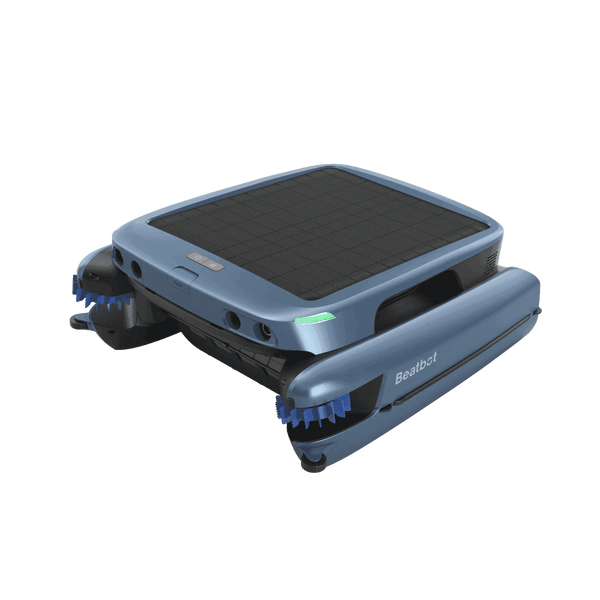
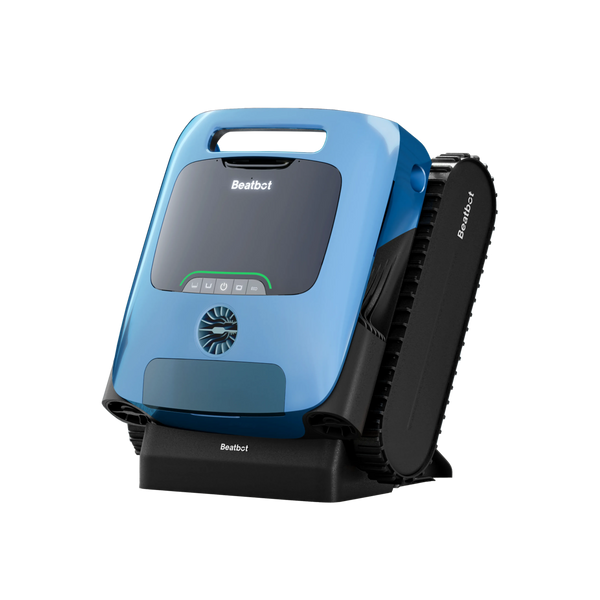
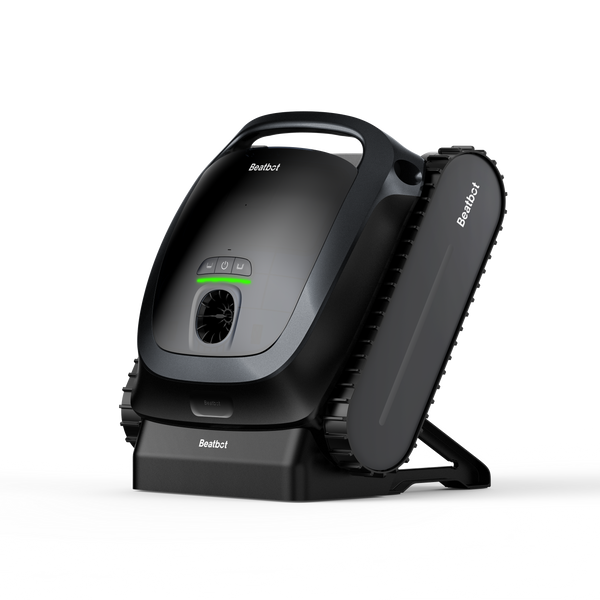
The Beatbot Sora 30 robotic pool cleaner covers floors, walls, waterline, and shallow platform areas as low as 8 inches deep in a single cycle, with a 5L filter basket that captures over 650 leaves per session and a 10,000mAh battery that runs up to 5 hours without mid-cycle interruption, keeping debris load low across pools up to 3,200 sq ft. For smaller pools or owners who want a lighter option, the Beatbot Sora 10 cordless pool robot offers the same 5L filter and 6800 GPH suction with a 7800mAh battery, plus smart waterline parking that brings the unit to the surface for tool-free retrieval at the end of each cycle.
CYA Target Levels and How to Test
The CDC and most pool chemistry resources recommend a CYA level between 30 and 50 ppm for outdoor chlorine pools. Some pool operators maintain higher levels (up to 70 ppm) in high-UV climates, but CYA above 80 ppm can begin to suppress chlorine effectiveness, requiring you to maintain higher free chlorine levels to compensate.
Test CYA monthly during the swim season. Liquid stabilizer can be added and retested within a few hours. For granular, always wait at least 48 hours before retesting and making any further adjustments. Both forms can be tested with the same pool test kit using the turbidity (cloudiness) method. CYA does not dissipate on its own, so the main cause of low levels is dilution from rainfall or partial draining.

For most outdoor pools, stabilizer only needs to be added at the start of the season or after a significant dilution event.
Because CYA does not break down under normal conditions, mid-season top-ups are only necessary if testing reveals the level has dropped, which typically happens after heavy rainfall or a large water replacement. If you are consistently topping up CYA more than once or twice per season without major dilution events, that points to a potential water loss issue rather than a stabilizer problem.
What About Stabilized Chlorine Products?
Trichlor tablets and dichlor shock both contain built-in cyanuric acid and will raise your CYA level with each dose.
If you use these products as your primary chlorination method throughout the season, your CYA level will creep upward over time, potentially reaching levels that require a partial drain-and-refill to correct. Pool owners who rely on stabilized chlorine compounds often do not need to add separate stabilizer at all until they have drained and refilled.
If you use an unstabilized chlorine source, such as liquid chlorine or calcium hypochlorite, your CYA level will not rise on its own and will require separate stabilizer addition. For those pools, the liquid-vs-granular choice becomes a direct cost and convenience decision at each adjustment.
FAQs
Can I pour granular stabilizer directly into the pool?
Yes, but with care. Pouring granular CYA directly into the pool is acceptable if you broadcast it across the surface while the pump runs, rather than dumping it in one spot. The risk is that crystals settling on a vinyl liner before dissolving can bleach the material. The sock method or bucket pre-dissolving eliminates that risk entirely and is the safer approach regardless of liner type.
How long will pool stabilizer last?
CYA does not degrade under normal pool conditions, so a dose added at the start of the season can last the entire swim season if water loss is minimal. Levels drop mainly through dilution: heavy rain, splash-out, or drain-and-refill events. Pools in rainy climates or those that lose significant water may need a mid-season top-up.
Will liquid stabilizer dissolve faster in cold water?
Liquid stabilizer is already in solution, so water temperature has little effect on its speed. It starts working as soon as it circulates. Granular CYA, by contrast, dissolves more slowly in cold water, so early-season application takes longer.
Does CYA ever need to be removed from the pool?
CYA does not break down on its own. If levels get too high (generally above 80 ppm), the only way to reduce it is through partial drain-and-refill with fresh water. This is why it pays to test monthly and avoid overdosing.
What happens if stabilizer levels get too high?
CYA above 80 ppm increasingly binds chlorine in a form that is less effective at sanitizing. The pool may look clear but pathogen protection is reduced. You cannot lower CYA by adding chemicals; partial drain-and-refill is the only correction. Granular stabilizer users who test too soon and redose before the product registers are most at risk of this scenario.
How long should I run the pump after adding stabilizer?
Run the pump continuously for at least 24 hours after adding either form. Liquid stabilizer distributes quickly, but granular needs extended circulation time to fully dissolve and reach a uniform concentration. Do not test CYA until the pump has run for at least a full cycle after adding granular.


