

 Flagship


 Sora Series


 AquaSense Series


 Skimmer & Bundle

 Retail Edition


 Accessories


 Extended Warranty


A small backyard does not rule out an inground pool. With roughly 1,200 square feet of usable yard, most homes can fit a 10-by-20-foot pool and still have room to walk around it. The constraint is rarely the pool itself. It is the setback rules, the side-yard access for excavation equipment, and the cleaning load that a smaller water volume concentrates rather than dilutes.

Can You Fit an Inground Pool in a Small Backyard?
Yes. A small backyard can hold an inground pool as long as the yard offers roughly 1,200 square feet of usable space and meets local setback rules. That figure assumes a 12-by-24-foot pool with about three to five feet of clearance on each side for walkway, coping, and fence setbacks. Smaller pools exist below that threshold, but they start competing with the deck, plumbing access, and safety clearances that make a pool livable.
Setback rules are the real bottleneck, not the pool itself. Most U.S. jurisdictions require a minimum distance from the property line, septic systems, and the house foundation, and those distances often matter more than the yard's overall dimensions. Measuring the distance between the house and rear fence, then subtracting the required setbacks on each side, gives the actual pool envelope.
Permits and builder availability add time that is easy to underestimate. Permit review runs two to six weeks in most U.S. jurisdictions, and reputable builders are often booked three to six months out during peak season. Setback disputes and HOA approvals can stretch the timeline further, pushing the actual start date well past the initial estimate.
Slope, utilities, and access are the physical constraints. Steep grading raises the cost of excavation, underground utilities can force the pool into a specific corner, and narrow side-yard access limits what equipment a builder can bring in. A 10-foot-wide gate is usually the minimum for standard excavation equipment. Anything narrower pushes the job toward smaller fiberglass shells lowered in by crane.
Which Inground Pool Shapes Work Best for a Small Backyard?
Rectangular, plunge, spool, and compact lap pools deliver the most usable water per square foot. Kidney and freeform shapes work when the yard has awkward corners or a curved property line.

Rectangular Pools
Rectangles are the most efficient use of water space. A 12-by-24 or 14-by-28 rectangle handles casual swimming for a family of two to four, supports pool covers cleanly, and pairs well with linear decks along the long side. For lap swimming in a small yard, length becomes the constraint, and most builders recommend at least 30 feet of uninterrupted water before a rectangular pool is worth using for laps.
Kidney and Freeform Pools
Kidney shapes soften a tight yard visually and tuck into corners where a rectangle cannot. The swim envelope is slightly smaller than a rectangle of the same footprint, which is the trade for a shape that blends with landscaping instead of stamping a box into it. A common small kidney runs around 10-by-20 feet with a 3.5-to-5-foot depth range.
Plunge and Cocktail Pools
Plunge pools are built for cooling off, not lap swimming. A typical plunge pool sits at 10-by-16 feet with a uniform four-to-five-foot depth that handles wading, hanging out, and built-in benches. Cocktail pool is a marketing variant of the same category, usually with a bench or bar-stool ledge built in. The smaller water volume heats faster, costs less to run, and responds quickly to chemistry adjustments.
Spool Pools
A spool sits between a spa and a plunge pool, usually 10-to-14 feet long by 7-to-8 feet wide, with uniform depth around 4 feet and integrated seating along at least one side. Some owners add spa jets and a heater to run it year-round. Spools are the smallest meaningful inground water feature before the build turns into a straight spa, and they fit yards where even a plunge pool runs over the setback envelope.
Compact Lap Pools
Long-and-narrow layouts, typically 8-by-30 or 8-by-40 feet, are the right answer for a narrow side yard or a rear yard where depth is tighter than width. Uniform depth of 4 to 5 feet keeps construction cost down. A compact lap pool fits where a standard rectangle cannot because it runs along the property line instead of across it.
What Size Should a Small Inground Pool Be?
For most small backyards, the workable footprint sits between 10 by 16 feet and 14 by 28 feet. Below 10 by 16, the build starts reading as a spa or spool rather than a pool. Above 14 by 28, the deck and fence usually collide with the property line.
Depth drives the decision as much as footprint. A 3-to-5-foot sloped bottom works for most recreational use. Uniform depth at 4 to 5 feet throughout is easier to clean, cheaper to heat, and the right choice when no one in the household plans to dive. Diving requires a minimum of 8 feet at the deep end plus a long enough run-in, which eats backyard space fast and rules out diving for most small-yard builds.
|
Yard Size |
Pool Size |
Best For |
Typical Shape |
|
Under 1,200 sq ft |
10 x 16 ft |
1–2 people, cool-off |
Plunge, spool, or small rectangle |
|
1,200–1,800 sq ft |
12 x 24 ft |
Small family, casual swim |
Rectangle or kidney |
|
1,800–2,500 sq ft |
14 x 28 ft |
Family of 3–5, light lap swim |
Rectangle |
How Much Does a Small Inground Pool Cost?
Small inground pools in the U.S. generally run from about $35,000 on the low end to $120,000 on the high end, with most builds landing between $50,000 and $80,000. Material choice is the single biggest driver, followed by site conditions such as slope and access.
Vinyl liner pools are the most accessible entry point, typically $35,000 to $65,000 for a 10-by-20 or 12-by-24 footprint, because the steel-or-polymer wall system and liner cost less than a structural shell.
Fiberglass pools in the same footprint run about $55,000 to $95,000, with most of the premium going to the shell itself and crane delivery. Gunite or concrete pools start around $70,000 and commonly reach $120,000 for a small footprint because the shotcrete, rebar, and plaster stages are labor-intensive regardless of pool size.
How Do You Lay Out a Small Inground Pool and Its Deck?
The deck, fence, and equipment placement decide whether a small pool feels tight or deliberate. In a small yard, each of the three is visible from almost every angle, so the decisions that would be forgiving in a large yard are not forgiving here.

Deck Placement
Concentrate deck space on one long side with the dining table, loungers, and any shade structure. Keep the other three sides as a narrow walkway. A 12-by-24 pool with a 10-by-24 patio on one side feels like a backyard room. The same pool with a thin four-foot wrap on all sides feels like an obstacle.
Fencing and Safety
Residential pools in the U.S. require a four-foot minimum fence in almost every state, and many jurisdictions require self-closing, self-latching gates. Glass pool fencing visually opens up a small yard. Black aluminum disappears against landscaping. Wood and white vinyl read heavier and shrink the perceived yard.
Equipment Pad
In a small yard, the equipment pad almost always goes against the house or behind a short privacy wall on the side yard. A 4-by-6-foot footprint handles a standard single-pump setup, and a heater adds another two to three feet.
How Do You Keep a Small Inground Pool Clean?
Small inground pools concentrate debris, body oils, and fine sediment in a smaller water volume, which shortens the window between water looking clean and water needing intervention. A 10,000-gallon pool reaches a noticeable debris load in a third of the time a 30,000-gallon pool takes for the same bather load.

Three things drive the cleaning workload in practice: surrounding trees, wind exposure, and how often people use the pool. A pool under mature oaks needs aggressive surface cleaning from late summer through fall. A pool in an open, windy yard collects dust and pollen year-round. A heavily used pool needs more frequent chemistry checks because sunscreen and body oils accumulate faster in smaller water volumes.
Which Beatbot Cleaner Fits a Small Inground Pool?
Because small pools give up cleanliness faster than large pools, the right cleaner is one that finishes a full cycle before debris has a chance to build up and requires no manual intervention between runs. Three Beatbot models cover the range of small-backyard cleaning loads.

Beatbot Sora 30: Finish a Small Pool in One Cycle
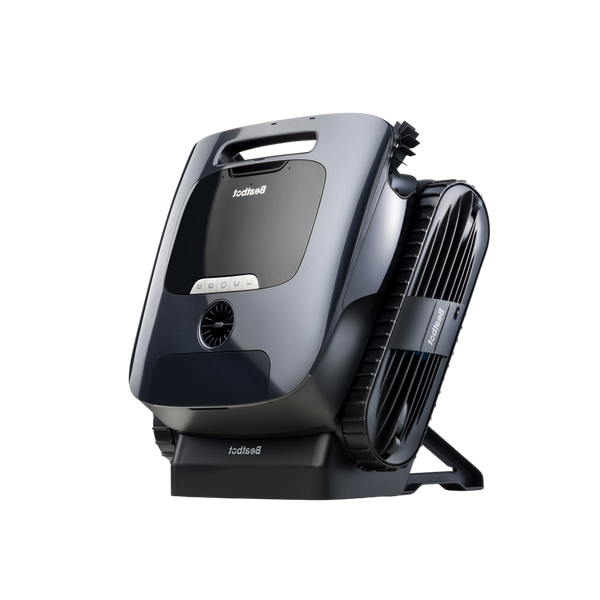
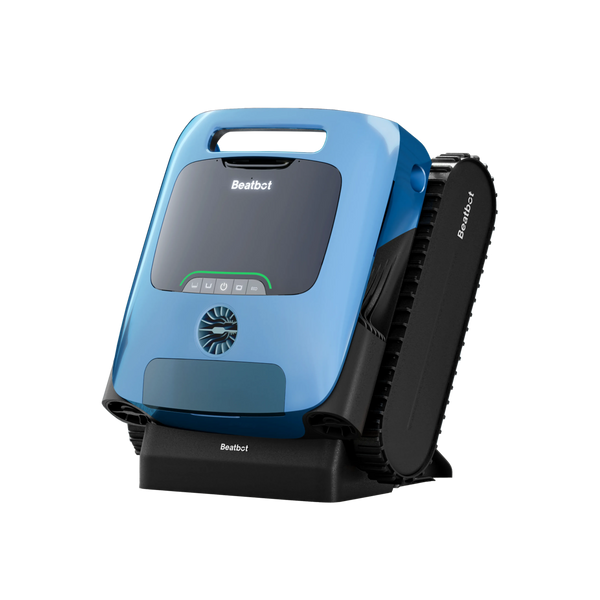
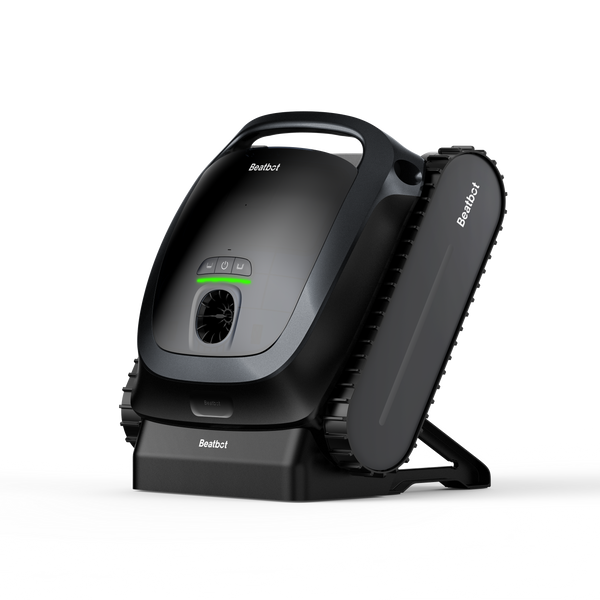
For a 10-by-16 or 12-by-24 pool, the Beatbot Sora 30 pool cleaning robot finishes a full floor, wall, and waterline pass in one charge with runtime to spare. The 10,000mAh battery supports up to 5 hours of floor cleaning and covers pools up to 3,200 square feet, which is several times the water area of any small inground pool.
Its platform and shallow-area cleaning reaches areas as low as 8 inches, so built-in benches and tanning ledges on plunge pools are handled in the same cycle.
Beatbot Sora 70: One Robot for All Four Zones
The Beatbot Sora 70 robotic pool cleaner replaces a structural cleaner plus a skimmer with a single device, which keeps the equipment pad lighter in a small yard. Its JetPulse water-surface cleaning uses two water jets that project flows inward and outward at the same time: the inward streams guide floating leaves and pollen toward the central suction inlet, and the outward streams form barriers that stop debris from slipping past the robot's sides.
Floor, walls, waterline, and surface are all cleaned in one pass, backed by a 6L debris capacity and an optional 3-micron ultra-fine filter for fine-particle polishing.
Beatbot iSkim Ultra: All-Day Surface Cleaning Without Plugging In
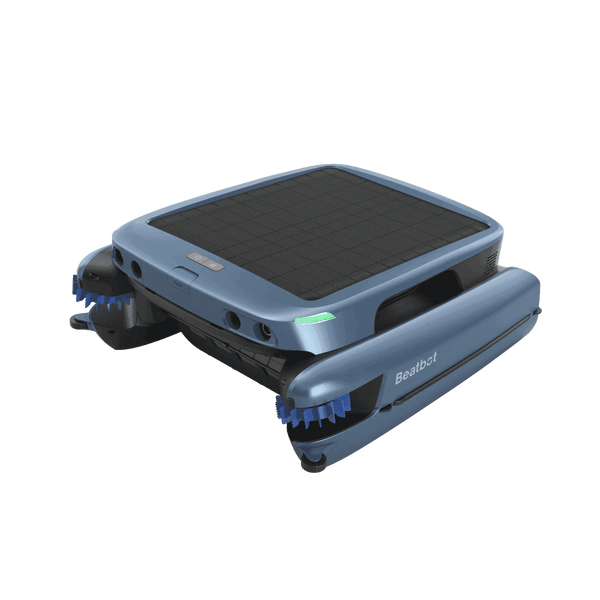
The Beatbot iSkim Ultra robotic pool skimmer is solar-powered and cleans the water surface continuously through daylight hours. A 24W solar panel with SolarTrack light tracking keeps a 10,000mAh battery topped up during the day, and a magnetic wireless charger handles cloudy stretches.
Its ClearWater Clarification System dispenses a plant-based clarifier as it skims, which tackles the fine-particle haze that becomes visible faster in small-volume pools. A 9L filter basket holds roughly 400 to 800 medium-sized leaves before it needs emptying.
What Should You Never Compromise on in a Small Inground Pool?
Three decisions survive every downsizing conversation: setback compliance, structural quality, and a cleaning setup sized to the pool's debris load.
Setback compliance is not negotiable. A pool placed inside the required buffer can fail inspection, block a future sale, or force an expensive relocation during a permit dispute.
Structural quality shows up years later. A vinyl liner rated for 20 mil outlasts a 15-mil liner by several seasons, a fiberglass shell with a proper gel coat resists blistering where a thinner one fails early, and gunite pools cut with undersized rebar crack along settling lines.
Undersizing the cleaning setup is the third regret. A single low-end floor robot cannot keep up with a pool under heavy tree cover, and a skimmer alone cannot handle a pool with no floor-cleaning solution.
FAQs
Can You Get an Inground Pool for $20,000?
A true inground pool build rarely comes in under $30,000 in the U.S. once permits, excavation, and equipment are included. Prefab drop-in shells or owner-general-contractor vinyl kits can approach the $20,000 mark on a flat lot with easy access, but the finished number usually lands higher once deck, fencing, and inspection costs are added.
What Is the Smallest Inground Pool You Can Actually Get?
Plunge pools and spools start around 8-by-12 feet. Below that footprint, most builders classify the project as a spa rather than a pool, and the pumps, filtration, and permit category shift accordingly. A 10-by-16 plunge pool is the practical floor for anything a homeowner would use as a pool rather than a soaking tub.
Is a 4-Foot Uniform-Depth Pool Worth It in a Small Yard?
Yes when the primary use is relaxation, family play with young kids, or integrated bench seating. A uniform 4-foot depth turns every square foot into usable standing area, which matters more in a small pool where floor space is scarce. It stops being the right choice once an adult swimmer in the household wants to practice lap strokes or a diving board is on the table.
What Is the Most Expensive Part of Building a Small Inground Pool?
The shell or structure itself, typically 40 to 60 percent of the total. A fiberglass shell and its crane delivery, a concrete shotcrete-and-plaster build, or a vinyl liner's steel-wall-and-liner system all dominate the line-item budget. Excavation comes second on sloped or tight-access yards. Permits and inspections are usually the smallest slice.
How Long Does a Small Inground Pool Take to Build?
A fiberglass shell installation typically takes three to six weeks from excavation to water-ready, vinyl liner pools run four to eight weeks, and gunite or concrete pools usually take eight to twelve weeks because of the curing and plastering stages. Weather delays stack on top, particularly on gunite builds where rain during the plaster stage pushes the schedule.
Is a Fiberglass or Concrete Pool Better for a Small Backyard?
Fiberglass installs faster and is usually the better fit for tight access, because the shell is lowered in by crane. Concrete offers more shape flexibility, which helps if the yard has awkward corners the pool needs to work around. For a standard rectangle or kidney in a small yard, fiberglass is the more common answer.
Do Small Inground Pools Need a Heater?
A heater extends the swim season meaningfully in most U.S. climates outside the Deep South. Smaller water volumes heat up faster and cost less to warm than larger pools, which partly offsets the heater's operating cost. A solar cover is a low-cost way to retain heat overnight regardless of heater choice.


