Flagship


 Sora Series


 AquaSense Series


 Skimmer & Bundle

 Retail Edition


 Accessories



 Extended Warranty


Pool filter sand lasts 3 to 7 years, with 5 years being the standard interval for residential pools. The range depends on pool usage, debris load, and water chemistry.
Sand does not wear out like a cartridge does. The sharp edges of each grain slowly round off from years of water flow and backwashing pressure, and once those edges are gone, debris slides through gaps that used to trap it. The pressure gauge can still read normal while the filter is quietly returning dirtier water to the pool.
How Long Does Pool Filter Sand Last?
Most residential pool sand filters need new sand every 5 years. Heavily used pools, pools under tree cover, and pools that have gone through algae blooms often need new sand at 3 to 4 years. Pools that stay covered most of the year, hold balanced chemistry, and use a robotic cleaner to capture debris before it reaches the filter can run closer to 7 years.
Filter sizing matters as much as the calendar. Undersized filters cycle more water per square foot of media, which accelerates grain erosion and pulls sand life toward the short end of the range.
What actually shortens sand life is not time but specific contamination events. Floc and chemical clarifiers bond to the sand bed and never fully wash out, gluing grains together into clumps backwashing cannot break. High calcium hardness leaves mineral scale that hardens the bed into something closer to concrete than sand.
Heavy sunscreen and lotion residue creates an oily film that traps debris on the surface instead of letting it migrate through. Pools that avoid these conditions can run on the same sand for 10 years or longer.
|
Pool Condition |
Typical Sand Life |
Notes |
|---|---|---|
|
Light use, low debris, covered most of year |
6 to 7 years |
Inspect annually after year 5 |
|
Average residential pool |
5 years |
Standard benchmark |
|
Heavy debris, tree cover, frequent use |
3 to 4 years |
Watch backwash frequency closely |
|
History of algae blooms |
3 years or sooner |
Dead algae clogs sand prematurely |
|
Saltwater pool |
4 to 6 years |
Similar to chlorine, slightly faster wear |
Signs It's Time to Change Pool Filter Sand
Sand needs changing when the filter stops doing its job, not when the calendar says so. Two or more of the signs below appearing together is a strong call to replace.
Backwashing More Often Than Usual
A healthy sand filter only needs backwashing when the pressure gauge climbs 8 to 10 psi (or about 25%) above its clean starting pressure. Backwashing every few days, or pressure climbing back up almost immediately afterward, means the sand is no longer holding debris in the proper depth of the bed.
Cloudy Water Despite Balanced Chemistry
When chlorine, pH, and alkalinity are all in range but the water still looks hazy after a full filter cycle, the sand is letting fine particles pass through. Cloudy water from worn sand persists no matter how many times you shock the pool.
Sand Returning to the Pool
Visible sand in the return jets usually signals a broken lateral inside the filter, which is a separate repair. Persistent fine dust appearing in the pool after every backwash points to the sand bed having eroded enough that the smallest grains are escaping.
Pressure That Stays Low Even When the Pool Is Dirty
A filter that never builds pressure between backwashes is no longer filtering. Water is finding a path of least resistance through channels in the worn sand bed instead of being forced through the media.
Compacted or Clumped Sand
If the top of the sand bed looks like a hard crust or shows visible channels carved into it during inspection, the sand has lost its loose, free-flowing structure. Backwashing will not restore proper filtration at that point.
How to Change Sand in a Pool Sand Filter
Changing sand takes 2 to 3 hours, with most of that spent draining the tank and shop-vacuuming the old sand out. The procedure below covers a top-mount filter, the most common residential design.

-
Turn off the pump at the breaker and close all valves leading to and from the filter.
-
Set the multiport valve to Winterize or Closed, unscrew the drain cap at the bottom of the tank, and let the water out. This step takes 30 to 45 minutes.
-
Disconnect plumbing at the multiport valve, unscrew the clamp ring, and lift the valve straight up.
-
Cover the standpipe with tape or a plastic cap to keep sand from falling in during removal.
-
Scoop or shop-vac the old sand out, keeping the vacuum nozzle above the laterals at the bottom of the tank. A 20-inch filter holds about 150 lbs of sand, closer to 200 lbs when saturated.
-
Inspect the laterals at the bottom of the tank for cracks. Replace any damaged ones before refilling.
-
Fill the tank with water until the laterals are just submerged. This cushions them when sand is poured in and prevents grains from packing into voids beneath them.
-
Slowly pour new #20 silica sand around the centered standpipe, stopping at the level marked in the owner's manual (typically two-thirds of the tank's interior height). Sizing reference is in the table below.
-
Clean any sand off the O-ring seat, reseat the multiport valve, and tighten the clamp ring evenly.
-
Reconnect plumbing, set the valve to Backwash, and run the pump for 2 to 3 minutes to flush fine dust from the new sand.
-
Switch to Rinse for 30 to 60 seconds, then back to Filter. Note the clean starting pressure on the gauge as a baseline for future backwashing.
Sand quantity is printed on the filter label or in the owner's manual. Use #20 silica pool filter sand unless the manufacturer specifies an alternative such as ZeoSand or glass media. Look for bags labeled specifically as #20 silica pool filter sand, since bags sold next to construction sand sometimes have uneven grain sizes despite similar packaging. Play sand and construction sand have the wrong grain size and will not filter properly.
|
Filter Tank Size |
Typical Sand Amount |
Approx. Pool Size |
|---|---|---|
|
16-inch |
100 lbs |
Up to 13,000 gallons |
|
19-inch |
150 lbs |
Up to 19,000 gallons |
|
22-inch |
200 lbs |
Up to 24,000 gallons |
|
24-inch |
250 to 300 lbs |
Up to 30,000 gallons |
|
27-inch |
350 lbs |
Up to 40,000 gallons |
How to Extend Pool Filter Sand Life
An annual deep clean extends sand life more than any other single action. Once a year, open the multiport valve, skim off the oily top layer, and gently flush a garden hose down into the sand bed (without disturbing the laterals) until the water runs clear. This removes the surface film and trapped organics that backwashing alone never reaches, and it is the single most overlooked piece of sand filter maintenance.
Backwashing is the action that wears sand down. Every cycle of high-pressure reverse flow tumbles the grains against each other and rounds their edges, so reducing how often the filter has to backwash directly extends sand life. That means keeping debris out of the sand bed in the first place.

A robotic pool cleaner does that job. It captures leaves, grit, and organic load in its own basket before that material ever reaches the pump intake, which cuts backwashing frequency and slows grain erosion. For pools with heavy debris loads or surrounding trees, that can move sand replacement from the 3 to 4 year range out to 5 to 7 years, and remove one backwashing trip a week during debris season.
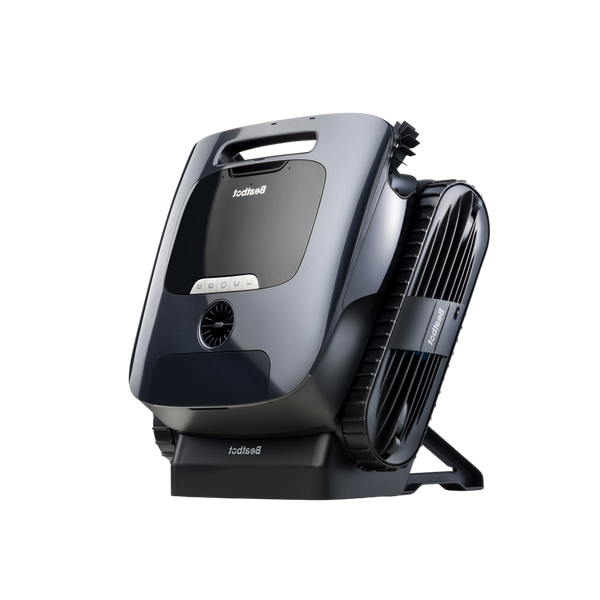
The Beatbot Sora 70 robotic pool cleaner is built for this kind of debris diversion. Its 6L basket carries 150-micron filtration as standard for everyday cleaning, and accepts an optional 3-micron ultra-fine filter that captures dead algae, pollen, and sediment.
The dead-algae point matters specifically for sand life because dead algae is the material that drives the compacted, crusted sand bed described above. Pulling it out at the robot stage means it never gets the chance to pack into the media.
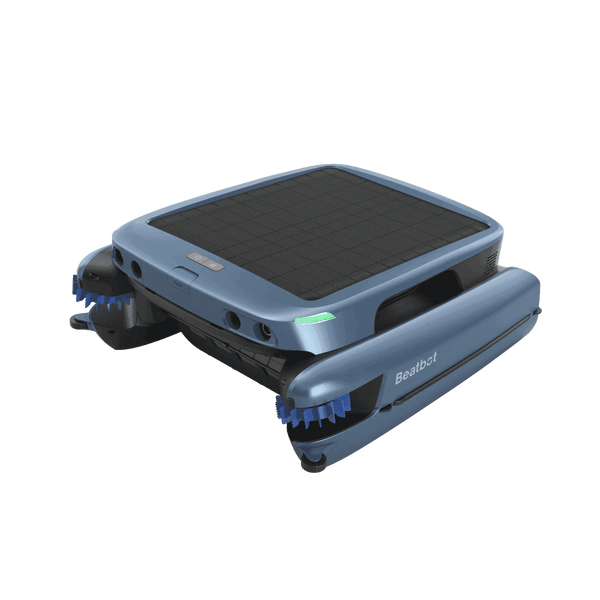
For smaller pools, the Beatbot Sora 30 pool cleaning robot applies the same diversion role at a different scale, with a 5L basket at 150 microns and shallow-area coverage down to 8 inches, where leaves and grit collect on steps and platforms before migrating into the main drain.
FAQs
Can You Reuse Old Pool Filter Sand?
No. Once the grains have lost their angular shape, washing or rinsing will not restore performance. Replace with new #20 silica sand.
Is Glass Filter Media Better Than Sand?
Glass media filters slightly finer particles and typically lasts 8 to 10 years instead of 5. It costs more upfront, but the longer replacement interval and improved clarity make it a reasonable upgrade if you are already opening the filter to swap media.
How Long Does New Sand Take to Filter Properly?
New sand reaches full filtration efficiency after about 2 to 4 hours of run time once the initial Backwash and Rinse cycles are complete. Slight cloudiness during the first day is normal as the bed settles, and pressure readings stabilize within the first week.
Can I Top Off Old Sand With New Sand Instead of Replacing It All?
No. Mixing new sand into a worn bed creates channels that let water bypass the media. All of the old sand has to come out. Topping off is acceptable only when the level has dropped slightly from gradual loss during backwashing.