

 Flagship

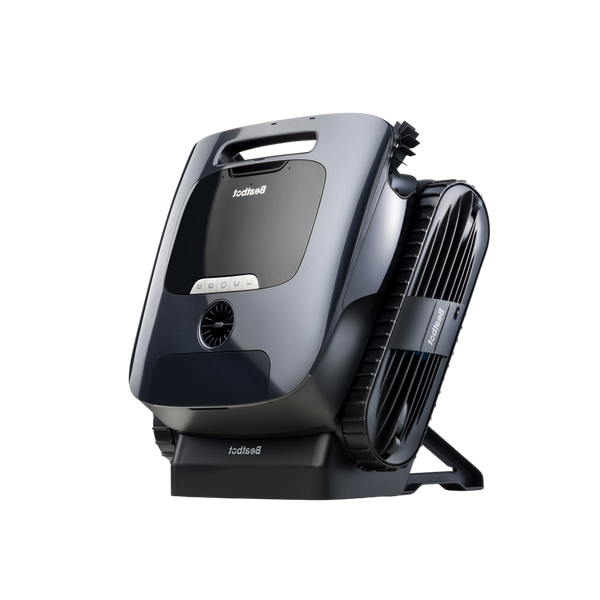

 Sora Series


 AquaSense Series


 Skimmer & Bundle

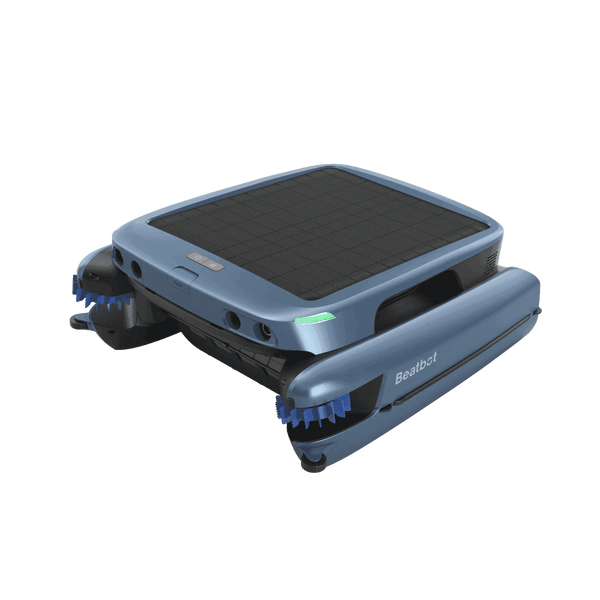
 Retail Edition


 Accessories



 Extended Warranty


Most above ground pools in the US last between 7 and 15 years, with the exact number shaped by material, climate, water chemistry, and winterization habits. A budget steel-walled pool with skipped maintenance can fail in under 7 years, while a quality resin or hybrid pool that is treated well often crosses the 15-year mark.

How Long Does an Above Ground Pool Typically Last?
The typical above ground pool lasts 7 to 15 years in the US, with most homeowners replacing theirs between year 8 and year 12. Resin and hybrid models tend to push toward the upper end of that range. Steel-walled pools cluster in the middle. Inflatable and soft-sided pools sit well below it, often retiring after just a few seasons.

What Determines How Long an Above Ground Pool Lasts
Above ground pool lifespan is determined by five things: wall and frame material, installation quality, water chemistry, climate exposure, and seasonal maintenance habits.
Installation matters more than most owners realize. A pool sitting on uneven ground stresses its walls every time it is filled, and pools installed over poor base material age faster regardless of how well they are cleaned. Aim for a perimeter level within an inch of variation.
The base under the pool matters just as much as the ground beneath it: a 2-inch layer of mason sand topped with a foam cove pad is the most common setup, while solid foam pads or commercial pool pads protect the liner better against roots, rocks, and ground frost. Avoid laying a liner directly on bare soil, gravel, or concrete without a cushion layer, since any sharp point underneath becomes a future leak.
Water chemistry is the slow killer. Chronically low pH eats at metal walls and accelerates liner wear. High calcium scales surfaces and clogs filtration. Salt chlorine generators, while convenient, shorten the life of metal components.
Climate adds the final pressure. UV exposure breaks down liners and exposed plastic parts. Freeze-thaw cycles in northern states stress walls if the pool is not properly winterized. Coastal humidity and salt air corrode metal frames faster than dry inland conditions.
How Long Does Each Type of Above Ground Pool Last?
Resin pools last the longest at roughly 10 to 15 years, followed by aluminum at 8 to 12 years, and steel at 7 to 10 years. Hybrid pools that combine resin top rails with metal walls usually fall between aluminum and resin. Inflatable and all-vinyl pools rarely survive past 5 years.
Steel above ground pools
Steel is the most affordable category and the most common at big-box retailers. The walls are strong but vulnerable to rust, especially in humid climates, near salt air, or when paired with salt chlorine generators. Owners who keep the wall coating intact and avoid salt systems often see the upper end of the steel range.
Aluminum above ground pools
Aluminum resists rust better than steel but is not corrosion-proof. Galvanic corrosion can happen where aluminum contacts dissimilar metals at fittings or rails. Aluminum tolerates salt chlorine generators better than steel, though still not as well as resin.
Resin above ground pools
Resin pools have the longest realistic service life because the polymer does not rust, corrode, or react with salt water. UV-stabilized resin holds up well to sun exposure, and many manufacturers back resin pools with extended warranties, sometimes lifetime structural coverage. The upfront cost is higher, but the structure often outlives several liner replacements.
Hybrid above ground pools
Hybrid designs pair resin top rails and uprights with steel or aluminum walls. The resin parts handle the highest-exposure stress points such as the top rail, where UV and pool chemicals do the most damage. The metal walls provide structural rigidity at a lower cost than full resin construction.
Inflatable and soft-sided pools
Inflatable rings and soft-sided frame pools are seasonal products. Most last 1 to 5 years, and few survive harsh winterization. They are best understood as a different category from a long-term backyard fixture.
Why the Liner and the Pool Structure Age Differently
The liner is almost always the first part to fail, typically lasting 5 to 9 years even when the surrounding pool is sound. Liner aging is driven by UV exposure, chemical wear, mechanical stress, and freeze damage.
It is normal to replace a liner once or even twice during the life of a quality pool. A fresh liner installed in a structurally sound resin or aluminum pool can extend total ownership well past the 15-year mark.

How Do You Know When an Above Ground Pool Needs Replacing?
An above ground pool is near the end of its life when structural problems show up on the walls or frame, not just on the liner. Wall flexing, rust streaks bleeding through paint, warped uprights, and recurring leaks at multiple seams are the clearest signals.
-
Rust spots that keep returning after touch-up paint, especially low on the wall where water sits
-
Top rails that crack, sag, or pull away from the upright posts
-
Walls that visibly bulge, wobble when the pool is full, or no longer hold their round or oval shape
-
Liner tears that recur in the same spots, suggesting a sharp edge or wall failure underneath
-
Frame fittings that strip out repeatedly when retightened
Seam leaks, wall flex, and structural rust generally call for replacement rather than repair. Walls under water pressure can fail suddenly, and a blowout drains thousands of gallons in seconds.
How Can You Extend the Life of an Above Ground Pool?
The fastest way to extend an above ground pool's life is to keep water balanced, remove debris quickly, and protect the structure during off-season months.
Water chemistry is the foundation. Hold pH between 7.4 and 7.6, total alkalinity around 80 to 120 ppm, and sanitizer at appropriate levels. Test weekly during the swim season, more often during heat waves or after heavy rain. Low pH is far more aggressive on metal walls than high pH, so erring slightly on the higher side is safer.
Debris removal protects both water clarity and chemical demand. Leaves, pollen, and organic load left in the pool drive up sanitizer use, stain liners, and feed algae that scars walls. Manual scrubbing with hard-bristle brushes and pole vacuums is one of the most common causes of small liner scratches that grow into leaks. A robotic cleaner replaces most of that contact-cleaning.
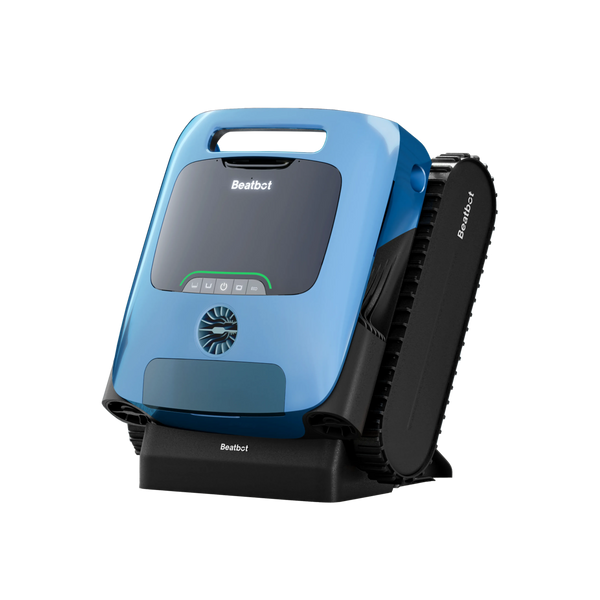
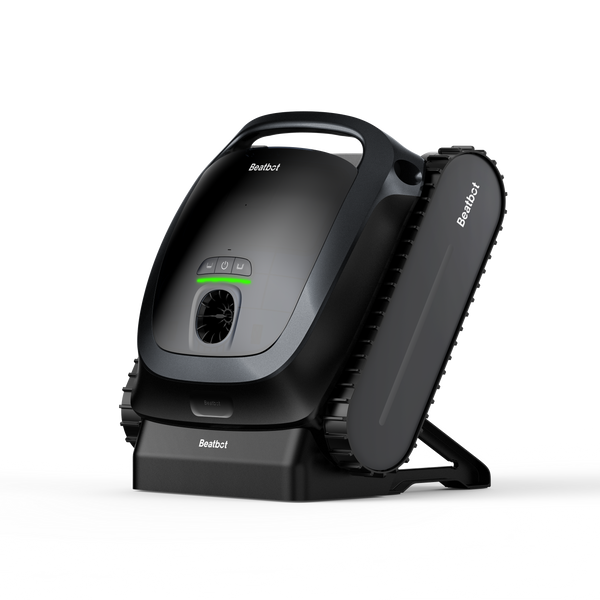
The Beatbot Sora 30 cordless robotic pool cleaner runs on tracked drive without rigid scrub bars, cleans floor, walls, and waterline in up to 4.5 hours per charge, and reaches into platforms and shallow zones as low as 8 inches deep, so the parts of an above ground pool that usually get hand-scrubbed get vacuumed instead.
For larger or heavier-load above ground setups, the waterline and water surface matter even more than the floor, since that is where sunscreen, body oil, pollen, and biofilm collect first and stain vinyl. The Beatbot Sora 70 robotic pool cleaner adds water-surface cleaning to the floor, walls, and waterline pass, with a 6L filter and 6800 GPH suction that pulls leaves and debris out before they reach the bottom.
Catching surface debris early keeps the waterline ring lighter and reduces how often the liner gets touched at all.
Off-season care closes the loop. A proper winter cover, lowered water level, balanced winterizing chemicals, and protected skimmer and return lines prevent the freeze damage that ends many otherwise healthy pools. In northern states, skipping winterization is the most common reason a pool that should have lasted 12 years lasts 6.

When Is It Worth Repairing Instead of Replacing?
Repair is generally worth it when the pool is under about 7 years old, the wall and frame are structurally sound, and only one major component such as the liner or pump needs attention. Replacement makes more sense when multiple systems are failing at once, the wall integrity is in doubt, or the pool is already past its expected service life.
A useful rule is to compare the cost of the repair to the remaining expected life. Replacing a liner on a 4-year-old aluminum pool with sound walls is an easy yes. Replacing a liner on a 12-year-old steel pool with rust spreading across the wall coating is usually money spent on a structure that will need replacement soon anyway. The same logic applies to pumps, filters, and skimmer assemblies.
FAQs
Can a pool last 20 years above ground?
Yes, though it is uncommon. A quality resin or hybrid pool installed correctly, kept chemically balanced, winterized properly, and given fresh liners as needed can pass 20 years. Most steel pools will not get there even with excellent care.
What do you do with an above ground pool during winter?
Lower the water level to just below the skimmer and return lines, balance the water with winterizing chemicals, blow out and plug the lines, remove the pump and filter for indoor storage, and install a tight winter cover with a cover pillow to absorb ice expansion. In freeze zones, leaving water in lines is the single fastest way to crack a skimmer or split a return fitting.
Does using a salt water system shorten an above ground pool's life?
It can, especially with steel walls. Salt chlorine generators can reduce a steel pool's lifespan to 5 to 7 years compared to 8 to 10 years on traditional chlorine. Resin and well-rated aluminum pools tolerate salt systems much better.
Can I leave my above ground pool empty for a day?
Not safely. Above ground pool walls rely on water pressure to keep their shape, and an empty pool can collapse, warp, or have its liner shrink and pull away from the track within hours, especially in sun or wind. Vinyl liners also dry out and become brittle without water against them. If you need to drain for repair, keep the pool empty as briefly as possible and refill the same day.


