Most Popular


 Sora Series


 AquaSense Series

 Skimmer & Bundle

 Retail Edition


 Accessories


Pool pH almost always trends upward, and the main reason is simple. Carbon dioxide keeps leaving the water, and as it escapes the water becomes less acidic and pH rises. Everything that drives pH high in a pool is either speeding up that carbon dioxide loss or adding something alkaline on top of it.
The usual accelerators are aeration from waterfalls and jets, salt chlorine systems, algae growth, fresh plaster in a new pool, and alkaline chemicals or mineral-rich fill water. The CDC recommends keeping pool pH between 7.2 and 7.8, with 7.4 to 7.6 as the target, and a reading above 7.8 is where problems start. Knowing which driver applies to your pool is what decides how you bring it down and keep it there.
What Counts as High pH in a Pool?
Pool pH is considered high once it rises above 7.8. The CDC recommends a range of 7.2 to 7.8 for safe swimming and effective sanitation, with 7.4 to 7.6 as the ideal target. The pH scale runs from 0 to 14, where 7 is neutral, lower numbers are acidic, and higher numbers are basic. Because the scale is logarithmic, each whole number is a tenfold change, so a reading of 8.2 is far more basic than it looks next to 7.6.
The range matters because chlorine works best inside it. Around 7.4 to 7.6, chlorine disinfects efficiently, and its killing power falls off as pH climbs higher. Once pH passes 7.8, the same chlorine dose sanitizes less and the water starts moving toward scale and cloudiness.

Carbon Dioxide Loss
Pool pH rises on its own because dissolved carbon dioxide steadily escapes into the air. In water, carbon dioxide forms carbonic acid, which is what holds pH down. Water and air constantly move toward the same carbon dioxide balance, so the gas off-gasses from the pool until it equalizes with the atmosphere. As that carbonic acid leaves, pH drifts upward, which is why a still, untouched pool still climbs over time.
This is ordinary physics rather than a fault in your water. How high pH can climb is capped by your alkalinity, which sets a kind of ceiling, but the upward pull itself never stops. Because a pool's pH naturally rises, the goal is to slow and contain it rather than fight every small increase.
Aeration and Water Features
Aeration raises pool pH by speeding up how fast carbon dioxide leaves the water. Waterfalls, spillover spas, fountains, return jets pointed upward, and heavy splashing all break the surface and push carbon dioxide out faster than a calm pool. The more aeration your pool sees, the quicker its pH climbs.
This is why two identical pools can behave differently. A pool with features running for hours a day needs more frequent testing and acid than a still one of the same size. If your pH rises fast and you cannot explain it, aerating water features are usually the first thing to check.

High Total Alkalinity
Total alkalinity sets how high your pH can climb and how stubbornly it resists change. Alkalinity is the water's buffer, the carbonates and bicarbonates that absorb shifts in pH. When alkalinity runs high, above roughly 120 ppm, that buffer raises the pH ceiling and pulls readings back up quickly after you correct them.
This is the reason pH and alkalinity have to be managed together. Lower pH with acid while alkalinity stays high and the water climbs back within days. When pH refuses to hold after treatment, high alkalinity is usually the cause, so bringing it down first is what finally lets pH settle.
Salt Chlorine Generators
Saltwater pools tend to run high on pH because of how the salt chlorine generator works. As the cell converts salt into chlorine, it releases gas bubbles, and that gas off-gasses from the water and carries carbon dioxide out with it. The loss of carbon dioxide is the main reason salt pools drift upward and need acid on a regular schedule.
A salt pool with steadily rising pH is working as designed rather than failing. The chlorine generation and the gas it produces both push toward higher pH, so routine acid dosing is part of normal salt pool care, not a repair.

Algae and Organic Debris
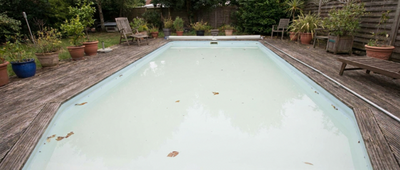
Algae raise pool pH by consuming carbon dioxide as they grow. Photosynthesis pulls carbon dioxide out of the water, and with less carbonic acid to hold pH down, the reading climbs. A real algae bloom can push pH well above 8.0, which is part of why green pools are so hard to balance until the algae is cleared.
Organic debris works in a slower way. Leaves, pollen, sunscreen, sweat, and body oils add to the load the water has to process and can nudge the balance upward, especially under heavy use. A pool that stays full of debris and starts growing algae will fight you on pH until it is cleaned out.

Pool Chemicals and Fill Water
Several common additions raise pool pH directly. Liquid chlorine (sodium hypochlorite) and cal hypo shock are alkaline and nudge pH up with each dose. pH increaser and soda ash raise it on purpose, and adding too much overshoots the target. Baking soda, used to raise alkalinity, lifts pH along with it.
Your fill water can be a quiet source too. Water from a well or hard municipal supply often arrives high in pH, alkalinity, and minerals like calcium, so topping off after evaporation slowly raises all three. If you shock with cal hypo and refill with hard water, expect a steady upward push that needs regular correction.
New Plaster Pools
A new plaster or pebble pool almost always shows high pH in its first months. As fresh plaster cures, it leaches calcium hydroxide into the water, a strongly basic compound with a pH near 12.6 that can spike pool pH well above 8.0 in the early weeks. Curing takes 30 to 60 days or more, so the effect fades gradually as the surface hardens.
The startup period needs careful handling rather than aggressive acid. Frequent testing and measured corrections keep pH in check while protecting the new finish, since overdosing acid pulls more calcium from the curing surface and can spike pH again. High pH in a new plaster pool is expected and temporary, but it still needs steady attention.
Why Does Pool pH Keep Rising After You Lower It?
Pool pH keeps rising after you lower it for two reasons. The first is natural. Carbon dioxide keeps off-gassing until it balances with the air, so pH climbs back toward its ceiling no matter how often you add acid. Chasing every reading down is a losing effort because the upward pull never stops.
The second reason is over-correction. Add too much acid at once and you drop alkalinity too low, which leaves the water aggressive and hungry for calcium. It then pulls calcium from plaster, grout, and surfaces, and pH can rebound higher than where it started. Lowering alkalinity into range to drop the ceiling, then making small steady corrections, holds pH far better than large acid pours.
Problems Caused by High Pool pH
When pool pH stays above 7.8, several problems stack up. Chlorine becomes far less effective, so the same dose kills fewer bacteria and less algae. Calcium scale forms on surfaces, tile, plumbing, and heater elements. Water turns cloudy as calcium carbonate falls out of solution, and swimmers get itchy skin and stinging eyes.
The damage builds quietly and costs money. Scale narrows pipes and coats heater components, shortening equipment life, while cloudy water makes the filter work harder. The chlorine you already paid for does less, and weak chlorine lets algae take hold, whose growth raises pH further and creates a loop that is hard to break.

How to Lower Pool pH and Keep It Stable
To lower high pool pH, add acid, usually muriatic acid or dry acid (sodium bisulfate). Measure your pH and pool volume, add the acid in front of a running return jet, let it circulate for several hours, then retest before adding more. If alkalinity is also high, bring it down first so the correction holds instead of bouncing back.
After that, match the routine to your pool. Salt pools and new plaster need acid on a schedule, pools with water features drift faster and need more frequent testing, and reducing aeration where you can slow the climb. Testing two to three times a week during the season catches small movements before they turn into spikes.
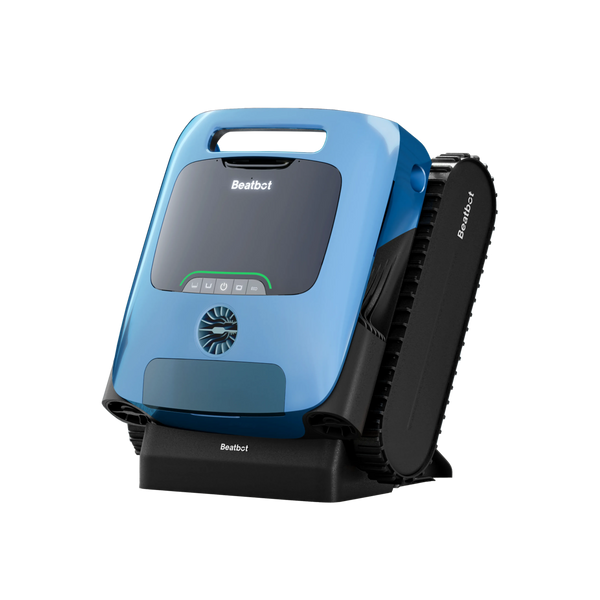
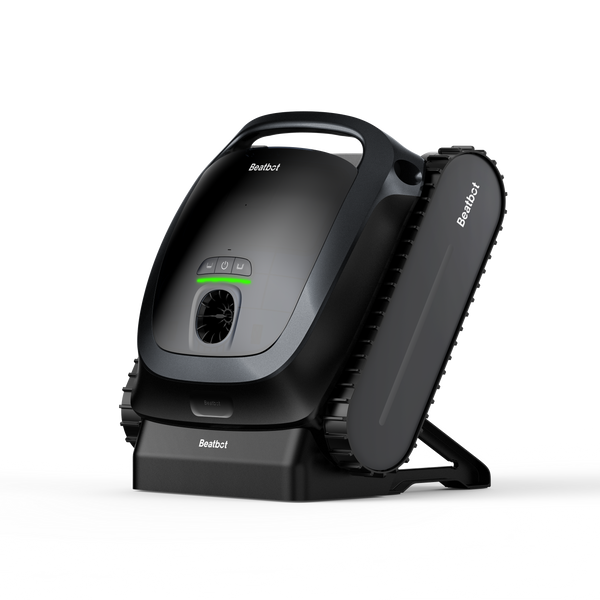
Algae and organic debris are two of the drivers that quietly push pH up, and a pool that keeps growing them will resist every correction. A robotic cleaner that keeps the whole pool clean removes that driver, which is exactly what the Beatbot AquaSense 2 Pro, a 5-in-1 robotic pool cleaner, does.
Algae takes hold on the walls and waterline before they spread, so a cleaner that only vacuums the floor leaves those footholds untouched. The AquaSense 2 Pro scrubs the floor, walls, and waterline and skims the surface in a single cycle, clearing the biofilm and debris that let algae bloom and push pH up.
Its ClearWater™ system also releases a natural clarifier to keep the water clear, so your test readings are easier to trust. It keeps the pool clean rather than balancing its chemistry, so it works alongside your acid and alkalinity routine. The most reliable path to stable pH is lowering alkalinity to drop the ceiling, correcting in small steady amounts, and keeping the water clean enough to test accurately.
FAQs
How long does it take for pool pH to drop after adding acid?
The pH usually drops within a few hours once the acid mixes with the pump running, but wait until the next day to retest before dosing again. Spreading acid across smaller doses prevents an overshoot that makes pH rebound.
Will a pool cover help control rising pH?
Yes, partly. A cover cuts evaporation and surface agitation, which slows the carbon dioxide loss that drives pH up, and it keeps out leaves and debris. Using one during idle stretches reduces both pH drift and cleanup.
Does rain lower pool pH?
Rain usually nudges pH down slightly, since rainwater is mildly acidic and mineral-free, so a heavy storm can leave the water low for a short time. The debris it washes in, though, can disturb the balance more lastingly.
Can I lower pool pH without chemicals?
Not really. Lowering pH takes acid or injected carbon dioxide, and aeration from features or jets does the opposite by raising it. There is no practical chemical-free way to bring a genuinely high reading back down.