Most Popular


 Sora Series


 AquaSense Series

 Skimmer & Bundle

 Retail Edition


 Accessories


Adding calcium chloride to a swimming pool is how you bring low calcium hardness back into a safe range. You test the water, work out the dose for your pool volume and the product's purity, dissolve the granules in a bucket first, then pour the solution slowly around the deep end with the pump running.
Calcium chloride is the standard calcium hardness increaser sold for pools, and the calcium it adds is what stops soft water from pulling minerals out of your plaster, grout, and metal fixtures. Calcium is also the steadiest of the core balance numbers, so once you've set it right it tends to stay put, which is exactly why it's worth getting right the first time.
What Does Calcium Chloride Do in a Pool?
Calcium chloride raises your pool's calcium hardness, the amount of dissolved calcium in the water, which protects your surfaces and equipment from corrosive, mineral-hungry water. Think of it as the calcium-supply side of keeping the water balanced.
Calcium hardness doesn't work in isolation. It's one of the inputs to the Langelier Saturation Index (LSI), the calculation that pulls together calcium, pH, total alkalinity, water temperature, and total dissolved solids to tell you whether the water is balanced, corrosive, or scale-forming.
A pool can hit a textbook calcium number and still run corrosive if its pH or alkalinity sits too low, which is why you set calcium with the whole balance in mind.
When calcium runs low, the water turns aggressive and goes looking for calcium wherever it can find it. In plaster and concrete pools, that means etching the surface and dissolving grout. In vinyl-liner pools, it pulls plasticizer out of the liner and leaves it brittle. In any pool, it eats at ladders, rails, heater components, and salt cells.
There's a good reason to lean toward the higher side of your range. Scale from too much calcium is treatable, since you can brush, dissolve, or filter it back out, while the etching and corrosion from too little calcium are permanent. Fixing low calcium prevents damage. Fixing high calcium only cleans up after the fact.
What Is the Ideal Calcium Hardness Level for a Pool?
The ideal calcium hardness level is 200 to 400 ppm for most pools. Plaster and concrete do best held around 250 to 350 ppm, while vinyl and fiberglass are comfortable down at 150 to 250 ppm.
The more useful way to land on a number is to ask what keeps your water LSI-balanced through the year. Colder water is more corrosive, so pools in climates that drop below 50°F for weeks at a stretch hold up better near the top of their range, and warm-climate pools can sit lower.
Plaster leans on the water's calcium far more than vinyl or fiberglass does, which is why its target runs higher.
If you're not sure, aim for the middle of your surface's range. That gives you the most cushion before either corrosion or scaling becomes a problem.

How Do You Know Your Pool Needs Calcium Chloride?
You know your pool needs calcium chloride when a water test reads below your surface's target range. Low calcium gives no visible warning until surfaces start to corrode, so testing is the only signal you can trust.
Use a liquid drop-count test kit for this, not test strips. Strips are fine for a quick weekly check, but your dose depends on exactly how far below target you are, and a precise reading keeps you from over- or under-shooting.
A few situations leave calcium low. Fill water from a softener or a naturally soft municipal supply often starts well under range. Draining and refilling waters down the calcium you already had. New plaster and heavy rain top-offs pull readings down too. Test the calcium straight from the tap on a new fill, then about once a month through the season.

How Much Calcium Chloride Should You Add?
As a rough guide, about 1.25 pounds of 77 percent calcium chloride dihydrate per 10,000 gallons raises calcium hardness by roughly 10 ppm. Purity is what moves that number.
Dihydrate flake and granular products run near 77 percent and track the guide above. Anhydrous or de-icer-grade calcium chloride at 90 percent or higher is more concentrated, so you'll need noticeably less for the same result. Go by the dosing chart on the bag, because a label that doesn't say dihydrate or anhydrous leaves you guessing at the real strength.
For a 20,000-gallon plaster pool reading 150 ppm with a target of 250 ppm, that's a 100 ppm bump, or about 25 pounds of 77 percent product.
Split a large dose across two or three rounds over a day or two. Dumping it all in at once can spike the balance near the return jets and cloud the water, and going in stages with a retest in between keeps you from overshooting a level you can't easily bring back down.
How Do You Add Calcium Chloride to a Pool Step by Step?
To add calcium chloride safely, dissolve it in a bucket of pool water first, then pour the solution slowly into the deep end with the pump running. Never drop dry granules into the pool or skimmer. Calcium chloride throws off a lot of heat as it dissolves, enough to make the bucket dangerously hot, so handling that heat is the part that matters most.
Step 1: Test and Balance the Water First
Confirm calcium with a drop kit, and get pH to about 7.4 to 7.6 and total alkalinity to 80 to 120 ppm before you dose. Adding calcium to water that's already off invites cloudiness and scaling.
Step 2: Measure the Dose and Gear up
Put on gloves and safety glasses, then measure the dose. Keep each bucket to about 10 pounds of calcium chloride, since any more is hard to dissolve and can get hot enough to soften the plastic.
Step 3: Pre-Dissolve the Granules in Pool Water
Fill a clean 5-gallon bucket about three-quarters with pool water, then add the calcium chloride slowly as you stir, always the chemical into the water and never the other way around. Setting the bucket in the pool helps keep the temperature down.

Step 4: Pour the Solution Into the Deep End
With the pump and filter running, pour the fully dissolved solution slowly along the deep-end perimeter. Pour about half, top the bucket back up with pool water, stir, and pour again. That keeps the heat in check and makes sure nothing undissolved sneaks in. Never pour into the skimmer, where the hot concentrate can chew up plastic equipment.

Step 5: Brush the Pool Surfaces
Brush the floor and walls so any settled granules dissolve all the way. Undissolved calcium that sits on the bottom can burn and stain the plaster.
Step 6: Circulate, Then Retest
Run the pump at least 1 to 2 hours to let the calcium spread out. For a large dose, give it 24 to 48 hours before you retest for an accurate read, then top off in small amounts if you still need to.
What if the Water Turns Cloudy After Adding Calcium Chloride?
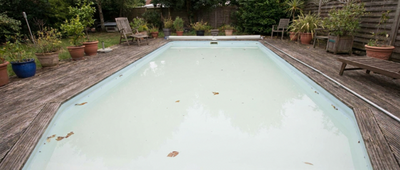
Cloudy water after adding calcium chloride is usually temporary, and it comes from undissolved granules or a dose added too fast. With the filter running and the surfaces brushed, it normally clears within a day or two, and dissolving the chemical first and adding it in stages heads off most of it.
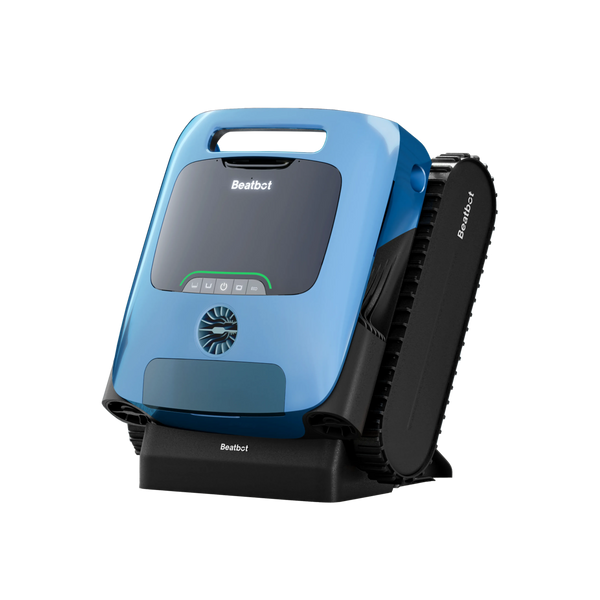
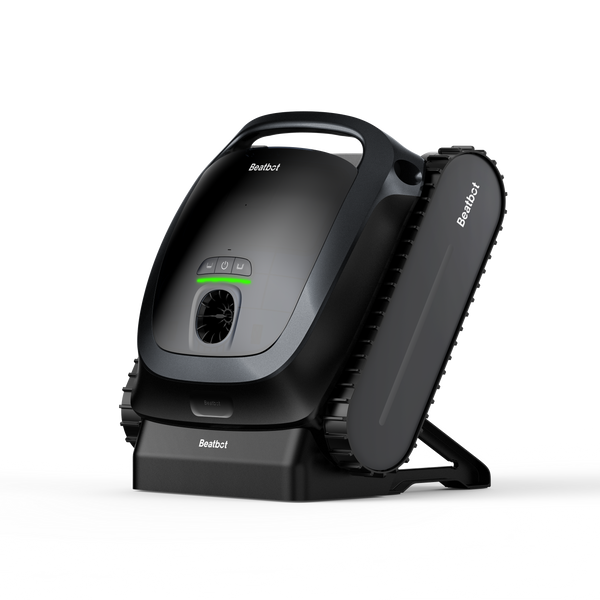
Finer filtration clears that fine haze faster. The Beatbot Sora 70 cordless robotic pool cleaner runs an optional 3-micron ultra-fine filter that traps the microscopic particles most pool filters just cycle back through the water, so the haze comes out for good and you reach for a chemical clarifier less often. While it filters, it brushes and vacuums the settled residue off the floor in the same pass.
If the water's still cloudy after a couple of days of filtering, the cause is usually chemistry, not leftover residue. Calcium hardness or pH that's climbed too high is an LSI problem you fix by rebalancing the water, not by running the filter longer.

What Mistakes Should You Avoid When Adding Calcium Chloride?
The costliest mistake is adding too much calcium at once, because nothing brings calcium hardness back down except draining and refilling part of the pool with softer water. Dose on the light side and retest, and you'll steer clear of that trap altogether.
A few other slip-ups come up again and again. Dropping dry granules straight into the pool or skimmer scorches equipment and stains the floor.
Mixing calcium chloride with another chemical, chlorine especially, in the same bucket or at the same time risks a dangerous reaction, so space your additions out. Skipping pH and alkalinity before you dose sets the water up to cloud. And leaning on test strips for a big adjustment can send you off target before the first scoop even goes in.
FAQs
How long after adding calcium chloride can you swim?
You can usually swim within a few hours, once the calcium chloride has fully dissolved and circulated. Check the product label for a specific wait time, and make sure the water's balanced and clear first.
Does calcium chloride raise the pH of pool water?
Calcium chloride is close to pH neutral, so it doesn't move pH much on its own. That's part of why it's the go-to calcium hardness increaser. Recheck pH afterward anyway, since circulation and other additions can nudge it.
Will baking soda raise calcium hardness?
No. Baking soda raises total alkalinity, a different reading, and does nothing for calcium hardness. Only a calcium-based product like calcium chloride will move the calcium level in your pool.
Is calcium chloride the same as calcium hypochlorite?
No. Calcium chloride raises calcium hardness, while calcium hypochlorite, or cal-hypo, is a chlorine shock that adds only a little calcium as a side effect. Stick with calcium chloride to adjust hardness.