Most Popular


 Sora Series


 AquaSense Series

 Skimmer & Bundle

 Retail Edition


 Accessories


A hot tub that keeps tripping the breaker is reacting to one of two electrical faults, and the way it trips tells you which. Spas in the United States run on a dedicated Ground Fault Circuit Interrupter (GFCI), which cuts power the instant it senses current leaking to ground or a load the circuit cannot safely carry.
A trip that fires the moment you reset it usually means a ground fault, often moisture or a failed part. A trip that takes minutes or hours points to an overload or an aging breaker. Once you read that pattern, the cause is almost always one of six parts, and most of them you can isolate yourself before calling anyone.
Read How the Breaker Trips Before You Touch Anything
The timing and trigger of the trip point to the cause faster than opening any panel. Watch how long the spa runs before it trips, and whether it cuts out only when a specific feature like the heater, jets, or blower is on.
Match what you observe to the most likely cause and the first test to run.
|
Symptom |
Most Likely Cause |
First Test |
|
Trips instantly on reset |
Ground fault from moisture or a failed part |
Disconnect parts one at a time |
|
Trips after several minutes or hours |
Heating element under load, overload, or aging breaker |
Note whether it trips as the heater cycles |
|
Trips only when the heater runs |
Corroded heating element |
Disconnect the heater and reset |
|
Trips only when jets or pump run |
Shorted pump motor |
Disconnect the pump and reset |
|
Trips only with bubbles or blower |
Flooded blower or ozonator |
Disconnect each and reset |
|
Trips with everything disconnected |
Worn-out GFCI breaker |
Replace breaker (licensed electrician) |
|
White powder, rust, or burning smell |
Corrosion or arcing wiring |
Inspect and replace damaged parts |
To confirm a suspect, take it out of the circuit. With the power off, disconnect one component at the control board, restore power, and watch the breaker. The part that lets the breaker hold while it is disconnected is the fault.
Shut the spa's breaker off at the main panel and confirm the power is dead before you open the equipment compartment. To reset cleanly, switch the breaker fully to off and then back to on in one firm motion, since a half-set GFCI will not hold.
Many spas also have a smaller GFCI inside the control pack with its own reset button, so check which device is actually cutting out. Spa circuits carry 240 volts, so never work on the panel while it is live.
Moisture in the Breaker Box or Control Pack
You can pin the trip on moisture if the spa cuts out instantly and you find droplets, condensation, or green corrosion inside the breaker box or control pack. Rain, splash, humidity, and a slow plumbing drip all reach these enclosures, and even a thin film of water gives current a path to ground that the GFCI reads as a leak.
With the breaker off, open both the equipment compartment and the breaker box and look closely at the terminals and circuit board. Dry everything with a clean cloth and a hair dryer set to cool or low, then leave the cover open for a while before restoring power, and replace the rubber gasket that seals the box.
If the moisture traces back to a plumbing drip, repair the leak first, because drying alone will not keep the water out. If the box keeps taking on water after that, add a splash barrier or move the enclosure farther from the spa.

A Failing Heating Element
A corroded heating element is the most common ground fault in older spas, and it shows itself when the breaker trips only as the heater energizes. The element sits directly in the water, and years of exposure to sanitizer and minerals erode the protective sheath around the coil. Once water reaches the live coil, the spa throws a ground fault every time the heater fires.
To confirm it, cut the power, disconnect the heater leads at the control board, and reset the breaker. If the breaker holds with the heater out of the circuit, the element is leaking and the heater needs replacing.
Track down why it failed before you install the new one. Running the heater with low water, a clogged filter, or heavy scale buildup cooks the element early, and a fresh element will fail the same way if the underlying problem is still there.

A Shorted Pump Motor
A pump that trips the breaker when the jets run has usually taken on water through a failed shaft seal. The bearings and seal inside a spa pump wear with age, and once the seal goes, water works into the motor housing and reaches the windings. A motor that has overheated and melted its windings shorts the same way.
White powdery residue or rust streaks around the pump's wet end signal that the seal has been weeping. Disconnect the pump at the control pack and reset the breaker, and if it holds with the pump out of the circuit, the motor is the problem. A pump caught early can be saved with a seal-and-bearing rebuild, while a motor that has already shorted needs full replacement.
A Faulty Ozonator or Air Blower
If the breaker holds until the bubbles or air jets come on, a flooded ozonator or blower is the likely cause. Both sit above the waterline, and they flood from backflow when the spa is overfilled or when a check valve fails, which lets water into parts that were never meant to get wet.
Isolate them one at a time. With the power off, disconnect the ozonator, reset the breaker, and watch, then reconnect it and repeat the test with the blower. Whichever part lets the breaker stay on when disconnected is the one to address.
A unit caught right after flooding can sometimes be drained and dried, but one that has rusted inside needs replacing, and a failed check valve should be swapped so it does not flood the replacement.
Loose or Damaged Wiring
Loose terminals and chewed wires cause trips that come and go without an obvious trigger. Connections that were never torqued properly heat up and contract through every cycle until they arc, and rodents nesting in a warm spa cabinet strip insulation down to bare copper.
With the power off, inspect every visible wire for scorch marks, melted insulation, and bite marks, and check that the screw terminals on the control board and inside the breaker box are tight. Anything burned, frayed, or stripped needs replacing rather than taping over. A trip that appears at random, with no link to a particular feature, is the pattern that most often points back to wiring.

A Worn-Out GFCI Breaker
If the breaker trips the instant you reset it with everything disconnected, the breaker itself is worn out. A GFCI in an outdoor subpanel takes years of heat, cold, and humidity, and the sensing circuit inside grows oversensitive or fails outright, tripping when there is no real current leak. Most GFCI breakers last 10 to 25 years, and lightning strikes or repeated power surges cut that short.
Rule out everything else first by disconnecting the heater, both pumps, the blower, and the ozonator. If the breaker still trips on reset, replacing a spa GFCI is a job for a licensed electrician, both because of the 240-volt feed and because the National Electrical Code sets specific requirements for how spa circuits are protected and bonded.
What It Costs to Fix a Hot Tub That Trips the Breaker
Most repairs land between a low-cost part swap and a few hundred dollars in labor, depending on which component failed. A GFCI breaker replacement typically runs around $200 to $400 with professional installation. A heater repair ranges from roughly $200 for a standalone element to about $1,000 for a full assembly on some models.
A pump is usually a few hundred dollars to rebuild and more to replace outright, while a blower or ozonator generally costs less. A diagnostic visit from an electrician is billed by the hour and varies by region.
The cheapest repair is the one you catch early. A leaking pump seal fixed in time costs a fraction of a shorted motor.
When to Fix It Yourself and When to Call an Electrician
You can safely run the low-voltage isolation tests, dry out a damp box, and check loose connections with the power off. Anything involving the 240-volt feed, the panel, or the breaker belongs to a licensed electrician.
National Electrical Code Article 680 requires both GFCI protection and equipotential bonding for spas and hot tubs, and bonding that is done wrong is a shock hazard, which is why feed and breaker work is not a DIY job.
Stop and call a professional the moment you smell burning, see scorched or melted parts, or find that the breaker keeps tripping after you have isolated every component. Some warranties also require a certified technician for electrical repairs, so check your coverage before you open anything that could void it.
How to Prevent Future Breaker Trips
Most repeat trips trace back to water and time, so a few habits prevent them. Keep the breaker box sealed and shaded so weather cannot work on the contacts, replace a pump seal at the first sign of weeping rather than waiting for it to flood the motor, have the heater element checked once the spa is a few years old, and keep the tub on its own dedicated circuit instead of sharing it with other equipment.
A good share of nuisance trips around water trace back to corded equipment, where a power cord and plug sit in the splash zone and slowly let moisture into the connection. Cordless gear sidesteps that.
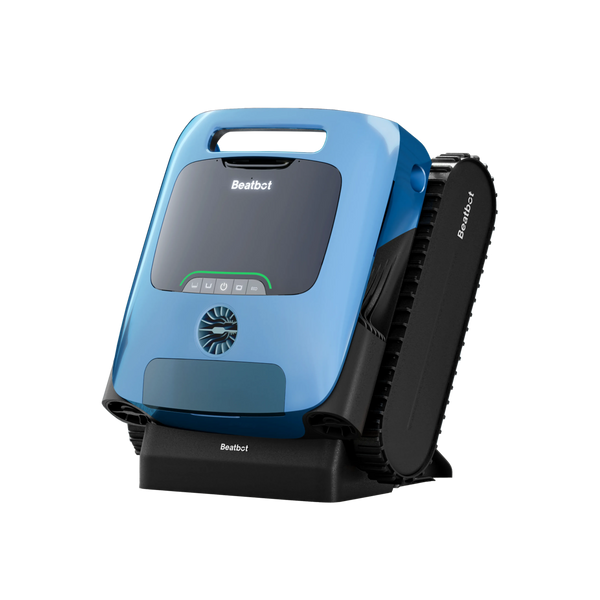
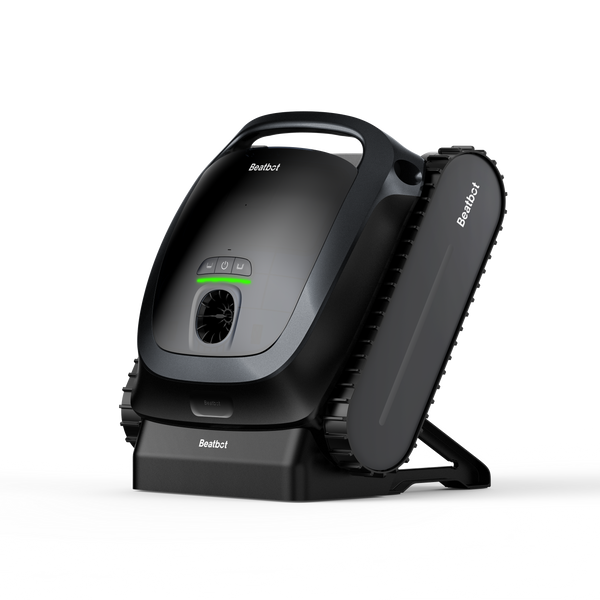
The Beatbot AquaSense 2 Ultra robotic pool cleaner runs untethered on a 13,400mAh battery and recharges on a wireless magnetic dock, so the robot and dock pass power through a sealed, plug-free contact instead of an exposed cord-to-outlet junction by the water. For a pool owner, that removes one of the wet electrical connections that quietly faults and trips a poolside breaker, and the dock tops the robot back up in about 4.5 hours between cleans.
FAQs
Is it dangerous to keep resetting a hot tub breaker that trips?
Yes. The GFCI cuts power for a reason, and forcing it back on bypasses that protection. One reset to clear a fluke is fine, but if it trips again, leave it off and find the cause.
Why does my hot tub only trip the breaker in cold weather?
Cold stiffens seals, lets condensation form inside enclosures, and makes the heater draw more current to hold temperature. A winter-only trip usually points to a heater or moisture problem that was already developing.
How long does it take to fix a hot tub that keeps tripping?
Isolating the faulty part usually takes under an hour with the power off. The repair ranges from a quick gasket or valve swap to a heater or pump replacement, often done the same day if the part is on hand.
Will a tripped breaker damage my hot tub?
A single trip will not harm the spa, but the fault behind it can, and a tub left without power in freezing weather can freeze and crack the plumbing. Fix the cause, then restore power.