Most Popular


 Sora Series


 AquaSense Series

 Skimmer & Bundle

 Retail Edition


 Accessories


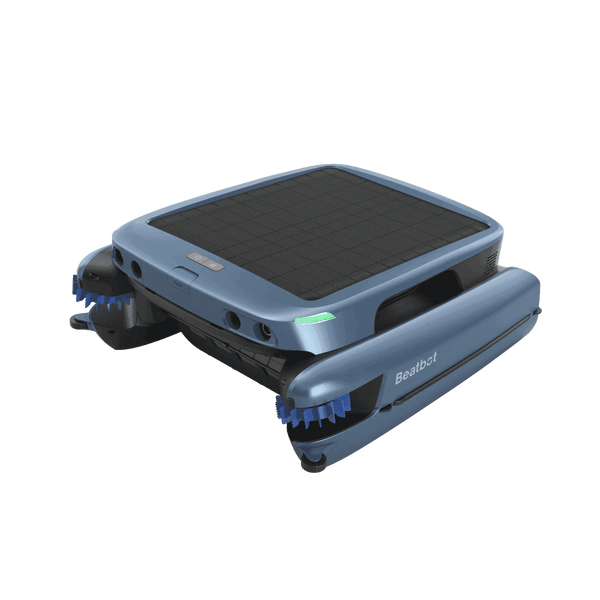
A solar pool skimmer is a cordless, floating robot that runs on solar power and patrols the water surface to pull out leaves, insects, pollen, and other debris before any of it sinks. Surface debris left to drift will settle on the floor, where it takes considerably more effort to remove. A skimmer catches it first.
How Does a Solar Pool Skimmer Work?
A solar panel on top of the skimmer converts sunlight into electricity, charging an onboard battery that keeps the unit running after dark or through overcast hours. Propulsion motors move the unit around the pool, and a filter basket collects whatever the skimmer pulls in. The two design variables that matter most for performance are how debris enters the basket and how the unit decides where to go next.
Debris Collection
Passive-intake designs rely on water flow through a front opening. The propulsion motor pushes the skimmer forward, and floating debris drifts into the filter basket as the unit moves. Active designs add a front roller brush, side brushes, or directed water jets that physically guide debris into the intake. Active designs handle larger items like whole leaves and twigs more reliably. Passive designs are quieter, simpler, and adequate for pools with mostly light debris such as pollen and bugs.
Navigation
Entry-level skimmers move randomly, bouncing off walls and turning at obstacles. They cover the pool eventually, but with no path control, areas can stay neglected for hours. Smarter units use ultrasonic sensors to map the pool boundary and follow an S-shaped or zig-zag pattern, with separate edge-cleaning passes for corners and along the wall. Path planning matters most in larger pools and in pools with heavy debris loads, where random coverage leaves enough timing gaps for buildup to start.

Why a Solar Skimmer Matters More for Above Ground Pools
Above ground pools have a built-in disadvantage for surface debris. Their skimmer intakes are wall-mounted and pull water only from a narrow strip near one edge, so debris that lands far from the intake can drift on the surface for a long time before it ever reaches the filter. In ground pools usually have additional drainage points and stronger circulation; above-ground systems rely almost entirely on that single surface intake.
Solar power suits the above-ground setup. Above ground pools are often placed away from outdoor outlets, with no permanent electrical run to the pool deck. A solar skimmer needs no cord, no extension, and no charging station near the water.
Surface debris that gets pulled before it sinks does not need to be vacuumed off the floor later, does not break down into fine particles that clog the filter cartridge, and does not consume the chlorine that would otherwise oxidize it. Above-ground filtration systems are smaller and more easily overwhelmed than in-ground systems, so reducing the load they carry extends cartridge life and keeps water clearer.

What Makes Above Ground Pools Different for Skimmers
Three factors shape the decision for above ground pools: liner material, layout density, and pool geometry.
Liner Compatibility
Most above ground pools use a vinyl liner, which means anything floating on the surface eventually rests against soft, scratch-prone material. A skimmer with smooth ABS or ASA housing and protective guide wheels is the safe choice. Sharp edges or unprotected hard parts can damage the liner over time. Confirming the manufacturer states vinyl-liner compatibility avoids the problem outright.
Layout Density
A 15- or 18-foot round pool with a ladder, return jet, skimmer intake, and a couple of float toys is a tight workspace. Skimmers with obstacle detection navigate the clutter. Random-pattern skimmers get pinned against the ladder or stuck on the float more often.
Pool Shape and Depth
Round and oval above ground pools concentrate debris toward the center, so edge-cleaning passes provide diminishing returns compared to rectangular pools where debris collects in corners. Most above ground pools are shallower than 5 feet, well within the operating range of any surface skimmer.
Key Specs That Determine Skimmer Performance
Four specifications separate strong solar skimmers from mediocre ones: navigation system, filtration rating, basket capacity, and the battery-to-solar-panel ratio.
Navigation System
Random-pattern skimmers cover an above-ground pool acceptably given enough runtime, but they leave timing gaps that show up as visible debris patches between passes. Sensor-based navigation with planned paths shortens those gaps and handles edge and corner cleaning as a distinct routine rather than by accident.
Filtration Rating
A 150-micron mesh captures leaves, twigs, bugs, and most visible debris, which is what users actually notice on the surface. Finer mesh down to 3 microns captures pollen, sand, and algae spores, which matter for water clarity but not for the surface skim itself. A 150-micron primary basket is the sensible default for above ground pools; finer filtration becomes worthwhile in pollen-heavy regions or pools that struggle with cloudiness.
Basket Capacity
A 2- to 4-liter basket is typical for entry-level skimmers and may need emptying every other day in heavy-debris conditions. The 9-liter basket on a unit like the Beatbot iSkim Ultra solar robotic skimmer can hold 400 to 800 medium-sized leaves before reaching capacity, which translates to weekly emptying in most above ground pools.
Battery and Solar Panel
A 10,000mAh battery paired with a 24W solar panel can run a skimmer through several days of overcast weather before performance drops; smaller batteries paired with smaller panels stall faster. The ratio of panel wattage to battery capacity matters more than either number alone.
Limitations to Consider Before Buying
Solar skimmers clean only the water surface. Floor sediment, wall algae, and waterline buildup are outside their scope entirely.
Performance drops in heavily shaded pools or consistently overcast climates. Most models carry enough battery to handle a night cycle, but if the solar panel cannot reliably recharge during the day, the unit will spend more time drifting than cleaning. Pools that receive fewer than 6 hours of direct sun per day are a poor match for a solar-primary design.
Above ground pools with steps, tanning ledges, or large skimmer ports can create navigation problems for some models. The better units use obstacle detection to avoid getting pinned against walls or stuck in corners, though no skimmer eliminates the risk entirely.
When a Dedicated Solar Skimmer Makes Sense
A dedicated solar skimmer fits pools where surface debris is the dominant problem and the floor stays clean enough that scheduled robotic cleaning handles it on its own. Pools in open, sunny yards near trees or gardens accumulate leaves, seeds, pollen, and insects continuously; a skimmer running around the clock prevents the kind of buildup that would otherwise require daily manual netting.
The Beatbot iSkim Ultra solar robotic skimmer is built for this role. Its 24W solar panel with SolarTrack™ light-energy tracking keeps the 10,000mAh battery charged during daylight; when sunlight is insufficient, the unit actively seeks better-lit areas of the pool before resuming work.
The 9L filter basket handles heavy debris loads without requiring mid-session emptying. The ClearWater™ clarification system disperses a natural clarifier into the water during cleaning, a water-quality function absent from most skimmers. Twenty sensors, including tri-ultrasonic technology, manage path planning and edge cleaning across pools of different shapes.
For owners who want full-pool automation, the iSkim Ultra pairs naturally with the Beatbot Sora 30 robotic pool cleaner. The Sora 30 covers floor, walls, waterline, and platform areas as shallow as 8 inches, delivering 6,800 GPH suction power with a 5L debris basket and up to 5 hours of floor cleaning on its 10,000mAh battery.
It does not clean the water surface, so the two products operate on different layers without overlap. The Sora 30's SmartDrain™ system releases internal water when the robot surfaces at the end of a cycle, reducing the weight before retrieval.
Solar Skimmer vs. Robotic Pool Cleaner
A skimmer stays at the surface and works continuously; a robotic pool cleaner works below the surface on a scheduled cycle to vacuum the floor, scrub the walls, and clean the waterline. Most robotic cleaners do not touch the surface at all. A smaller group of robots handles both layers in a single device, which is the category worth considering if you want one product instead of two.
When a Full-Coverage Robotic Cleaner Does More
The Beatbot Sora 70 robotic pool cleaner covers all four zones in a single device. Its JetPulse™ water-surface cleaning system uses four coordinated water streams to capture floating debris actively rather than by passive suction; app-controlled targeting lets you direct the robot to spots with heavy accumulation.
The same robot cleans the floor at 6,800 GPH suction power, climbs walls, scrubs the waterline, and reaches platform areas as shallow as 8 inches. A 10,000mAh battery provides up to 5 hours of floor cleaning and up to 7 hours of surface cleaning per charge, with five selectable cleaning modes in the Beatbot app.
The trade-off against a dedicated skimmer is operational pattern. The iSkim Ultra runs continuously on solar power with no required intervention between basket empties. The Sora 70 operates on cleaning cycles and needs recharging between them.
Beatbot Skimmer and Robotic Cleaner Options
|
Feature |
Beatbot iSkim Ultra |
Beatbot Sora 70 |
Beatbot Sora 30 |
|
Primary Role |
Surface skimmer |
Full-pool robotic cleaner |
Full-pool robotic cleaner |
|
Surface Cleaning |
Yes (dedicated) |
Yes, JetPulse™ |
No |
|
Floor / Wall / Waterline |
No |
Yes (4-zone) |
Yes (floor, wall, waterline) |
|
Platform Cleaning |
No |
Yes (8-inch depth) |
Yes (8-inch depth) |
|
Water Clarification |
Yes, ClearWater™ |
No |
No |
|
Battery |
10,000mAh + 24W solar |
10,000mAh |
10,000mAh |
|
Filter Capacity |
9L |
6L |
5L |
|
App Control |
Yes |
Yes |
Yes |
|
Warranty |
2 years |
3 years |
2 years |
|
Best For |
Surface-only automation |
Complete pool coverage + surface |
Complete pool coverage, no surface cleaning |
How to Choose a Pool Cleaner for Your Above-Ground Pool
Your pool's debris profile is the starting point. Heavy surface debris with a clean floor points toward a dedicated skimmer. Debris at every level, including surface, floor, and walls, points toward a full-coverage robotic cleaner that includes surface cleaning.
Sunlight exposure determines whether a solar-primary product will perform reliably. At least 6 to 8 hours of direct sun per day is enough for most models; pools that fall short of that should look for a model with AC or magnetic wireless charging as a backup.
Managing two separate products means two baskets to empty, two devices to monitor, and two schedules to maintain. A single full-coverage robot reduces that overhead, at the cost of the continuous, solar-powered operation that a dedicated skimmer provides.

FAQs
Can a solar pool skimmer work at night?
Yes, as long as the battery charged sufficiently during daylight. The Beatbot iSkim Ultra carries a 10,000mAh battery that sustains operation well after sunset.
Do solar skimmers work in above ground pools with steps?
Most modern skimmers include obstacle detection that steers them around steps and walls. Check the specific model's documentation to confirm compatibility with your pool's layout before purchasing.
Are above-ground pool skimmers worth it?
Yes, when the pool collects steady surface debris from nearby trees, gardens, or open exposure. A skimmer running continuously prevents the daily netting routine and reduces how often debris sinks to the floor. Pools with light debris or heavy shade see less return on the investment.
How long do solar pool skimmers last?
A well-built solar skimmer typically lasts several seasons of continuous outdoor use. Build quality, UV resistance of the housing, and battery cycle life are the main factors. The Beatbot iSkim Ultra carries a 2-year warranty, a reasonable proxy for expected service life.