Most Popular


 Sora Series


 AquaSense Series

 Skimmer & Bundle

 Retail Edition


 Accessories


Choosing a pool heat pump comes down to matching the unit to your pool and your climate, not to finding the highest BTU number on the shelf. A pool heat pump warms the water by moving heat out of the surrounding air, which is why it runs at a fraction of a gas heater's cost in mild conditions. The choice rests on four things. Match the heater type to your climate, the sub-type of heat pump to how you swim, the BTU output to your pool volume, and factor in how much heat your pool loses.

Heat Pump vs Gas vs Solar: Which Pool Heater Should You Choose?
A heat pump is the best choice for most owners who want low running costs and a longer swim season in a mild climate, a gas heater wins when you need fast heat in cold weather, and solar makes sense in sunny regions where you have space and are patient about heating time. Each type trades upfront cost, running cost, and speed differently, so the right pick depends on your climate and how often you swim.
The table below compares the three on the factors buyers weigh most, the balance of upfront cost against running cost, plus heating speed, climate fit, and how long each type lasts.
| Factor | Heat Pump | Gas | Solar |
|---|---|---|---|
| Best Climate | Mild, above 50°F | Any, including cold | Sunny |
| Heating Speed | Moderate | Fast | Slow |
| Upfront Cost | High | Low | High |
| Running Cost | Low | High | Very low |
| Lifespan | 10 to 20 years | Around 5 years | 15 to 20 years |
The choice hinges on the upfront-versus-running-cost trade-off. Gas costs less to install but more to run, which fits occasional heating and quick warm-ups. A heat pump reverses that, paying back a higher upfront cost through low running costs across a long season. Solar has very low running costs but heats slowly and cannot reliably stretch your season. For a mild climate and regular use, the heat pump is the balanced pick.
What Are the Three Types of Pool Heat Pumps?
Pool heat pumps come in three designs, fixed-speed, inverter (variable-speed), and heat and cool (reverse-cycle). They differ mainly in how the compressor behaves, and that difference drives their price, efficiency, and noise.

Fixed-speed heat pumps are the most affordable to buy and the simplest to run. They operate at one output level, which makes them a solid pick for warm regions where you mostly need to hold a steady temperature. Their limitation shows up in cooler shoulder seasons and in noise, since they always run at full speed.
Inverter heat pumps adjust their compressor speed to the pool's real-time demand. Once the water reaches your target temperature, the unit slows down instead of cycling on and off, which lowers energy use and running noise. They cost more upfront and repay it over a long heating season, so they fit owners who heat their pool for months at a time.
Heat and cool units add a reverse-cycle mode that pulls heat out of the water. In hot climates where a pool can warm past comfortable in midsummer, this replaces a separate chiller. If your summers regularly push the water into bath-warm territory, the cooling function is the reason to pay more.
The table below sums up how the three sub-types compare and who each one suits.
| Heat Pump Type | How It Runs | Efficiency | Noise | Best For |
|---|---|---|---|---|
| Fixed-Speed | One constant output | Standard | Higher | Warm regions, light use, lower upfront cost |
| Inverter | Variable speed to demand | Higher | Lower | Long heating seasons, lower running cost |
| Heat and Cool | Reverse-cycle heat or chill | High | Varies | Hot climates that also need cooling |
Match the sub-type to how you use the pool. Choose fixed-speed if you heat lightly in a warm region and want to keep the upfront cost down. Choose an inverter if you run the pool for months at a time and want lower running costs and quieter operation. Choose heat and cool only if your summers get hot enough that you would otherwise want a chiller, since the cooling mode is what justifies its higher cost.
What Size Pool Heat Pump Do You Need?
Size your pool heat pump to your water volume. The common rule of thumb is about 50,000 BTU for every 10,000 gallons in a moderate climate, and most residential units top out near 140,000 BTU. The table below shows typical minimums across the full range of pool sizes, from small above-ground pools to large in-ground ones.
| Pool Volume | Suggested BTU Output |
|---|---|
| Up to 10,000 gallons | 50,000 to 60,000 |
| 15,000 gallons | 90,000 |
| 20,000 gallons | 120,000 |
| 25,000 gallons | 140,000 |
| Over 30,000 gallons | 140,000, expect longer heat-up time |

Undersizing is the more common mistake. A pump that is too small runs at full capacity constantly and still struggles to hold temperature, which costs more over time than buying the right size once. Going larger heats faster and raises the upfront price, so there is a practical ceiling worth respecting. Climate, wind exposure, and how many degrees of temperature rise you want all shift the real number, which is why two pools of the same size can need different units. The right size is the smallest unit that comfortably reaches and holds your target temperature in your coldest month of use.
What to Compare Before You Buy a Pool Heat Pump
Beyond size, five factors separate a good buy from a costly one. Compare the COP, the heat exchanger material, the flow rate, the warranty, and the electrical requirements before you commit.
COP, or coefficient of performance, is the efficiency rating. It measures how much heat the unit delivers per unit of electricity it draws, and higher is better. Most quality pool heat pumps sit between 4.0 and 6.0, meaning they move four to six times more energy into the water than they consume. A higher COP is the single best predictor of low running costs, though the rating is measured under ideal conditions and drops as the air gets colder.
The heat exchanger is where pool water meets the refrigerant loop, and its material decides the unit's lifespan. Titanium has become the standard because it resists corrosion from chlorine and salt far better than older cupronickel designs. If you run a saltwater pool, a titanium heat exchanger is close to non-negotiable.
Flow rate needs to match your pump. Every heat pump lists a minimum and maximum flow, and if your pump moves water too slowly the unit will not switch on, while too much flow can damage it. Owners with a variable-speed pump should confirm the heat pump still gets enough flow at the speeds they normally run.
Warranty and electrical requirements round out the list. Warranties vary widely, and some manufacturers back the titanium heat exchanger for longer than the rest of the unit, so read what each part covers. Almost all pool heat pumps need a dedicated 240-volt circuit and a 50 to 60 amp breaker, which means a qualified electrician should confirm your panel can handle the load before you buy.
How Can You Lower Your Pool Heat Pump Running Cost?
You lower running cost by cutting how fast your pool loses heat, and the most effective single move is a pool cover. Roughly three quarters of a pool's heat loss comes from evaporation off the water surface, so an uncovered pool in a windy spot sheds enough heat overnight to make even an efficient heat pump work hard every day. Reducing that loss usually does more for your bill than a higher COP or a larger unit.

A cover traps heat and cuts evaporation, so you hold the same temperature with a smaller unit running fewer hours. Wind matters too, since moving air speeds up evaporation, and a fence, hedge, or wall on the windward side reduces it. These changes also shrink the BTU size you need in the first place, which lowers your upfront cost. Sizing for your real conditions rather than the lab rating is what keeps running costs predictable.
How to Keep a Longer Swim Season Low-Maintenance
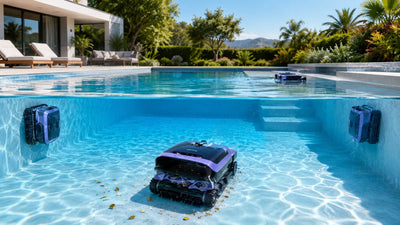
The way to keep a longer season low-maintenance is to automate the cleaning, because the months a heat pump adds are also the months your pool collects the most debris. Spring pollen and fall leaf drop land in the water exactly when you are running the heat pump and using the pool most. A cordless robotic pool cleaner absorbs that extra load without adding to your routine.
Keeping the water surface clear matters most here. Floating leaves and debris are what stop you from covering the pool consistently, and consistent covering is what protects the heat you are paying to add.

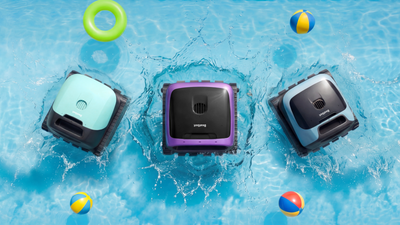
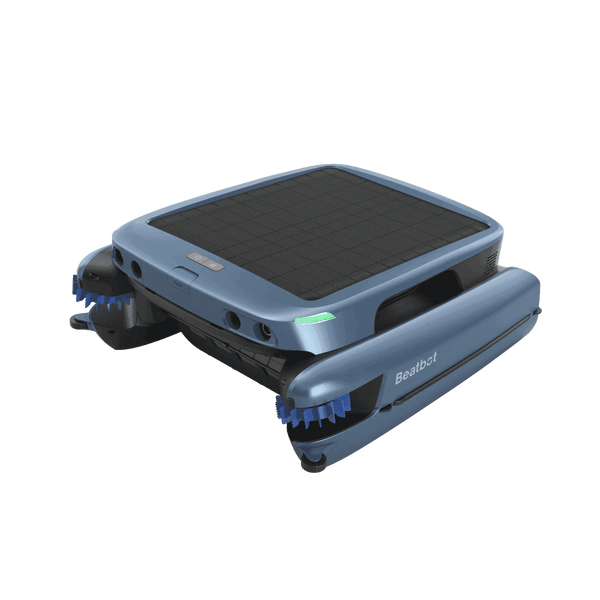
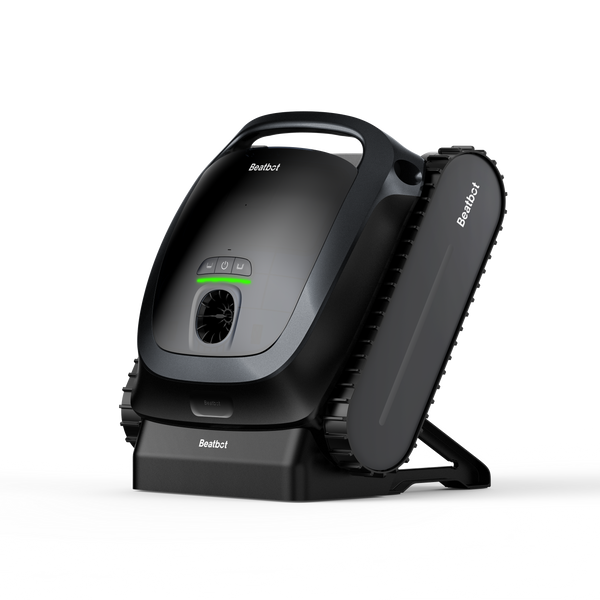
Beatbot Sora 70 robotic pool cleaner’s JetPulse water-surface cleaning uses dual converging jets that draw floating leaves and debris inward and capture them in a single pass, so the surface stays clear enough to cover without skimming first. The same unit also cleans the floor, walls, waterline, and shallow areas, and its 10,000 mAh battery runs up to 7 hours on the surface or up to 5 hours on the floor and covers pools up to 3,230 square feet on one charge, which is what a large pool needs across a months-long season. It is backed by a 3-year warranty.
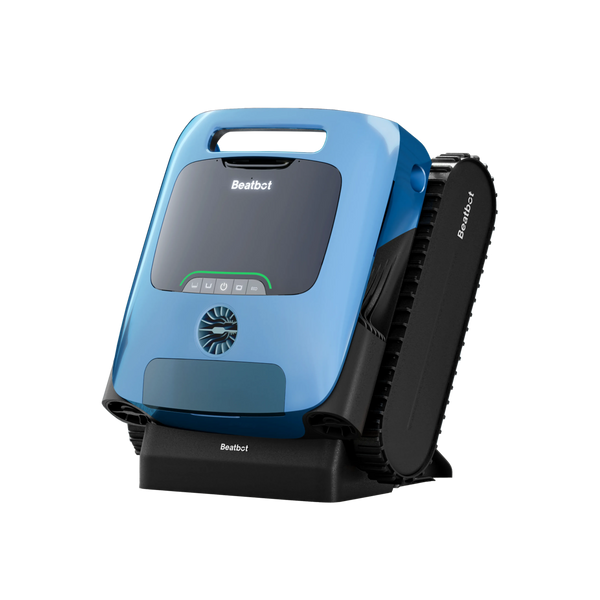
If a cover or skimmer already keeps your surface clear, the Beatbot Sora 30 robotic pool cleaner covers the floor, walls, waterline, and shallow areas and platforms on a single cordless charge, with 6,800 GPH of suction and a 2-year warranty.
FAQs
Do Pool Heat Pumps Work in Cold Weather?
Pool heat pumps work best when the air stays above roughly 50°F, since they draw heat from the surrounding air. In cooler conditions they slow down and lose efficiency, and they are not built for freezing temperatures. Some inverter models with scroll compressors hold up better in mild cold, but for reliable heat in a genuinely cold climate, a gas heater is the more dependable option.
Is a Pool Heat Pump Cheaper to Run Than a Gas Heater?
Yes, a pool heat pump costs significantly less to run than a gas heater because it moves existing heat instead of burning fuel to create it. The trade-off is speed and upfront cost, since heat pumps heat more slowly and usually cost more to install. Over a full season of regular use, the lower running cost is where the savings add up.
Can a Pool Heat Pump Cool the Water as Well as Heat It?
Only heat and cool models, also called reverse-cycle units, can lower your pool temperature. A standard heat pump only warms the water. If your summers regularly push the pool past comfortable, a heat and cool unit removes the need for a separate chiller.
How Long Does a Pool Heat Pump Take to Heat a Pool?
A pool heat pump raises water temperature slowly, roughly 1 to 1.25°F per hour depending on the unit size, pool volume, and air temperature. Heating a cool pool to a comfortable level can take a full day or more, which is why owners leave the unit running and use a cover to speed things up and hold the gains.
How Long Does a Pool Heat Pump Last?
A well-maintained pool heat pump typically lasts 10 to 20 years, longer than a gas heater and on par with solar. A titanium heat exchanger and stable water chemistry are the biggest factors in reaching the upper end of that range. Keeping the flow rate and filter in good shape also extends its life.