Most Popular


 Sora Series


 AquaSense Series

 Skimmer & Bundle

 Retail Edition


 Accessories


Your pool floor looked clean yesterday, and this morning there is a soft film of dust across it again. That is the fine-debris problem: sand tracked in from a beach towel, pollen drifting down after a windy afternoon, silt washed in by a rainstorm.
These particles are small enough to pass through weak filtration, heavy enough to sink before your pump cycle can pull them up, and persistent enough to cloud otherwise clear water. Leaving them on the floor also raises running costs, since fine organic debris feeds chlorine demand and creates conditions for algae.
Why Fine Particles Are Harder to Remove Than Leaves
A pool cleaner that handles autumn leaves well is not automatically good at fine debris. Leaves are large and buoyant; a robot with moderate suction and a coarse basket catches them easily. Fine particles behave differently. Sand and silt are dense enough to settle into corners and along wall joints. Pollen and dust form a thin film over the floor that requires consistent surface contact to lift, not just suction from a distance. If the filter mesh is too coarse, particles pass right through and stay in the water.
Basket capacity compounds the problem. Fine debris compacts slowly, so the basket fills unevenly. A small basket that reaches capacity mid-cycle stops filtering effectively, leaving the second half of the pool less clean than the first.
There is also a recirculation issue specific to corded and pressure-side cleaners. Because they route water back through the pool's own filter system, any particle too fine for that filter gets pushed back into the pool through the return jets. This is why fine debris often seems to reappear a day after cleaning.

What to Look For in a Pool Cleaner for Small Debris
Three specs predict fine-debris performance: filter micron rating, suction flow rate, and basket volume. Micron rating sets the ceiling on what the filter catches — a 150 µm mesh handles pollen, fine sand, and most dirt; a 3 µm mesh captures dust, algae spores, and particles invisible to the naked eye. Suction flow rate determines whether the robot can pull dense particles off surfaces in a single pass. Basket volume determines how long filtration stays effective before performance drops.
Surface coverage is a fourth factor that often goes unmentioned. Fine debris accumulates on walls, along the waterline, and on ledges just below the surface — not only on the main floor. A robot limited to floor cleaning leaves most of the fine-particle buildup untouched.
How the Beatbot Sora 30 Addresses Fine Debris
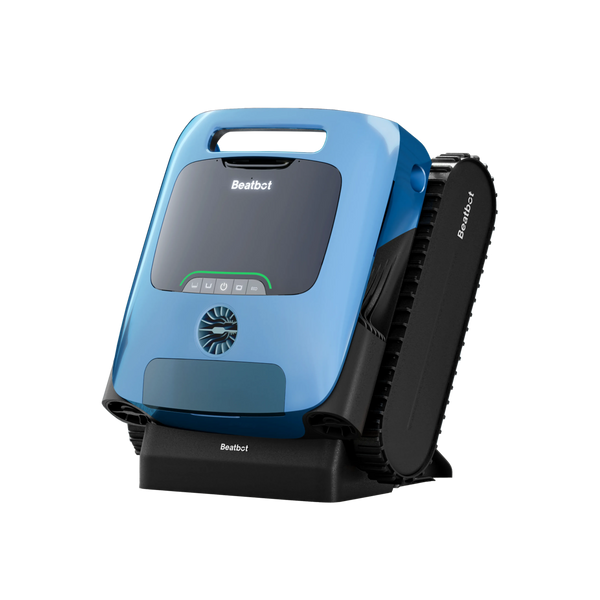
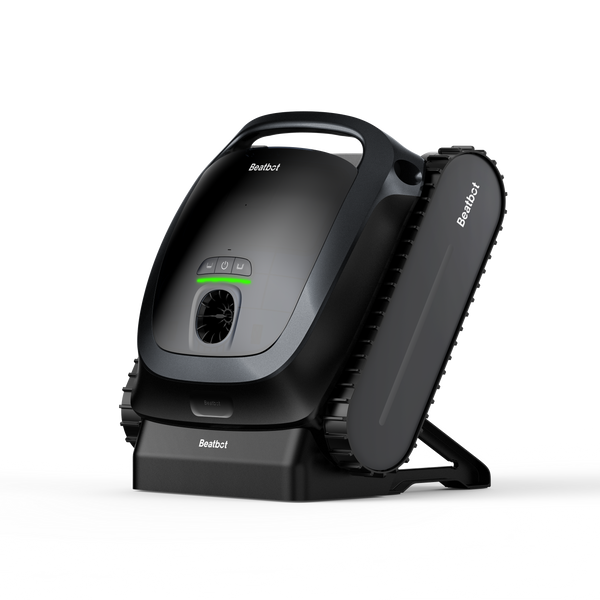
The Beatbot Sora 30 robotic pool cleaner is cordless and works in both above-ground and in ground pools on concrete, ceramic tile, vinyl, and fiberglass. Its 6,800 GPH suction system is built around our HydroBalance center-mounted pump design. The standard 5L filter basket uses a 150 µm mesh, capturing pollen, fine sand, and general dirt across pools up to 3,200 sq ft on a single charge without mid-cycle performance loss.
Most cordless robots struggle with fine debris because tight filtration restricts water flow and drains the battery. HydroBalance keeps suction strong enough for dense particles while still delivering up to 5 hours of floor-cleaning runtime. The Sora 30 also collects debris in its own onboard basket rather than routing water through your pool's filter system, so fine particles are removed from the water entirely instead of being pushed back through the return jets.
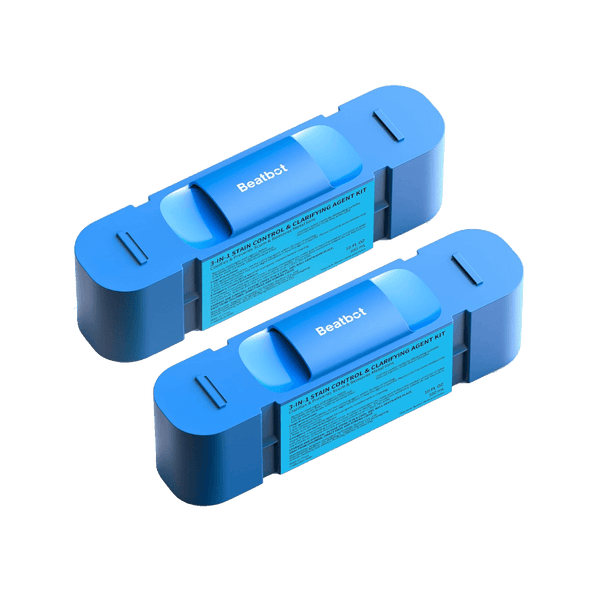
When you need to go finer — post-storm silt, dust accumulation, or micro-algae before it becomes visible — the optional 3 µm ultra-fine filter cartridge (sold separately) handles what the standard mesh cannot. Run the 150 µm mesh for regular maintenance, and switch to the fine filter when water clarity drops.
The four-roller brush system delivers a 100% wall-climbing success rate across all four surface types. The Sora 30 climbs walls and cleans the waterline in the same cycle, so fine particles along joints and the waterline ring are gone without a separate pass.
|
Spec |
Beatbot Sora 30 |
What It Means |
|
Suction |
6,800 GPH |
Pulls fine sand through the filter path without stalling |
|
Standard filter |
150 µm (5L basket) |
Captures pollen, dirt, and fine particles |
|
Optional fine filter |
3 µm (sold separately) |
Traps microscopic dust and ultra-fine silt |
|
Battery runtime |
Up to 5 hours (floor) |
Completes a 3,200 sq ft pool in one charge |
|
Cleaning coverage |
Floor, walls, waterline, platforms |
No manual touch-up in shallow ends or steps |
|
Shallow cleaning |
Down to 8 inches deep |
Reaches platform areas standard robots skip |
|
Wall climbing |
100% success rate |
Four-roller system grips all surface types |
|
Pool compatibility |
Above-ground and in-ground |
Works on concrete, tile, vinyl, and fiberglass |
|
Warranty |
2 years |
Backed by our 2-year warranty |
The 3 µm optional filter is the relevant upgrade when visible dust or silt layers remain after a standard run. For everyday maintenance, the 150 µm mesh is sufficient.
Shallow-End and Platform Coverage: Where Most Robots Fall Short
Fine debris concentrates in shallow ends, steps, and in-pool platforms. These surfaces sit below the skimmer line but are too shallow for most robotic cleaners, so pollen and sand accumulate there regardless of how well the main floor is cleaned.
The Sora 30 reaches water as shallow as 8 inches and cleans accessible platforms with a minimum area of roughly 3.3 by 3.3 feet. If your pool has wide shallow ledges or a beach entry, those zones are covered in the same automated cycle — no manual brushing after.

Getting the Sora 30 Out of the Pool
When the cleaning cycle ends, SmartDrain releases the internal water and a four-chamber floating mechanism brings the Sora 30 to the surface automatically. At 19.6 lbs, lifting it out without the added weight of trapped water makes a real difference.
From the Beatbot app, you can trigger one-click surface parking when the robot is on the water surface and connected via Wi-Fi, view cleaning history, monitor water and environment temperature, and customize cleaning modes. OTA updates are pushed directly to the unit — no manual firmware steps needed.
FAQs
Is the Sora 30 cordless, and can a cordless robot handle fine debris?
The Sora 30 is cordless. The common weakness of cordless robots with fine debris comes from tight filters choking water flow and draining the battery. Our HydroBalance high-flow pump keeps suction strong through a full cycle while still running up to 5 hours on floor cleaning.
Does the Sora 30 work in both above-ground and in ground pools?
Yes. The Sora 30 is rated for above-ground and in ground pools up to 3,200 sq ft on concrete, ceramic tile, vinyl, and fiberglass surfaces.
Will fine debris come back after the Sora 30 cleans?
Fine debris reappears when a cleaner routes water back through the pool's filter system and particles slip through. The Sora 30 collects everything in its own onboard basket, so captured debris leaves the water entirely instead of cycling back through the return jets.
How often should I run the 3 µm fine filter?
Run it after heavy pollen season, after a rainstorm, or when water clarity drops after a standard cycle. The 150 µm mesh is sufficient for regular maintenance between those events.