Most Popular


 Sora Series


 AquaSense Series

 Skimmer & Bundle

 Retail Edition


 Accessories


Pool clarifier is a water treatment product that groups microscopic suspended particles into larger clumps so your filter can capture them. If your pool looks hazy even though the chemistry is balanced and the filter is running, a clarifier is usually the right next step. It does not fix the underlying cause of cloudiness on its own, but it gives your filtration system a real advantage when particles are simply too small to be caught any other way.
What Causes Cloudy Pool Water?
Pool water turns cloudy when tiny particles remain suspended rather than settling or getting trapped in the filter. Those particles can be almost anything: dead algae cells after a shock treatment, fine dust and pollen carried in by wind, oils and sunscreen shed by swimmers, or calcium deposits from hard water. None of these are large enough to be caught by a standard filter on their own.
Chemistry imbalances also contribute. High pH or high total alkalinity can cause dissolved minerals to precipitate out of solution as fine cloudiness. A filter that is overdue for a backwash or cartridge rinse will recirculate particles it should be removing. Heavy rain adds another layer of complexity, diluting sanitizer and washing in environmental debris all at once.
How Does Pool Clarifier Work?
Most conventional pool clarifiers use synthetic polymer chains, typically a compound called polyDADMAC, that carry a positive electrical charge. Particles suspended in pool water tend to carry a negative charge, so the polymer binds to them and groups them into larger, heavier clusters. Those clusters either settle to the pool floor to be vacuumed or become large enough for the filter to trap.

Standard clarifiers work within two to three days if the filter is running continuously. Overdosing is counterproductive: too much polymer creates a stable suspension that actually stays cloudy longer.
A natural alternative is chitosan, a compound derived from the shells of crustaceans like crabs and shrimp. Chitosan works through the same basic mechanism but is biodegradable and generally considered safer for skin and eyes. It is compatible with chlorine, saltwater, and other sanitizing systems.
When Should You Use a Pool Clarifier?
A clarifier makes the most sense in three situations: after a shock treatment that killed algae, whose dead cells stay suspended for days; after heavy rain or high bather load, which introduces far more fine debris than a filter handles efficiently on a normal cycle; and as regular weekly maintenance for pools that consistently show mild haziness despite good chemistry.
Clarifiers are not the right tool when cloudiness comes from a chemistry problem. If pH is above 7.8 or calcium hardness is out of range, the precipitation will continue regardless. Fix the water chemistry first, then use a clarifier to clear the residual haze. A clogged or undersized filter will undermine any clarifier for the same reason: grouped particles need somewhere to go.
Flocculant is the faster alternative when you need results in hours rather than days. It drops all particles to the pool floor so you can vacuum them to waste, but requires more effort and some water loss. For pools with cartridge or DE filters, flocculant is typically not recommended because those filter types cannot handle the surge.
The Problem With Traditional Clarifier Treatments
Most pool owners who use liquid clarifiers measure the product, walk the pool edge pouring it in, run the filter, and wait. That works, but uneven distribution is a real risk. Clarifier that concentrates in one area over-treats that zone and under-treats others, reducing overall effectiveness.

Synthetic polymer formulas can also interact with metal sequestrants, causing a milky precipitate if both are added at the same time. And keeping a consistent weekly schedule is difficult when clarifier is one more manual step in a maintenance routine that already has too many of them.
How the Beatbot AquaSense 2 Ultra Improves Water Clarity
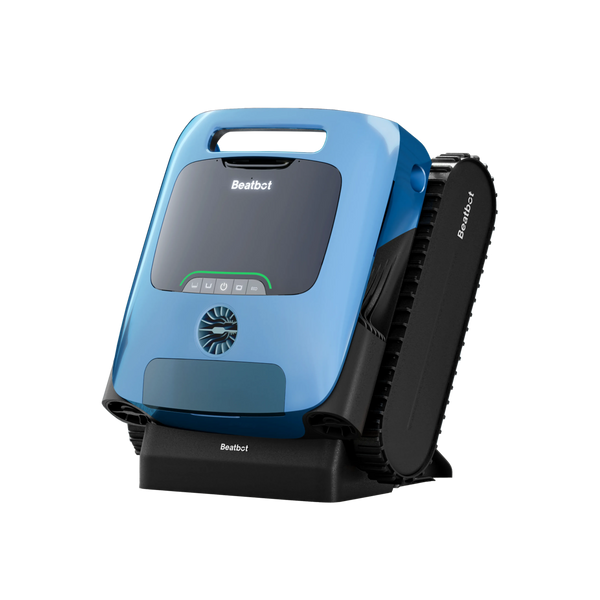
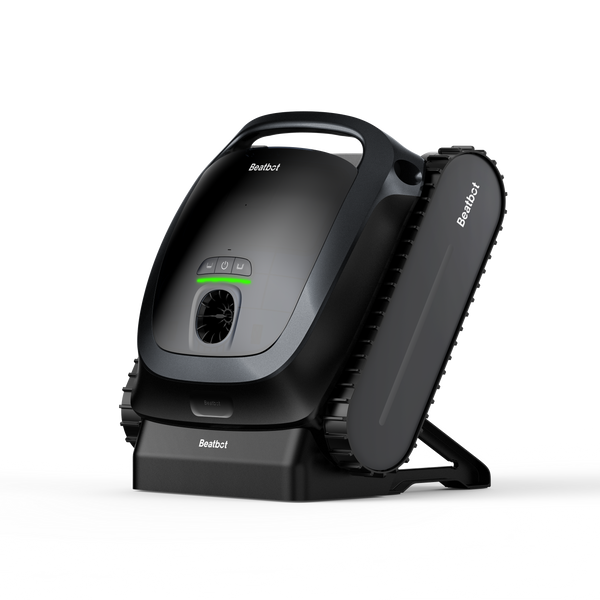
The Beatbot AquaSense 2 Ultra robotic pool cleaner includes a built-in ClearWater™ Natural Clarification System that dispenses a chitosan-based clarifier automatically while the robot cleans. The clarifier is derived from recycled crab shells, biodegradable, and pH-neutral.
Because the robot moves across the entire pool floor and surface during its cleaning cycle, the clarifier is released evenly throughout the water rather than poured in at a single point. The chitosan binds dirt, oils, and microscopic particles into larger clumps that sink to the bottom to be vacuumed by the robot or captured by the pool's circulation filter.
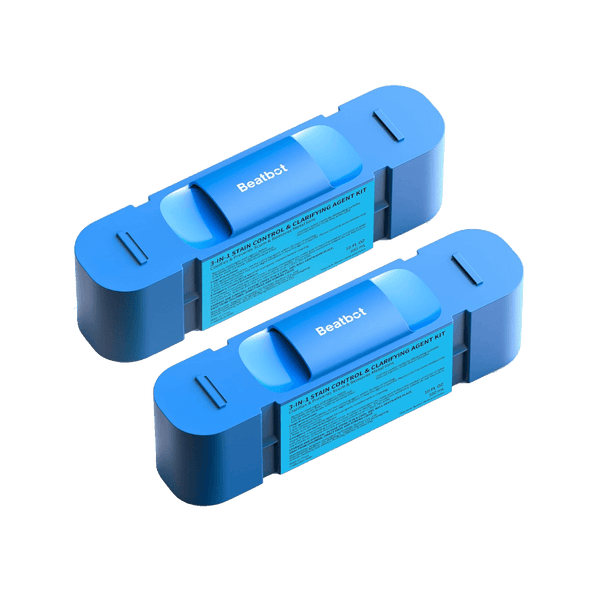
One 300ml clarifier kit treats up to 99,000 gallons and lasts roughly one month with weekly use. Each dose is pre-measured, eliminating the risk of overdosing. The kit is activated through the Beatbot app, where you can also schedule clarification ahead of regular use. The ClearWater™ system works four times faster than traditional clarifiers, according to Beatbot's data.
Do You Need a Clarifier If You Have a Robotic Pool Cleaner?
A standard robotic pool cleaner or manual vacuum removes debris you can see. It does not affect the suspended microscopic particles that cause haziness. Water clarity at the particle level requires a separate treatment unless the cleaner has a built-in clarifier system.
The Beatbot AquaSense 2 Ultra combines both in a single device: it vacuums the pool floor and walls, cleans the water surface, and dispenses clarifier in the same session. For pool owners who want to consolidate their maintenance tools, that reduces both the number of products to buy and the number of steps per week. For those with an existing clarifier routine that works, it is a convenience upgrade rather than a necessity.
FAQs
Can you use pool clarifier and shock at the same time?
It is better to shock first and add clarifier afterward. High chlorine levels right after shocking can interfere with how some clarifiers bind particles. Wait until chlorine drops back toward the normal range, then apply the clarifier to clear the dead algae the shock left suspended.
Can you over-dose pool clarifier?
Yes. Too much synthetic polymer clarifier can stabilize the particle suspension and keep the water cloudy longer. Always follow the dosage instructions for your pool volume. Pre-measured kits, like those used in the Beatbot AquaSense 2 Ultra, eliminate this risk by dispensing the correct amount automatically.
Is chitosan safe for swimmers?
Chitosan is derived from crustacean shells and is biodegradable, non-toxic, and pH-neutral. It has been used in pool clarification for decades. People with shellfish allergies should consult a doctor before swimming in chitosan-treated water, as a precaution, though the processed form differs from dietary shellfish proteins.
How often should you add clarifier to a pool?
For routine upkeep, a weekly dose is a common schedule, with extra treatment after heavy rain or large pool gatherings. The Beatbot AquaSense 2 Ultra follows this rhythm automatically, with one 300ml kit covering about four weekly doses before it needs replacing.