Most Popular


 Sora Series


 AquaSense Series

 Skimmer & Bundle

 Retail Edition


 Accessories


A good robotic pool cleaner costs between $500 and $1,500 in 2026. Most pool owners land on the best mix of coverage and reliability in the $700 to $1,000 range. Entry-level, floor-only models start near $150, and multi-function machines that skim the surface and clarify the water can run past $3,000.
A robotic pool cleaner is a self-contained machine that drives around your pool, scrubs the surfaces, and filters out debris on its own, so what you pay mostly comes down to how much of the pool it reaches and how fine its filtration is. The gap between a $400 machine and a $1,000 one shows up less on the receipt than in what's left in your water.
Robotic Pool Cleaner Prices at a Glance
Robotic pool cleaner prices fall into four bands in 2026. Entry models run $150 to $500, mid range runs $500 to $900, premium runs $900 to $1,500, and multi-function machines start at $1,500 and climb past $3,000.
|
Price Range |
Coverage |
Filtration |
Best For |
|
$150 to $500 |
Floor only |
Standard mesh |
Small or above ground pools |
|
$500 to $900 |
Floor, walls, waterline |
Upgraded cartridge |
Most in ground pools |
|
$900 to $1,500 |
Floor, walls, waterline, some surface |
Fine dual filtration |
Complex or debris heavy pools |
|
$1,500 and up |
Full coverage plus surface and clarifier |
Ultra fine multi layer |
Hands off, large or tree lined pools |
Coverage and filtration are the two columns that drive most of the price, so match those to your pool before you get hung up on the number.
What Makes a Robotic Pool Cleaner Good?
A good robotic pool cleaner does five things well. It cleans the whole pool, from the floor up to the walls and waterline. It catches the fine stuff, down to sand and pollen. It follows a planned path for full coverage. It runs long enough to finish your pool in one go. And it comes with a warranty that matches what you paid.
Full Pool Coverage
Coverage comes down to how much of the pool the machine keeps clean. Floor-only models leave the walls and the waterline alone, and the waterline is where oils and scum build into that ring you can spot from the deck. Machines that climb the walls and scrub the waterline keep that line clean, and the ones a step up add the water surface, so leaves and pollen get pulled out before they sink.
Filtration That Holds Fine Debris
Filtration is what decides whether your water looks clear or cloudy. Standard baskets grab leaves but let fine sand, silt, and pollen slip right back into the pool. Finer filters, often rated near 150 microns or lower, trap those tiny particles and hold onto them until you empty the basket. Two pools can run for the same amount of time and still look nothing alike, and filtration is usually why.
Navigation, Runtime, and Warranty
Planned S-shaped and N-shaped paths cover more of the pool in less time than a machine that just bounces around. A battery or cable that lasts a full cycle matters more the bigger your pool gets. And a longer warranty is a fair read on how many seasons the maker expects it to keep running.
2026 Price Ranges and What Each One Cleans
What each range cleans climbs one zone at a time. The floor comes first, then the walls and waterline, then the water surface, and at the very top the machine even clarifies the water. Wherever your pool's needs stop is where your spending can stop too.
Entry Level and Above Ground Pools: $150 to $500
Cleaners in the $150 to $500 range stick to the pool floor, and you'll find wall climbing, waterline scrubbing, and fine filtration on the higher tiers. They pick up leaves and bigger debris off the bottom with a standard mesh basket and simple movement, so anything smaller than a leaf tends to stay put in the water.
Floor cleaners like the Aiper Scuba SE sit near the bottom of this range at around $150. For a small above ground pool that doesn't collect much, this tier is plenty. For an in ground pool with walls and a waterline, you'll still be doing some cleaning by hand.
Mid Range Cleaners: $500 to $900
Cleaners in the $500 to $900 range add wall climbing and waterline scrubbing on top of floor cleaning, along with better navigation and a finer basket. This is the first tier where a single machine handles all three zones most in ground pools care about, which is why so many owners land right here.
Corded models like the Dolphin Nautilus CC sit around $650 and run on continuous power, while cordless wall climbers a bit higher up trade the cable for battery freedom. If you've got an in ground pool with a normal debris load, a machine in this band keeps it swim-ready without much hands-on work.
Premium Cleaners: $900 to $1,500
Cleaners in the $900 to $1,500 range bring stronger navigation, finer dual filtration, longer runtimes, and the first machines that clean the water surface along with the floor, walls, and waterline. This is where one robot starts doing the job of the separate tools you used to juggle.
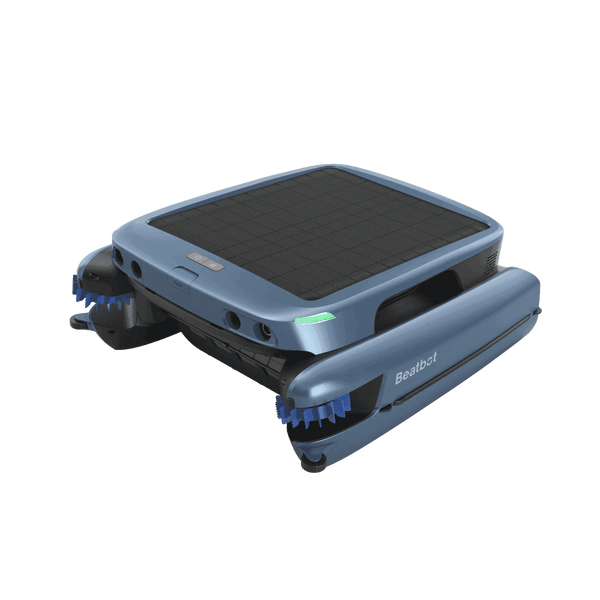
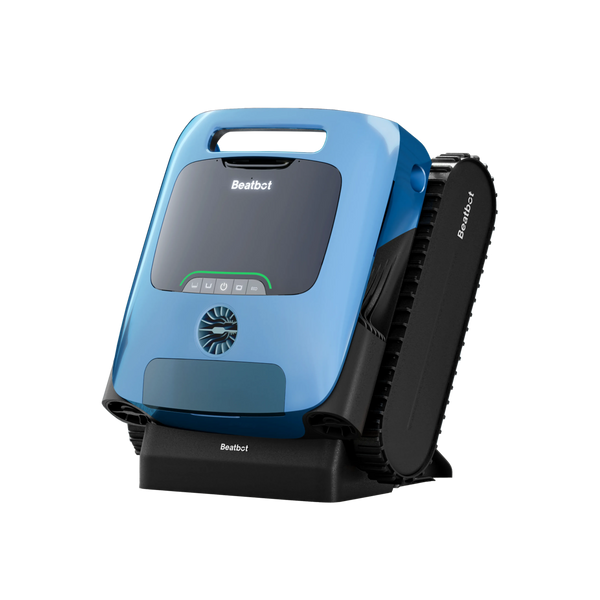
Corded workhorses like the Dolphin Cayman sit near $1,000 with weekly timers and steady suction. At the top of this band, the Beatbot Sora 70 robotic pool cleaner at $1,499 is one of the few cordless machines at this level that also cleans the water surface, not just the floor, walls, and waterline. Its JetPulse system uses twin jets that pull floating debris in toward the central intake instead of shoving it at the wall, so leaves and pollen get scooped up in the same cycle that cleans the floor.
The Beatbot Sora 70 also reaches platforms and shallow spots as low as 8 inches, moves water at 6,800 GPH, holds 6L of debris, and covers pools up to about 3,230 square feet on its 10,000 mAh battery. If your pool sits under trees or has a tanning ledge that most machines skip right over, that mix is the reason to step up from mid range into this band. Surface skimming that used to call for a separate skimmer just becomes part of the main clean at this price.
Ultra Premium and Multifunction: $1,500 and Up
Cleaners above $1,500 add full-pool coverage plus features that take over the jobs you'd otherwise do by hand, like surface skimming and water clarification, often guided by AI mapping. At this point you're not just paying for cleaning. You're paying to take steps out of your routine.
Corded high-end models like the Dolphin Premier sit around $2,000 with multi-media filtration and scheduling. At the very top, the Beatbot AquaSense 2 Ultra robotic pool cleaner at $3,150 pairs an AI camera and HybridSense pool mapping with a 5-in-1 clean that includes its ClearWater clarifying system, and it's backed by a 3-year full machine replacement warranty rather than a repair policy. This tier fits large or complex pools, and owners who'd rather hand off water clarity and full automation entirely.
The Best Value Range: Why $700 to $1,000 Works for Most Pools
The $700 to $1,000 range is the value sweet spot because it's the lowest price that reliably brings together full floor, wall, and waterline coverage with fine filtration and planned navigation. Drop below it and you usually give up one of those three, and the one that goes first is almost always filtration.

That filtration gap is easy to miss when you buy and impossible to miss a few weeks later, when the water goes hazy even though the machine ran right on schedule. Paying into this range gets you a filter fine enough to hold onto the particles a coarser basket lets slip through.
Going above $1,000 only makes sense when your pool calls for it, and that comes down to its debris load, its shape, and its shell. If none of those push you higher, the sweet spot is right where extra money stops buying you a cleaner pool.
Corded vs. Cordless: Does It Affect the Price?
You'll find both corded and cordless machines in every price band, and a cordless model usually costs a little more than a corded one with the same coverage, thanks to the battery inside. The choice is less about price and more about how you want to live with it day to day.
Corded cleaners draw steady power, never stop to recharge, and suit very large pools or anyone who wants to set a weekly timer and forget about it. Cordless cleaners skip the cable running across your deck, drop in anywhere without hunting for an outlet, and are the designs that make surface skimming and easy drop-in use possible in the first place. The price difference reflects the battery and the freedom it buys you, not a difference in how clean your floor ends up.
Hidden Costs to Factor Into the Price
The purchase price isn't the whole cost of a robotic pool cleaner. Over a few seasons, you'll also want to factor in filter or basket replacements, battery lifespan on cordless models, whether the warranty repairs or replaces the machine, clarifier refills on the models that use them, and the pool service you stop paying for.
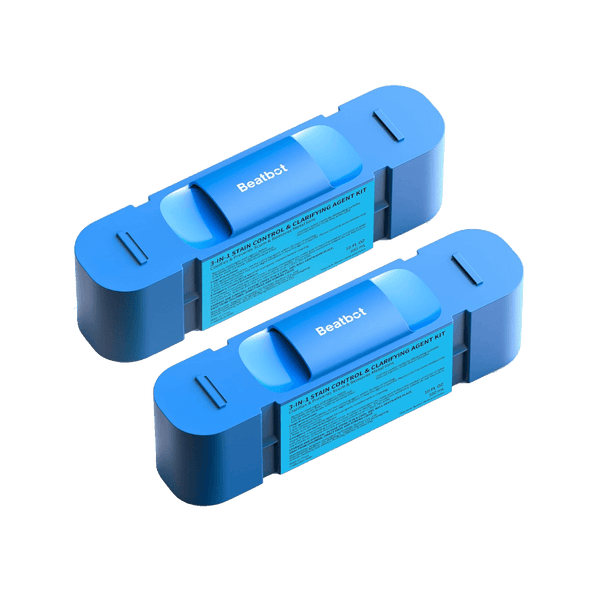
Batteries are the quiet variable on cordless machines, since capacity shifts over time, so it pays to check battery quality and warranty coverage on any cordless model. A warranty that swaps a bad unit for a new one saves you the downtime a repair-and-return policy creates, which is worth a read before you buy. And models that dispense a clarifying agent go through a consumable you'll need to restock.
Set against those costs is the labor a good machine takes off your plate. Weekly pool service usually runs somewhere between $50 and $150 a month depending on pool size, so a machine that covers the whole pool and handles most of that work can pay for itself in a season or two. The lowest-priced machine is rarely the lowest total cost once you add up filtration, battery life, and what you save on service.
How Much Should You Spend on Your Pool?
How much you should spend comes down to your pool's size, its material, its debris load, and how much of the work you want to keep doing yourself. Match those four things to a price band and the decision gets a lot simpler.
A small above ground pool that stays fairly clean is well served under $500. A standard in ground pool with walls and a waterline to keep up fits the $500 to $1,000 range, where most owners should focus. A pool under heavy tree cover, one with shallow ledges, or a fiberglass shell that leans entirely on the robot points you toward $1,000 and up, where surface cleaning and finer filtration start earning their keep. The more of the pool you want handled without lifting a finger, the higher in the range your answer lands.
FAQs
How long do robotic pool cleaners last?
Most robotic pool cleaners last around 4 to 7 years with regular use. Lifespan comes down to build quality and warranty more than corded or cordless, and cordless models lean on a battery that a solid warranty should cover. Rinsing the filter after every cycle helps either type go the distance.
Can a robotic pool cleaner replace my pool service?
A robotic pool cleaner takes over the vacuuming and brushing a service does, across the floor, walls, waterline, and on higher models the surface. It won't test or balance your water chemistry, though, so you'll still handle chemicals yourself or keep a lighter service for that part.
How much does it cost to run a robotic pool cleaner?
Running a robotic pool cleaner usually costs just a few dollars a month in electricity, far less than pump-driven cleaning systems. Cordless models charge between cycles, and corded ones only draw power while they're running. Filter rinsing and the occasional basket replacement are the main ongoing costs.
What size pool can a robotic cleaner handle?
Coverage per cycle varies by model, with many rated for pools up to roughly 3,000 square feet on a single run. Bigger pools may need a second cycle, or a corded model that never has to stop and recharge. Check the rated coverage against your pool size before you buy.